Guide
Using consumer intelligence to get a 360° view of your industry
Staying at the forefront of your industry has never been easier.
Marketers, product and engineering teams, sales: all these teams know the importance of keeping up with trends in their industry.
Shifts in an industry can change how you message your products in commercials to altering entire product lines.
And ultimately, brands fall into two categories: those who drive the industry trends, and those who play catch up.

Keeping up with shifting consumer opinion is more important than ever, and digital consumer intelligence has made it even simpler for brands to track, analyze, and act upon these trends.
Our increasingly digital world provides us with a massive repository of consumer insights. From social media to product reviews to live survey results, brands have the trends that define their industries at their fingertips.
Now it is on brands in every industry to capitalize on this archive of human thought. With trillions of data points and best-in-class artificial intelligence technologies, industry analysis has never been easier.
To showcase this, in this guide we cover:
- How consumer intelligence can boost industry and trend analysis
- The six most impactful industry analyses, from spotting emerging trends to analyzing consumer purchase intent
- A real brand example of how industry insights led to a better bottom line.
Using consumer intelligence for industry analysis
Whether it’s how your brand compares to your competitors, or what emerging consumer and market trends are shaking up your industry, companies have the tools to have their fingers on the pulse of their sectors.
With consumer intelligence from a diverse range of sources, you can answer the most important questions impacting your industry and ultimately, your work. We explore six of them below:
1. What is the general size of this industry?
Is your industry growing or is it on the decline? Is the market changing or evolving? How can you prepare for five years from now?
Using digital consumer intelligence to analyze industries, brands can detect, in real-time, changes in market size. It may reveal growing opportunities for a product, opportunities to pivot products or messaging, or new market white space.
Is there room to grow in your current industry or is it time to innovate something completely different?
Take a look at the personal tablet conversation, the market was on the rise for years, but recently, interest has been on the steady decline.
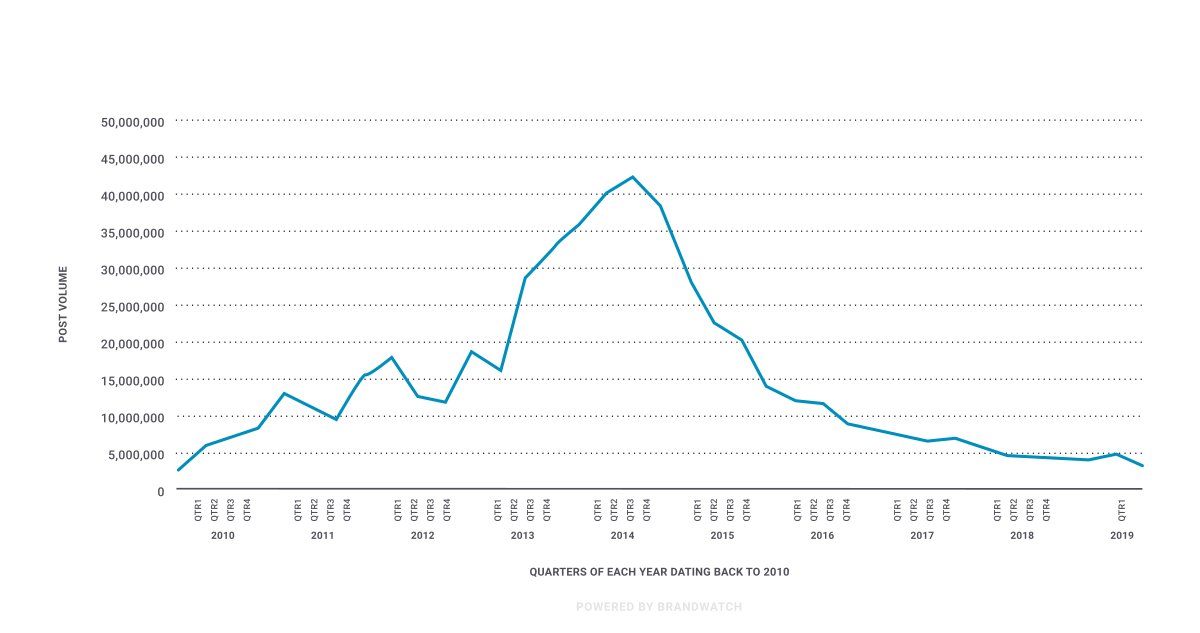
This product might be a victim to loss of consumer interest. Tech companies not currently producing tablets might use this information to direct their future R&D, while companies with existing tablet products may want to experiment their marketing and advertising strategy to try to invigorate consumer energy in tablets.
For the companies turned off by tablets though, using digital data to understand their industry can help answer a related question.
2. What product trends are emerging in the industry?
Social intelligence can do wonders for analyzing the products you’re selling and the products you’re looking to develop and go to market with. Companies can monitor conversations around their specific industry or product lines to understand consumer behavior and detect emerging trends before they get popular.
Consider smart home devices. The below analysis of smart device conversations segmented by product type show that the most popular features within the product has changed over the years.
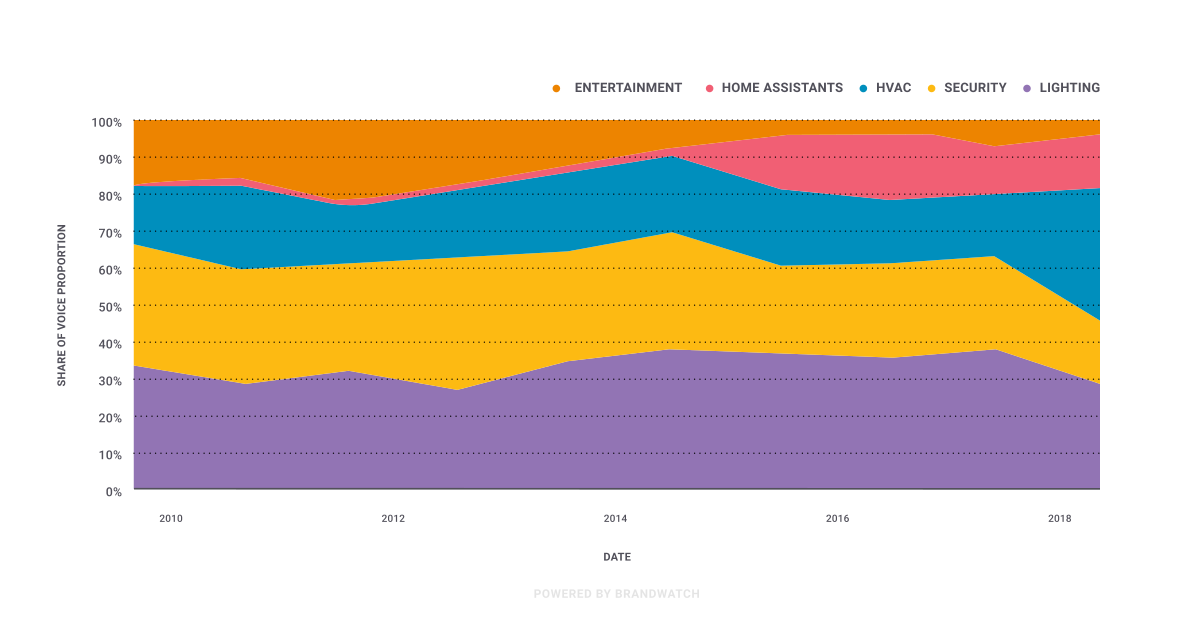
Home assistants have become increasingly popular, lighting control remains king, and entertainment has fallen.
If Amazon wants to market their Echos more effectively, now is the time to feature asking Alexa to dim the lights or turn on your security system.
3. Where do we stand within our industry?
To this day, one of the most common analyses brands use to understand their industry is uncovering0 their share of voice within an industry. And it’s foundational for good cause.
Your growth and your competitors’ growth, measured via online conversation, could be quite different. Social intelligence can easily measure brands’ relative size in the market, and whether a brand is gaining or losing market share in terms of brand visibility.
Take a look at the diet app industry. Some of the smaller apps saw their conversation growing, but their rate of growth wasn’t as fast as MyFitnessPal, and they were losing market share.
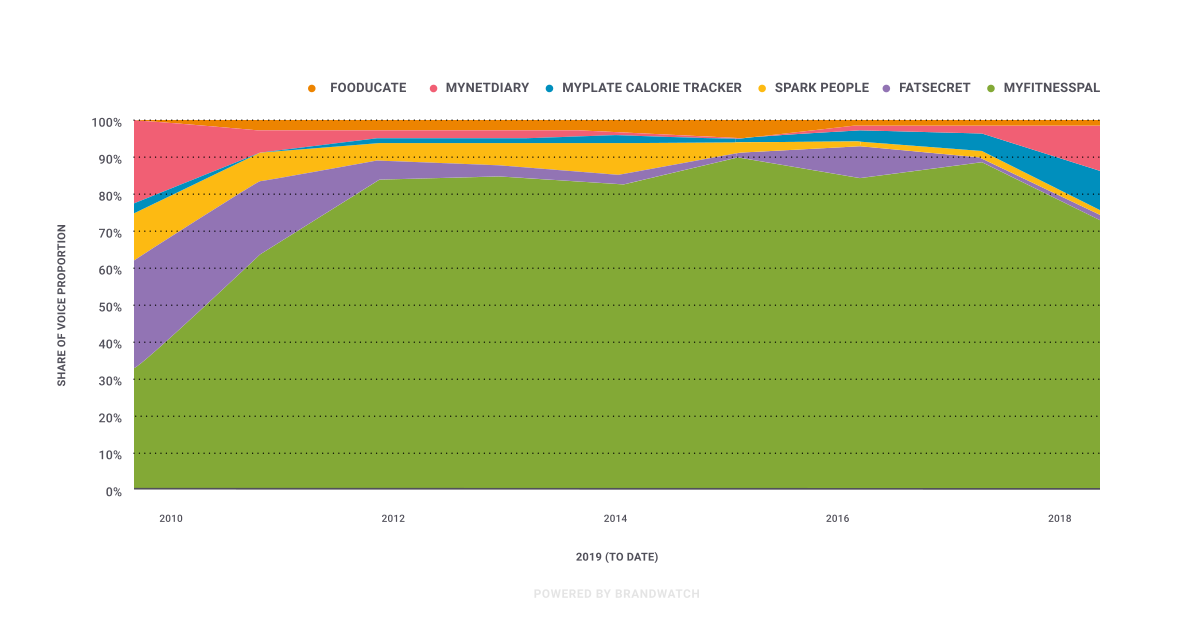
Despite the five apps we analyzed having nearly equitable share of voice in 2010, MyFitness Pal grew to lead the industry for nearly a decade. This unequal visibility likely helped the company’s name recognition, growing their organic reach, and positively impacting their sales.
However, what happened in 2016, when FatSecret and MyPlate Calorie tracker began to own more of the conversation? Did consumer preferences in either the apps themselves or dieting behaviors change?
4. What preferences and opinions are driving purchase behavior?
On review pages, forums, and social media, consumers discuss thier specific feelings about your industry. Identifying and analyzing the key reasons customers themselves spend their money (or not) is vital for every team in your organization.
Consider smartphones: there are only a handful of companies that lead the industry in smartphone manufacturing, but Apple has a unique brand presence and power that’s unlike its competitors. Not necessarily about product quality, Apple excels, arguably more than anyone else today, in brand strength.
An interesting and insightful example of this, in the past five years, there have been about 200,000 posts on Twitter of iPhone users simply expressing their love of texts coming through blue. Now that is brand loyalty.
5. What trends are purchase behavior in my industry?
Going beyond a consumers’ conscious thoughts or opinions, purchase behavior is commonly affected by even bigger industry trends.
Finding the patterns in your brand’s ‘intent-to-purchase’ is a powerful insight that can help you make decisions. Are there seasonal changes in your product’s ‘intent-to-purchase’ conversation online?
Are celebrity influences driving changes in consumer behavior? Uncovering this conversation’s ebbs and flows can give more nuance to the factors impacting your company today and tomorrow.
Take La Croix, the popular sparkling water brand, and their ‘intent-to-purchase’ conversation. Quickly analyzing this conversation reveals that one of the main drivers of customers purchasing La Croix is not necessarily because they love the beverage, but to replace other drinks like soda or alcohol.
Trends like this are extremely useful to marketers, and can help brands pivot their messaging to keep up with their customers. But ultimately, trends might not just impact your branding but the entire direction of your product team.
6. How is my industry changing, and how can I get ahead of shifts?
Everything experiences change. Even the most constant and stable industries will change over time.
Analyzing digital consumer data can detect these changes as they begin. And by keeping up with these changes as they happen, brands can become leaders in their space.
If Blockbuster could have used social intelligence to see the shift to streaming, or Kodak the change to digital, maybe these companies could have made early investments that would keep them as titans in their industry.
Let’s analyze the wine industry. Wine has always been (and let’s face it, will always be), a huge market. But take a look at the recent trends within wine. Red and white wine were always the two major players, but recently rosé has proven popular.
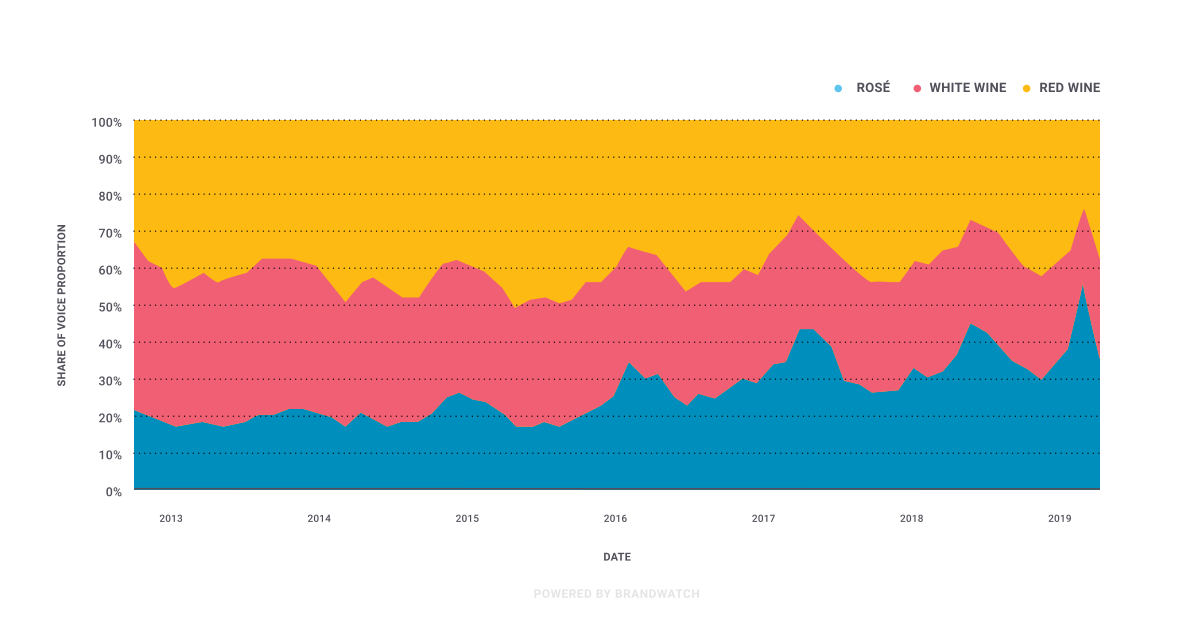
Analyzing the beverage conversation further shows that this trend is impacting other drinks as well, with rosé ciders, rosé vodkas, and rosé seltzers all growing in popularity.
These changes were detectable online as early as 2015 and brands back then could’ve seen the boom coming and product focus and brands could have begun ramping up production. What will be the industry boom of next year?
Summary
Consumer intelligence can completely revolutionize the way brands understand their industry, and measure their places in it. Gone are the days of only having access to manual market research, slow-moving survey data, and guesswork.
With access to nearly any corner of their market with a press of a button, brands now have instant access to their market, their industry, and the trends happening within them.