GUIDE
Social + NPS: How to Move Towards a Holistic View of Customer Advocacy
Find out what social data can add to traditional means of calculating a Net Promoter Score, and how you can do it yourself
Brand advocacy has long been considered something that’s inextricably linked to company growth.
The Wall Street Journal found that Net Promoter Score mentions in earning calls are actually on the rise. Plus, in many organizations, the score is tied to executive compensation – some even refer to it as the “true North Star.”
It makes sense – if you make customers happy, they’ll be more likely to repeat a purchase and to recommend your offering to their peers.
In some cases, getting this right can be make or break.
“In fact, the only path to profitable growth may lie in a company’s ability to get its loyal customers to become, in effect, its marketing department,” wrote Frederick F. Reichheld in HBR all the way back in 2003.
Net Promoter Score has been around for a long time, and has made the tracking of numbers on promoters, passively satisfied people, and detractors easy to repeat over time.
Its appeal is in its simplicity.
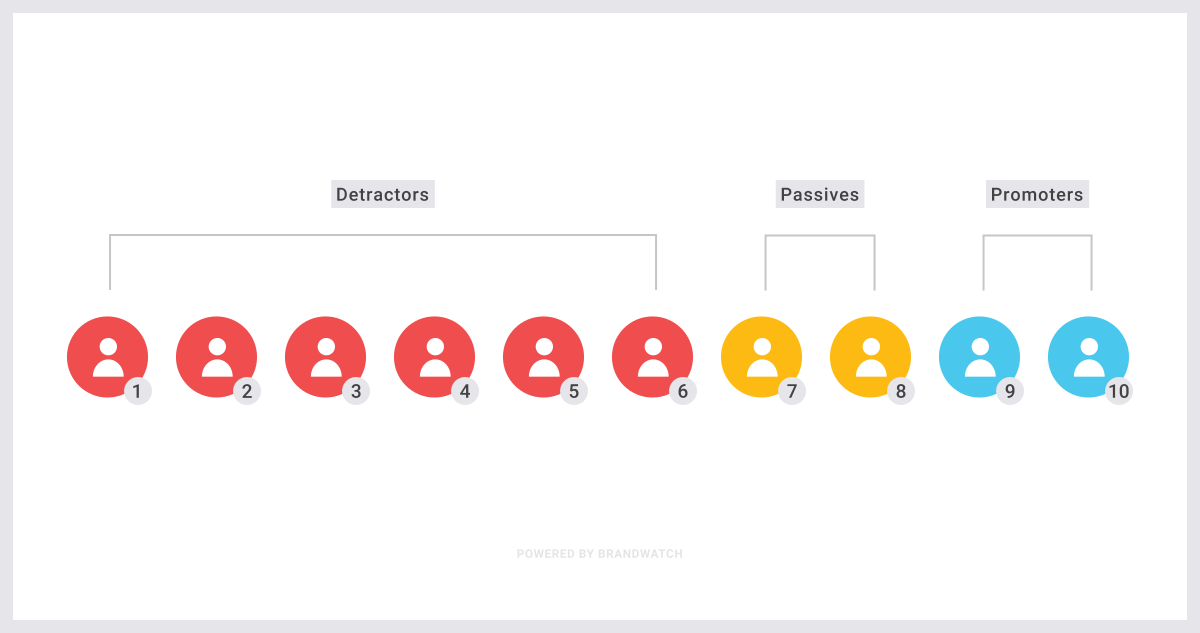
That said, the traditional way of measuring Net Promoter Score has its weaknesses as a stand alone metric. There’s plenty of room for improvement.
Potential limitations of traditional NPS measurement:
- Feedback is solicited
- Due to time and financial restraints, sample sizes are often small
- There can be a long lag between the survey being sent out and analysis of the results
- One data point provides a single output
- Some have suggested NPS is liable to ‘gaming’
Our answer? Social + NPS.
Why combine social data with traditional ways of measuring NPS?
- Feedback from social is unsolicited and comes in while customers are engaged with a brand or product. It can identify problems and wins happening right now. Plus, since it’s not solicited, it’s far harder to ‘game’
- Depending on the size of a customer base, sample sizes on social can dwarf those of traditional surveys
- Results are immediate – as soon as the analysis set up is ready it’s there constantly and can be checked and tracked over time, enabling agility
- Additional data points (including both quantitative and qualitative data) help to understand traditional NPS. What’s behind that single data point? Why do people choose not to be advocates
- You can identify influential advocates you may want to partner up with. You can also identify detractors from your competitors who may be open to a different solution
- Speaking of competitors, examining conversation around rivals on social can help you gather intel on their strengths and weaknesses, straight from the voices of their customers
Social data can help provide the context traditional NPS alone lacks, which is why many of our clients are incorporating social into their customer experience tracking.
There are two ways to go about it – bringing social and NPS data together to compare, and creating a whole new score – a ‘SNPS’, if you will.
Comparing social with your NPS research
One data point never tells the whole story.
That’s why it’s so important to contextualize the data you have. Mixing quantitative with properly handled qualitative data is a great way to get behind the numbers.
What’s delighting your promoters? What’s aggravating your detractors? Whether through combining survey, social, or focus group data with your Net Promoter Score you can start to understand what’s behind it and action those insights to improve it.
There are so many ways to combine these data sets, but here are a few examples:
- Using historic social data to look backward at NPS drivers
- Using machine learning to help categorize large scale survey data and then delve into how it’s affected your score
- Using real-time monitoring of social, survey, or search data to make predictions about your upcoming score and fix problems as they arise
How to calculate a social NPS
Another way to approach social + NPS is to literally create a Social Net Promoter Score. This can be constantly measured to check on consumer feeling towards your brand, and any spikes in negativity can be quickly examined and addressed.
Identifying detractors, passives, and promoters using social is a process with five steps. Here’s how you can get started.
1. Define exactly what you need a score for
All good analyses begin with a solid foundation, which is often a research question that can viably be answered with the resources available and that cuts to the core of a business-critical problem.
When you’re looking to calculate a social Net Promoter Score, you’ll need to start by examining what it is that you want to learn about. Obviously if you’re working for a parent brand you might find more insight be dividing up your NPS research between the brands that operate under it. Meanwhile, if you have one core product you may be interested in dividing up your NPS research by different aspects – customer service, the durability of the product, the availability of the product, etc.
Whatever it is, make sure you’re clear about the purpose of the research before starting out. Now is also a good time to identify things that aren’t interesting to you (e.g. people’s opinions on the packaging, the senior leadership team, an event you’re associated with, etc).
2. Isolate the voice of the customer
A Net Promoter Score relies on the thoughts of those who have interacted or are interacting with your brand, product, or service. The key here is to listen to feedback from real people who are offering their genuine opinion.
The best way to get down to this level is to use personal pronouns alongside or near the thing you’re looking to calculate a social Net Promoter Score for. It’s also a good idea to filter out mentions from news sites, which are unlikely to be authored by customers, and to make sure you’re just looking at unique authors and not general volume. This means you’re looking at the number of individuals, meaning very vocal people won’t skew the data one way or another.
3. Segment voice of the customer data
You’ll now hopefully have a large pool of data to begin segmenting, and there are many ways to do this.
The way that you define a promoter, passive, or detractor is entirely up to you. Your industry and target audience will have their own words and signifiers of positivity and negativity – “sick” in skateboarding can mean something very different to “sick” in a restaurant.
However you split out the data (whether with rules or machine learning or a mix), make sure you’re dropping it into distinct buckets. The most important of these are the promoters and the detractors.
4. How’s it looking?
Take a look at some of the verbatim examples from your promoter and detractor buckets. How accurate are they? Are there any pieces of the conversation you’re missing out on? Remember, this is something you can iterate as you go.
5. Do some simple math
So, you’ve got your promoters and your detractors. Just looking at the volumes can help you get a gauge for how well you’re doing.
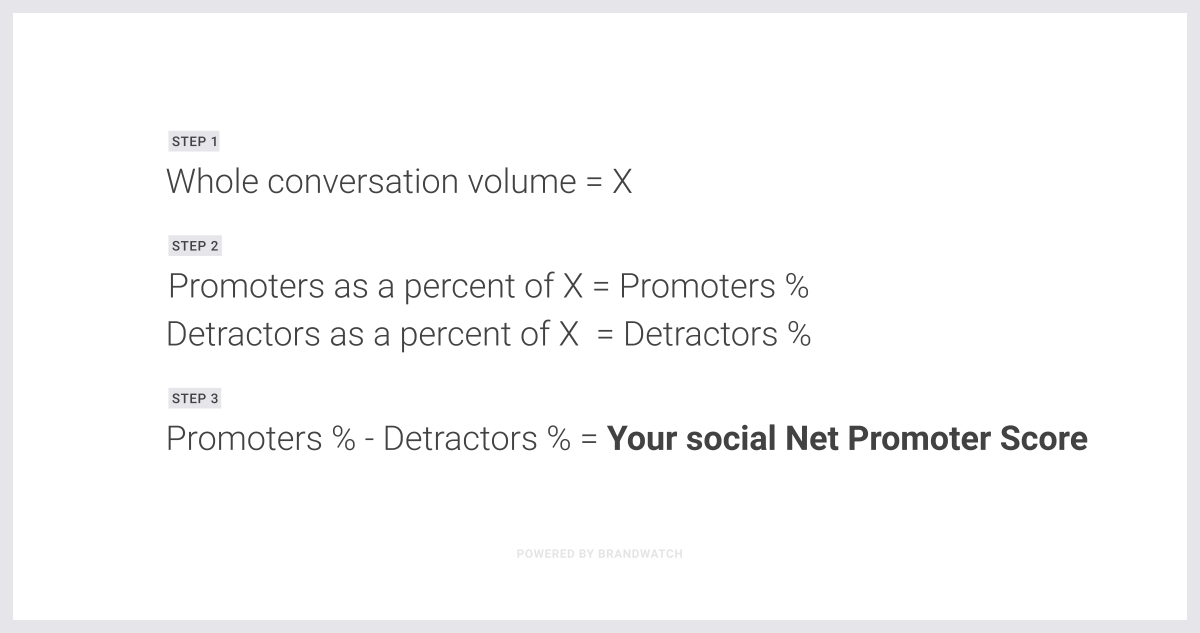
But if you want to compare your social NPS to your traditional NPS there’s a simple equation to do.
Turn your detractor and promoter numbers into percentages (out of the full conversation). Minus the detractor percentage from the promoter percentage. You have your social Net Promoter Score.
Summary
Traditional NPS is a great metric, but so much context can be added with social and the results are pretty much immediate.
A fresh take on a traditional piece of research can help brands react faster to consumer preferences and issues, to continuously track advocacy and to build a more holistic view of consumer feedback.