We looked at over 100 billion tweets over 10 years to see how online behavior has changed over time.
Brandwatch Consumer Research gives researchers access to an archive of 1.3 trillion posts, going back to 2010.
As 2020 approached, we thought we’d take a look at Twitter data from the US and the UK back to 2010 to see what had changed over time.
In this report, you’ll discover the following:
– How has online slang changed over time?
– How have the emotions we share online changed from year to year?
– What do big trends look like over the last decade? Including analysis of:
- Boybands
- Mobile games
- Influencers
- Diet
If you want to take a look at the methodology click here.
How has online slang changed over time?
The language of the internet shifts quickly, and slip-ups can be cringe-worthy.
Even when you learn the correct slang, it’s probably faded off into obscurity already.
It’s a true minefield for social media managers looking to keep their brand voice current, but we wanted to see if some slang words had more longevity than others.
Slang heavyweights over time
Let’s start with three slang heavyweights – ‘bae’, ‘lit’, and ‘stan’.
These three terms neatly demonstrate how words fall in and out of common use over time.
Bae is an endearing term (although it’s often used in jokes). ‘Lit’ is a positive term, that basically means ‘great’. ‘Stan’ is a term used to describe superfans (it originated in Eminem’s song about an obsessed fan).
Slang analysis 1
We reached peak ‘bae’ in the summer of 2014. Meanwhile, ‘lit’ came later in 2016. And ‘stan’ is just beginning to take off, reaching a peak in 2018.
Common slang: Fleeting and flowing
Next up are slang words that are mentioned slightly less.
We separated them from the top-mentioned slang terms so that their progression or regression over time is clearer.
Slang analysis 2
Longer term trends:
As you can see below, the use of ‘de’ or ‘da’ in place of ‘the’ (as in ‘in da house’, ‘you de best’) was well-used for a time but has become less popular in recent years.
Words like ‘woke’ and ‘vibes’ have enjoyed a slow upwards progression over the years, and are super popular at the moment.
Shorter term trends:
The word ‘ghosted’ (used to describe someone suddenly stopping contact with another person) has only just surfaced properly on the graph – could this be a slang word that grows or dies?
The word ‘dab’ had a brief peak in late 2015, but has fallen out of popular use since.
Slang on the up and slang on the down
Not only can words rise and fall in popularity, they can also undergo changing meanings.
Since ‘woke’ started to take off, it’s gradually come to have more and more negative connotations. You could say it’s undergoing pejoration (a linguistic term for moving from a positive to a negative meaning). Of course, whether being ‘woke’ is good or not good depends on the individual.
Meanwhile, it’s worth considering whether a term has risen or fallen in popularity because it’s ‘cool’ or because of other factors, like technology. It could be that while use of smartphones (and autocorrect) has gone up, habits like using ‘da’ or ‘de’ instead of ‘the’ have fallen.
How have the emotions we share online changed from year to year?
Let’s switch focus and look instead at emotions.
A jolly old time
Using a sampled search of tweets running back to 2010, and using Brandwatch Consumer Research’s automatic categorization of emotion-driven posts, we were able to map out how feelings like ‘joy’, ‘anger’, and ‘surprise’ had manifested on the platform over time.
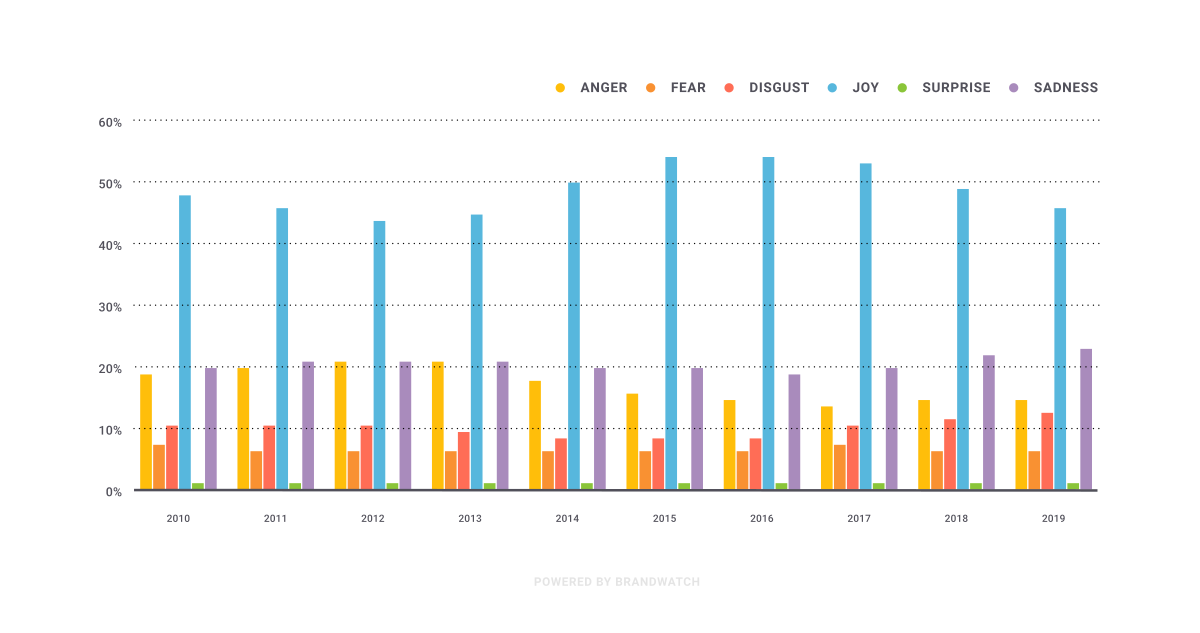
We found that:
- Joy is the overwhelming emotion, regardless of year
- Anger has gradually gone down as a % of the emotion driven conversation over time
- Sadness and disgust are on the rise in their share of emotion-focused mentions
- Fear and surprise have remained fairly constant throughout the ten years we studied
Clearly, the mood of the internet is not a constant.
What do big trends look like over the last 10 years?
We’ll switch gears again now, and look at how four huge topics and trends have changed over time.
Boybands
Anyone who’s been working in social data analysis for a while will know just how good Justin Bieber, One Direction, and BTS have been at finding their way into almost any conversation.
What we mean to say is, regardless of the topic, there’s usually going to be a strain of conversation that involves one of the above big names.
Politics? BTS have been involved in a number of global initiatives to raise awareness around important issues. Hats? Justin Bieber has lots of hats. Sandwiches? Harry Styles from One Direction ate one once and it was documented.
But how have these pop icons seen their mentions change over time?
Battle of the boybands
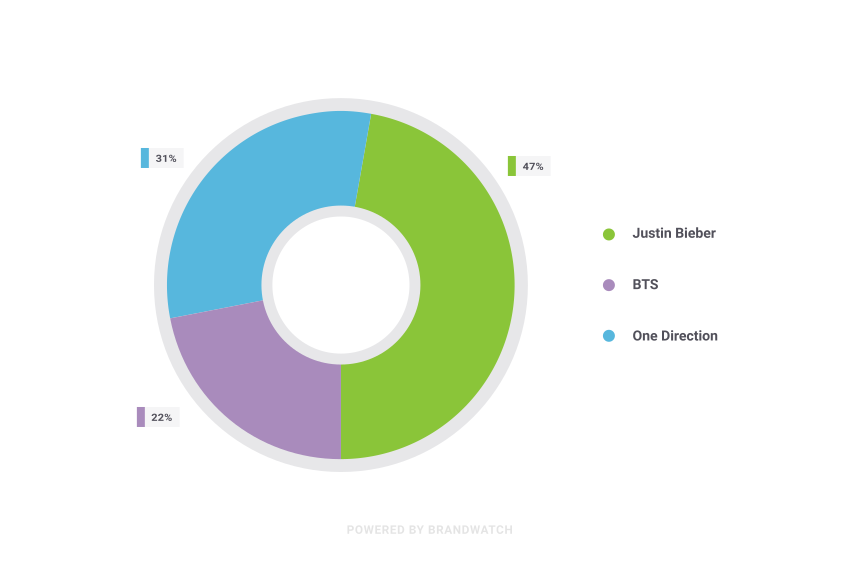
As you can see, Justin Bieber has maintained a solid presence on the platform across the years, though his mentions have fallen more recently.
One Direction hit their peak in mentions in late 2015, as they performed for the last time before their lengthy hiatus.
Meanwhile, BTS is the new boyband on the block that’s breaking the internet. The k-pop group is insanely popular online, and they appeared multiple times in our report 101 times brands went viral in 2019. They’re clearly making the most of their fame, with a number of successful big name brand partnerships already in their portfolio.
While BTS are definitely making big names for themselves, they’re yet to usurp Bieber or One Direction in total volume of mentions. That said, it only seems like a matter of time.
Mobile games
Mobile gaming has come on in leaps and bounds over the last 10 years, with the likes of Candy Crush and Angry Birds leading the way towards the enormous titles we see today, like Fortnite.
The below chart demonstrates the many kinds of life cycles mobile games can have.
Mobile gaming: Quick uptake vs sustained popularity
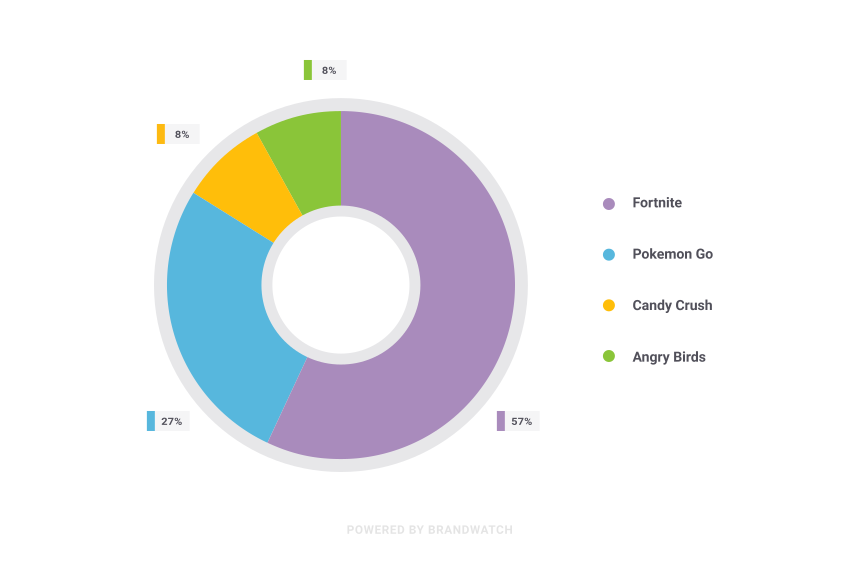
As you can see above, Pokémon Go was able to create the biggest splash in online interest when it launched in the summer of 2016. With it’s fresh format that got people to explore their local neighborhoods, people went mad for the game.
The hype, however, didn’t last forever. While it continues to be played by loyal fans, it’s never been able to replicate launch numbers in terms of conversation.
Then came Fortnite, a game that’s got millions of players hooked worldwide. The launch of Fortnite didn’t get the numbers Pokémon Go achieved, but they’ve continued to build over time. The game is wildly popular today and, despite not having that initial big splash, they’ve actually maintained hype and eclipsed the other games we studied in terms of share of voice (see below).
There’s definitely something to say here about the life cycle of a customer base when it comes to new games – there are many ways it can play out.
Influencers
Another trend that comes and goes is people.
Who’s out? Who’s in? Who’s loved? Who’s in trouble?
We searched for mentions of some of the internet’s biggest names over the last 10 years to see how the data looked.
Kim Kardashian, it can safely be said, has been consistently ‘in’ for a decade now.
Influencers and Infamy
Kylie and Kendall Jenner are also pretty consistent, with Kylie making big waves in social conversation more recently.
The biggest spike in the data belongs to Logan Paul. This wasn’t for a good reason – the YouTuber earned a huge amount of criticism after posting a video of himself that included footage of the body of a man who’d died by suicide.
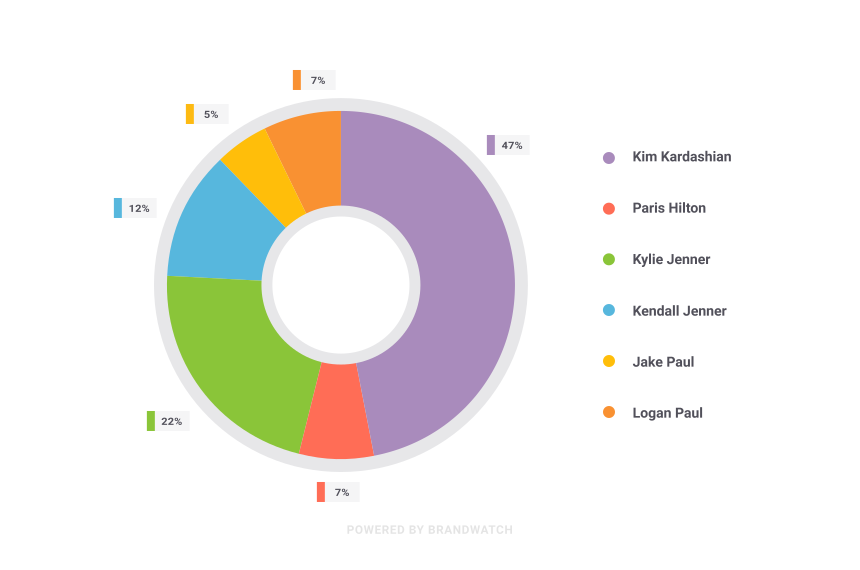
While Logan Paul may have the biggest spike, he comes fifth when it comes to total influencer mentions in the ten year period. He was pipped to forth place by long-established influencer Paris Hilton.
Diet
Finally, we’ll be looking at diet trends – specifically around people who are forgoing animal products.
As you can see from the chart below, vegetarianism has maintained a steady amount of online conversation over the last ten years.
Veganism vs Vegetarianism conversation
More recently, though, veganism has had a massive rise in popularity.
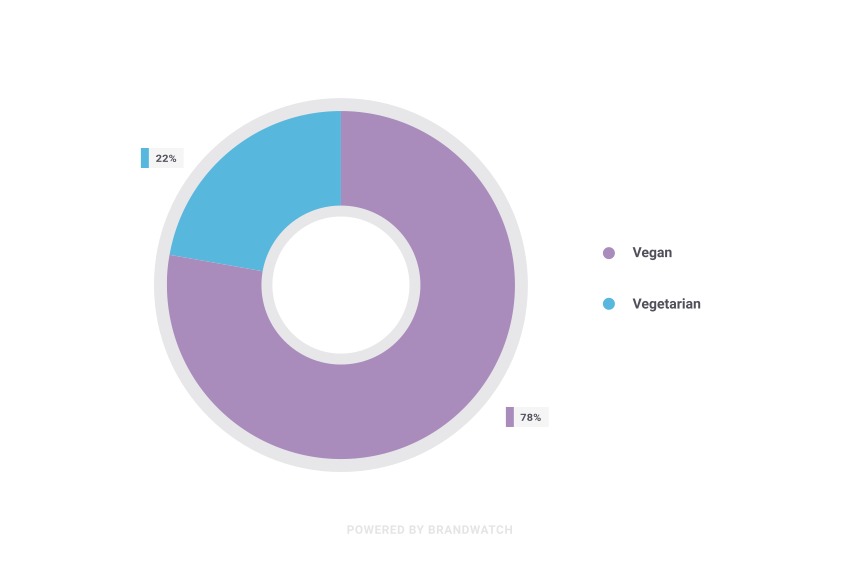
It’s consistently been mentioned more than vegetarianism, has more than three quarters of the share of voice between the two conversations, and shows no sign of slowing down.
Summary
So, what have we learned from examining key trends within a decade of social data? Among a few things, the key takeaways are this:
- Slang words come and go – some enjoy a long time in the wider social lexicon, while others have only a fleeting lifespan. And, during those lifetimes, they can take on different meanings.
- It goes without saying that the internet is always changing, but when we look beyond individual trends we can also see large-scale changes like overall online emotion and mood.
- Much like words, trends like games and music have lots of different shapes. Some are in the spotlight for a while, while others are gone as fast as they appear. Long-lasting, meaningful campaigns and reputations aren’t always built from a single big bang.
Methodology
For this research, we searched for US and UK tweets back to 2010 using Brandwatch Consumer Research. This gave us access to a large sample of all those tweets, in which to search for trends.
To look at emotion, we relied on Consumer Research’s automatic sentiment categorization to see how they changed over the years.
To look at the slang words and big trends, we used keyword searches to look at the volumes on Twitter back to 2010.