Businesses today have easy access to customer and business data on a scale that would have been unimaginable a decade or two ago.
But with such large volumes of data, especially when it is unstructured or scattered around the organization, it can be overwhelming to try and make sense of it all. Modern technology such as artificial intelligence and text analysis can help with this, but it’s still critical to know what questions to ask of your data and how to ask them.
In this guide, we’ll introduce Brandwatch’s new Data Uploads and then take a look at five ways to explore your first party data and the hidden insights you can find by digging a little deeper.
Introducing Brandwatch’s new Data Uploads
Brandwatch customers can now analyze first party data alongside social data, using all of Brandwatch’s world-class AI and customizable reporting, to build a complete picture of their customers and businesses.
MyHealthTeams discovered valuable insights by uploading their own data.

“The key thing we were looking for was a new approach to easily uncover actionable insights and quantify sentiment among the thousands of conversations happening daily on our social network. By analyzing the data that we uploaded into the platform, we were able to readily discover unexpected trends, data-backed insights, and even influencers. The visualizations are amazing. They’re easy to generate, easy to understand and, importantly, make it easy to discover new ‘a-has’ and areas for further exploration. And they are a succinct way of summarizing important trends.”
Here are five more examples of how this technology could benefit your business.
5 ways to discover hidden insights in your first party data
1. Get a bird’s eye view of all your customer touch points
One of the most basic but important steps for making sense of your data is to get it all in the same place so you can analyze the full picture. This is easier said than done for a number of reasons:
- The data lives on various different platforms, usually where it was originally collected
- This data can get siloed, rarely accessed by teams other than the one that owns it
- Once it has been used and reported on for its primary purpose, the data can tend to be forgotten about
For example, the support team has a specific focus when analyzing tickets. They primarily need to understand how many issues get resolved and how quickly. The product team will look at reviews with a focus on which features need improvement.
But there are insights to be gleaned from these datasets for different teams across the organization.
The marketing and web teams, for example, should know if there are issues repeatedly coming up in support tickets where customers have been sold an inappropriate product. Then they can provide better information for prospective buyers.
The social media and content teams could take inspiration from what customers say they love the most about products in reviews so they can create and promote case studies around these aspects.
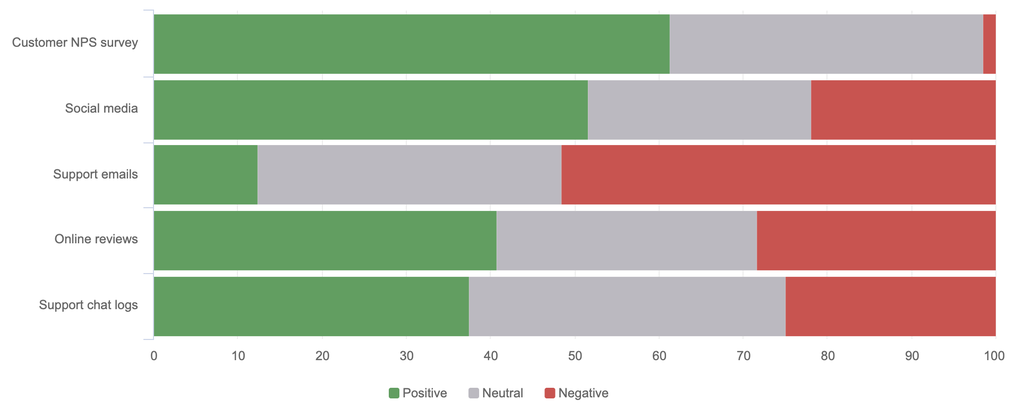
With Brandwatch Consumer Research you can upload any text-based first party data you have access to and analyze it alongside social and other online data about your brand or products. This includes data such as:
- Support tickets
- Call log transcripts
- Chat logs
- Online and offline survey responses
- Customer reviews
- Community forums
Sentiment and topic analysis tools allow you to focus on the most positive or negative interactions your customers are having, whether they are taking place on phone calls, in emails to support, or on social media.
2. Understand the drivers of sentiment
Sentiment and emotion analysis is a great starting point for segmenting customer feedback, especially when you have a large amount of data. But if you really want to dig deep into specific areas, you need to approach sentiment by identifying and studying what’s driving positive or negative customer experiences.
Machine learning tools, like Brandwatch’s Custom Classifiers, can help identify drivers of sentiment like this even when the data is unstructured. By training an algorithm with examples, you can teach it to identify negative or positive comments in context (even if the language used does not contain obvious keyword signals). This can be much more practical than just sorting things by positive or negative sentiment, and it will give you a more nuanced understanding of the feedback your customers are giving you.
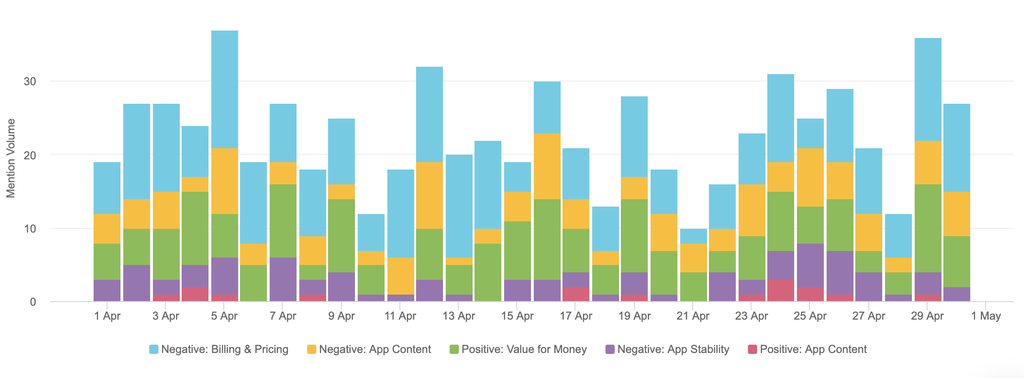
For example, in a set of customer reviews you might train a Brandwatch Custom Classifier to identify negative reviews that are complaining about:
- The quality of your product
- The delivery process
- The price
- The product description, or suitability of the product for what the customer bought it for
While each of these is ‘negative’, they are actually very different pieces of information and each would require a very different response – possibly even from multiple different teams.
3. Monitor shifting trends
Once you have a segmented overview of your customer data you can start to monitor key topics over time.
This can help you to quantify the impact your initiatives are having on customer experience.
- Has a change in training reduced support tickets around a particular product or service?
- Has a new feature release increased positive feedback around usability?
It can also help you understand seasonal changes:
- Are there more customer issues with deliveries in winter?
- Do your customers have service issues more often at certain times, or days of the week?
4. Compare how customers talk in private and in public
Customer data is a trove of insights in itself, but combining it with consumer opinion from social media can open up even more valuable discoveries. Analyzing these data sets side by side can reveal hidden issues in the customer journey and add a nuanced understanding of how different cohorts of consumers talk about your products in private and in public.
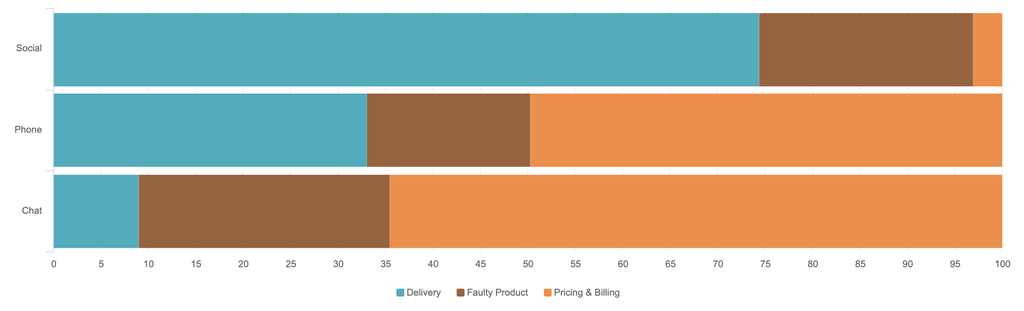
Customers might go to social media to rave or complain about different things than they would in private messages with a company. Discovering issues that are not coming up in support tickets but are shared online is a good way to identify problems with your support system. It might suggest:
- Customers aren’t aware they can get help, or they don’t know how to access it
- They’ve become exasperated with a lack of solutions
- Or worse, they’ve had no response at all
Either way, there are some critical improvements to be made.
You can also build a more in-depth understanding of different groups of customers with different data sources.
5. Validate social sources using customer data
Confirming correlations between online and offline data can be as useful as identifying the differences. Social data contains a wealth of information but it is unstructured and can be extremely messy, making it difficult to separate trustworthy consumer intelligence from background noise. By comparing online and offline data you can identify correlations that help you justify conclusions drawn from social sources.
The key benefit to this is building confidence around your analysis. If you’re able to better trust insights derived from social conversations, the good news is that there’s a lot more of it out there and it’s cheaper and more readily available than many traditional sources of consumer and market research data.
Conclusion
There’s a lot more than meets the eye when it comes to analyzing your first party data, if you know how to look for it.
And it’s not just your own customer or business data you can study in Brandwatch. You can technically upload any open source datasets you like.*
With Brandwatch’s world-leading AI text analysis and charting capabilities you could do anything from dissecting the language used in political speeches to comparing the lines spoken by different genders in Hollywood movies! If you have the data, you can plug it into Brandwatch.
*Note: Brandwatch has very strong data privacy requirements. Please note that you must have a legal basis for processing any data you upload. See our Data Privacy FAQs for more information.