logo

Covid-19 Daily Bulletin 06/04: Savings, Sentiment, and Celebrities

Find out why mast towers are being attacked and why people are turning to savings accounts.

Welcome back as we start a new week. Today we’re looking at how we’re doing with working from home, mobile towers being burnt down, and saving money in a pandemic.

Want these emails straight to your own inbox? Click the button below.

Subscribe

Saving money for a non-quarantined day

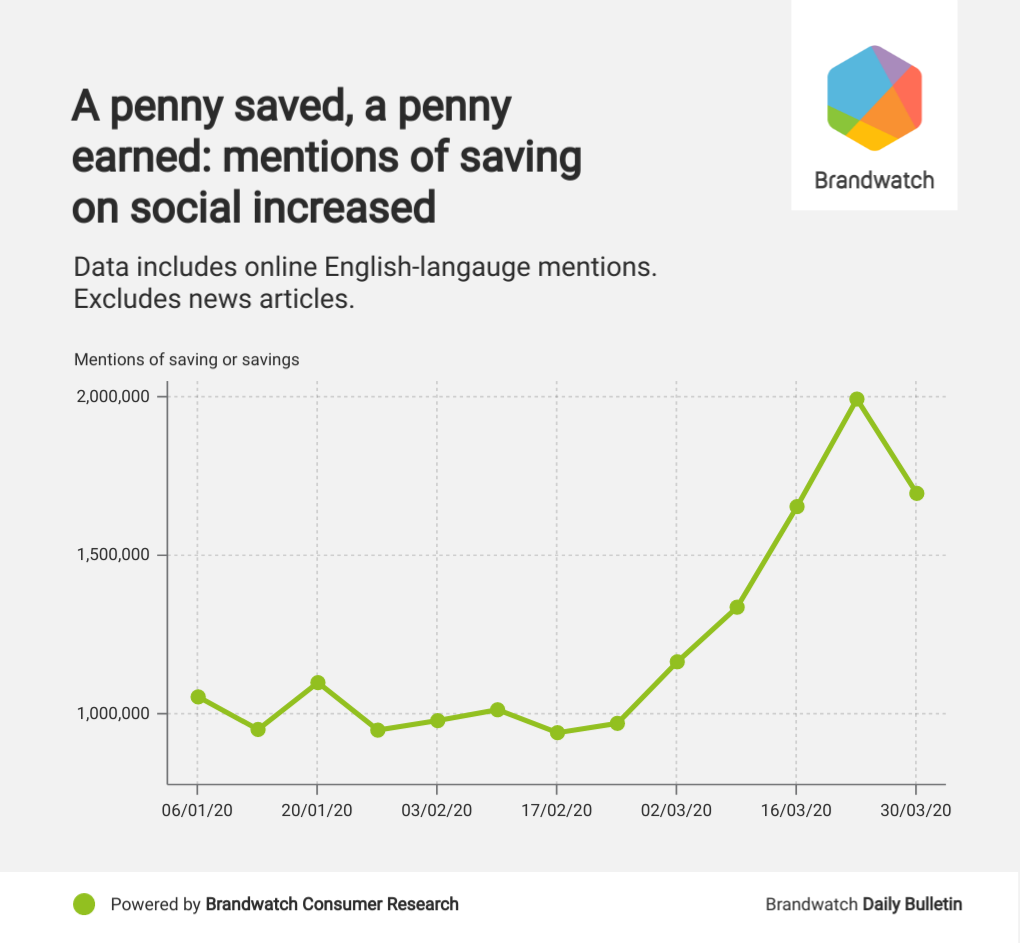
In January, the period of new year’s resolutions, there were 3 million people talking about saving on social media (in English). In March, during this pandemic, there were 5 million.

In a period of redundancies, lay offs, and furloughs, people are talking about saving to make up for a shortfall in pay (895k mentions) and bracing themselves for job losses (894k mentions).

Unsurprisingly, future extravagant purchases weren’t mentioned in great volume within savings conversations. Those talking about saving their money just want to make sure they’ll be OK in the fallout of the virus.

We found that ‘family’ (with 1m mentions) and ‘children’ (with 593k) were strong reasons for saving.

There were also 55k mentions of people saving money because they couldn’t go to stores and spend it. These were overwhelmingly positive as people tried to find a silver lining in the pandemic cloud.

But, for all the planners, there are plenty of people who feel they can’t save or don’t know how.

It’s clear, and to be expected, that consumers are worried about their financial situations at this time. This is especially true for those that are unable to save at all. For the time being, with lockdowns in place, people will be looking to save as much as they can while it’s harder to spend.

Whether these saving habits continue in the long run, after lockdowns begin to relax, remains to be seen.

Get more consumer finance insights with our report on the US and a cashless future.

Are we adjusting to working from home?

Previously, we looked at how different countries were coping with working from home. We’ve since expanded our search to include more languages and countries to get a wider view of the topic.

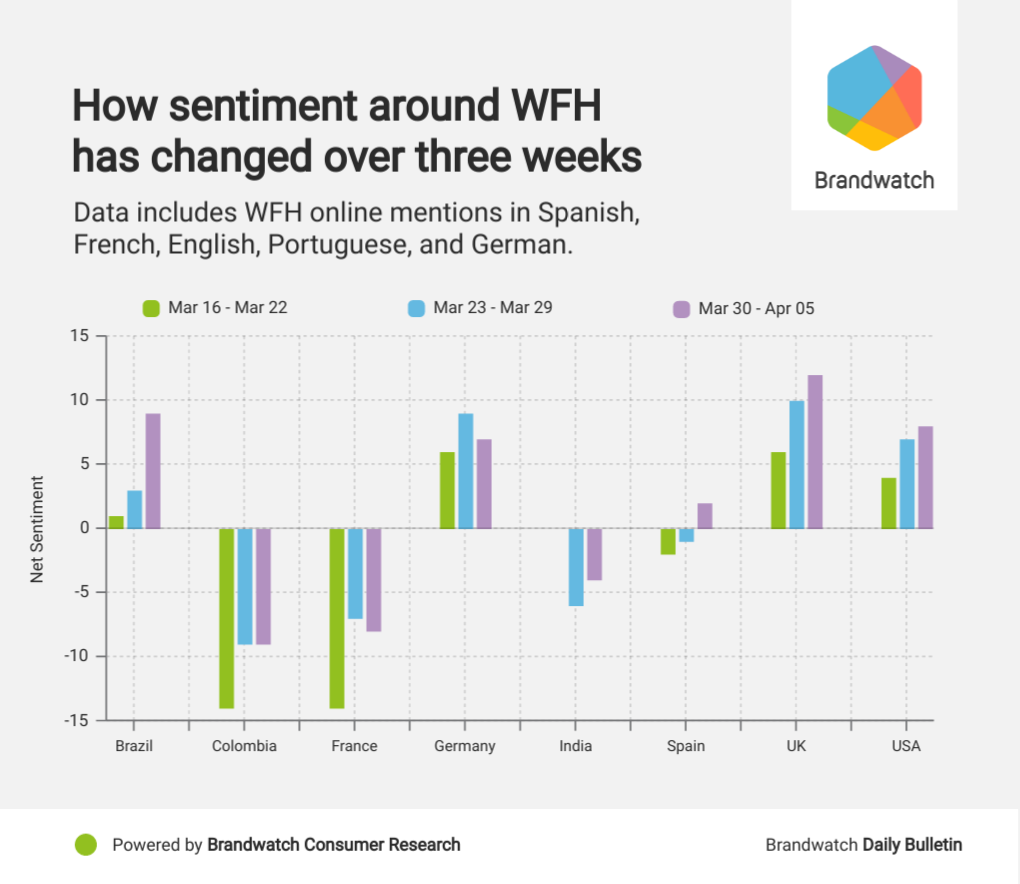
Picking out the eight countries talking about WFH the most in March, we looked at the net sentiment of their posts, and how this has changed from week to week.

Last time we saw that France stood out with a much higher percentage of negative mentions compared to everyone else. Well, they’ve now got a friend in Colombia who dislikes WFH just as much.

We can also start to see a trend. In all countries, sentiment has become more positive since the first week, although some saw a decline from week 2 to week 3. On average, net sentiment is up from -0.2 in week 1, to 3.2 in week 3. It’s worth noting that countries have been in different stages of lockdowns during this time.

And, when we looked closer at the data, we found far more drops in negative mentions than rises in positive ones.The naysayers, it seems, are either getting tired of complaining or finding their working-from-home feet.

Burning towers: Celebs stoke the 5G coronavirus theory flames

During Fake News Week last week, as we looked at a range of conspiracy theories, a new one started to rear its head. According to some, 5G was to blame for the spread of Covid-19.

Using our Consumer Research platform, we wanted to know what compelled members of the public to believe it and share it, and how it led to 5G masts being vandalized and Mobile UK staff being abused.

The conversation about the conspiracy last week skyrocketed by 3301%, with 112k unique authors talking about it. This was very much influenced by celebrities sharing this content with a seal of approval, and tabloids reporting on those celebrities.

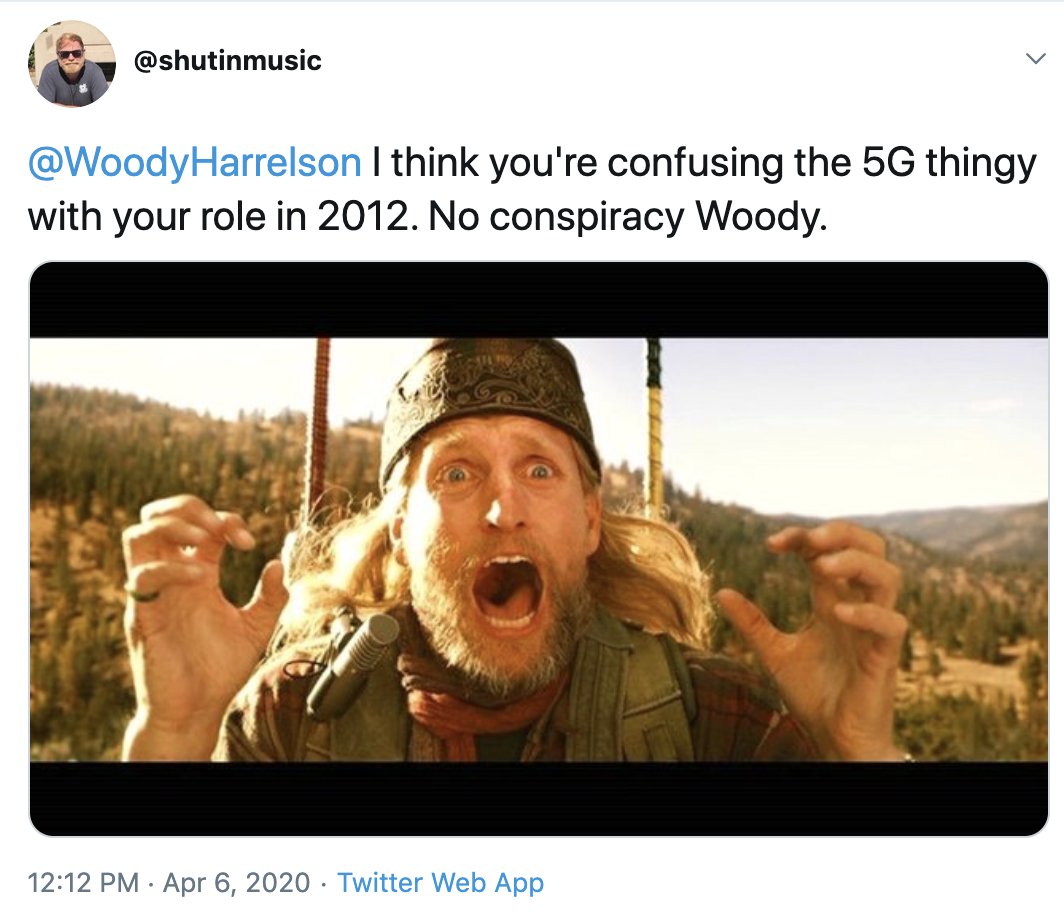
Cheers and Hunger Games star, Woody Harrelson, and former Dancing on Ice judge Jason Gardiner, were just a few celebs to name that spread the theory. When Harrelson backed it, mentions of the theory increased 80% on Friday.

In terms of media reinforcing the idea, from March 1 to April 5, there were 2.8k English-language articles published in online media that referenced the 5G theory. Together, they received 3.7m social engagements and shares.

The theory saw a lot of attention on YouTube and Facebook. For the latter, this was heavily driven by coverage in the UK press. Both the Daily Mail and The Sun covered the story, getting 403k and 132k Facebook shares respectively.

This is an important lesson for any brands involved in 5G, whether they’re setting up masts or offering it as a service. Conspiracy theories can be easy to brush off, but once the ball gets rolling, people and infrastructure can end up in danger.

You can learn more about how mis- and disinformation spreads in our Fake News 2020 report.

Get more in-depth data

Every week we put out a wide-ranging Covid-19 report on consumer trends and industry changes from around the world.

Head here to find out more and get signed up.

Thanks for reading

If you enjoyed today’s bulletin, here’s the web version of it for easy sharing. If you were forwarded this email and want to get it yourself, subscribe here.

Stay safe,

Brandwatch Response Team

logo
Digital Consumer Intelligence

Runtime Collective Limited (trading as Brandwatch). English company number 3898053
New York | Boston | Chicago | Austin | Toronto | Brighton | London | Copenhagen | Berlin | Stuttgart | Frankfurt | Paris | Madrid | Budapest | Sofia | Chennai | Singapore | Sydney | Melbourne

Privacy Policy

Update subscription preferences

Unsubscribe

We value your privacy

We use cookies and similar technologies to personalize ads and content (including by sharing data with Google), to measure site performance, and to improve your experience. Learn more in our cookie policy

Privacy & Safety • Terms of Service

No, take me to settings
Yes, I agree
More info.

By using our site you agree to our use of cookies —