logo

Covid-19 Daily Bulletin 15/05: Relationship Problems and Future Spending

Family quibbles wait for no virus.

Another week nearly done, we’re back today with a very forward-looking section on holiday spending, and another on our social relationships.

Don’t forget to subscribe to get this bulletins straight to your inbox.

SUBSCRIBE

Looking ahead to the holidays

Is it ever too early to look forward to the holidays? Probably. But when times are this hard, we all need a bit of hopeful thinking.

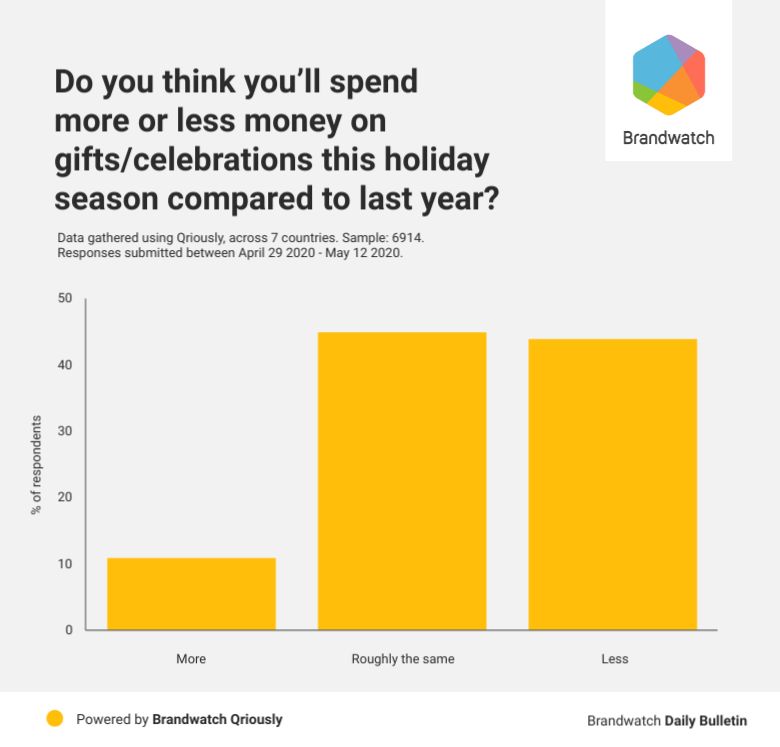
In our most recent Qriously survey, we asked 6,914 consumers across Australia, France, Germany, Singapore, Spain, the UK, and the US about how they’re thinking about the holidays at the end of 2020, via their smartphones and tablets.

Specifically, do they think they’ll be spending more, less, or roughly the same?

For most, it’ll be the same or less, with 45% and 44% of the responses respectively. It’s a pretty bleak picture, considering the holidays are a long way off yet.

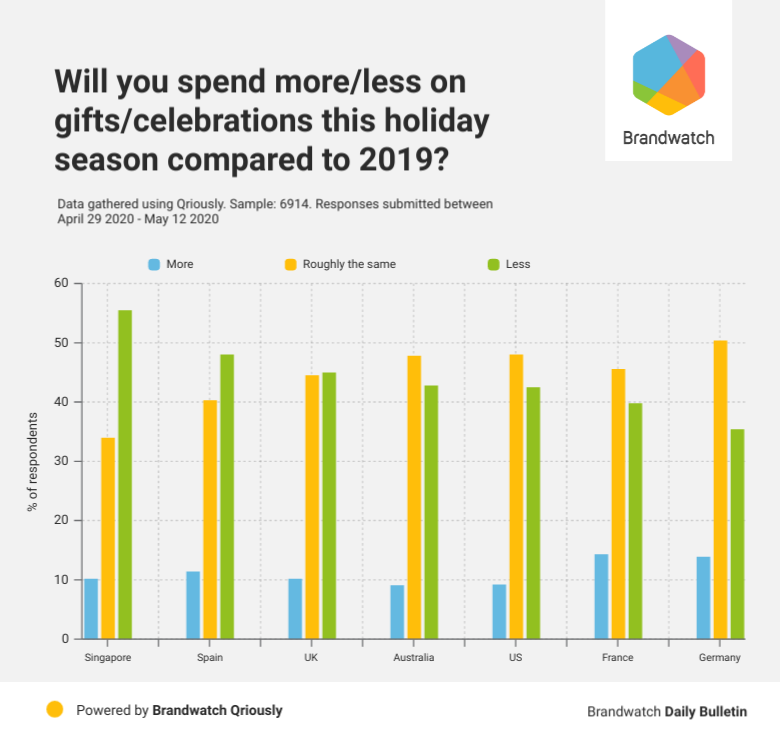
Is the pessimism universal? Breaking the data down by country, there are definitely different takes.

Germany and France appear to have the most optimistic citizens of the countries we studied. They are most likely to say they think they’ll spend more, but the option is still very much in the minority. In the same survey we also asked respondents if they had saved more money in the bank than usual since the outbreak of Covid-19. Curiously, those in Germany and France were least likely to say they had.

Meanwhile, those in Singapore, Spain, and the UK were most likely to say they’ll be spending less in the holiday season this year. These countries also had the least people selecting ‘Roughly the same’ as an option.

These stats don’t tell the future. What they do show is confidence in the future, from consumers’ current standpoint. For most, it looks to be an austere year ahead.

Relationships put to the test

We often talk about the economic impact of Covid-19, but it’s also having a devastating effect on our social lives. And this isn’t just about missing having fun – socializing is important for our mental health, too.

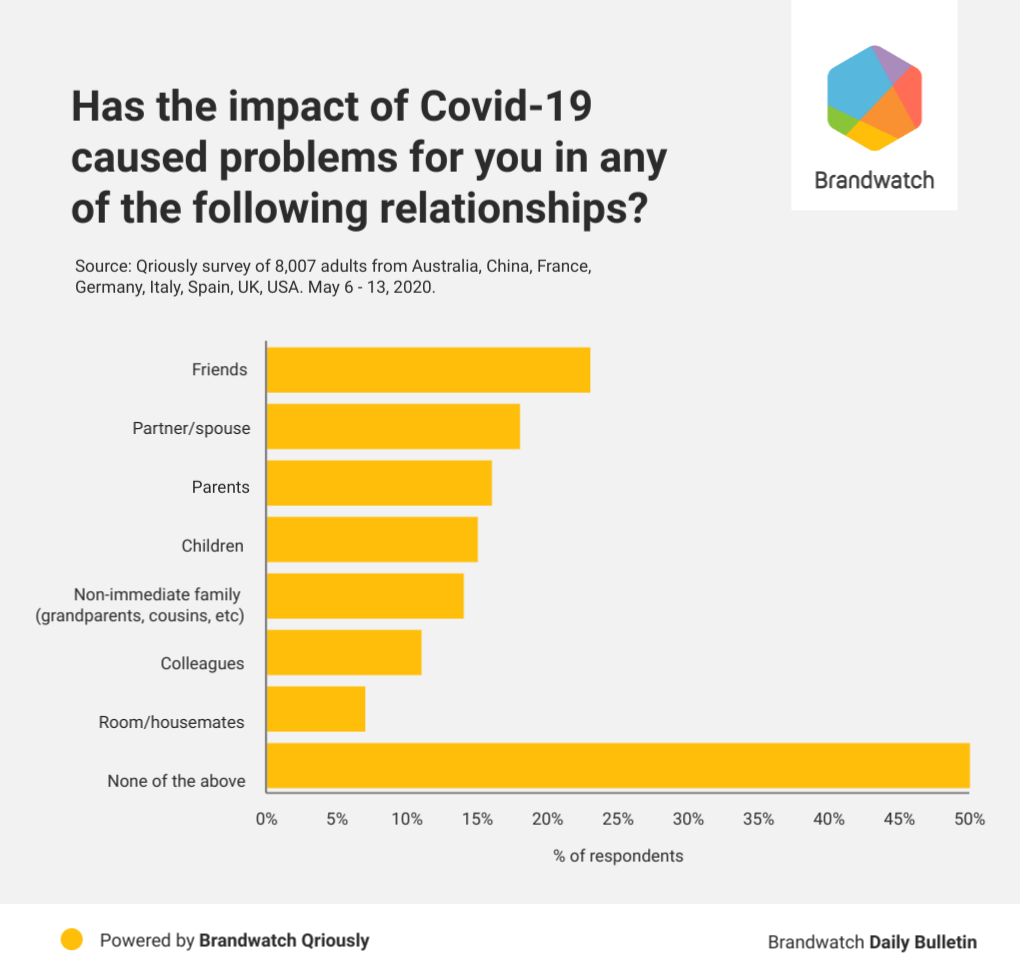
Using Qriously, we wanted to get a better idea of how people’s relationships with their friends and family were being affected. Through their smartphones and tablets, we surveyed 8,007 adults from Australia, China, France, Germany, Italy, Spain, the UK, and USA on the subject.

Unsurprisingly, a lot of people reported relationship problems, with friendships appearing to be the most troublesome (23% of people selected ‘Friends’). That said, a lucky 50% said they’d had no issue with any of the relationships we listed.

Under lockdown, many aren’t able to see friends face-to-face, which is always tough. But people are also reporting issues with those they’re likely living with, such as partners and children. This means we’re not only facing problems because of a lack of interaction – we’re also having trouble with too much of it.

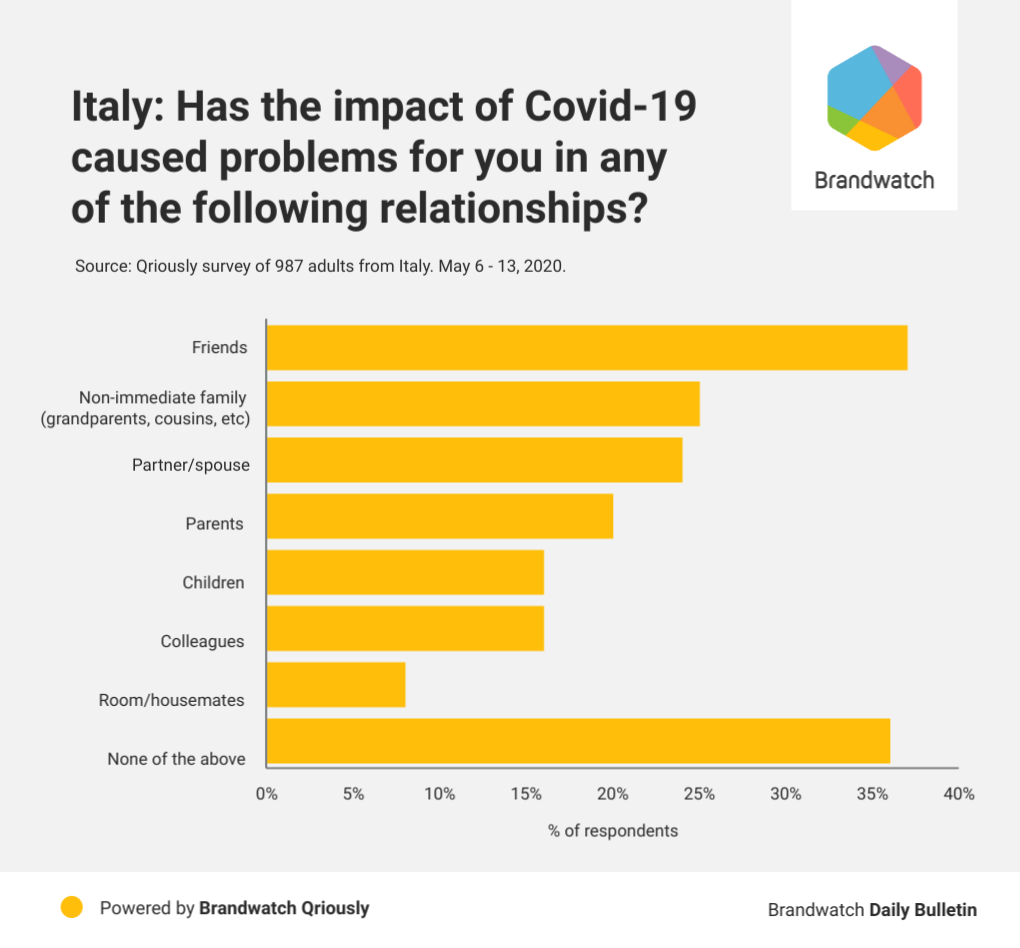
Looking at a country level, all but one reported numbers that were very similar to the average for each option.

It was only Italy that stood out from the pack.

Most notable is the number of people saying they’d had no problems with the people listed – in Italy it’s just 36%, compared to the average of 50%. That could equate to a lot of fallings out and bad blood. For a country so heavily hit by Covid-19, that people are stressed and possibly taking it out on each other isn’t much of a surprise.

But we can also see another difference Italy has from other countries. They reported much higher numbers of problems with non-immediate family members (25% compared to the 14% average). This either means that Italians are closer than those in other countries to their grandparents and cousins, or find it easier to fall out with them. We won’t make a claim either way.

We can get some insight on relationships in Italy from another question we asked, too.

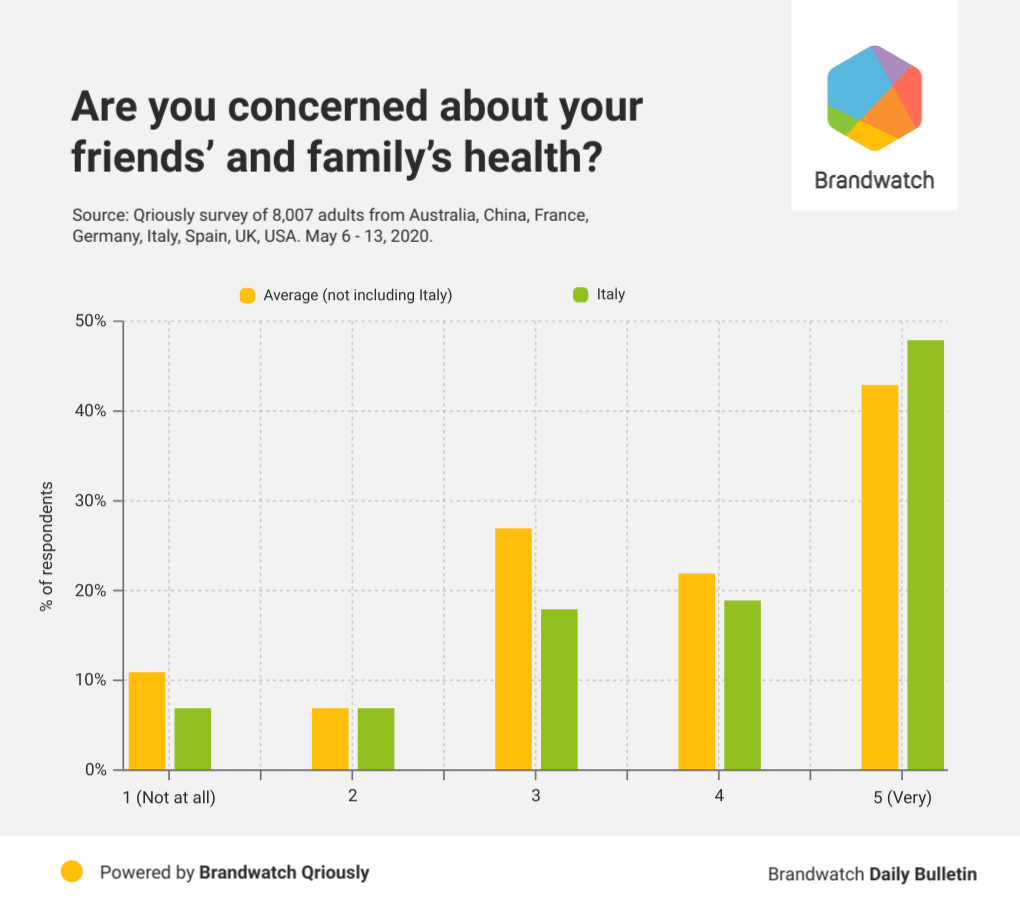
Italians are more likely to be very worried about the health of their friends and families, with 48% of them choosing this option compared to the 43% average. (Though obviously both are high figures and are taking a mental toll on people). While there may be more friction in relationships in Italy, there’s no shortage of care.

Having said all that, we can end on a positive note.

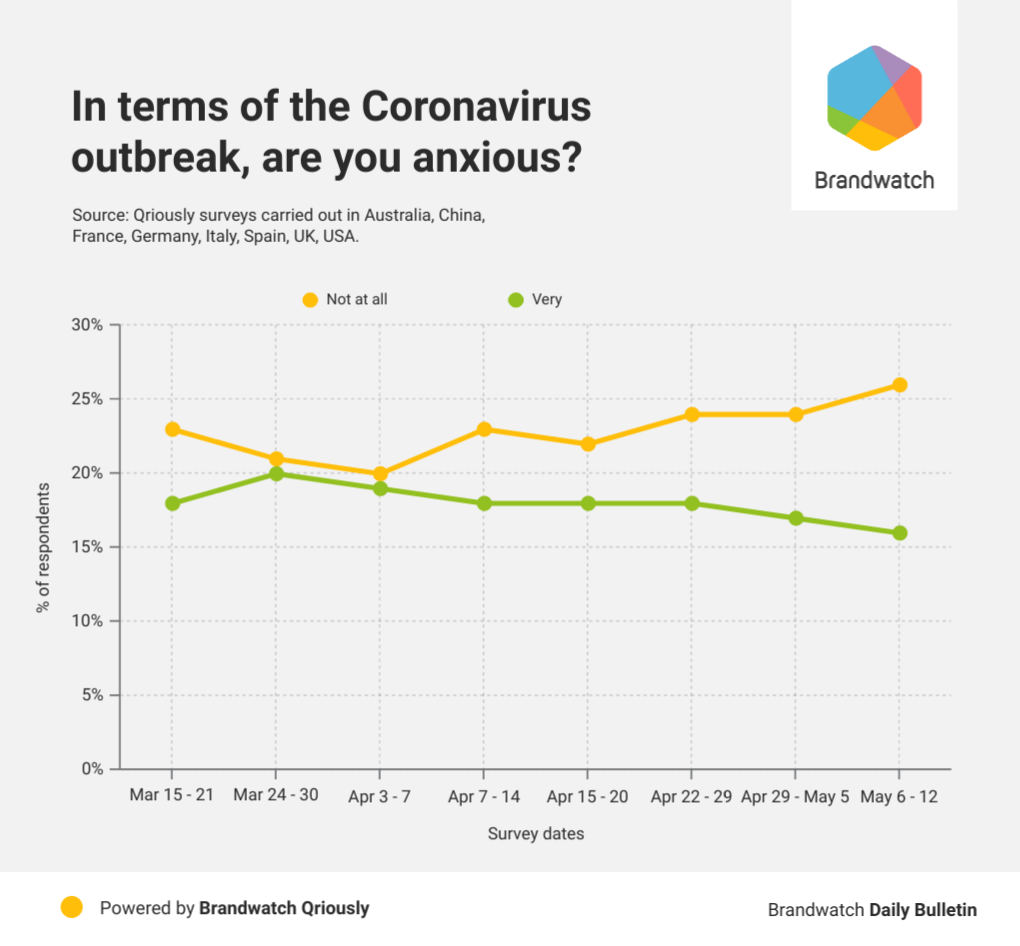
The number of people saying they’re very anxious is falling, and the number of those saying they’re not anxious at all is climbing.

After weeks and weeks of lockdown, this is encouraging. As we noted, a lack of socialization is not good for mental health, while job worries and being stuck indoors can compound the negativity.

Considering all of this, seeing anxiety levels falling is a sign people are adjusting and beginning to mentally ride out the storm. We hope this trend continues.

Get more in-depth data

Want more analysis? Our weekly report will be right up your street.

Head here to find out more and get signed up.

Thanks for reading

We hope you enjoy the weekend. And if you want to get these bulletins yourself, subscribe now.

Stay safe,

Brandwatch Response Team

logo
Digital Consumer Intelligence

Runtime Collective Limited (trading as Brandwatch). English company number 3898053
New York | Boston | Chicago | Austin | Toronto | Brighton | London | Copenhagen | Berlin | Stuttgart | Frankfurt | Paris | Madrid | Budapest | Sofia | Chennai | Singapore | Sydney | Melbourne

Privacy Policy

Update subscription preferences

Unsubscribe

We value your privacy

We use cookies and similar technologies to personalize ads and content (including by sharing data with Google), to measure site performance, and to improve your experience. Learn more in our cookie policy

Privacy & Safety • Terms of Service

No, take me to settings
Yes, I agree
More info.

By using our site you agree to our use of cookies —