US Election Bulletin 09/23: Latest Poll Data and Finding Consensus

Can Americans agree on anything?

Welcome to our fourth US presidential election bulletin.

Our latest poll results arrive as the death of Supreme Court Justice Ruth Bader Ginsburg dominates the headlines. We’ll have more on what people want in regards to the Supreme Court next week.

Today, along with our usual poll results, we’re looking at how Americans view climate change, federal funding for veterans and medical workers, and companies taking political stances.

Don’t want to miss next week’s poll? Click subscribe below.

SUBSCRIBE

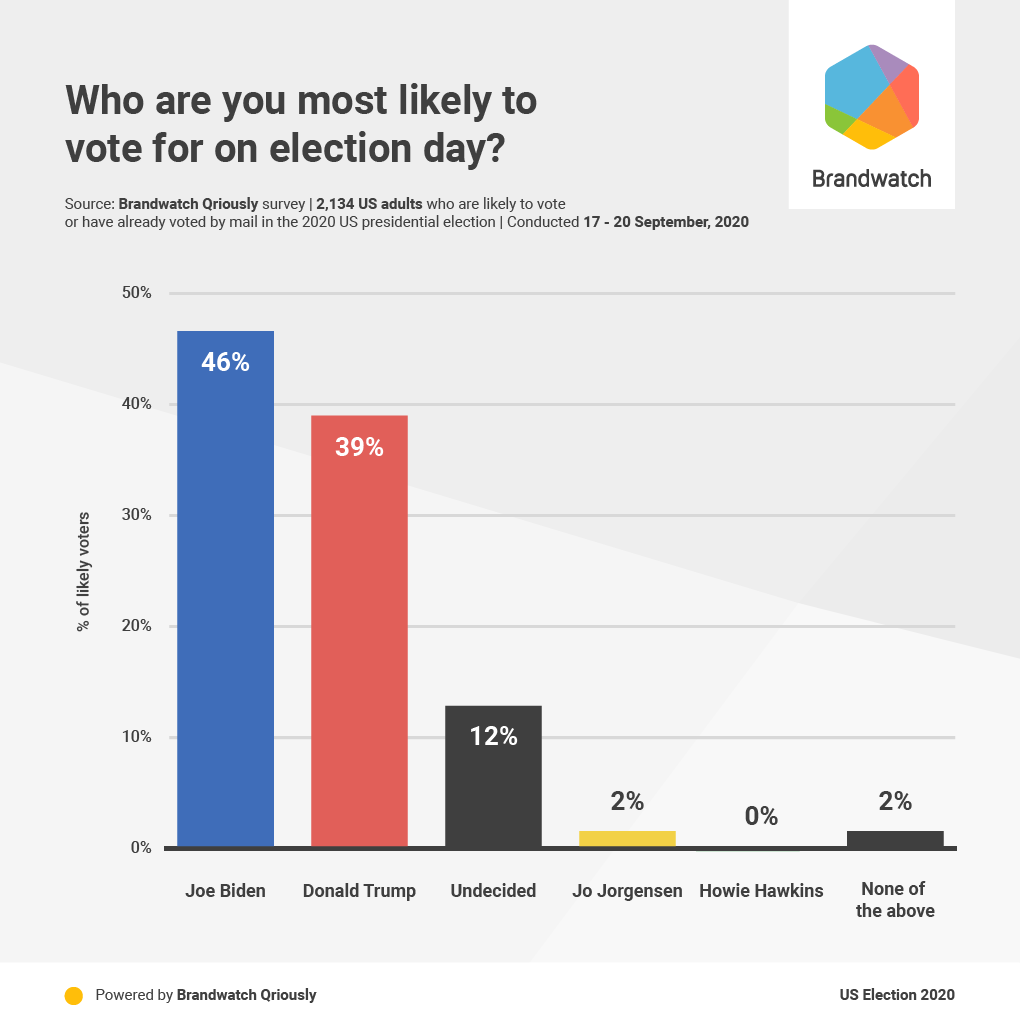
The results: Joe Biden: 46%, Donald Trump: 39%, undecided: 12%

Using Brandwatch Qriously, we surveyed 3,309 American adults from September 17 to September 20 2020. The above results come from the 2,134 respondents who say they are likely to vote or have already voted by mail in November’s election. (After weighting, this is 54% of the overall sample).

Biden leads with 46.4% of likely voters supporting him against Trump’s 38.6%, a margin of +7.8. A further 12% of voters say they’re undecided, meaning both candidates still have a lot of people left that they can try to bring onboard.

We should note here that we changed our methodology slightly this week to improve the quality of our results. This means we cannot directly compare our latest results with our previous ones. For more details on what changed and why, please read our methodology section at the end of this email.

As we do every week, we’re releasing our polling data along with our bulletins. If you want to have a dig around or do your own analysis, you can find our tables and the raw data here.

Let’s take a closer look at our headline results.

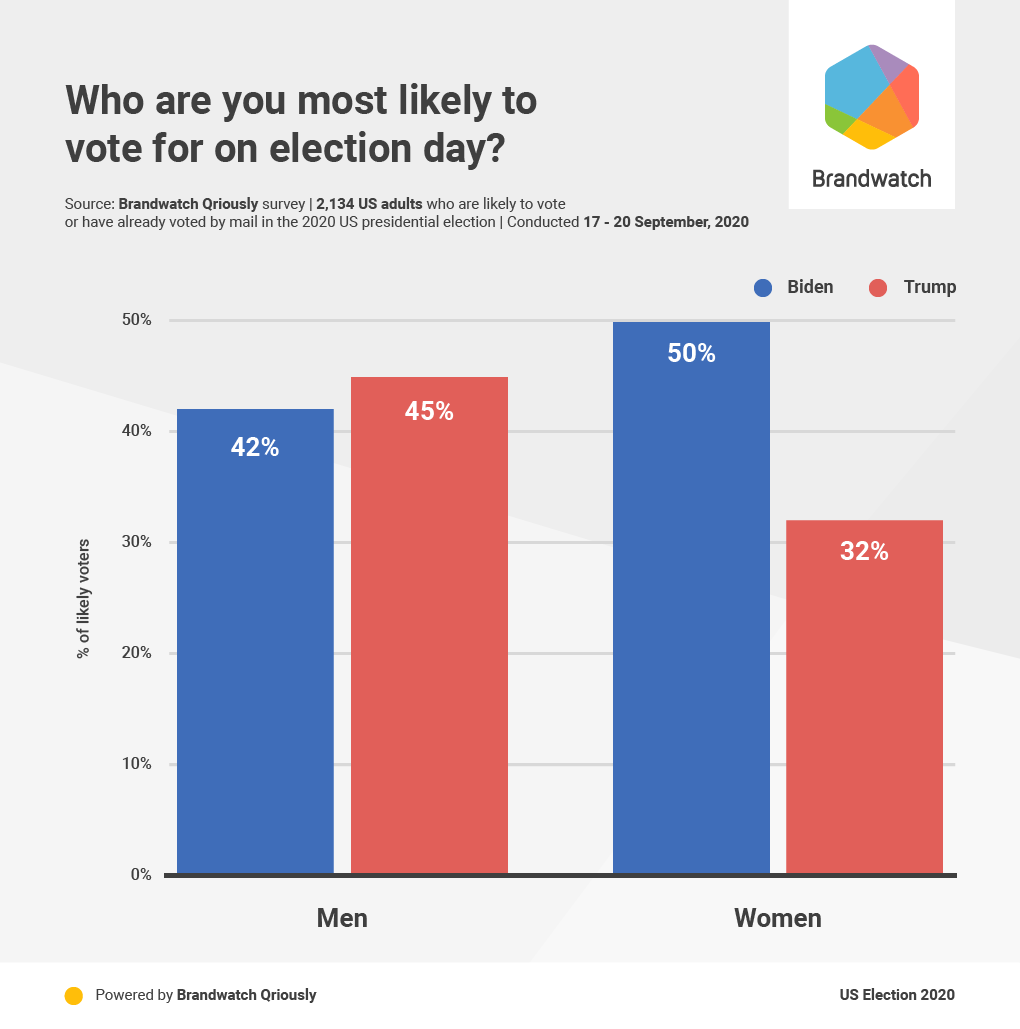
Breaking the results down by gender, we found some key differences in voting intent.

For men, Biden and Trump are practically neck and neck. For women, it’s a different story – Biden holds a commanding +18 lead. Biden will need to put the work in to keep women onside if he wants to win the presidency.

Views on climate change

Devastating fires raging in the US have focused people’s attention on climate change once again.

Using Brandwatch Consumer Research, we found that 79k unique authors mentioned climate change in the week commencing September 7. That increased to 88k the following week, making it the 4th biggest week for climate change discussion we’ve ever seen (we can see as far back as 2010).

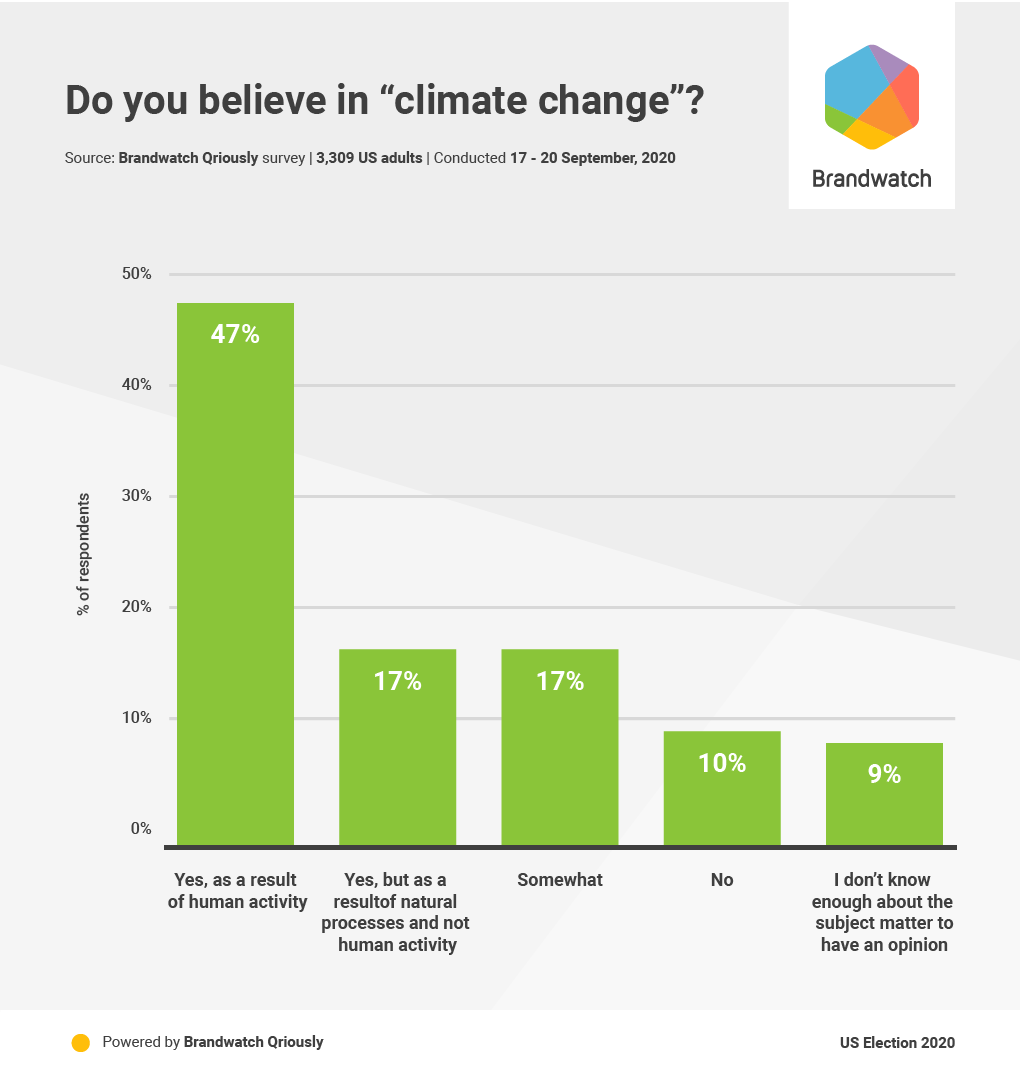
With so much attention focused on climate change and its fallout, we decided to ask the American people for their views and beliefs around the topic. For the purposes of this survey, we defined climate change as “the raising of the Earth’s average temperature.”

The majority of American adults believe in climate change (64%), although that falls to 47% for those who believe it’s caused by human activity. 10% say they don’t believe in it at all. People who want to see immediate action taken to combat climate change may well feel disheartened by these results.

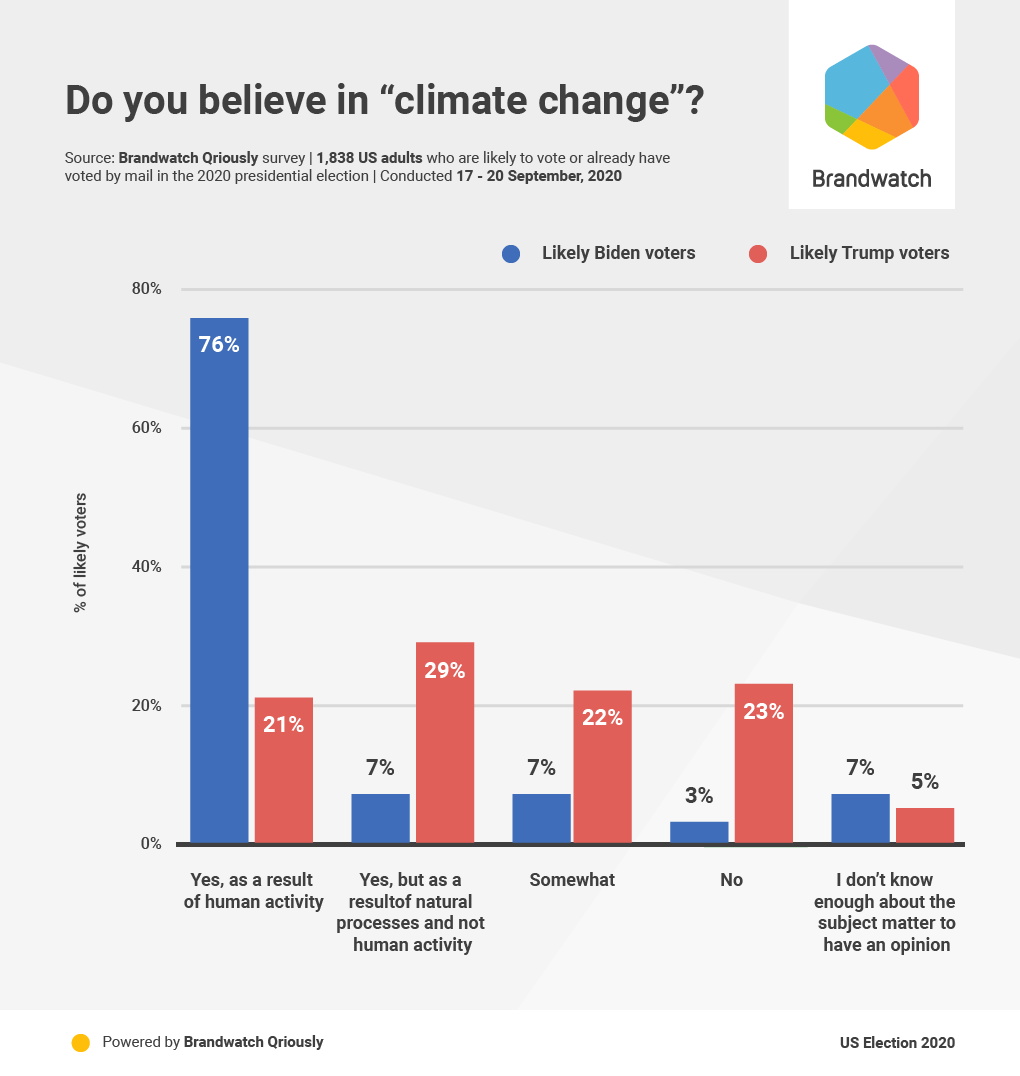
Now let’s take a look at the same question, breaking the results down by voting intention.

It’s clear there is a big partisan divide over the issue. A huge 76% of likely Biden supporters believe climate change is caused by humans, with just 21% of likely Trump supporters agreeing. In comparison, 23% of likely Trump voters don’t believe in it, compared to just 3% of likely Biden voters.

This tells us that Biden will benefit from having a clear plan around climate change to mobilize his voters. He has already done work on this, announcing a $2 trillion climate plan last month.

On the other hand, Trump has supporters spread across the spectrum on the issue, suggesting it’s not an area of opportunity for him. This fits with his often contradictory record on the issue, which has included claiming the concept of climate change was created by China, as well as saying it’s not a hoax and is a “very serious subject.”

We also found that 65% of Americans think the issue has been politicized, either by one party or both. Whether for better or worse, this means a lot of people in the US now see the issue as linked to politics.

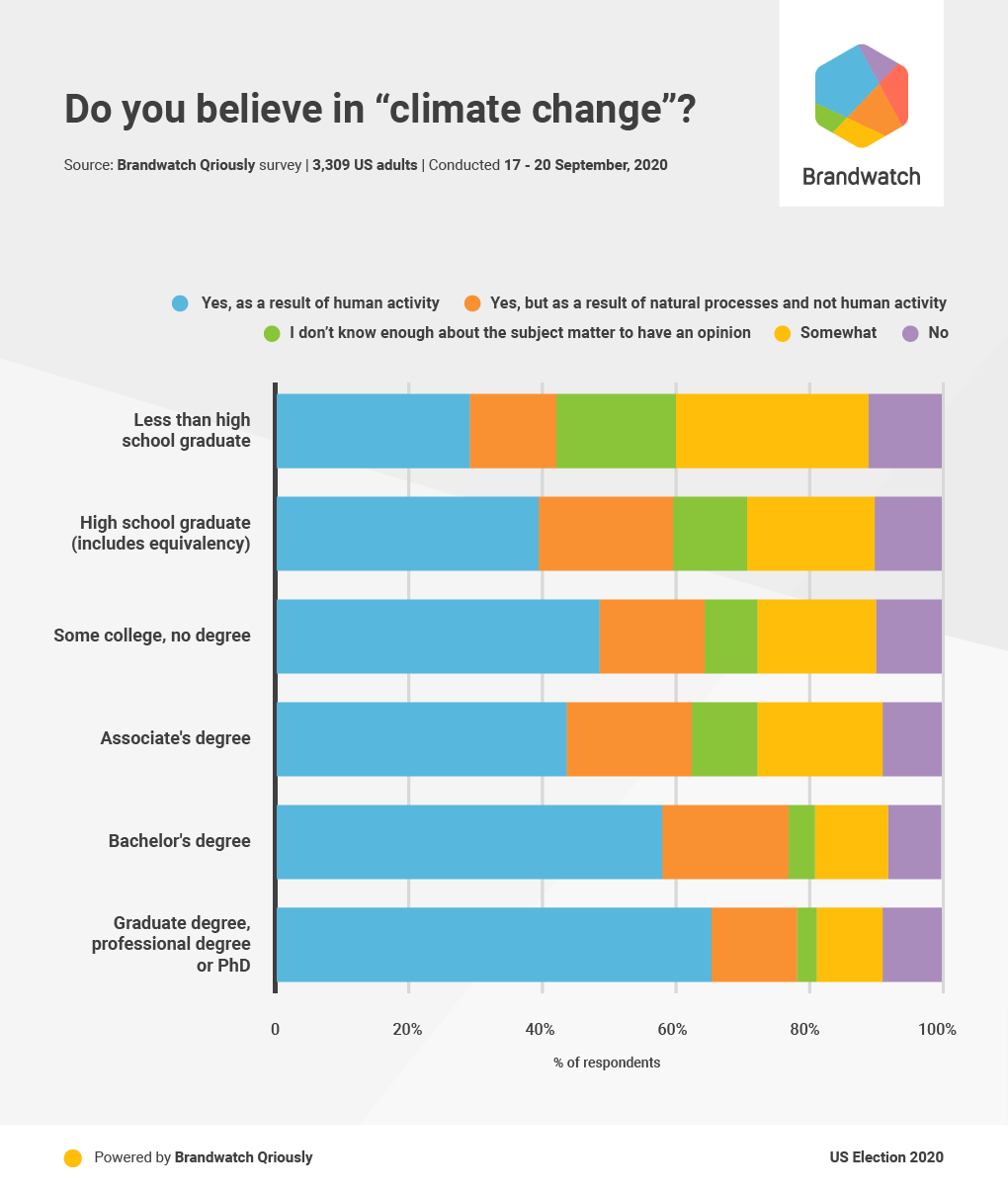
We found that political leaning wasn’t the only factor that affected how people view climate change.

Education level is also a key indicator of how someone might feel. The higher the level of schooling you have completed, the more likely you are to believe climate change is caused by humans. Having said that, the percentage of people saying they don’t believe in climate change at all remains fairly consistent across all groups.

Federal support: Can we all agree?

Partisan disagreement is obviously a common theme for any election, but we wondered if we could find something the American people universally agree on.

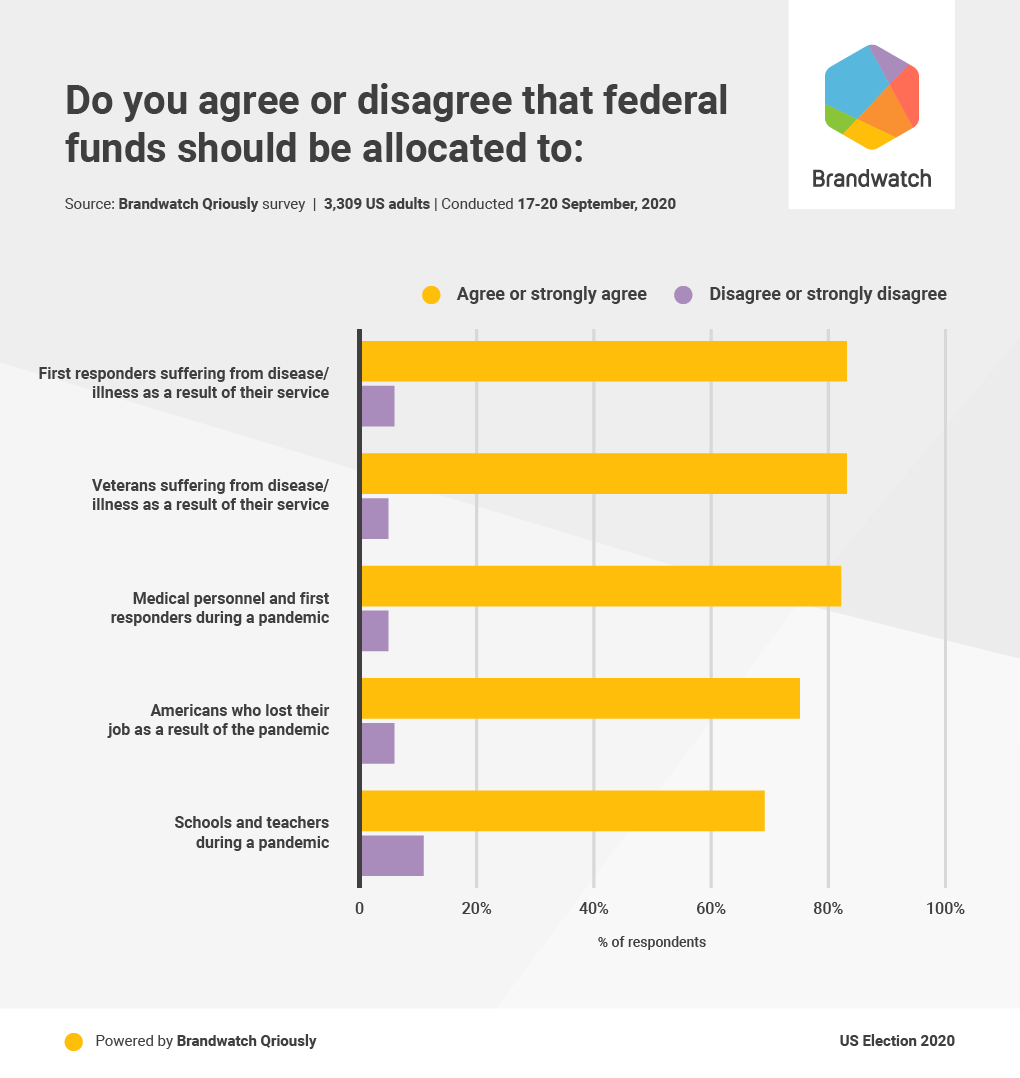
It’s been a tough year for many people – for nurses treating Covid-19 patients, for firefighters tackling wildfires, and for those who have lost their jobs due to the pandemic. We decided to ask Americans whether these people (and others) should receive federal funds to support them.

Could this be something the United States of America has a consensus on?

We’d say so. Opposition to federal funding for veterans, teachers, first responders, and others is low across the board. The vast majority of Americans agree that the government should be supporting the groups we listed.

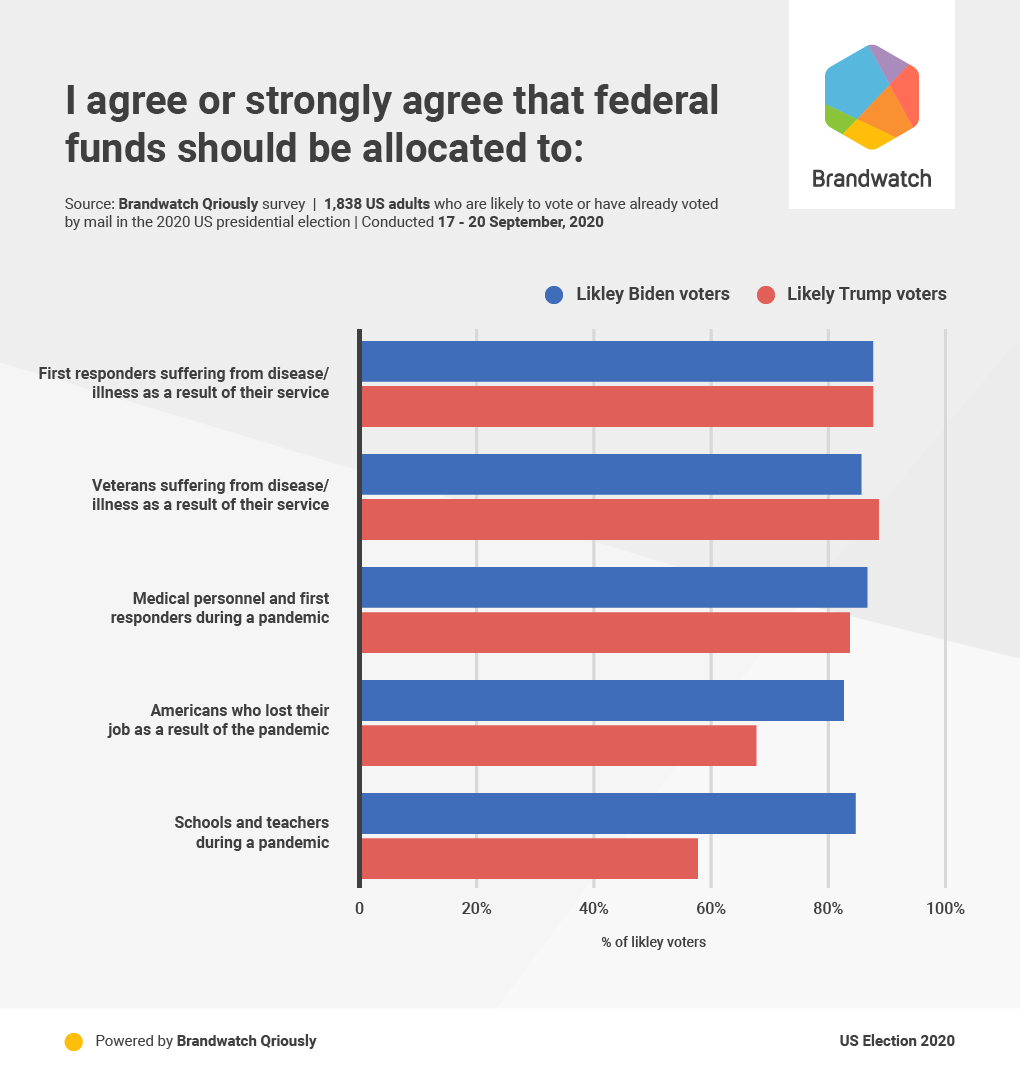
Let’s take it a step further and look at likely Biden and Trump voters on the same issue. Will the consensus hold?

For the most part it does. In fact, both sets of voters are more supportive of these measures than the average American, save for Trump voters when it comes to schools and teachers and those who have lost work.

In federal funding for first responders, veterans, and medical personnel, we’ve finally found common ground between likely Trump and Biden supporters.

Brands and politics

Finally, we surveyed Americans on brands and companies taking political positions, and how those positions might affect where consumers spend their money.

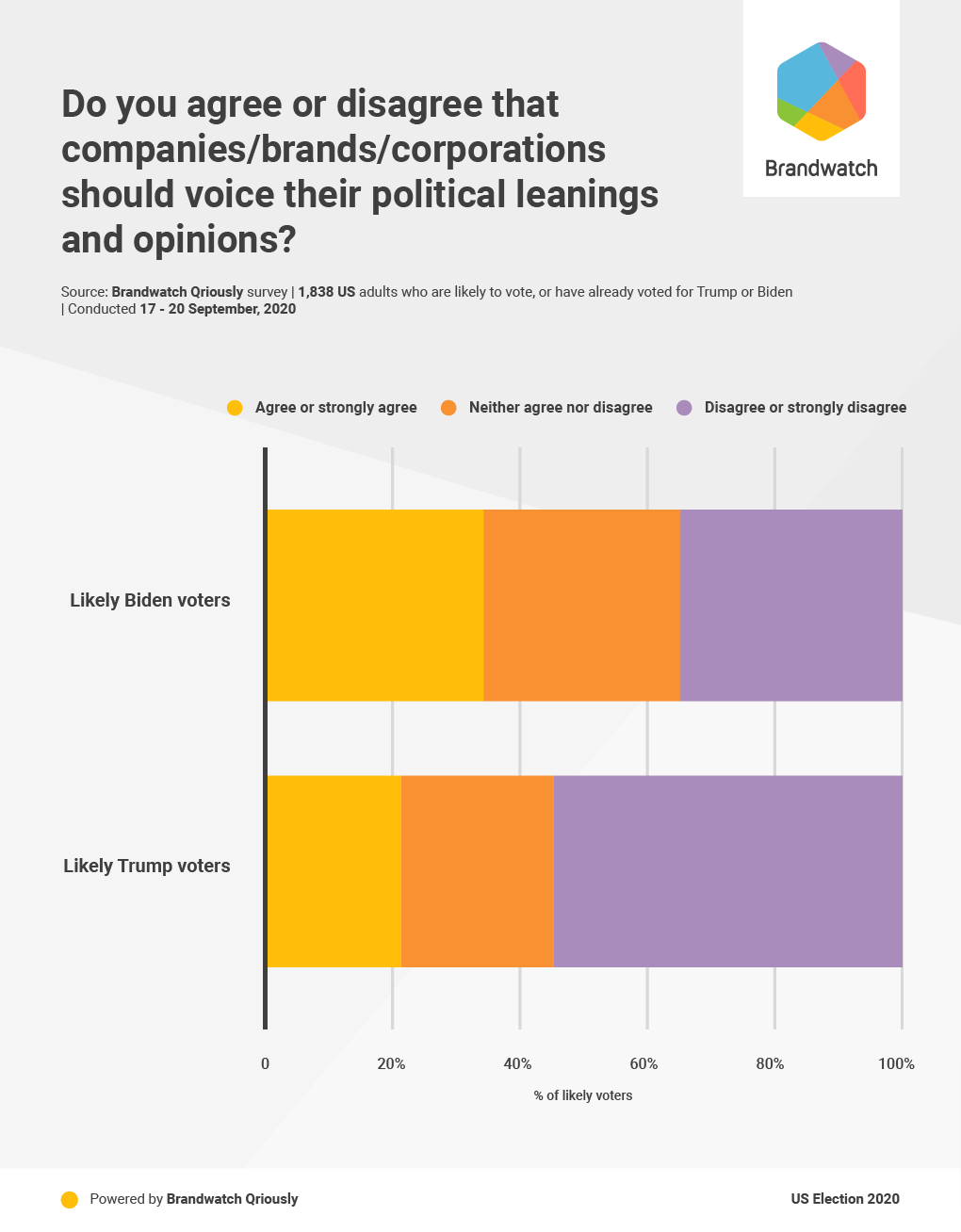
Overall, Americans are more inclined to disagree than to agree with the idea that companies, brands, and corporations should voice their political leanings and opinions (38% disagree or strongly disagree versus 28% who agree or strongly agree). However, Biden voters are more inclined than Trump voters to feel brands should express their politics.

Beyond voters, how does this influence consumer spending at large?

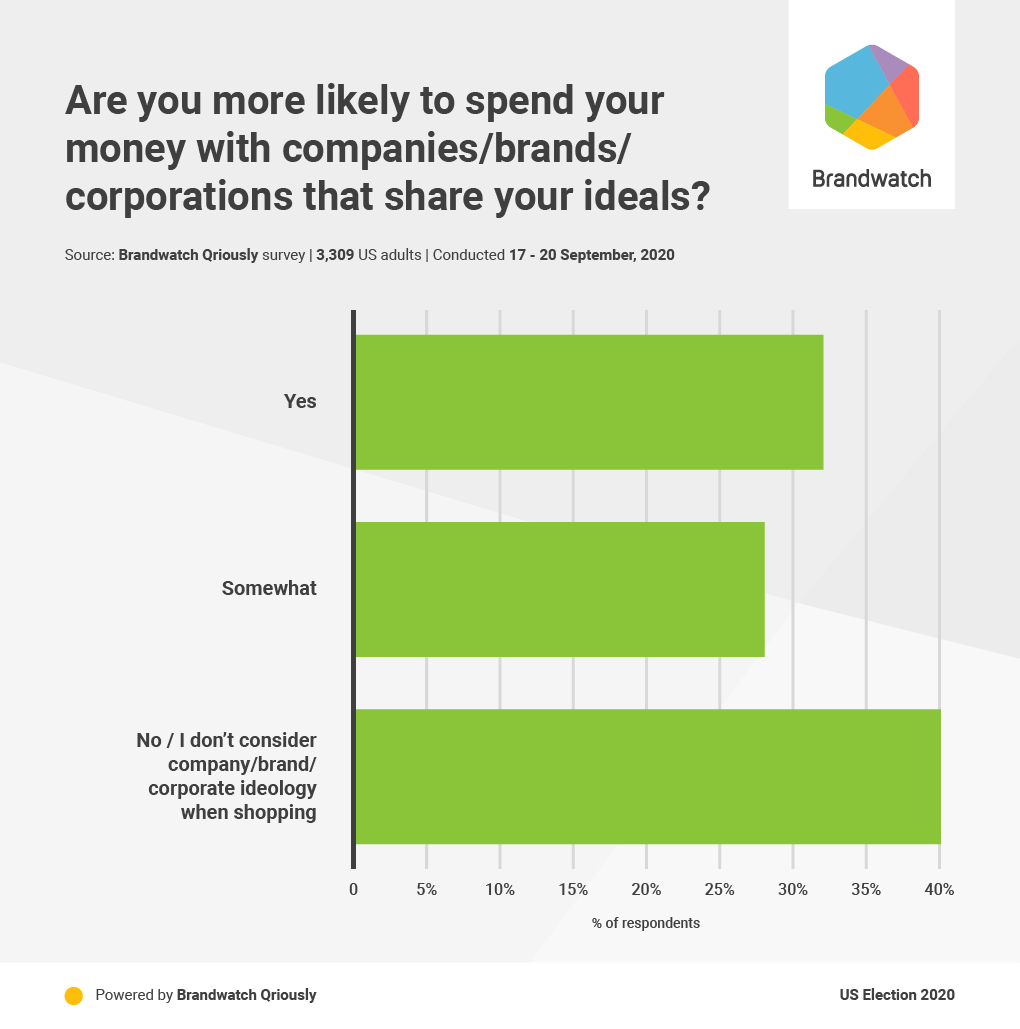
We found that 32% of Americans are more likely to spend money with a company that aligns with their values. Nearly a third of Americans shouldn’t be shrugged at, but it’s clear that, for the majority of US citizens, brands and their political positions aren’t a major concern.

What does this mean for companies considering taking a stance? In general, if sales are your aim, avoiding taking one is a safe bet. But, if you’ve got the research to know your target market sits well within the aforementioned 32%, and what their values are, there’s potential to increase profits there.

Of course, it’s not all about sales for some companies – it’s about doing the right thing. To those brands deciding to make the leap in the coming weeks and months, all we can say is good luck. Also, make sure your customer service workers and social media managers are well looked after and equipped to handle any potential backlash.

Keep your finger on the world’s pulse

Want data covering more than just the election? Every Monday and Friday we send out our Brandwatch Bulletin, giving you data and analysis on current events, consumer trends, and everything in between.

Sign up for the Brandwatch Bulletin here.

Thanks for reading

That’s it for this week. Don’t miss our next one by subscribing here.

Stay safe,

Brandwatch React

Data and methodology

Detailed tables and raw data are published here. Data is released under the Open Data Commons Attribution License (ODC-By) v1.0. If you are publishing or using this data you must give attribution to Brandwatch Qriously.

Brandwatch Qriously uses river sampling and delivers market research questions to respondents via ads on mobile device apps. The proportion of respondents recruited in a particular app is determined by the demographic of its users, which allows for the collection of representative samples. There are no incentives meaning participants are more likely to provide candid and accurate responses. Qriously has successfully predicted nine major elections. It offers an accurate, fast, and reliable way to conduct market research, even within hard-to-reach groups and countries.

Please note a methodological change this week. To address the under-sampling of 2016 Clinton voters, this week’s data is additionally weighted by recalled 2016 presidential election vote (or non-vote). Weighting by past vote is widely used by many polling companies, along with weighting on demographic variables, to ensure that the electorate is correctly represented. Due to this change in methodology, however, we caution against directly comparing the headline figures with those from last week’s poll to infer changes in public opinion.

About the poll: 3,309 adults aged 18+ nationwide were surveyed from 17 September – 20 September 2020. The size of the subsample of likely voters was 2,134. Data was weighted to be nationally representative in terms of age, gender, education, race, geographical region (census division), and NCHS urban/rural community type, using data from the Census Bureau’s American Community Survey (ACS), as well as 2016 Presidential election vote (or non-vote). Targets for 2016 vote were calculated using results from the Federal Election Commission, population totals from ACS and mortality data from the National Centre for Health Statistics. The margin of error at the 95% confidence level, taking into account the effect of weighting, is +/- 2.5 percentage points for estimates from the full sample. For the subsample of likely voters it is +/- 3.0 percentage points. Sampling error can be larger for subsets of these samples. In addition to sampling error, all polls are subject to a range of other potential sources of error. When percentages do not sum to 100% this is due to the effect of rounding.
logo
Digital Consumer Intelligence

Runtime Collective Limited (trading as Brandwatch). English company number 3898053
New York | Boston | Chicago | Austin | Toronto | Brighton | London | Copenhagen | Berlin | Stuttgart | Frankfurt | Paris | Madrid | Budapest | Sofia | Chennai | Singapore | Sydney | Melbourne

Privacy Policy

Update subscription preferences

Unsubscribe

We value your privacy

We use cookies and similar technologies to personalize ads and content (including by sharing data with Google), to measure site performance, and to improve your experience. Learn more in our cookie policy

Privacy & Safety • Terms of Service

No, take me to settings
Yes, I agree
More info.

By using our site you agree to our use of cookies —