logo

Covid-19 Daily Bulletin 15/04: Quarantine Dreams and Hangovers

It seems Covid-19 means more nightmares but less hangovers.

Welcome to today’s bulletin where we’ll be looking at hangovers, dreams, and what people think of their government’s quarantine measures.

Want these emails as soon as they go out? Click the subscribe button below.

GET DAILY BULLETINS

What do people think of quarantine measures?

With some governments in Europe looking to lift restrictions, and debates over the topic raging in the US, we used Qriously to find out what citizens thought of the quarantine measures in place in their countries.

We surveyed 8,079 adults across Australia, China, France, Germany, Italy, Spain, the UK, and the US, via their smartphones and tablets. ¹

Here’s what we found.

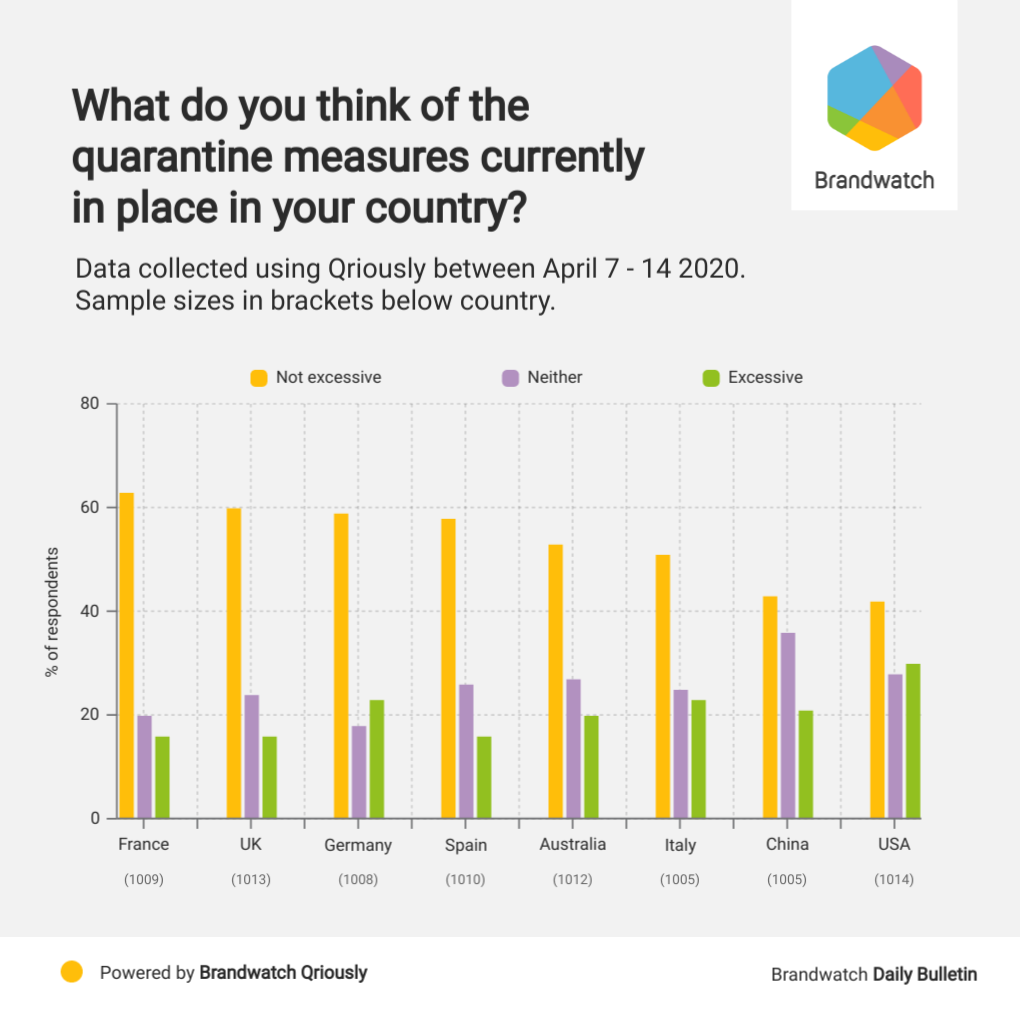
In all countries for this question, the largest group of respondents were those who said the measures were not excessive. But this lead varies a lot, especially when we compare it to those who consider the measures excessive.

On one side we have France – 63% of people do not think the measures are excessive, versus only 16% who do. On the other, the USA is 42% to 30% – it’s much more polarized.

It’s clear that different populations have varying views on what is or isn’t excessive, but we have to keep in mind that each country is at a different stage of lockdown, and each has employed slightly different measures.

Nevertheless, the data is a good gauge on how populations are taking to being quarantined. Based on the results, France’s government is unlikely to see much backlash to their lockdown extension, while US leaders may face a much more hostile reaction.

Quarantine dreams are made of this: Nightmares on the rise

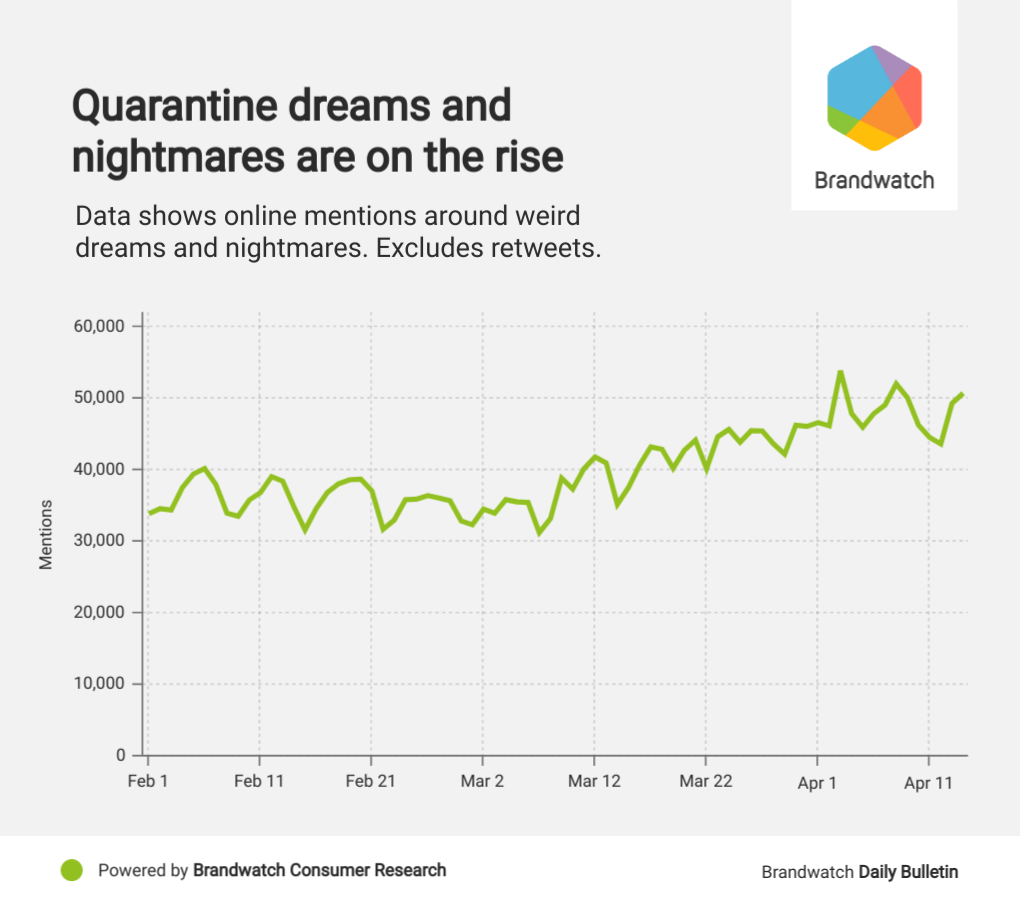
Isolation can feel like a waking nightmare sometimes, and now it appears that nightmares have started seeping into our evening routines. Using our Consumer Research platform we investigated how people have been sleeping during the pandemic. Spoiler alert: not well.

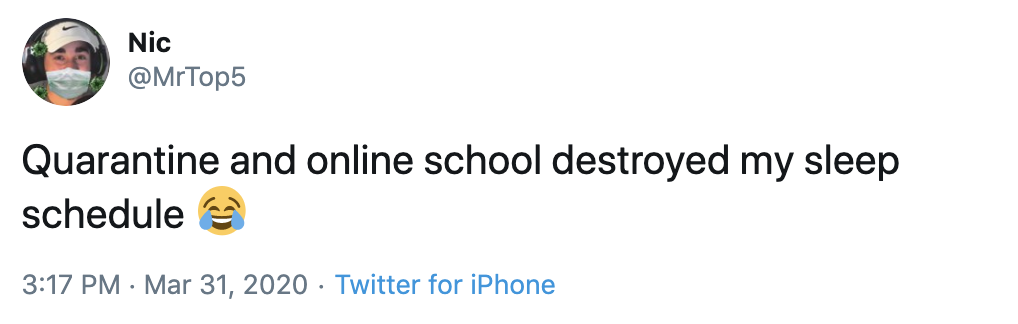
Two weeks ago we covered the rise of #CantSleep. When we looked at the conversation drivers behind this trend, we found that Covid-19 was having a big impact. Between January 1 and March 29, there were 7k posts mentioning both a lack of sleep and the virus.

And now we can see another trend emerging. In the last 31 days, there were 1.4m English-language mentions of weird dreams and nightmares, up 27% compared to the 31 days before that.

Emotion-categorized conversation revealed the mentions to be 67% angry, driven by social users’ irritation at not being able to sleep to their usual schedules.

According to 28.8k people, they’ve had the worst nightmares of their lives during the outbreak. Perhaps influenced by the news, there were 1.4k mentions of nightmares about cruise ships on social media, making it the most common ‘shared’ nightmare in the last 14 days.

Online reports of sleep paralysis, when a person wakes up but is unable to move, also increased. In the last 14 days there were 1.9k mentions of the condition, up 42% from the two weeks prior.

People taking to social platforms to vent their frustrations can be expected, but the volume of social users struggling with bizarre dreams and nightmares indicates that isolation is really beginning to take its toll on mental health.

Common settings for dreams (like those on cruise ships, mentioned above) point to what seems to be shared trauma, even if it’s just caused by watching the news. It could be a long time before many people are willing to board cruise ships again.

Hangovers on a comedown

In most of these bulletins we’ve picked out rising trends, but today we’ve found one falling: hangovers.

While we’ve covered the fact that we’re virtually drinking instead of going out, it seems like we’re better at pacing ourselves at home compared to when we’re out and about.

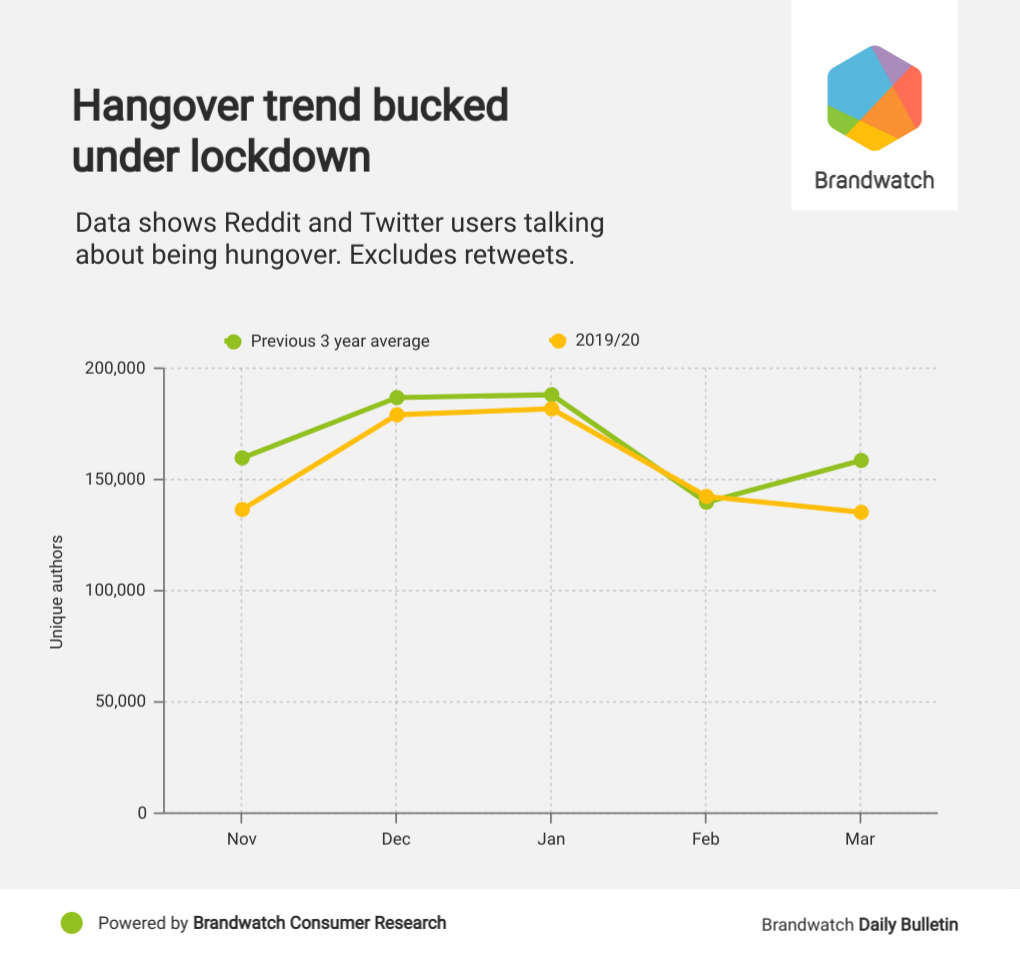
Every year sees a similar trend for hangover reports online. Peak posting time is December and January, as people get festive and ring in the New Year. Then it drops in February, only to pick back up in March. This year, things look different.

In 2020, hangover discussions dropped from February to March by 5%, rather than rising by the average 13% which we’ve seen in previous years.

It’s hard to pinpoint a specific reason, but we can look to our altered drinking ‘culture’. We’re at home with our chosen drink, and that’s it. There’s no happy hour, less peer pressure to keep going, and, when the booze runs out, many people can’t even leave the house to stock up.

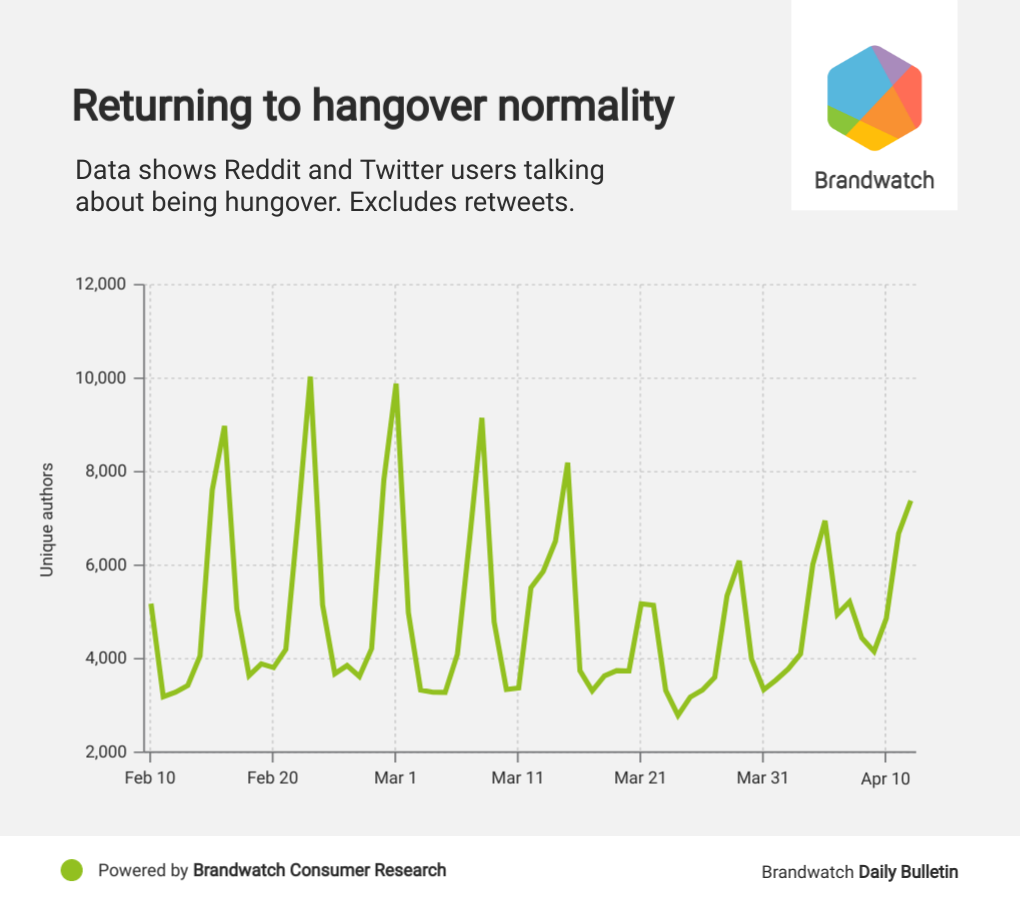
Saying that, maybe we’re getting back into our stride. Looking at the data in April so far, people are getting back to their headache-inducing ways. Perhaps we’ve just got better at stocking up.

Get more in-depth data every Wednesday

Want more analysis that looks at industries the world over? We have a weekly report just for that.

Head here to find out more and get signed up.

Thanks for reading

Want to get these bulletins? Sign up here.

Stay safe,

Brandwatch Response Team


¹ Note: All surveys are subject to a wide range of potential sources of error. On the basis of the historical record of the polls at recent general elections, there is a 9 in 10 chance that the true value of a survey result lies within 4 points of the estimates provided by this survey, and a 2 in 3 chance that they lie within 2 points.

logo
Digital Consumer Intelligence

Runtime Collective Limited (trading as Brandwatch). English company number 3898053
New York | Boston | Chicago | Austin | Toronto | Brighton | London | Copenhagen | Berlin | Stuttgart | Frankfurt | Paris | Madrid | Budapest | Sofia | Chennai | Singapore | Sydney | Melbourne

Privacy Policy

Update subscription preferences

Unsubscribe

We value your privacy

We use cookies and similar technologies to personalize ads and content (including by sharing data with Google), to measure site performance, and to improve your experience. Learn more in our cookie policy

Privacy & Safety • Terms of Service

No, take me to settings
Yes, I agree
More info.

By using our site you agree to our use of cookies —