logo

Covid-19 Daily Bulletin 15/06: Second Waves and Covid Scams

Fraudsters are taking advantage of the pandemic.

Welcome back after a well-deserved weekend. Today we’re looking at how the Covid-19 conversation has evolved, and how scammers have upped their activity in recent months.

Want these bulletins sent straight to your inbox? Subscribe below.

SUBSCRIBE

Second wave concerns on the rise

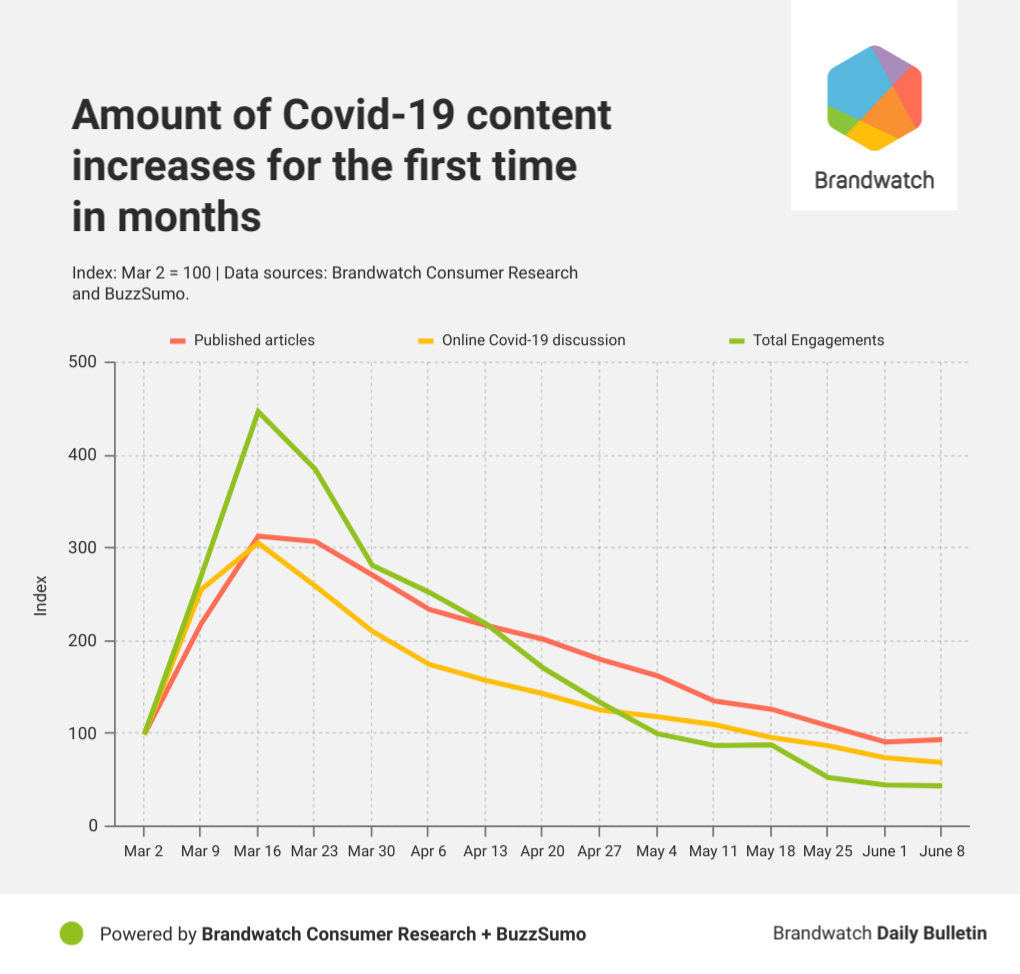
Every Monday we take a look at the online Covid-19 discussion and the articles published on the topic.

To do this, each week we see how many online commenters spoke about Covid-19 on platforms like Twitter and Reddit, or on forums and blogs. We use this to gauge the size of the online Covid-19 discussion.

We also use BuzzSumo to see how many articles about Covid-19 are published and the amount of engagements they get. Engagements in this case refer to actions like Twitter shares and Facebook likes.

We then index everything to the week of March 2, just before many lockdowns came into place, so we can compare our metrics over time.

Here’s what the latest data looks like.

The online discussion shrank again, this week by 7%. This is one of the smaller drops we’ve seen, with the average weekly fall being 12% since March 23. Meanwhile, Covid-19 articles are up by 3%, the first increase for this metric we’ve seen since the week after the pandemic was officially declared on March 11.

We reported last week that the big drop in Covid-19 commenters coincided with a huge rise in conversation around the Black Lives Matter movement. Was this still having an effect this week?

To get an idea of the size of discussion around the movement, we looked at use of the #BlackLivesMatter hashtag. This has dropped off significantly, from 1.6m uses in the week of June 1, to 496k uses in the following week. This could mean focus is shifting back to Covid-19.

We wanted to find out what caused this sudden trend upward for Covid-19 articles published, and why the shrinking of discussion around it had slowed.

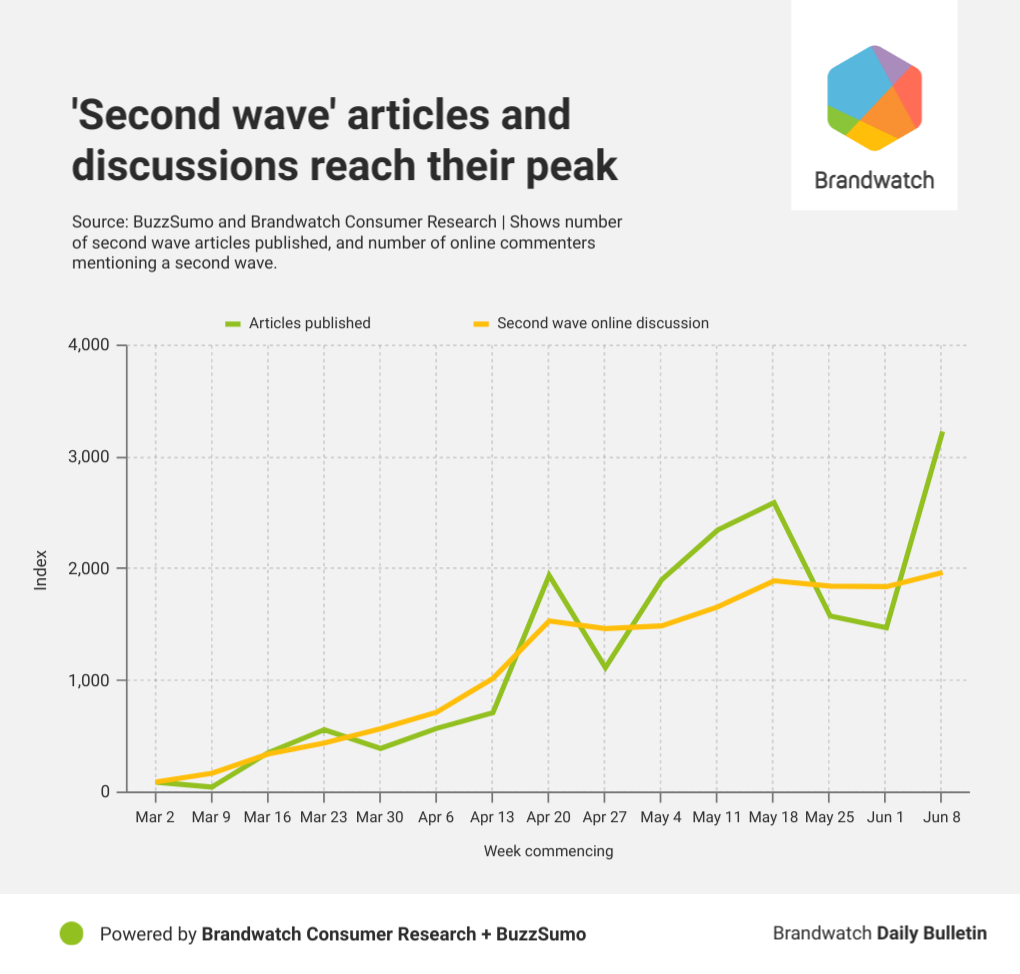
We found one topic getting a lot of attention: a second wave of Covid-19.

The amount of articles published about a second wave and the number of commenters on the subject have been rising since the start of March. Last week saw the highest numbers for both metrics, with article numbers specifically jumping a lot.

Without this topic, the total number of Covid-19 articles would have only increased by 2% rather than 3%. Meanwhile, the decrease in the Covid-19 discussion would have been 2% larger. And we shouldn’t be surprised. As countries attempt to reopen, many are incredibly worried a second wave will follow.

We can expect coverage and discussion of the topic to continue into this week, especially as many shops in the UK reopen, and the EU lifts border restrictions in the hopes of bringing in tourists.

Cases of scams and fraud jump under Covid-19

The pandemic means we’re all living in a cloud of anxiety and uncertainty. Faced with difficulties like unemployment, debt, housing worries, and health concerns, more people are being forced into vulnerable situations and falling for scams or fraudsters.

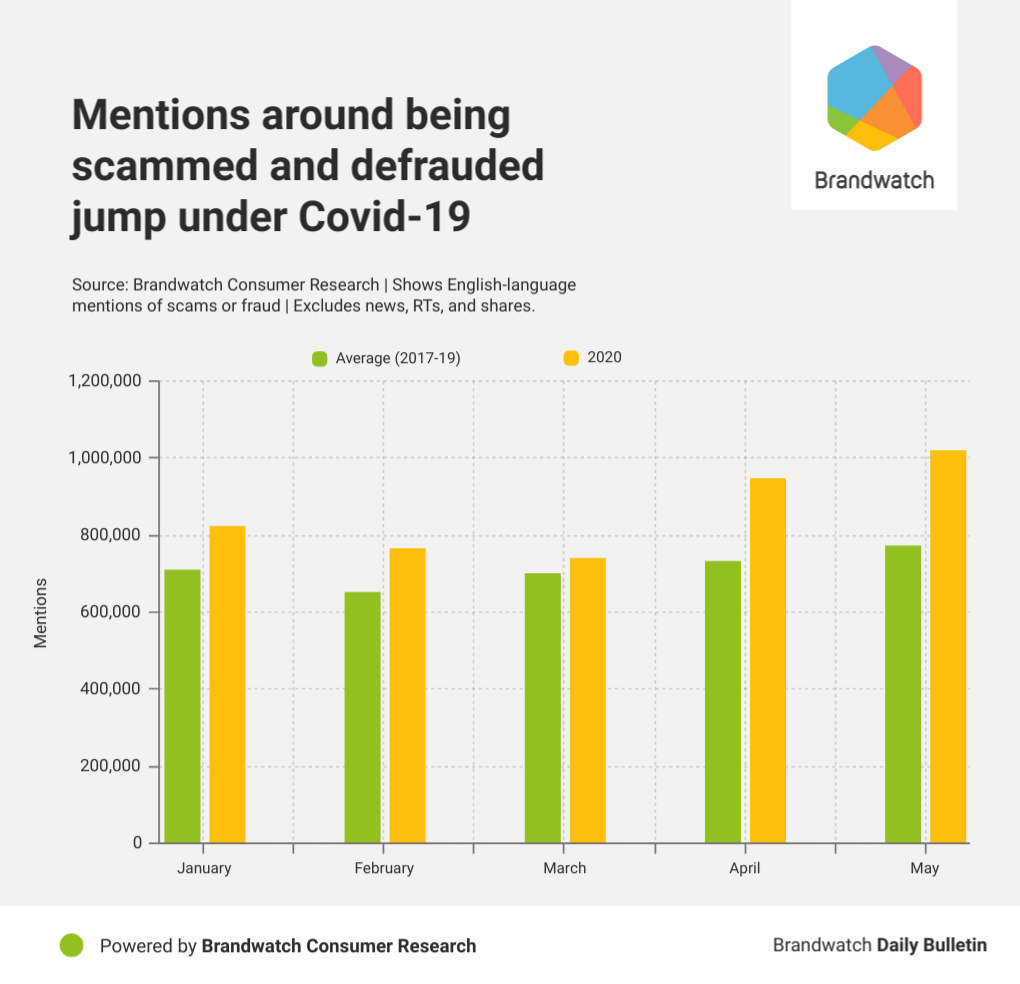
Using our Consumer Research platform, we investigated English-langauge mentions of people talking about falling victim to scams on social media, and found the conversation had jumped upwards during the pandemic.

For the March to May period, mentions of people falling victim to scams were up by 23% in 2020, compared to the average for the same period 2017-19. This suggests criminals could be specifically using the pandemic to prey on more people.

We found the top-mentioned scams in March, April, and May were:

  • Bank – 211k
  • Tax – 184k
  • Credit card – 153k
  • Insurance – 109k
  • Stimulus check – 68k

Opportunistic thieves are targeting people at financial pressure points, when they’re stressed and likely to bow under pressure. Worryingly, the huge amount of mentions of stimulus check scams show fraudsters are creating ploys specifically around the pandemic too.

Ultimately, it’s a confusing and stressful time for victims, especially if they’re unsure of what to do, or if they’ve already made a payment or given out their details. There were 446k mentions from people seeking help from companies, organizations, and professionals about scams and fraud in the last three months, indicating that there’s a gap in information at the moment when people need it most.

Now is a good time for financial services brands to remind consumers of how they will and won’t approach them for details or payment, to help keep fraud at bay.

Get more in-depth data

Don’t miss our regular insights reports that go into huge detail on how Covid-19 is affecting consumers.

Head here to find out more and get signed up.

Thanks for reading

Another day down. Want these bulletins sent straight to your inbox? Sign up here.

Stay safe,

Brandwatch Response Team

logo
Digital Consumer Intelligence

Runtime Collective Limited (trading as Brandwatch). English company number 3898053
New York | Boston | Chicago | Austin | Toronto | Brighton | London | Copenhagen | Berlin | Stuttgart | Frankfurt | Paris | Madrid | Budapest | Sofia | Chennai | Singapore | Sydney | Melbourne

Privacy Policy

Update subscription preferences

Unsubscribe

We value your privacy

We use cookies and similar technologies to personalize ads and content (including by sharing data with Google), to measure site performance, and to improve your experience. Learn more in our cookie policy

Privacy & Safety • Terms of Service

No, take me to settings
Yes, I agree
More info.

By using our site you agree to our use of cookies —