As Singapore continues to make adjustments to the Covid-19 situation, citizens are starting to think about the future and the next phase of life in the wake of the virus. But the new phase we’re entering has just as many challenges to face as the first.
Despite the uncertainty that surrounds this time, consumers are giving some indication of how they’re planning for it and thinking about behaving within it. These indications are going to drive the most successful business strategies of 2020 and beyond.
To get a perspective on how Singaporeans are adapting and looking ahead, we surveyed over 800 consumers via their mobile devices. We also examined search data and looked to public online conversations across social networks, blogs, forums, and more to add context to our survey findings.
In this report, we’ll answer the following questions:
- What activities are people doing differently in Singapore, and what will they continue to do once the outbreak is contained?
- What new priorities do consumers in Singapore have? What factors have slipped down the list when deciding on a purchase, due to Covid-19?
- How have consumers adapted to buying particular items online as opposed to in-person? And will they continue to use online shopping for these items once lockdown measures are eased?
Short term and long term changes to consumer behavior
Forward planning
In this section, we’ll look at two sets of numbers:
- The % of consumers who planned to do a certain activity in 2020 before the pandemic took hold
- The % of consumers who planned to do a certain activity in 2020 before the pandemic and that still plan to do the activity in 2020
Leisure and travel
Travel and tourism is one of the industries that got hit the hardest during the outbreak. And consumers are suffering, too – Singaporeans have been forced to cancel their travel plans without any indication of when it will be safe to travel again.
We asked our respondents about their plans for booking or going on vacation, and whether they planned to buy tickets for festivals or gigs in 2020.
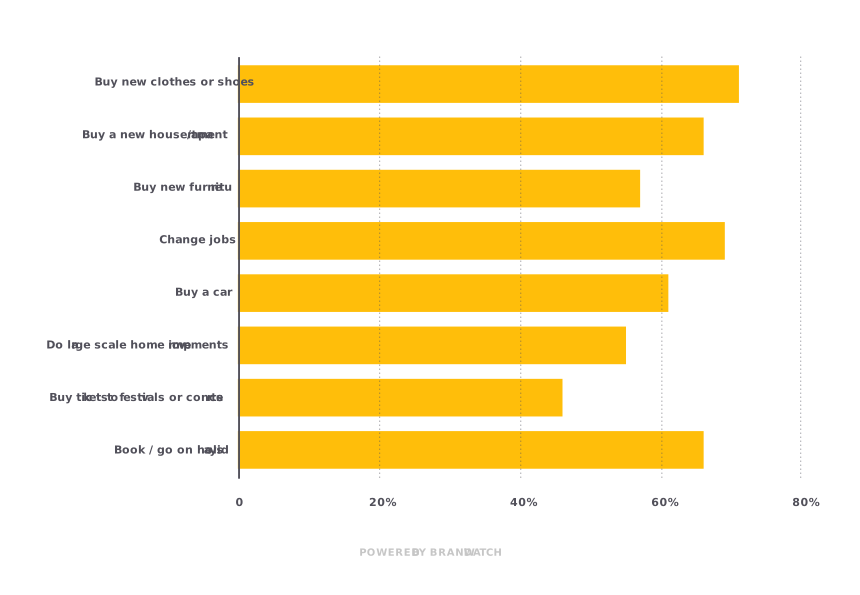
Before the outbreak, 39% of respondents said they planned to book or go on a vacation in 2020. Post-outbreak, 66% of those consumers still plan to.
This high number is to be expected. Being in one of the smallest countries in the world, Singaporeans have struggled to adjust to being unable to travel beyond the little red dot.
Meanwhile, 11% of our respondents said they planned to buy tickets for festivals and gigs in 2020 pre-pandemic. Now, less than half of those people still plan to. That’s not great news for the events industry.
Home improvement
Many Singaporeans have used lockdown as a time to seek inspiration for much-needed home improvements and gardening.
They are spending substantially more time online researching home and garden related content.
Search interest in gardening-related content in Singapore
When we asked people about changes they plan to make to their homes, the results were pretty similar even though the price points for each option are significantly different.
For our question about plans pre-Covid-19 outbreak:
- 13% of respondents planned to buy new furniture
- 11% planned to do large scale home improvements
- 10% planned to buy a new house/apartment
Despite the outbreak hitting Singapore hard, many still plan to go through with their home improvement plans. This could be the result of consumers working from home and attempting to make their home more work friendly.
- 57% still plan to buy new furniture this year in 2020
- 55% still plan to do large scale home improvements in 2020
- 66% still plan to buy a new house/apartment in 2020
Note: See our section on buying furniture online below.
All this tallies with the social data we’ve gathered around how people are spending time in their own homes. In March and April, there was an increase in social posts about DIY compared to January and February.
Just over a month ago, Singapore’s homegrown firm Secretlab has reported an increase in demand for gaming chairs, as consumers seek equipment tailored to their home lifestyle needs.
Clothes and shoes
What about smaller purchases?
Predictably, lots of our respondents had planned to buy clothes and shoes in 2020, and many of them are still planning on doing so.
71% of people who planned to buy new clothes or shoes this year still plan to.
Note: See the section below on consumers buying clothes online since the outbreak – many of them plan to continue doing so, even if they didn’t usually buy clothes online before.
This all makes sense. After time spent in lockdown, retail therapy will be tempting.
Consumers have to keep themselves entertained, too. Back in May, we looked into some of the common home hobbies APAC consumers, including those in Singapore, have adopted during lockdown. Online shopping (including clothes shopping) is one of the top-mentioned topics across social media. Within that conversation, consumers discussed their online experiences and didn’t shy away from raising concerns when things weren’t up to scratch.
Jobs
Another question we asked consumers around their future thinking was whether they planned to change jobs in 2020.
Before the outbreak, around 17% of our respondents in Singapore said they were planning to switch the job they do this year. Now, 69% of those consumers still plan to, while 31% appear to have given up on the idea.
The proportion who still plan to switch roles is remarkably high given the tumultuous job market right now.
Of course, the picture is extremely mixed in terms of opinions around jobs, particularly as situations are different for everyone. But the last few months have certainly given lots of people time to reflect on what’s important to them, and perhaps what they want from the work they do.
Given all the change, working environments are never going to be the same again. Now that many have proved they can work from home effectively, employers may start to adapt their remote working policies. Globally on social media, there are thousands of people talking about how they “really like” or “love” working from home, and women are talking about this more than men (57% of gender-categorized authors talking about enjoying working from home were women).
Now and next
Another way to look at how consumers of the future will act is to examine what they’re currently doing and what they think they’ll continue to do.
For example, we’ve all witnessed panic buying around various items in the last few months. Financial worries have also been rife. Hundreds of thousands of people are talking about and asking for advice on saving their money online, indicating a large-scale effort to build up a safety net.
But will this behavior continue?
Our survey found that 82% of respondents in Singapore who’ve tried to save more during the pandemic say they will continue to do so once the outbreak is contained.
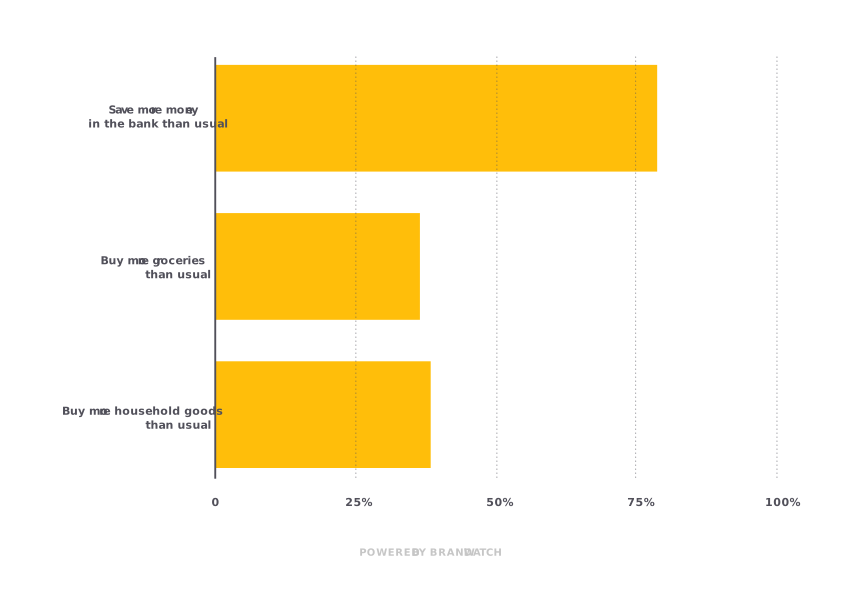
Meanwhile, 40% of those who’ve been buying more household goods than usual amid the outbreak plan to continue doing so once it’s been contained. The implication here is huge for retailers, who may need to rethink supply chains and stock management for continued high demand in the future.
The number is significantly less for groceries, which kind of makes sense – they tend to have a short shelf life.
Whether the consumers saving up their cash or stocking up on household goods like cleaning products or toilet paper will continue to do so for years to come is hard to tell. But the data certainly points to some scarring on consumer behavior left behind by the panic of short supplies and job losses associated with Covid-19.
Toilet paper could continue to sell well for many months yet.
Something to look forward to?
Looking to the end of 2020, how do consumers feel about the holidays?
The results aren’t exactly merry.
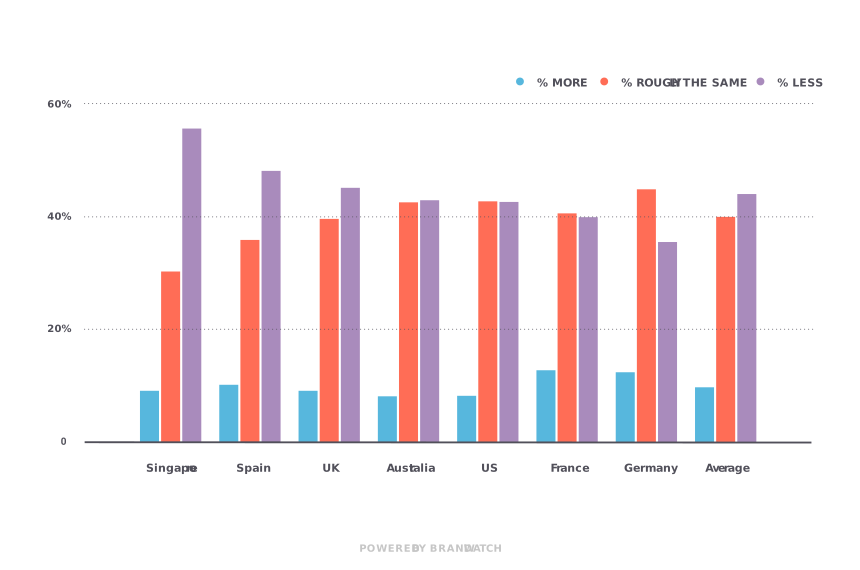
- 56% of respondents in Singapore think they’ll be spending less on holiday gifts and celebrations this year compared to last year
- 34% think they’ll spend roughly the same amount
- Only 10% think they’ll spend more than last year
Looking at this globally, many have opted to spend less this year. It’s worth noting that Singapore has the highest percentage of consumers falling into this group.
Singaporeans’ priorities during and after the outbreak
We also wanted to look specifically at consumer values and priorities in the context of Covid-19. For example, amid chaos, do our values change?
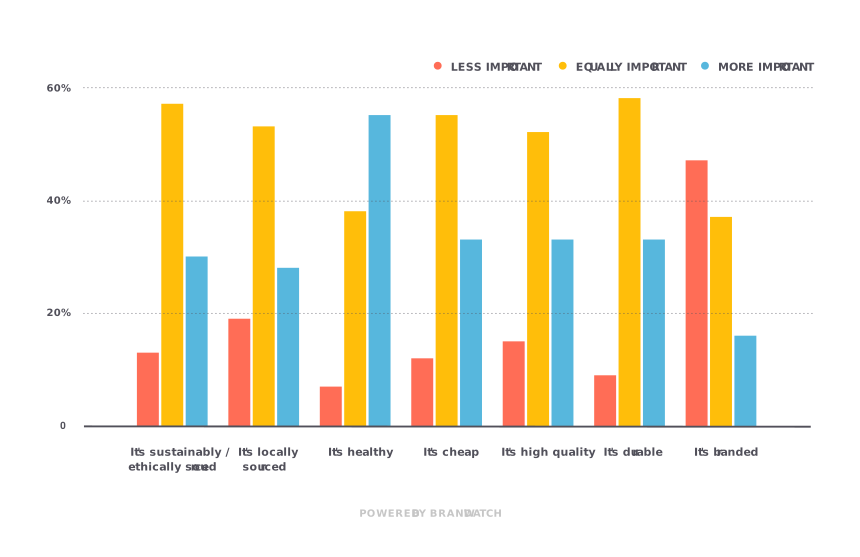
While lots of Singaporean consumers selected ‘equally important’ for these factors, the most interesting insights come from looking at what’s more or less important.
There is an increasing concern about buying healthy products. 55% think this is more important to them when buying things since the outbreak began, while 33% think it’s equally important.
With Singaporeans unable to visit the gym or go on overseas hiking trips, healthy products are in high demand.
From a practical point of view, 33% of respondents think that it’s more important now for a product to be cheap, durable and/or high quality.
Adapting to online shopping
In this section, we’re looking at online shopping specifically. Should online retailers expect the surge in demand to continue? And what kind of challenges could they face?
New online customers are loving the experience
Once again, we asked our survey respondents to tell us about how they’ve changed their behavior. First, we asked them about the things they’d bought online since the outbreak that they normally wouldn’t get from the internet.
A handful of respondents said they’ve bought clothes, groceries, or toiletries and beauty products online when they normally wouldn’t have got them that way.
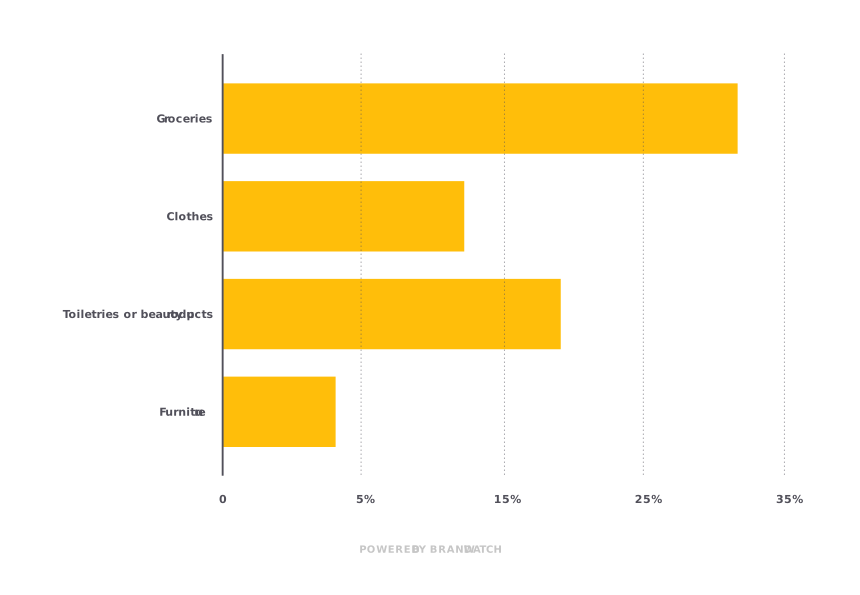
Looking to the future, we wanted to know how many of these new online shoppers would continue to buy things online now that they’ve had the experience. More than 60% of new online consumers across most categories said they would.
The number is particularly high for those who’ve bought clothes online – 68% say they’ll continue to do so post-outbreak. Given that so many people are still planning to make clothing purchases in 2020 (see the first section), this is really encouraging for big online fashion retailers.
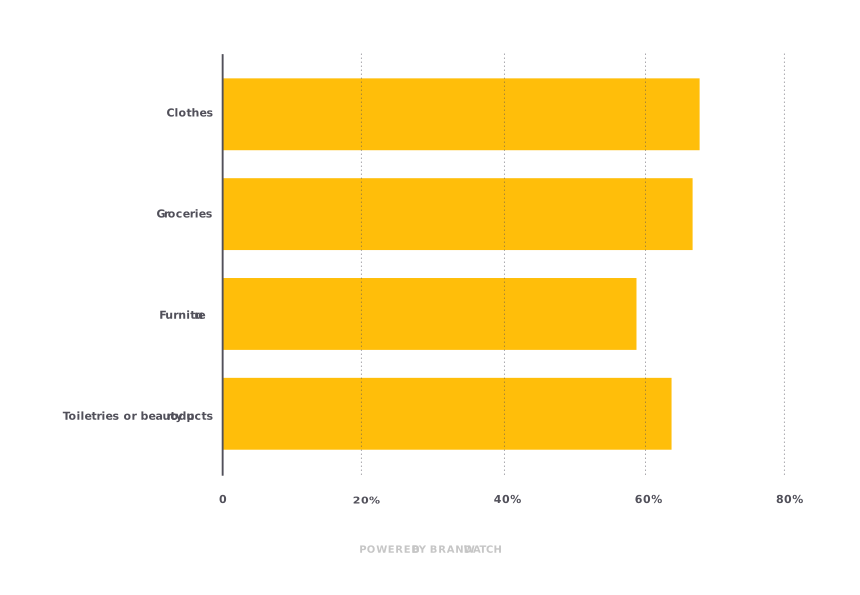
Online furniture sales, while smaller in number, have a high rate of customer satisfaction by the look of this. 59% of new online furniture customers say they will buy online again.
The same goes for grocery customers, marking a potentially massive change for food retailers who could continue to see less footfall in store, and more online custom.
When there are issues, what are they?
All that said, Singaporeans are sometimes faced with shopping experiences that do not meet their standards.
29% of the respondents surveyed said they’d had trouble shopping online, and we asked them what that looked like.
The main problem we found was trouble with delivery. Many Singaporeans were faced with slow delivery but at the same time understood that retailers were going through a difficult time. This tallies with social data we’ve found. Our Consumer Research platform found that people are taking their complaints online when they don’t receive their purchases on time.
When we broke down the data by age group, we found that those over 55 over-indexed for finding the process too complicated and worrying about the security of online shopping. For retailers hoping to retain their new online customers of all ages, digging into these kinds of pain points and concerns can help keep people on board for the long term (and not abandoning their carts in the present).
Key takeaways
While Singaporeans are continuing to invest in their savings accounts, they are also hopeful that they’ll be able to proceed with their bigger purchasing or life plans later in 2020.
And, given how the pandemic has evolved and that safety measures are constantly being adjusted, it is not surprising that more and more consumers are opting for online shopping to minimize the spread of Covid-19.
Now that brands have had time to react to the crazy few months we’ve had, the next phase we all face is rethinking and rebuilding. How can we make sure business can be done sustainably? And how can we ensure that customers’ new habits and needs are served?
These habits and needs are constantly changing, and this report only represents a snapshot in time. The driver of the big decisions to be made in coming weeks and months, the thing that will set the course for successful businesses, must be the real-time voice of the customer.