As AI makes content easier to produce, brands face a harder question: what makes them worth choosing?
Heading into 2027, the challenge is not simply to produce more. Our research points toward a shift in where brands create value: evidence people can inspect, expertise they can learn from, identities they recognize, and experiences worth their time. In a world of abundant content, being credible, distinctive, and worth choosing matters more than being everywhere.
We surveyed over 1,000 marketers and analyzed over 106 million online conversations to uncover the most impactful digital marketing trends for 2027.
This report explores 11 trends, covering how brands earn trust, stand out, and give people something worth their time.
Let’s dive into the digital marketing trends shaping 2027:
- Human-made is becoming a premium signal
- Proof is the new marketing currency
- Your in-house experts are your most trusted voices
- Competition for AI recommendations moves beyond owned content
- Sameness is every brand's problem
- Brands must fight harder to earn their place in communities
- The best brand experiences can't be summarized
- Brands are embracing maximalism
- Slow content is the antidote to algorithmic overload
- The audience is now a marketing critic
- Brand identity becomes more sensory

1. Human-made is becoming a premium signal
“Made by a human” is becoming a selling point.
Craft has long helped brands communicate care and quality. Now that AI can produce a campaign image, a voiceover, or a product video in seconds, brands are making human involvement a distinction in its own right.
People are also pushing back on AI-made marketing. According to Brandwatch Consumer Research, conversations about AI-generated ads more than tripled in the past year, up 240% to 464k mentions, and 9 in 10 mentions with a clear sentiment were negative. In our survey, human-first content came out as the top trend for 2027, selected by 71% of marketers.
"While AI has made execution faster and easier, I believe we're losing some of the critical thinking and originality that make great marketing truly stand out."
Apparel brand Aerie has built its marketing around showing real people. It doesn't retouch its models, and more recently it extended that promise, pledging never to use AI-generated bodies or people in its campaigns. The Instagram post announcing the pledge became its most popular, with more than 40k likes, and Aerie's sales rose 23% year over year that quarter. As CMO Stacey McCormick put it, "In an industry where everything is generated, realness becomes special."
It's showing up in luxury too. For its 2026 holiday campaign, Drawing Prada, Prada brought in former Disney animator John Pomeroy, and every frame of the animation was drawn by hand. Pomeroy said the aim was "to show just how valuable the human touch is."
Some brands say it outright. When Le Creuset launched its new Riviera color with a surreal video of its pots sailing like boats – the kind of image many people now assume is AI – the post said the clip was made "entirely by hand using digital art and real video footage, not AI," and credited the artist.
"I want our organization to prioritize human-led content, we've already seen an AI backlash."
Look for the places where your audience would notice a person’s hand, such as the artwork, the voice, or the story, and make that work visible. It can give people another reason to value what you make.
2. Proof is the new marketing currency
If you can’t prove it, don’t promise it.
Proof has always mattered, but what's changed is how cheap the alternative has become. When a testimonial, a product shot, or a case study can be generated without much effort, people are starting to question what's real, who made it, and whether anyone checked its authenticity. In 2027, that skepticism turns proof from good practice into a competitive advantage.
In February 2026, Dove invited Reddit users to try its Intensive Repair hair mask and promised to publish the first 50 reviews exactly as written, critical ones included. So instead of promising "deep nourishment" or "silky, healthy-looking hair," its r/eal Reviews campaign led with lines like "smells like an old lady" and “still seems dry” across social content and New York City billboards.
By spotlighting the awkward bits, Dove gave people a reason to believe the praise too – and it worked. Unilever notes sales rose by more than 100% compared with the previous year.
Dove isn't an outlier. People are increasingly checking what's real. According to Brandwatch Consumer Research, online conversation discussing whether content is AI-made grew 186% in the past year, to around 3 million mentions. Marketers are noticing too, with 32% of marketers selecting radical brand transparency as a trend set to shape 2027. For many, the answer is choosing credibility over reach.
"Building a trustworthy brand over chasing virality and volume."
Reviews are one kind of proof. Framework, a company that makes easily repairable laptops, built proof another way. When component prices rose sharply, it published a running blog post explaining each price increase and what it was paying suppliers. When costs fell again, Framework automatically refunded the difference on orders that had already shipped. The company didn't just claim its prices were fair. It showed customers the evidence.
Some brands go further and tie the price to proof. The AI customer support platform, Fin, links what clients pay to whether its AI agent works. Customers pay $0.99 each time it resolves an issue or completes a handoff they've set up, and the homepage leads with its average resolution rate: 76% across more than 12,000 customers.
The right proof depends on the promise. If a product works, let customers see it working. A polished promise may get attention but giving people something they can inspect, test, or challenge is what will make it believable.
3. Your in-house experts are your most trusted voices
Audiences don't only want to hear from brands. They want to hear from the people behind them.
Most shoppers never meet the person who decides what ends up on the shelves. In May 2026, Kathryn Turner, a product developer at British retailer Marks & Spencer, opened a TikTok account and started talking about her job.
Her videos cover the parts of the job customers rarely see: product development stories, new launches, and her favorite items from the aisles. Viewers hear directly from someone shaping what’s on the shelves, with first-hand knowledge of the products and suppliers. She has since gained over 300k followers.
As AI takes on more content production, brands can lean into first-hand knowledge: the story behind a product decision, a supplier relationship, or a lesson learned from building something. The opportunity isn’t simply to encourage employees to post for reach. It’s to find people whose knowledge customers would find useful or interesting, even if they wouldn’t know to look for it. In our survey, 34% of marketers picked expert-led marketing as a trend set to shape 2027.
The right people won't always be senior executives or natural TikTok creators, and video won't always be the right format. At fintech company Ramp, lead economist Ara Kharazian turns spending data from Ramp’s customers into a monthly AI Index and a weekly newsletter, and his work has been cited by The New York Times, the Financial Times, and Bloomberg.
At developer-tools company PostHog, the people building the product write its build mode newsletter for more than 80,000 product builders. In one 2026 article, engineer Edwin Lim shared how the team rebuilt its AI onboarding wizard, including the decisions that helped increase paid conversion fivefold and double activation.
Most companies have someone customers would listen to. The difference is choosing them deliberately, then finding a format they can sustain and a way to reach the people who would value it.
4. Competition for AI recommendations moves beyond owned content
Your newest audience, LLMs, doesn't click. It recommends.
With roughly half of consumers worldwide now using AI-powered search, brand visibility is becoming less about ranking and more about being surfaced by LLMs.
In our survey, 59% of marketers say optimizing for AI systems will shape marketing in 2027. In a separate question about their workload, 56% of all respondents said they now spend more time on generative engine optimization (GEO) and AI visibility than they did 2-3 years ago.
The competition to get recommended is already heating up. Brands that moved early on AI visibility have had a head start in shaping how LLMs understand them. And owned content alone won't be enough to catch up because LLMs synthesize information from earned media, expert commentary, customer reviews, comparison sites, social media platforms, and community discussions. So when an LLM recommends your brand, it's pulling from what the entire internet says about you, not just what you've published yourself.
That means PR, content, and search need to work together – and brands that are only just getting started have ground to make up quickly.
“As a one-person SEO and GEO team, I want 2027 to be the year we invest in how we're talked about, not only in what we publish.”
Footwear brand Clarks learned that ChatGPT can’t recommend what it can’t properly read. Even small discrepancies like calling a color “navy” in one product listing and “blue” in another, could stop the system from recognizing them as the same product. So the brand uploaded its entire product catalog to OpenAI and gave the model a consistent source of product information to work with, making it easier for ChatGPT to surface Clarks products accurately in recommendations.
AI search is also quickly becoming more than a visibility channel. OpenAI’s “Instant Checkout” has made participating merchants shoppable directly through ChatGPT integrations. Shoppers can now discover products and complete purchases without leaving the AI interface. Sephora also launched an app in ChatGPT where shoppers can ask for beauty advice and receive personalized product recommendations. “Sephora, help me find a foundation for dry skin” would generate a curated list of options.
Forward-thinking brands are doing two things at once: making it easy for LLMs to understand and recommend them, and building the reputation that makes people want to choose them.
5. Sameness is every brand’s problem
When everyone has the same tools, distinctiveness comes from the decisions those tools can't make for you.
There’s research behind the sameness concern. In an experiment involving 293 people writing short stories, researchers at UCL and the University of Exeter found, access to generative AI ideas made individual stories better rated, but also more similar to one another. For brands, that's the risk: each piece of content can look fine on its own, while the whole category starts to sound the same.
Take luxury watch ads. They usually show close-ups of intricate movements and talk about precision and legacy. When Detroit-based watchmaker Shinola launched its Duck Automatic watch, it went the other way. Its campaign, "There's more to life than the feed" encouraged people to get distracted, touch grass, and spend some time watching ducks. By stepping away from the tropes the whole category relies on, it stood out.
That instinct to do something different matters when producing competent content has never been easier.
Most rebrand announcements sound the same: a new look, a statement about evolving the brand. When UK cereal brand Surreal refreshed its packaging, it skipped the earnest rebrand announcement and ran ads poking fun at the whole process, with lines like "It took us 11 months to slightly change the colour." As Richard King, founder and CEO at the Product Marketing Alliance, put it, "you shouldn't take your 10% hex code change that seriously."
B2B has its own bland middle too. The software platform, Payapps, targeted finance directors still loyal to 20-year-old spreadsheets with LinkedIn ads like "Oh sheet!" and "Absolute sheetshow!" and won silver for Best Integrated Campaign at the 2026 UK Agency Awards.
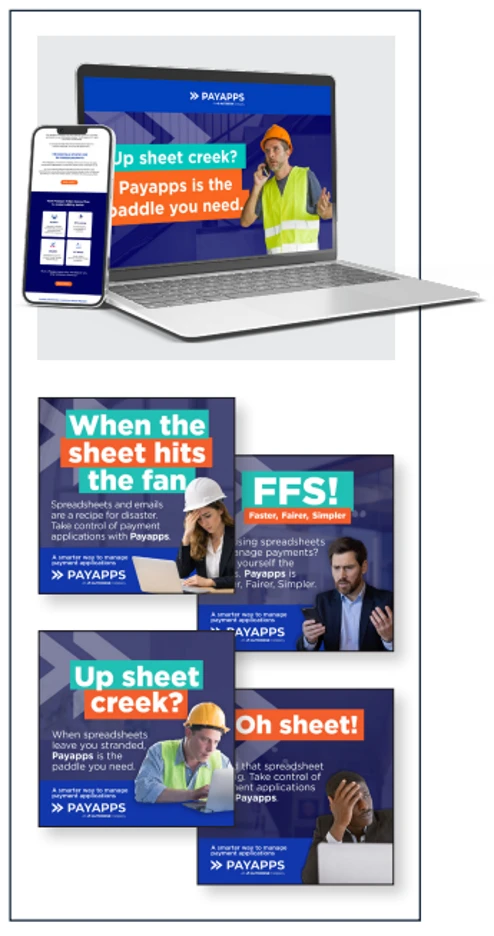
Neither was being funny for the sake of it. Both spotted what everyone in their category was saying, and said something else.
When we asked marketers what they think their organization should focus on in 2027, one respondent put it simply: “To remember who we are, what we are, why we do it – and that we’re good at doing it. There’s too much reliance on AI.” – Brandwatch survey respondent, 2026
Marketers can still use AI to explore ideas and speed up production. But brand voice, taste, and the decision not to follow the obvious route still need a more human starting point. The feed already has enough versions of what worked yesterday.
6. Brands must fight harder to earn their place in communities
The best audience is the one that chooses you.
Organic reach is declining across social networks, and frustration with unpredictable algorithms is growing. Brands that have relied on platforms to distribute their content are finding that the same platforms are making it harder to be seen.
At the same time, online conversation around community-focused platforms like Twitch, Discord, Substack, and Beehiiv have grown 18% in the past 12 months. In our survey, 47% of marketers say community-led marketing will shape 2027.
That creates two distinct opportunities. Brands can build their own communities via newsletters, groups, and owned spaces where audiences opt in directly. Or they can earn a place in communities that already exist. Both require the same thing: showing up with something that’s worth the audience's time, not just a message to push.
The brands doing this well tend to listen before they act. For years, beauty creators shared unconventional ways to use Vaseline products, from taming brows to creating a highlighter base. The brand listened. Through Vaseline Verified, it tested community-created hacks in a laboratory setting, putting creators at the center of the campaign. More than 3.5 million DIY Vaseline hacks have been shared online. The brand has reviewed around 6,000 of them, and when it turned some of those creator-inspired ideas into products, they sold out within minutes of their TikTok Live debut in March 2026.
Vaseline didn't manufacture a community around its brand. It listened to the one already there and gave creators a role in shaping what came next.
Coach took a similar approach with its Spring 2026 “Explore Your Story” campaign. The brand created 12 miniature books – small enough to wear as bag charms, but with real pages you could read. It asked Gen Z communities to help shape the narrative and name each one, then took the campaign to college campuses, giving students spaces to connect and share their own stories. Rather than marketing at the community, Coach invited people to take part in shaping the campaign.
Dr Pepper found inspiration in its audience too. In January 2026, it licensed TikTok creator Romeo Bingham's viral homemade jingle for an ad during the College Football National Championship game. Bingham got his jingle on national TV, and the brand got a ready-made hit that its audience already loved.
You can pay for reach: sponsor a post, run some ads, boost your content. But neither of those options builds the kind of relationship that makes an audience choose you. Whether you're building your own community or earning a place in someone else's, the question is the same: what are you contributing?
7. The best brand experiences can't be summarized
Don’t just give people something to see. Give them something to do.
As more marketing can be generated, streamed, or summarized, participation gives physical experiences something digital content can’t fully reproduce.
In our survey, 28% of marketers chose "unsnippable marketing" – experiences an AI summary can't capture – as a trend set to make an impact in 2027, and 39% selected immersive brand activations.
People are turning up for them, too. Brandwatch Consumer Research data shows posts from people saying they went to, stopped by, or queued for a brand pop-up grew 19% in the past year, to around 170k.
It doesn't take a big budget to do this. Running Late, a small London coffee shop, started a run club to promote its early opening hours. Regulars now lead the pace groups, most runs end with a free coffee back at the shop, and it's since grown into walking, book, craft, and hiking clubs.
Google Cloud took a similar approach to technical training. Across events in London, Los Angeles, and Singapore, its Tech Immersion program put global technical go-to-market professionals inside “The Vault,” an environment built around exploration rather than presentations. Attendees moved through peer-led talks, spatial-audio stories, and interactive installations, making participation part of how they learned. The experience went on to win Event Marketer’s 2026 Grand Ex Campaign of the Year.
The strongest activations give attendees something worth filming as well as something worth doing. At Coachella 2026, Hailey Bieber's beauty brand Rhode launched its first immersive festival pop-up, Rhode World. Visitors could play dart games, put makeup on in a glam room, try products, and collect samples.
Build the experience for the people in the room first. If it's worth taking part in, it'll be worth sharing too.
8. Brands are embracing maximalism
There’s a growing appetite for personality.
In September 2026, Wendy's brought back the bright yellow look that defined the brand for decades, replacing its more minimalist red-and-white look. The company called it “one of the most requested comebacks in Wendy's history,” after years of fans asking to return the old look. People didn’t just want nostalgia; they wanted Wendy's to look like Wendy's again.
Wendy’s fans are not alone. Between October 1, 2025 and October 1, 2026, mentions of minimalism rose 56% while negative sentiment in those conversations surged 150%. Online, people criticize brands for logo redesigns that strip away character. And it’s not just logos. Mentions of sans-serif fonts increased 462%, with much of the frustration focused on how every brand now looks the same “clean.”
Marketers are seeing this shift too. In our survey, 71% say human-first content, including content with more personality, will be a trend that shapes digital marketing in 2027. And some brands are already acting on it.
Korean Bros designed bright packaging to stand out in the Asian food aisle and make an unfamiliar product feel more approachable. Within a few months, the brand was an Amazon bestseller, and nine months later, it was in 300 Target stores.
Starface built its identity around being seen. Its star-shaped acne patches turned skincare into an accessory people want to wear. By 2026, Starface was available in more than 20k retail locations across North America and secured a $105 million minority investment.
You're seeing it everywhere now – Lemme with its punchy vitamin branding, and Fishwife that turned tinned fish into something Instagramable.
Standing out doesn’t mean every brand needs more color or a busier logo. Start with the details people already recognize as yours, then find ways to make them more distinctive.
9. Slow content is the antidote to algorithmic overload
Slow content rewards deeper attention.
Social feeds are built for speed. There’s always another post, another recommendation, another reason to keep scrolling. But people are becoming more selective about what deserves their time. For brands, that creates an opportunity to make something worth stopping for.
There are signs of that shift. Between October 1, 2025 and October 1, 2026, Brandwatch tracked 52% more mentions of social media fatigue than the previous year, while digital detox mentions grew 33%. Even Cambridge Dictionary has petitioned to add “scroll fatigue” to the dictionary.
Slowmaxxing – the deliberate choice to slow down and reduce stress – has surged 4,121% in the past year. The conversation is still relatively small at 8k mentions, but the direction of travel is clear.
That doesn’t mean audiences suddenly want everything to be longer. The question is what makes content worth spending more time with. That's what we mean by "slow" content: something that gives people a reason to spend more time with an idea, story, or subject. It might be a documentary, newsletter, podcast, or deep dive.
Nearly half (49% of respondents to our workload question) say they now spend more time on content creation and strategy than they did 2-3 years ago. That extra effort can go towards content with more depth and value.
Heineken took that approach in 2026, with a 10-minute documentary, "The Pub That Refused to Die," telling the true story of an Irish village’s fight to save its last remaining local pub. Rather than using a standard social media format, Heineken gave the story more time and space. It put purpose at the center of the narrative and created a reason for people to keep watching.
The same approach can work for educational content too. King Arthur Baking Company uses its Things Bakers Know podcast to explore everyday baking questions, like what eggs actually do in baking, through longer conversations with baking experts.
Slow content can also mean moving beyond the feed altogether. Curated newsletters give audiences another reason to spend time with the brand. In our survey, 14% of respondents see newsletter-first marketing shaping their strategy in 2027. Many brands, including Google and Daily Nation, are already leaning into newsletters as a way to reach audiences directly, outside the feed. Another one – Morning Brew – has grown to 5 million subscribers across its vertical brands and it’s now worth $75 million.
Depth asks more of people’s attention, so give them a reason to stay. Slow content works when the extra time feels worth it.
10. The audience is now a marketing critic
Your audience can see the sell coming.
In our survey, 32% of marketers selected radical brand transparency – brands openly showing their processes and tactics – as a trend set to shape 2027. Audiences want to see what's behind the marketing, too.
Research from the UK's Advertising Standards Authority found around 80% of consumers want influencers to label paid content clearly and upfront, rather than leaving them to guess.
Brand trips are a familiar move: a company covers a luxury getaway, and creators post about it. In August 2026, OpenAI hosted its first influencer brand trip at a luxury retreat in upstate New York. Creators shared videos of farm-to-table dinners and beekeeping, but commenters focused on the deal behind the content. One suggested a creator had sold her soul “for a nice hotel room.” The marketing arrangement became part of the story.
Chipotle took a different approach with its Behind the Foil campaign, sending 100 creators behind the line at more than 50 restaurants to film morning prep. There were no scripts or shot lists, and none of the footage was shot by the brand. One “Chili Lime Chips” ad performed above the fast-food industry average for likability, with 74% of viewers saying it made them more likely to buy.
Knowing how a tactic works doesn’t make it unusable. It does mean the execution has to hold up once audiences can see the incentive, convention, or strategy behind it.
That extends beyond creator marketing. Canadian grocer Maxi played on the idea that brands kill youth trends by joining them. It priced 8 products at amounts ending in .67, deliberately making itself the “6-7” trend killer. The campaign reportedly increased sales of those products by 57% compared with the previous year.
The tactics can still work. They just can't hide anymore.
11. Brand identity becomes more sensory
Analog is having a moment, and brands are finding new ways to turn that appetite for tangible experiences into something distinctive.
Using Brandwatch, we tracked a 32% increase in conversation around physical media between October 1, 2025 and October 1, 2026, spanning VHS, cassettes, DVDs, CDs, and vinyl.
Nostalgia is part of the appeal, but there are other reasons physical things feel valuable now. When so much depends on subscriptions, platforms, algorithms, and internet connections, owning something that works without Wi-Fi, can’t disappear behind a paywall, and remains yours to use on your own terms can offer a sense of permanence and control.
In 2026 research from The Harris Poll for Quad, 84% of US adults said owning physical items feels more satisfying than owning digital ones, while 42% pointed to the enjoyment of touching and interacting with physical objects as a reason for collecting. That appetite extends to how people experience brands: 84% said physical details such as packaging, textures, and finishes increase their trust.
One viral post called for the return of physical concert tickets, describing them as “the perfect memorabilia for concerts.” The appeal wasn’t simply accessing the event. It was having something from it afterwards.
That appetite for tangibility can shape more than the product. Sound, touch, movement, and materiality can become distinctive parts of a brand’s identity and marketing.
For its new “Made by Sound” identity, Apple Music turned musical frequencies into physical vibrations across mineral oil, creating the wave-like forms used in the design. A behind-the-scenes film made that physical process part of the marketing too.
Bose, meanwhile, linked its return to wired earbuds to renewed interest in wired listening, but made modern “plug-and-play” simplicity part of the pitch: USB-C, noise cancellation, and no Bluetooth pairing or separate battery to charge.
McDonald’s Germany took a more playful route, turning a miniature boombox that plays snippets of 2000s pop songs into a branded physical touchpoint.
For marketers, distinctive assets don’t have to stop at color, type, and imagery. What does your brand sound like, feel like, or do when someone interacts with it? Something recognizable people can hear, touch, or keep can give the brand another way to mean something beyond the screen.
Methodology
We surveyed over 1,000 marketers about the digital marketing landscape in 2027 and combined this with data from Brandwatch Consumer Research, where we examined trends in online conversations between October 1, 2025 and October 1, 2026. References to “the previous period” mean the previous 12 months prior to this timeframe.
Throughout the process, we worked closely with internal experts who analyze social data and trends every day, helping us validate and strengthen our findings.
You can jump to the top of the report here.
Published on November 22nd, 2026