logo

Brandwatch Bulletin #123: How AI Nightmares Took Over Twitter

The horror, the horror.

24 June 2022

Today we’re looking at how DALL-E, and its mini-me version, led to an avalanche of bizarre and unsettling images on social media.

Let’s get to it.

Subscribe to the Brandwatch Bulletin

Introducing DALL-E

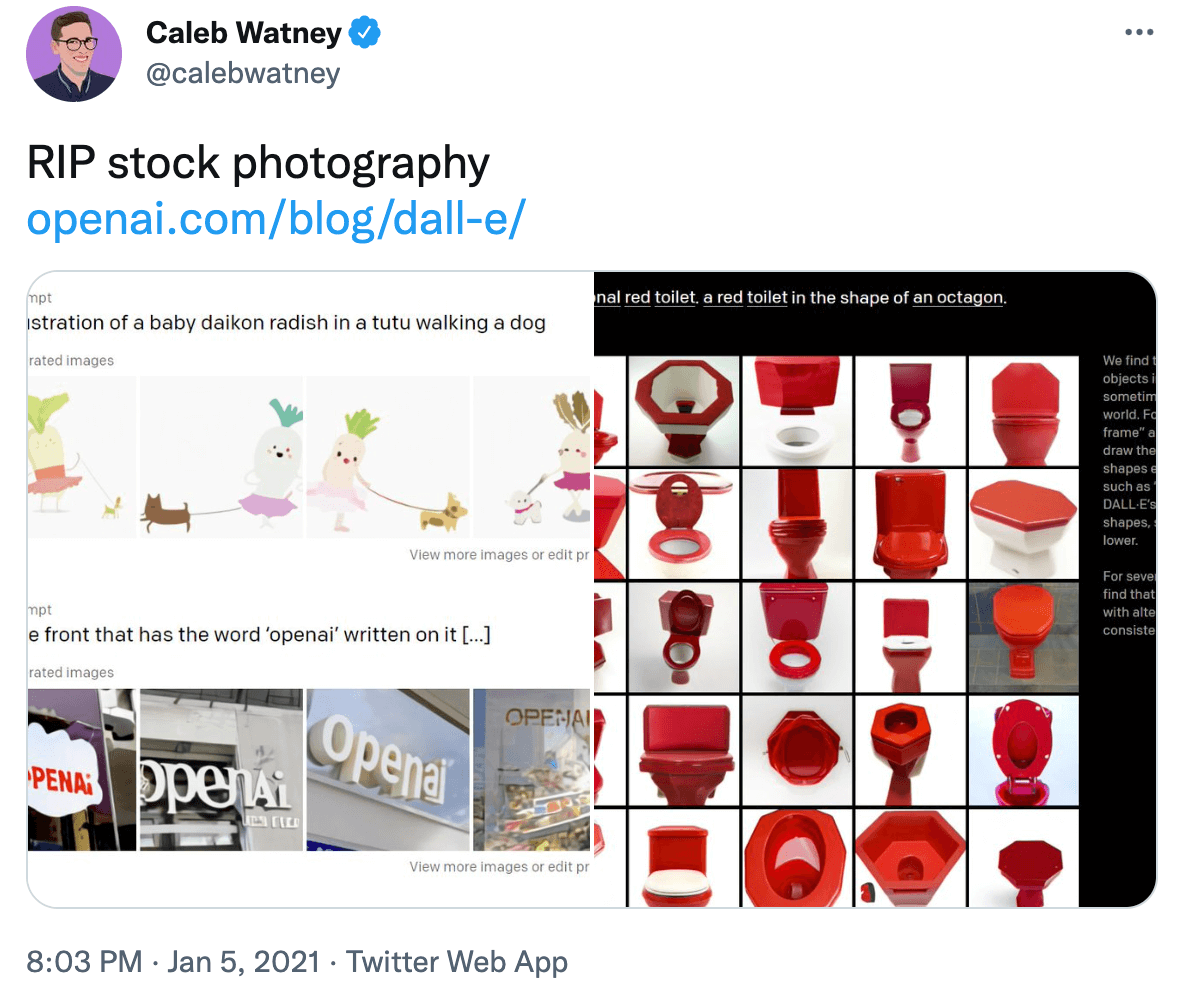
Back in January 2021, the artificial intelligence research laboratory OpenAI revealed DALL-E to the world. DALL-E, named after Salvador Dalí and WALL-E, uses AI technology to turn text prompts into new images created from scratch.

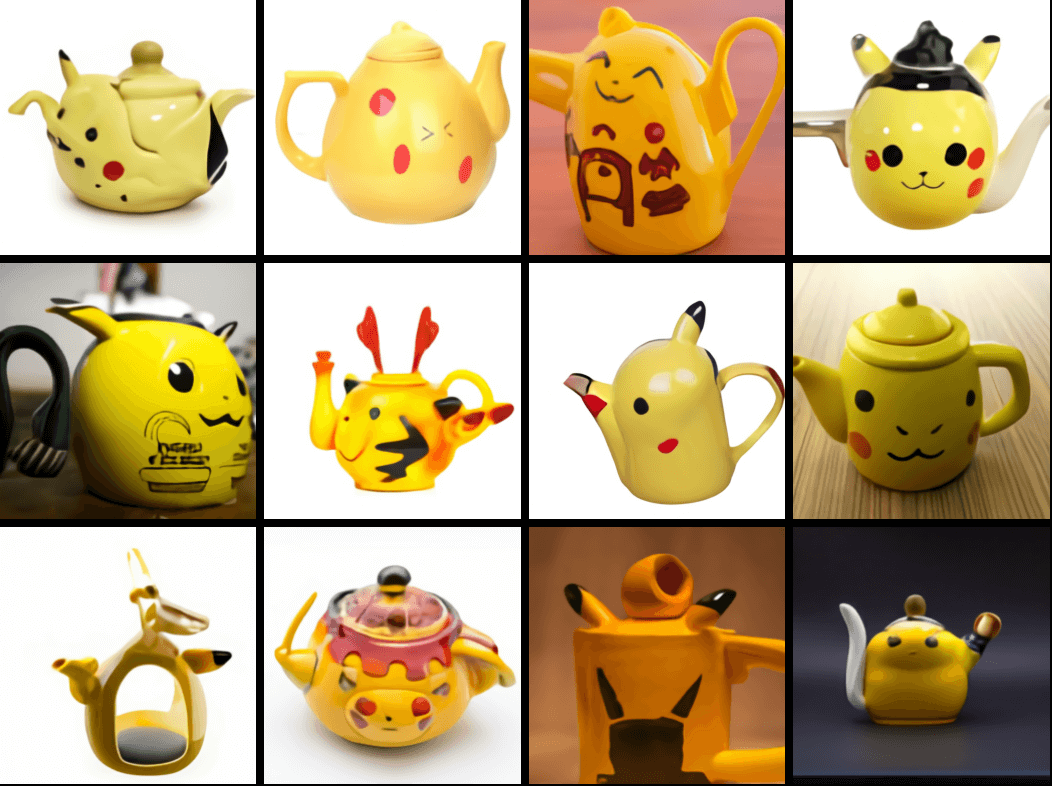
For example, the below images are based off the prompt “A teapot in the shape of Pikachu”. You can have a play around with the technology and create your own images within set restrictions here.

A hugely impressive development, DALL-E was just another step forward for the AI world. It garnered a fair bit of attention, generating news articles and social media discussions about what this technology meant for art and artists.

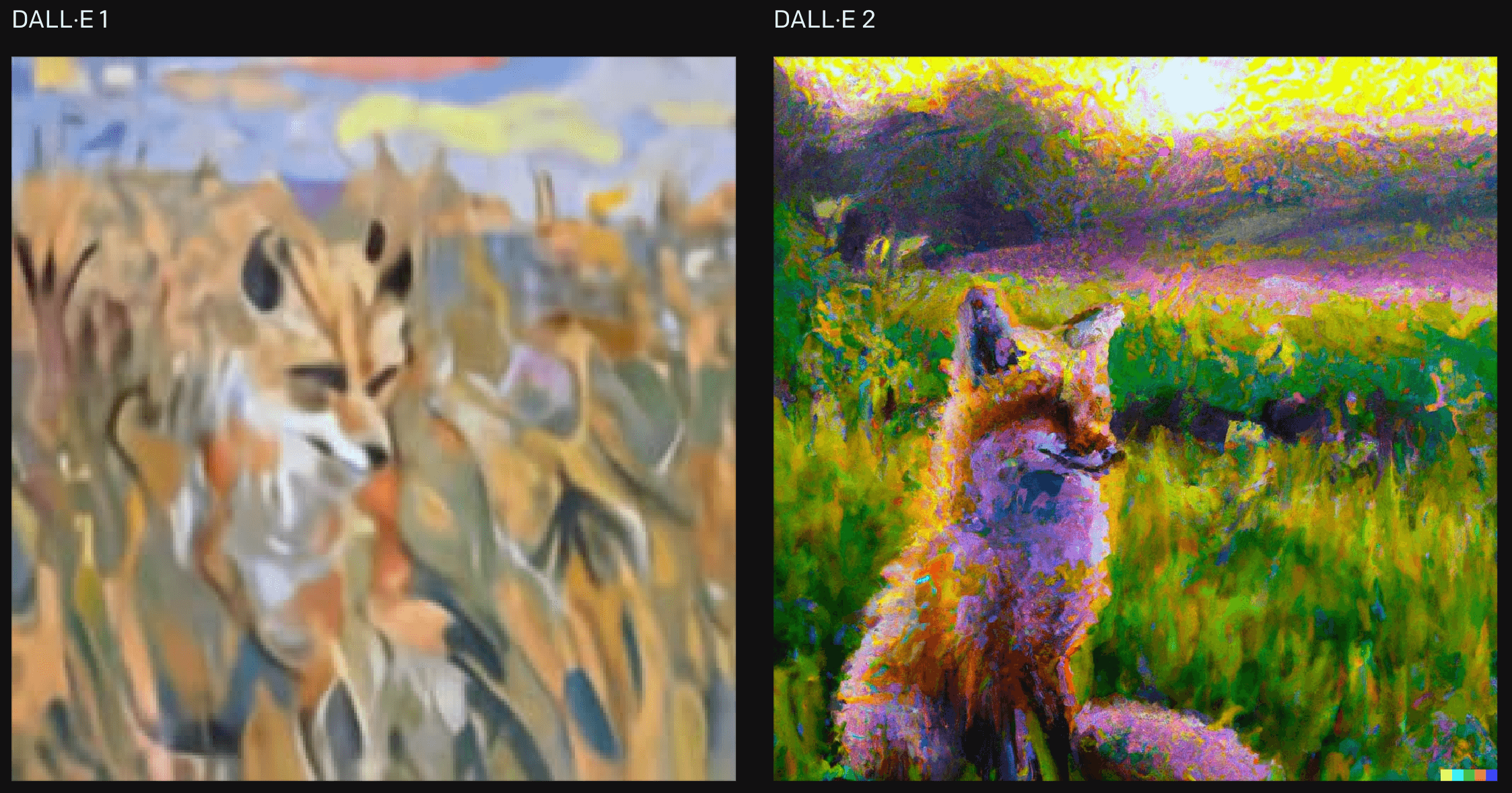
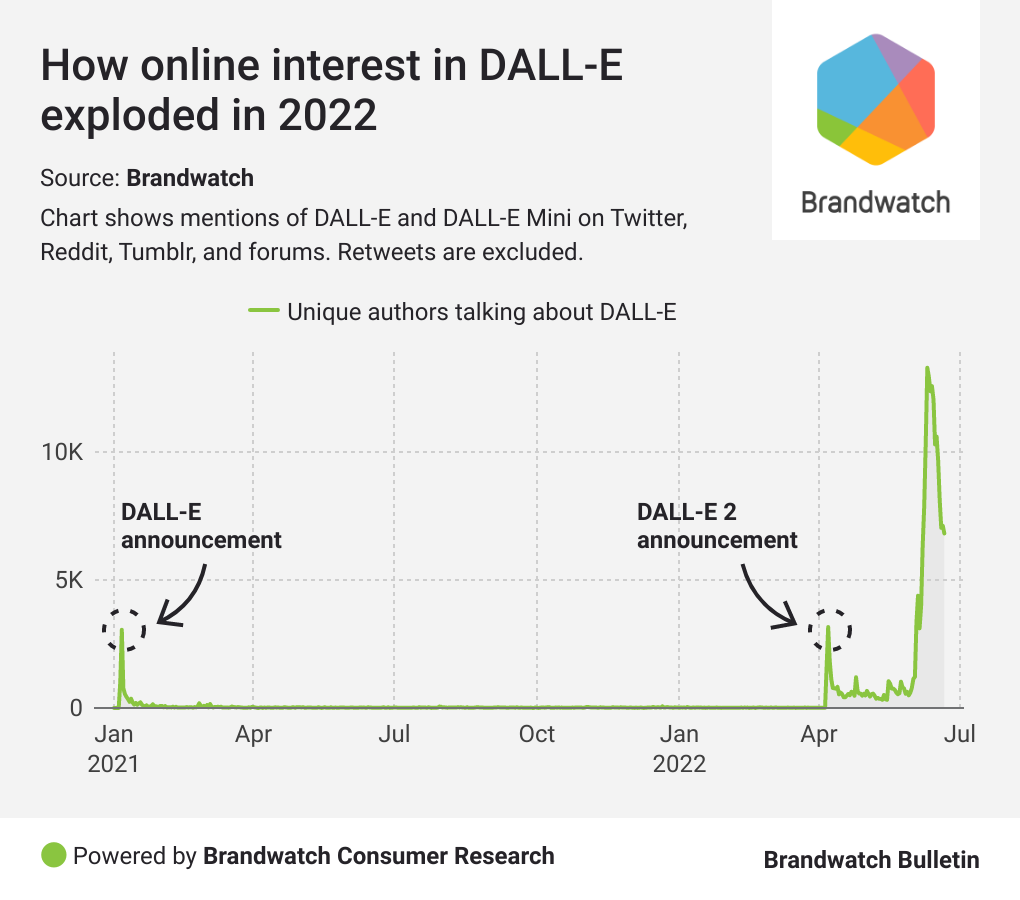
But interest soon died away, and beyond its users and the AI community, it was largely forgotten until April 2022 when DALL-E 2 was announced. This new and improved version vastly upped the quality of the images produced, as you can see in these comparison images for the prompt “a painting of a fox sitting in a field at sunrise in the style of Claude Monet.”

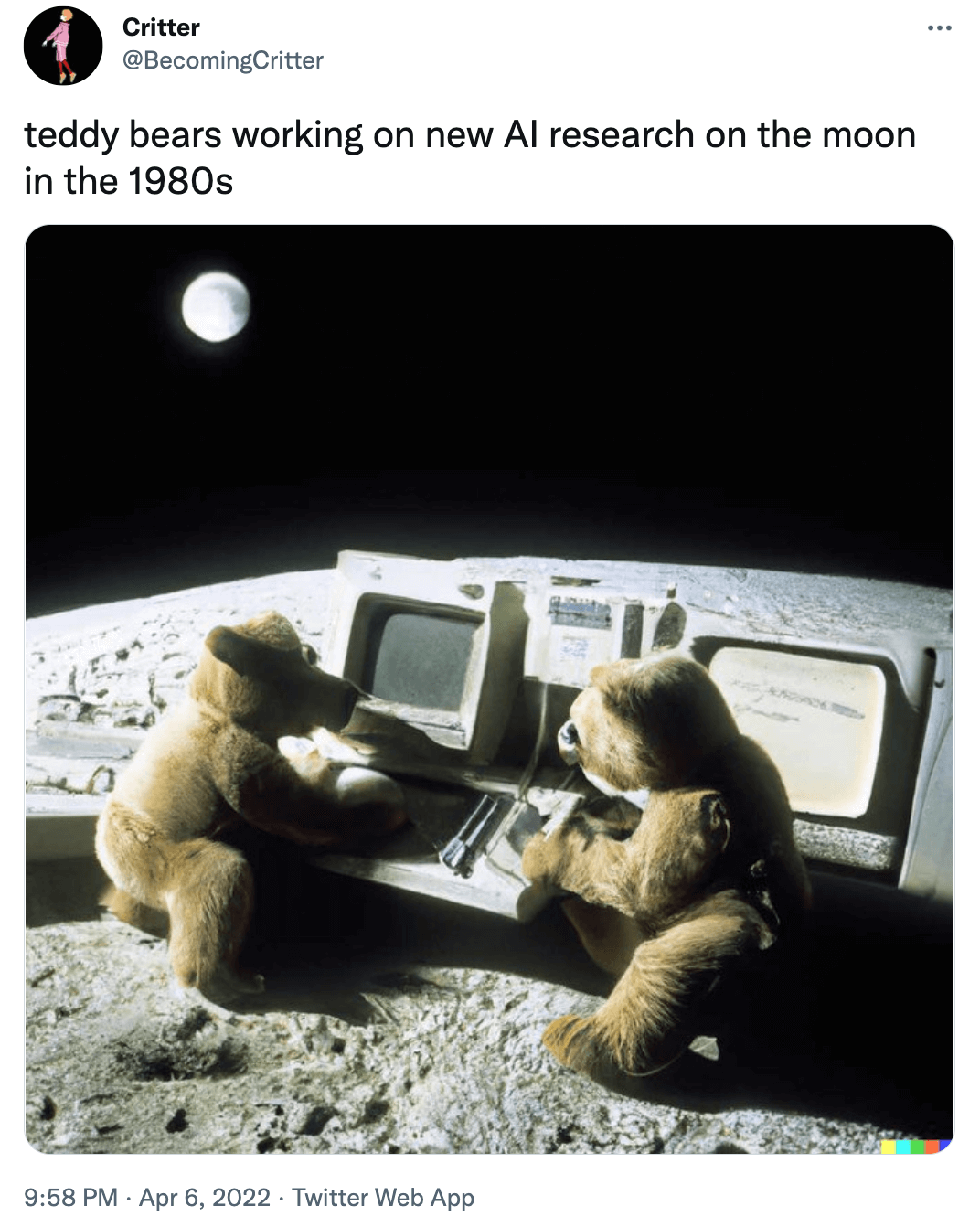
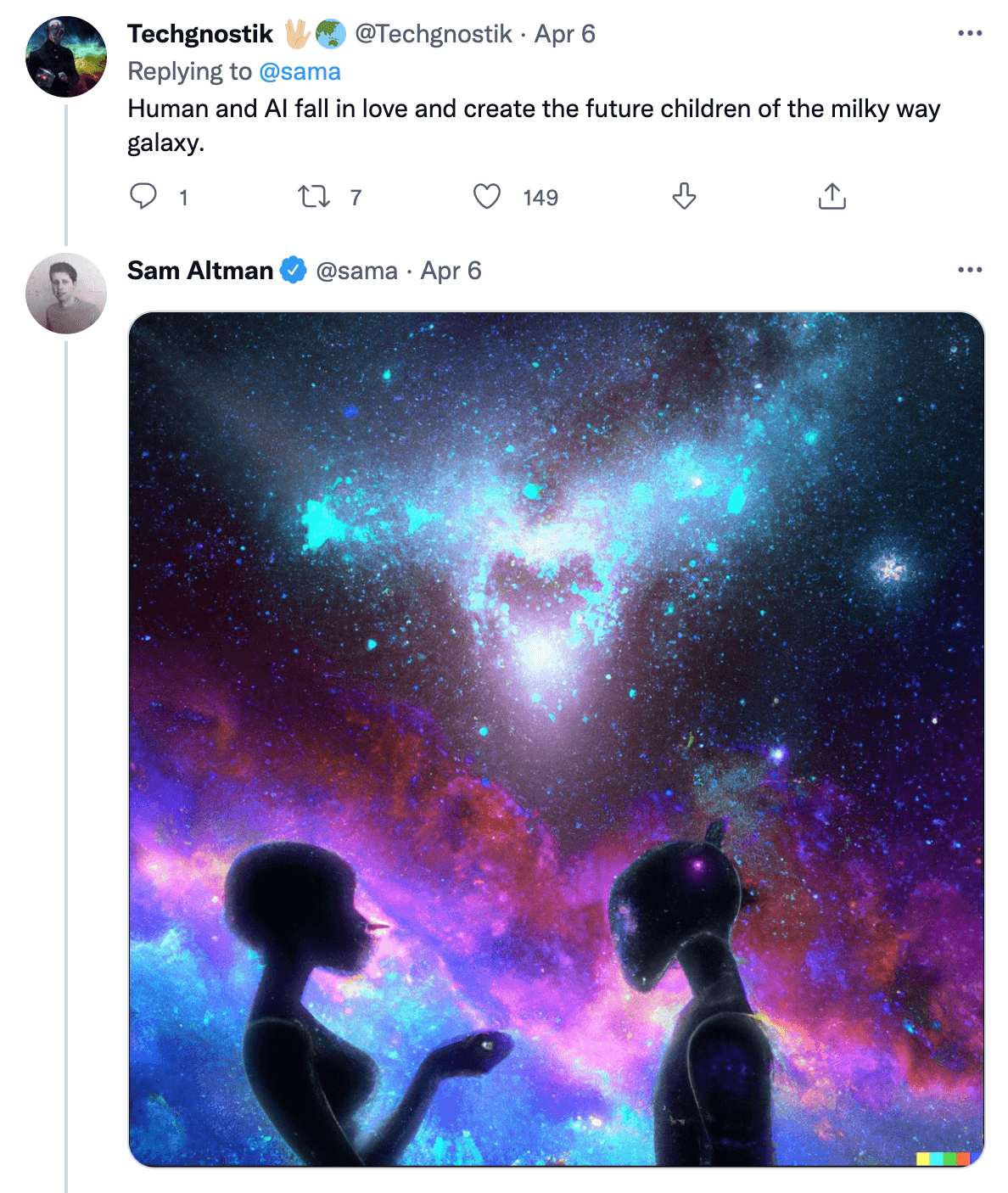
Again this sparked lots of discussions around the quality, the limitations of DALL-E 2, and its uses. There were also a slew of image examples shared, whether generated through the limited options on OpenAI’s site, or by people lucky enough to get access to the full model.

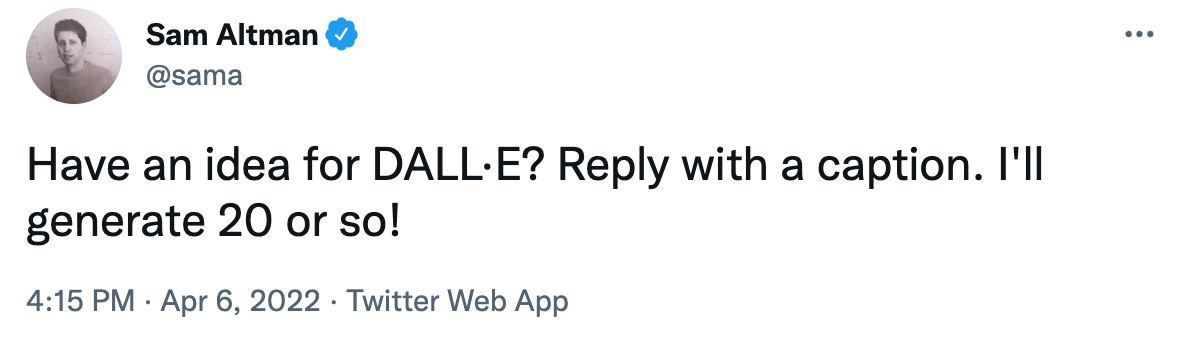
Based on our Consumer Research data, in the week of the DALL-E 2 launch, 7.6k people posted about it. A big help for this was people with access and Twitter accounts asking their followers to supply prompts. Unsurprisingly this was popular as users were itching to give the technology a go.

All in all, a decent launch for a relatively niche piece of technology, reaching a wide audience and clearly demonstrating its capabilities. We imagine OpenAI were happy with how it went.

But then something happened they didn’t expect: a tsunami of surrealist, bizarre, and sometimes unsettling images hit social media. And they weren’t coming from OpenAI’s technology, even though DALL-E was being mentioned alongside them.

To explain what happened, we need to go back to Jul 2021.

The masses join the party

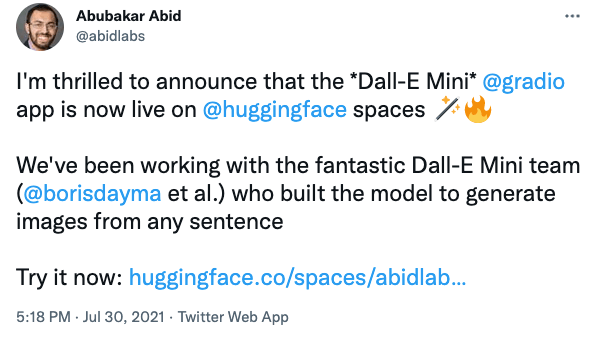
On July 30 last year, Dall-E Mini went live on Hugging Face, an online community working on a range of AI projects. A product of one of their community week events and with no official links to OpenAI, essentially it was a recreation of DALL-E with far limited training. The main pull being that anyone could give it a go.

While a hugely impressive piece of work, it mostly went unnoticed on social media. It continued to pick up a few mentions every day here and there until the DALL-E 2 release. Interest slowly spread and by the end of May DALL-E Mini was referenced around 40 or so times a day.

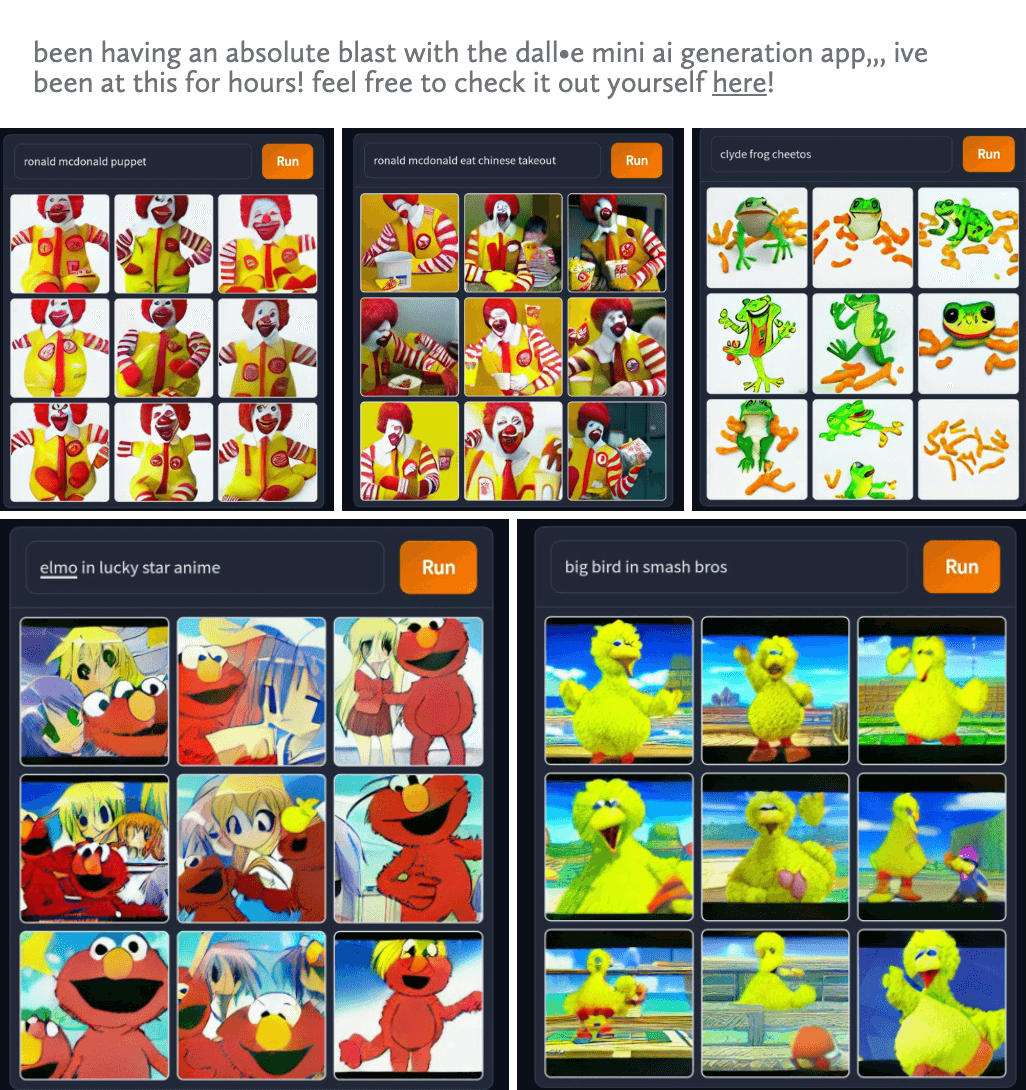
Then, on June 4, this was posted to Tumblr by user lomleyo:

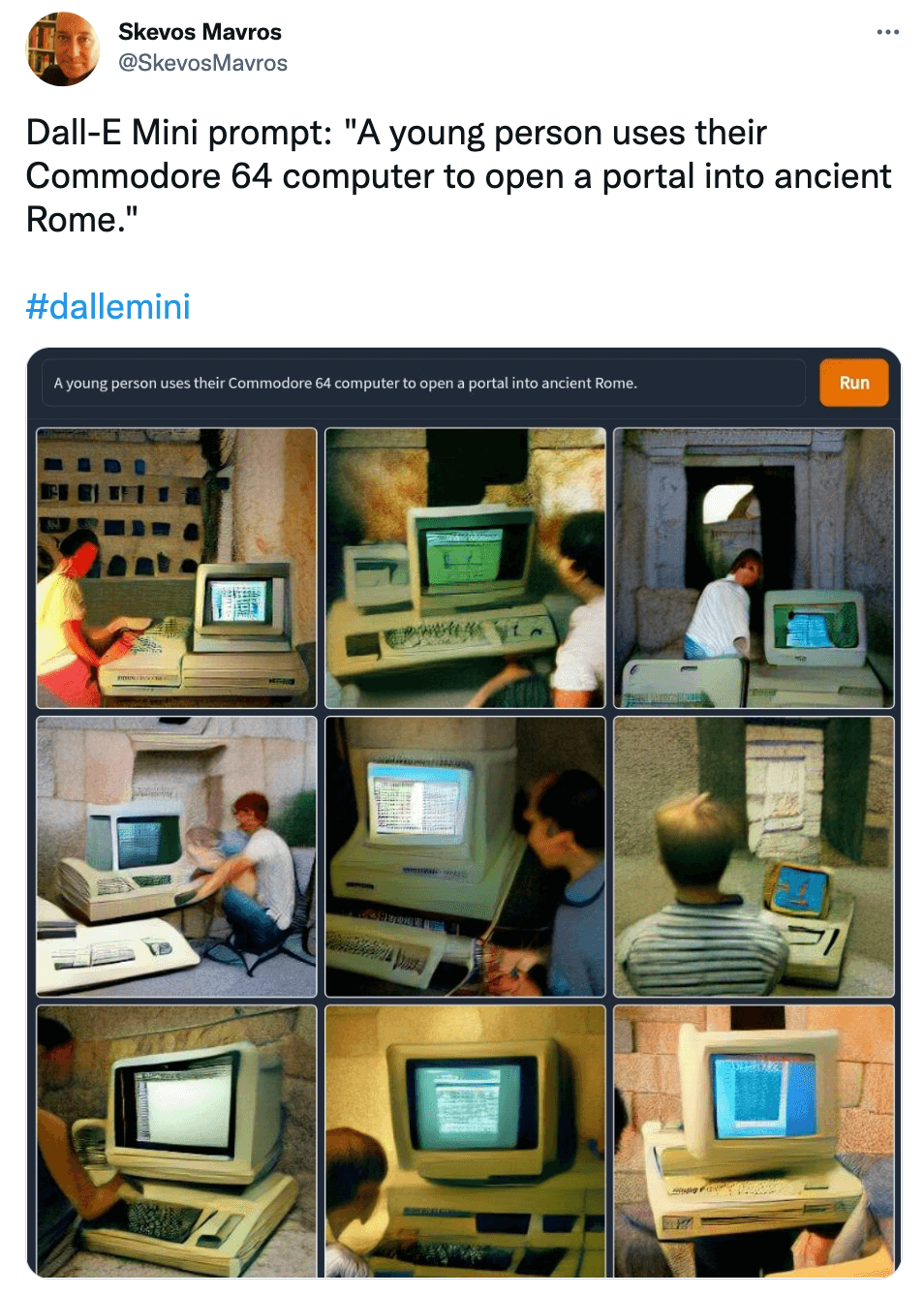
It received well over 200 shares that day, with interest on Twitter rising shortly after. Mentions of DALL-E Mini continued to rise, and by June 10 over 4.6k people were mentioning it specifically. Suddenly, you couldn’t open Twitter without seeing a 3×3 grid of strange and curious images, such as:

Others were far more bizarre and nightmarish, including the AI seemingly creating its own monster called ‘crungus’. In other words, the collective mind of the internet unleashed a wave of AI-generated fever dreams. Few could we include in this email, but feel free to search around Twitter. It won’t be long before you see something to give you cold sweats.

While this period also saw a decent amount of posts about the proper DALL-E, the main driver was the mini version. Thanks to it, there was far more interest generated than by OpenAI’s official DALL-E announcements.

But there was a PR problem for OpenAI. The fact the mini version used their technology’s name meant some people would think they had created it. Meanwhile people were sharing images generated by DALL-E Mini, and saying they were made using DALL-E.

Aside from the confusion this could cause, there were other issues. First, Mini’s images are much lower quality. Second, Mini was being used to create some particularly edgy and questionable images. While not a full-on PR disaster, it risked people associated OpenAI’s technology with memes, shock-effect jokes, and poor quality.

Luckily there was an amicable resolution. OpenAI reached out and Mini’s creators renamed it to the pleasingly punny Craiyon. While this is a step forward, it came quite late in the game.

All in all, it’s a clear example of the double-edged sword of virality. DALL-E is most certainly far more well known thanks to the viral mini version, but how many people know what the true technology is actually capable of?

OpenAI certainly isn’t being passive though. It’ll take some work, but it will be possible to fix things. We reckon designing the cover for Cosmopolitan is a perfect start.

What should we cover next?

Is there a topic, trend, or industry you’d like us to feature in the Brandwatch Bulletin? We want to hear your ideas to make sure our readers are getting what they want. We may even ask to interview you if you’re involved with the topic.

Send any and all ideas to [email protected] and let’s talk.

Thanks for reading

If you liked what you saw today, sign up for the Brandwatch Bulletin now. We’ll be back next week. See you then.

Stay safe,

The Brandwatch Bulletin team

logo
  Our Suite     Use Cases     Industries     Get started  

Runtime Collective Limited (trading as Brandwatch). English company number 3898053
New York | Boston | Chicago | Austin | Toronto | Brighton | London | Copenhagen | Berlin | Stuttgart | Frankfurt | Paris | Madrid | Budapest | Sofia | Chennai | Singapore | Sydney | Melbourne

Privacy Policy

Update subscription preferences

Unsubscribe

We value your privacy

We use cookies and similar technologies to personalize ads and content (including by sharing data with Google), to measure site performance, and to improve your experience. Learn more in our cookie policy

Privacy & Safety • Terms of Service

No, take me to settings
Yes, I agree
More info.

By using our site you agree to our use of cookies —