logo

Brandwatch Bulletin #157: Does Ketchup Belong in the Fridge?

We’ve got the data.

31 March 2023

Do you keep ketchup in the fridge? Is leftover pizza better cold or reheated? Any preference on which way to hang your toilet paper? 

While there’s no right or wrong answer to these questions, people definitely feel strongly about their preferences when they discuss them online. Meanwhile, it’s important for the brands who sell these goods to know how they’re actually used by consumers. 

So, for today’s Bulletin, we’ll use social listening data to discover which mundane items cause the biggest controversies and what can be learned from them.

Subscribe to the Brandwatch Bulletin

Fridge foods: Yay or nay?

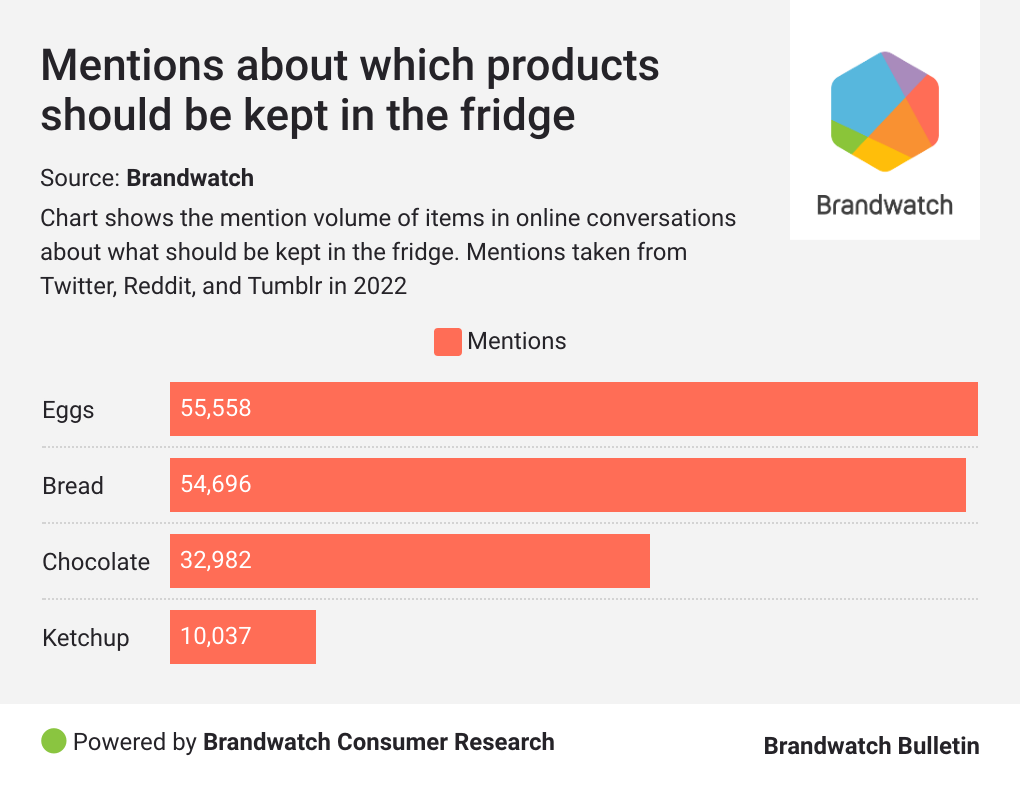
We used Brandwatch Consumer Research to search social media for public conversations about what to keep in the fridge. When looking at which fridge foods were causing the most mentions, eggs stole the show while bread came in at a close second.

While eggs and bread were the most discussed topics, social media users generally agreed that eggs belong in the fridge and bread belongs in the cupboard. However, the ketchup debate caused the most controversy. 

A whopping 60% of emotion-categorized mentions about where to store ketchup contained disgust. People were divided with their opinions on whether it should be stored in the fridge or not – and disgusted at those who don’t share their habits.

Heinz even made the cut as a trending topic with some users synonymizing “Heinz” with “ketchup”. This shows just how powerful Heinz’ branding is when it comes to the sauce space.

Now, how about the facts?

The FDA explicitly recommends keeping eggs in the refrigerator to prevent salmonella and other bacterial growth. And, while storing bread in the fridge can’t hurt you, it – ironically – means the product becomes stale much quicker.

When it comes to chocolate, it’s more down to preference. Storing chocolate in the fridge does alter taste and texture, but some people prefer a colder version. 

For ketchup, Heinz actually released a statement to address the debate a few years ago. They said that, because of its natural acidity, Heinz Ketchup is shelf-stable. “However, we recommend that this product, like any processed food, be refrigerated after opening.”

So really, it’s down to preference. Just like the next debate…

The leftover pizza debacle

Do you prefer cold leftover pizza, or would you rather stick it in the microwave to get it piping hot? This question has divided the internet, causing plenty of controversy on social.

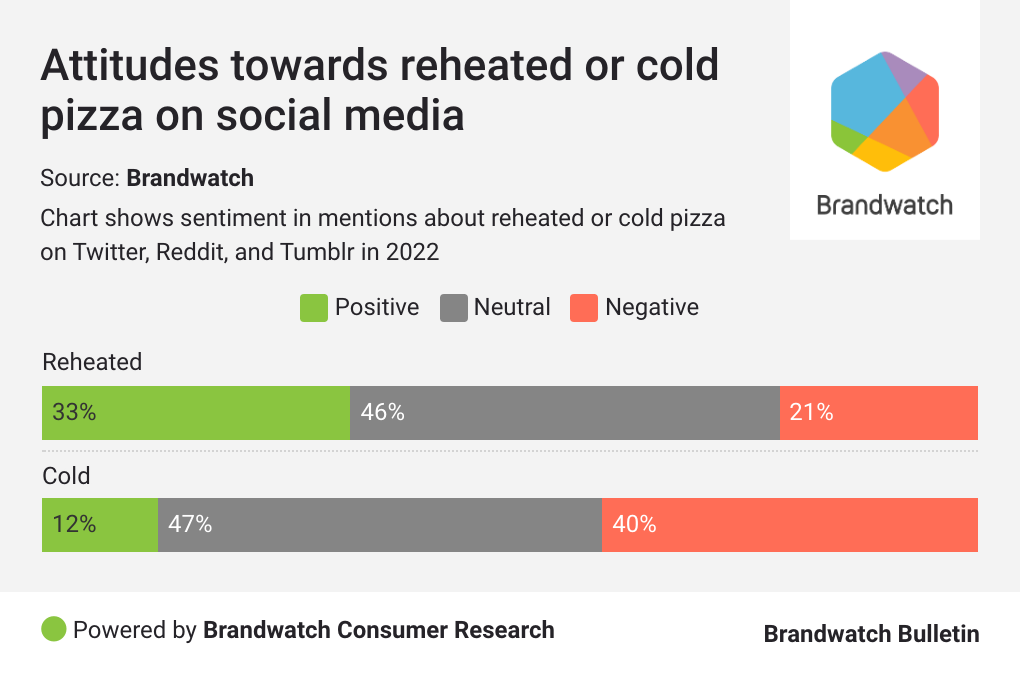
A cold pizza preference comes with plenty of backlash. In fact, 40% of mentions about cold leftover pizza were negative and just 12% were positive. On the other hand, one third of mentions discussing reheating pizza were positive.

If we had to call a winner here it’d be reheated pizza but of course there’s no right or wrong answer – as long, apparently, as you’re consuming any leftovers within four days.

Now, let’s dive into a debate where there’s a little more consensus.

Toilet paper orientation

An age old debate: Should toilet paper hang over the roll, or be tucked underneath?

Various surveys have concluded that over 70% of people prefer their toilet paper to hang over. “Overs” are also more likely to notice a roll’s orientation, and flip an incorrect roll. Interestingly, that’s almost exactly what the social data says too.

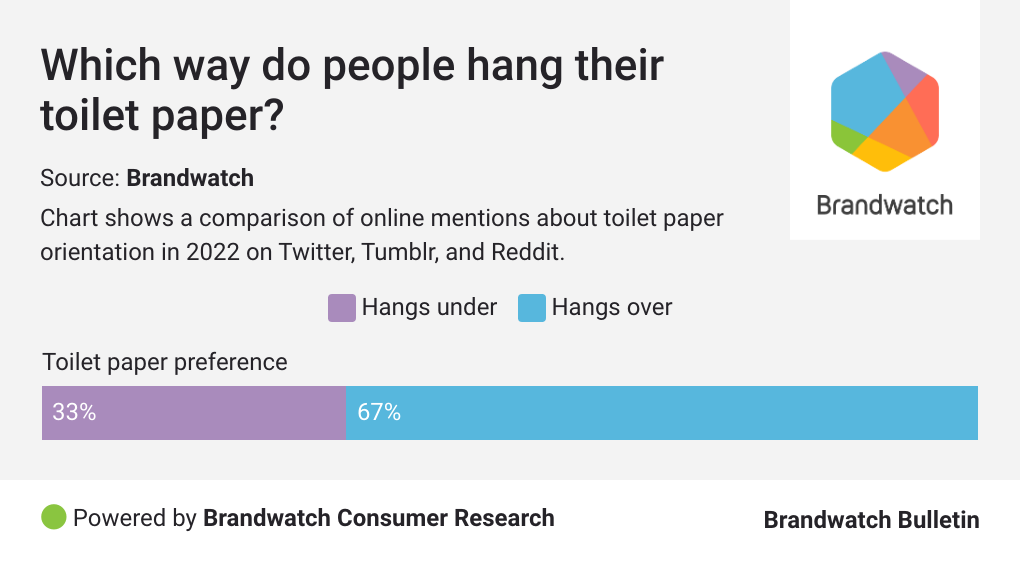
67% of mentions about toilet paper orientation were about hanging toilet paper rolls over. The “under” conversation carried a lot more negativity too, with 43% of emotion-categorized mentions showing disgust.

Like the surveys suggest, “over” hangers were more vocal about their preference – and more likely to disagree with people who hang the other way.

It turns out that “overs” might actually be right. According to the 1891 patent for the toilet-paper roll, the end of the roll should be hanging off the exterior – in other words, hanging the toilet roll over is the correct orientation. This also minimizes the amount of bacteria deposited onto the toilet roll. So maybe “overs” have a reason to be so vocal.

Controversies and consumer insights

Social media is riddled with interesting debates that brands can learn from and even get involved in.

Monitoring conversations around your products and those of competitors can help brands to understand consumer pain points and make improvements. For example, if it’s not clear that a product should be used in a particular way, they can update the packaging to help users have a better experience.

And, from providing education materials (like how to store edible goods) to entertaining followers with jokes about how best to store items like toilet paper, there are opportunities for brands of all kinds to engage with consumers online – even on the most mundane subjects.

Whether you keep your ketchup in the fridge or not, we’re not judging you. But people on the internet might. 

What should we cover next?

Is there a topic, trend, or industry you’d like us to feature in the Brandwatch Bulletin? We want to hear your ideas to make sure our readers are getting what they want. We may even ask to interview you if you’re involved with the topic.

Send any and all ideas to [email protected] and let’s talk.

Thanks for reading

You won’t receive a Bulletin next week due to the Easter weekend, so we’ll see you in a few weeks with more insightful data stories.

If you were forwarded today’s bulletin and want to get them yourself, you can subscribe to the Brandwatch Bulletin here.

See you next time,

The Brandwatch Bulletin team

logo
  Our Suite     Use Cases     Industries     Get started  

Runtime Collective Limited (trading as Brandwatch). English company number 3898053
New York | Boston | Chicago | Austin | Toronto | Brighton | London | Copenhagen | Berlin | Stuttgart | Frankfurt | Paris | Madrid | Budapest | Sofia | Chennai | Singapore | Sydney | Melbourne

Privacy Policy

Update subscription preferences

Unsubscribe

We value your privacy

We use cookies and similar technologies to personalize ads and content (including by sharing data with Google), to measure site performance, and to improve your experience. Learn more in our cookie policy

Privacy & Safety • Terms of Service

No, take me to settings
Yes, I agree
More info.

By using our site you agree to our use of cookies —