logo

Brandwatch Bulletin #190: How to Avoid the Deinfluencing Trap

How brands can stay on the right side of deinfluencing.

3 Oct 2025

Deinfluencing is no longer just a viral trend – it’s a cultural shift. What started as creators pushing back against overhyped products has become a regular part of consumer-brand dynamics. And marketers need to pay attention to avoid getting caught in the discourse. 

But how big is deinfluencing right now? And what can brands do to stay on the right side of the conversation? 

Let’s find out. 

Subscribe to the Brandwatch Bulletin

The state of deinfluencing 

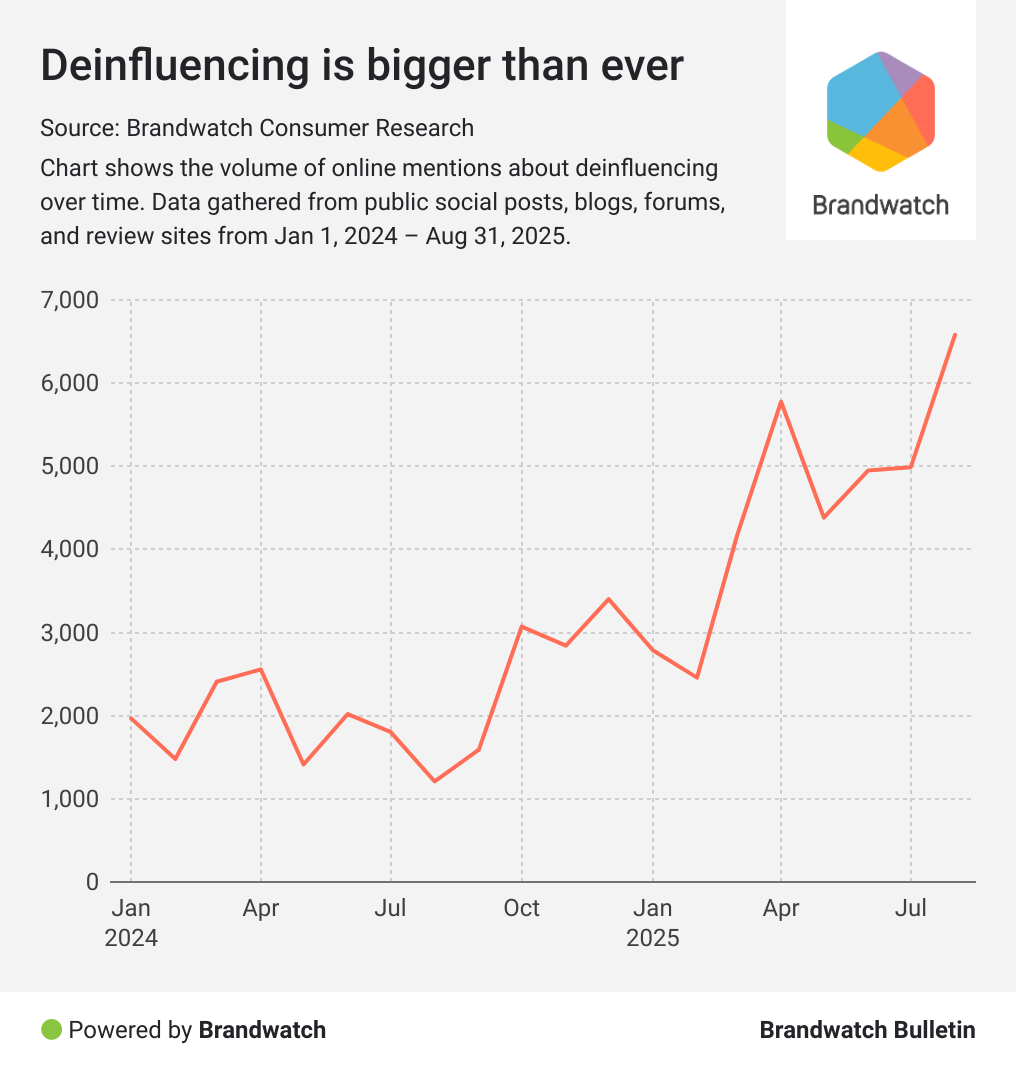
Mentions of deinfluencing are up 79% in 2025 according to our State of Social 2026 report. But it’s not just the volume that’s changed. It’s how people are using the term. 

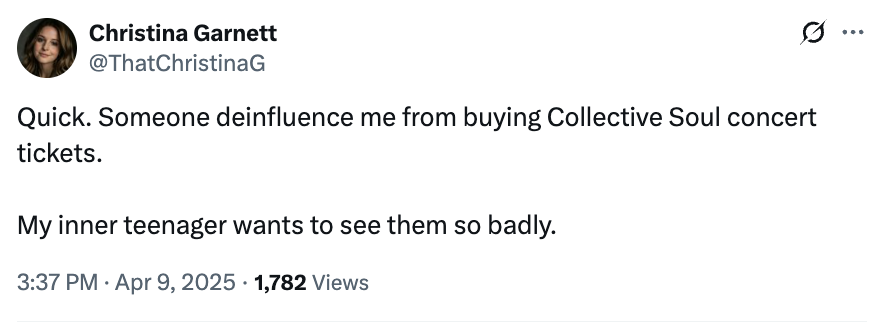
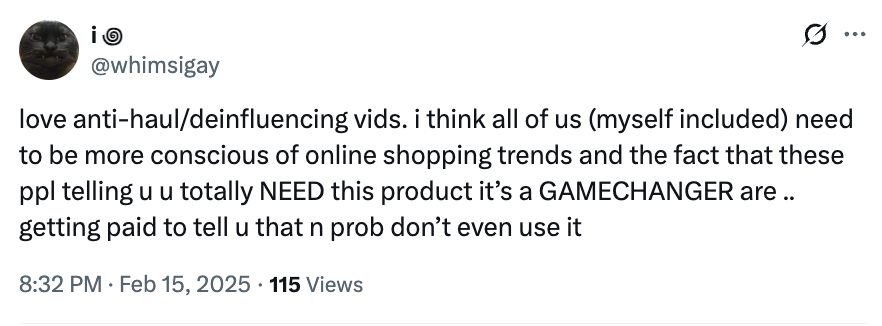
What was once a term that appeared mainly in viral videos, deinfluencing has become a go-to phrase in everyday consumer conversations. From asking peers what not to buy to sharing experiences with overhyped products, people are using deinfluencing as a tool to manage purchasing expectations. 

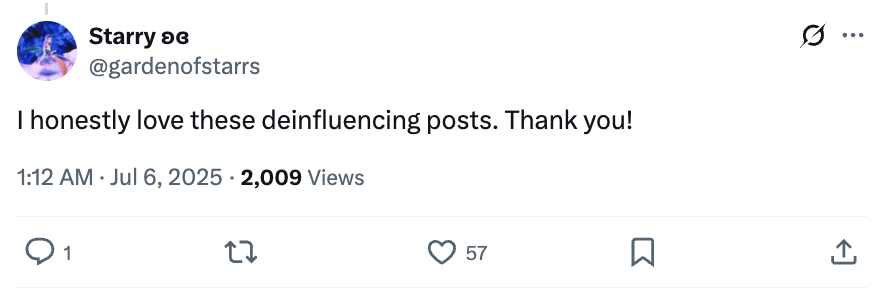
But with joy being the most prominent emotion in these conversations (at 36% of deinfluencing mentions), it’s not all negative. Many posts are about products people really want to buy or showing appreciation for peers being honest about their product experiences.  

And in these cases, being part of the conversation isn’t a threat at all. Instead, it’s an opportunity for brands to understand real consumer opinions.

For example, drugstore makeup brand Milani benefitted from being compared to pricier brands when influencer Hasime Kukaj said the brand’s lipstick was similar to a more expensive competitor’s product. Afterwards, Walmart shared they’d seen a 500% jump in sales of the product. In these cases, embracing the comparison to more prestige products can be a real win.

At its core, deinfluencing is simply another way for consumers to gather real-person recommendations and product information. And brands should be actively listening to tap into these fruitful conversations.

But what’s driving consumers to seek out these ‘anti-recommendations’ in the first place? And what should marketers do about it? 

Why deinfluencing is now the norm  

Influencer marketing is set to surpass $30 billion in 2025, and 88% of consumers say they’ve purchased something based on an influencer’s recommendation. But with such massive influence comes massive responsibility – and when products don’t live up to the hype, disappointed consumers are pushing back publicly. 

And a couple of things have amplified this pushback. Firstly, platforms have shortened the path to purchase for shoppers. Social commerce and shoppable posts have made it easier than ever to buy impulsively – meaning less time for research and more potential for buyer’s remorse when products don’t live up to expectations. 

At the same time, consumer behaviors and priorities have shifted in the opposite direction. Decision fatigue, the rising cost of living, and growing awareness of overconsumption mean people want to be more cautious about what they add to their baskets – creating tension between platforms pushing impulse purchasing and consumers trying to buy more thoughtfully. 

Consumers are increasingly relying on peer opinions to validate their purchases, making deinfluencing a social norm rather than a fleeting trend. In fact, people actively look for reasons not to buy something.

And for brands, this isn’t necessarily bad news: these conversations reflect a growing demand for authenticity. I know that might sound counterintuitive, so let me explain. 

How marketers can turn deinfluencing into a positive 

Deinfluencing allows brands to tap into a more authentic brand identity. The first step to doing this? Listening.

Tracking deinfluencing mentions around your brand and industry can reveal where expectations are falling short. Whether it’s improving your product experience to changing your marketing strategy, these insights can help you close the gap between what you’re promising and what you’re delivering – before disappointed customers do it for you.  

But here’s where many brands stumble: the response. Be cautious when engaging. Sometimes acknowledging criticism or clarifying a consumer misconception can help – but make sure to avoid any heavy-handed marketing efforts. In fact, a recent study found that using direct language (the kind designed to drive immediate action) as a brand actively disengages people from your efforts. And in the context of deinfluencing, it could actually invite more criticism. 

Finally, brands need to keep long-term trust in mind. Admitting that a product isn’t right for everyone might actually reduce the risk of returns, avoid bad reviews, and keep negative mentions at bay. Being seen as transparent is always a plus (as highlighted in our report), and companies that prioritize authenticity are far more likely to build loyal customer bases in the long run. 

The takeaway? Don’t fear deinfluencing – learn from it. The brands that listen and improve will come out on top. 

TL;DR 

The short of it? Deinfluencing is a core part of consumer culture. But people aren’t just rejecting products – they’re seeking authentic and honest opinions before purchasing. Listening and learning to these conversations can offer vital insights into customer intentions and expectations. 

I want to hear from you! 

Spotted a trend or got a burning question about today’s topic? Just hit reply – your ideas often spark our best deep dives. Brandwatch customers can join the conversation in the Community, too.

And if this gave you an “aha” moment, forward it to someone who’d appreciate it. New readers can subscribe here. 

See you next time,

Emily @ Brandwatch 

logo
  Our Suite     Use Cases     Industries     Get started  

Runtime Collective Limited (trading as Brandwatch). English company number 3898053
New York | Boston | Chicago | Austin | Toronto | Brighton | London | Copenhagen | Berlin | Stuttgart | Frankfurt | Paris | Madrid | Budapest | Sofia | Chennai | Singapore | Sydney | Melbourne

Privacy Policy

Update subscription preferences

Unsubscribe

We value your privacy

We use cookies and similar technologies to personalize ads and content (including by sharing data with Google), to measure site performance, and to improve your experience. Learn more in our cookie policy

Privacy & Safety • Terms of Service

No, take me to settings
Yes, I agree
More info.

By using our site you agree to our use of cookies —