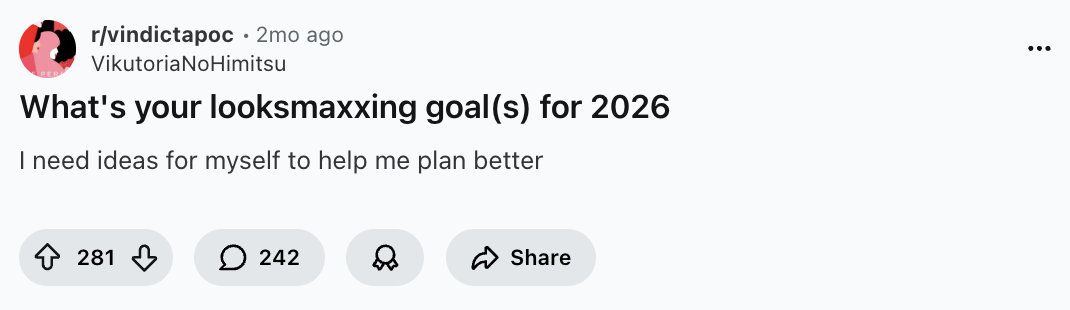
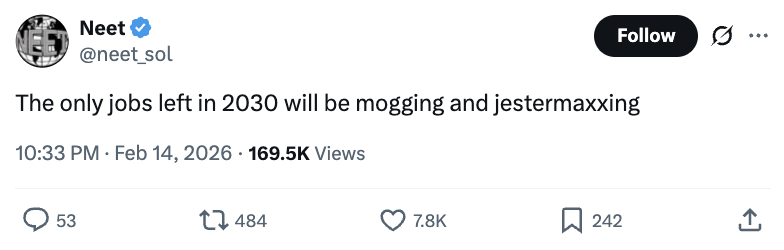
The vocabulary reinforces hierarchy among looksmaxxers. It frames self-improvement not as personal growth, but as a competition.
For some, looksmaxxing feels empowering – it’s a structured way to take control. As Jamilla Rosdahl from the Australian College of Applied Psychology wrote: “Where young people feel like they can’t control their environment, they may turn to trends such as looksmaxxing as something they can control.”
But on the flip side, the movement is also rooted in insecurity and, in some spaces, isolation. And as participation grows, so does concern from mental health advocates.
After all, this isn’t just a beauty trend, it’s a wellbeing conversation. And that’s what makes it sensitive territory for brands.
How can brands tread lightly?
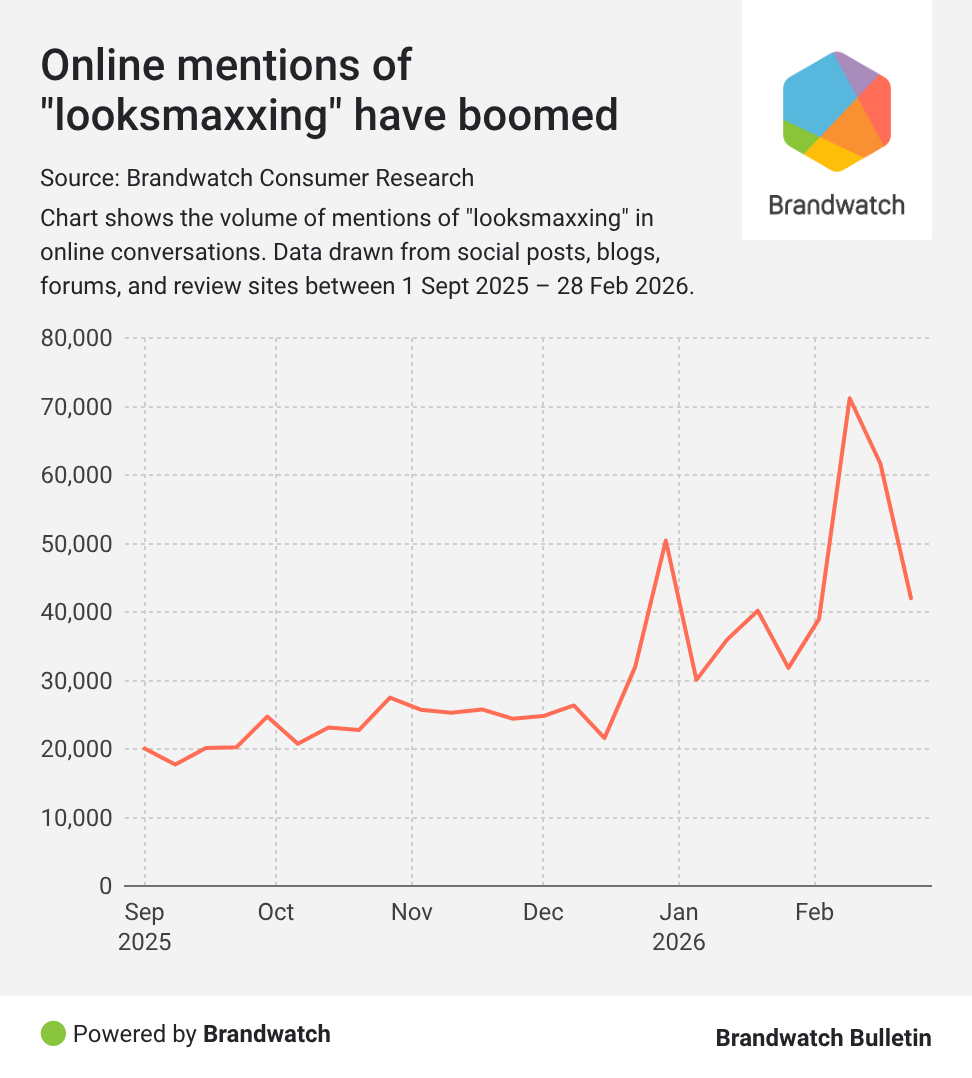
A 32% increase in unique authors shows us that new participants are entering the looksmaxxing conversation – not just observing it. Young men are talking openly about skincare. They’re comparing cosmetic procedures. And they’re publicly tracking progress.
But this visibility does not equal endorsement.
While the growth of the looksmaxxing conversation reflects shifting norms around male grooming and self-presentation, brands need to resist the temptation to lean into the more extreme or competitive elements driving engagement. Popularity alone isn’t a green light.
Looksmaxxing communities often speak in metrics – like jawline angles and percentages of muscle mass – and they tend to value proof and transparency. Educational, research-based messaging may resonate more than aspirational aesthetics alone, but this is where brands must be nuanced. It’s important to ensure that performance-driven messaging avoids implying deficiency. There’s a fine line between “enhance what you have” and “fix what’s wrong.”
A grooming brand using looksmaxxing vocabulary might generate short-term engagement, but given that 84% of sentiment is negative, that association carries real reputational risk – whereas a brand that leads with ‘build a routine that works for you’ frames the product as a tool for self-care rather than a correction for a flaw.
Brands need to critically analyze their own messaging. They need to ask if they’re encouraging healthy self-improvement, or reinforcing comparison culture.
After all, in a social space where algorithms dominate and validation feels measurable, brands can decide to fuel the pressure – or help to reshape it.