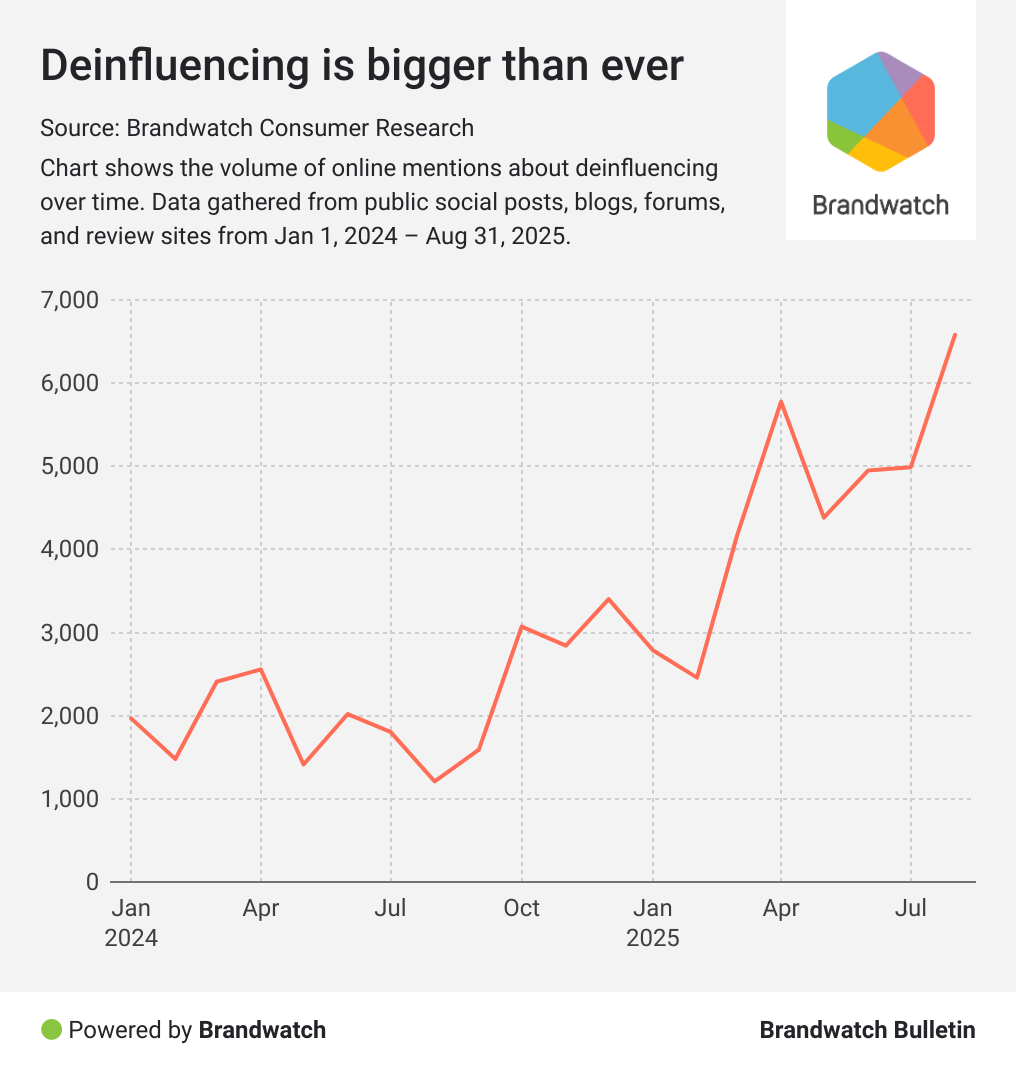
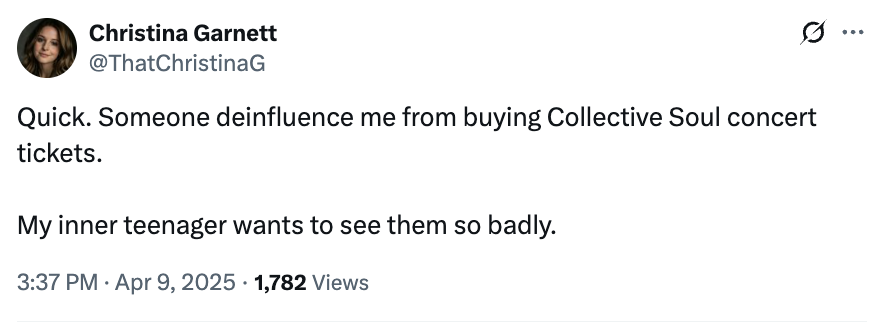
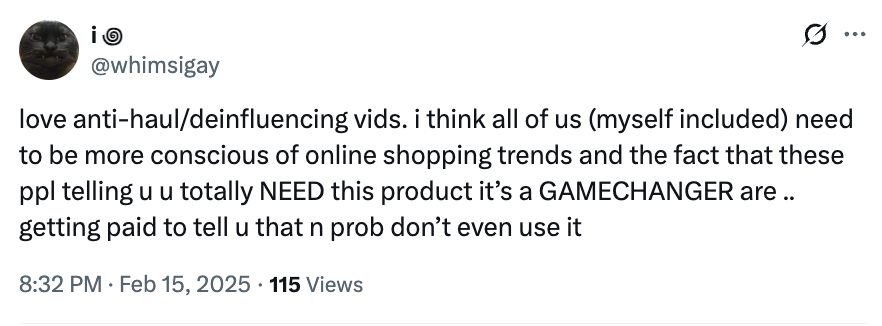
Consumers are increasingly relying on peer opinions to validate their purchases, making deinfluencing a social norm rather than a fleeting trend. In fact, people actively look for reasons not to buy something.
And for brands, this isn’t necessarily bad news: these conversations reflect a growing demand for authenticity. I know that might sound counterintuitive, so let me explain.
How marketers can turn deinfluencing into a positive
Deinfluencing allows brands to tap into a more authentic brand identity. The first step to doing this? Listening.
Tracking deinfluencing mentions around your brand and industry can reveal where expectations are falling short. Whether it’s improving your product experience to changing your marketing strategy, these insights can help you close the gap between what you’re promising and what you’re delivering – before disappointed customers do it for you.
But here’s where many brands stumble: the response. Be cautious when engaging. Sometimes acknowledging criticism or clarifying a consumer misconception can help – but make sure to avoid any heavy-handed marketing efforts. In fact, a recent study found that using direct language (the kind designed to drive immediate action) as a brand actively disengages people from your efforts. And in the context of deinfluencing, it could actually invite more criticism.
Finally, brands need to keep long-term trust in mind. Admitting that a product isn’t right for everyone might actually reduce the risk of returns, avoid bad reviews, and keep negative mentions at bay. Being seen as transparent is always a plus (as highlighted in our report), and companies that prioritize authenticity are far more likely to build loyal customer bases in the long run.
The takeaway? Don’t fear deinfluencing – learn from it. The brands that listen and improve will come out on top.