logo

Brandwatch Bulletin #192: How Trends Die (And Why Brands Should Care)

What the "6-7" meme tells us about trend lifecycles.

5 Dec 2025

Trends don’t always die naturally – sometimes audiences kill them. And whether it’s a poorly timed meme or a two-week-old TikTok, jumping in after a trend’s expiration date sends a clear message to your audience: you’re not reading the room. 

So, let’s dive into the latest trend on everyone’s For You Page (FYP) to see what its rapid rise and fall can teach brands about how trends die, and when it’s time to move on.  

Subscribe to the Brandwatch Bulletin

The 6-7 meme’s rise (and swift fall) 

Like most viral trends, the 6-7 meme rose to fame in ways no one can really explain.

Early signals point to American rapper Skrilla’s song Doot Doot (6 7), released in late 2024. By January 2025, TikTokers were already using the track over basketball clips, but this was only the beginning – it then snowballed.

A wave of in-jokes led to a breakout moment in September: a video of a young boy courtside at a basketball game shouting “6-7” and throwing the now-iconic hand gestures. The clip exploded, racking up over 7.8 million views on YouTube alone. 

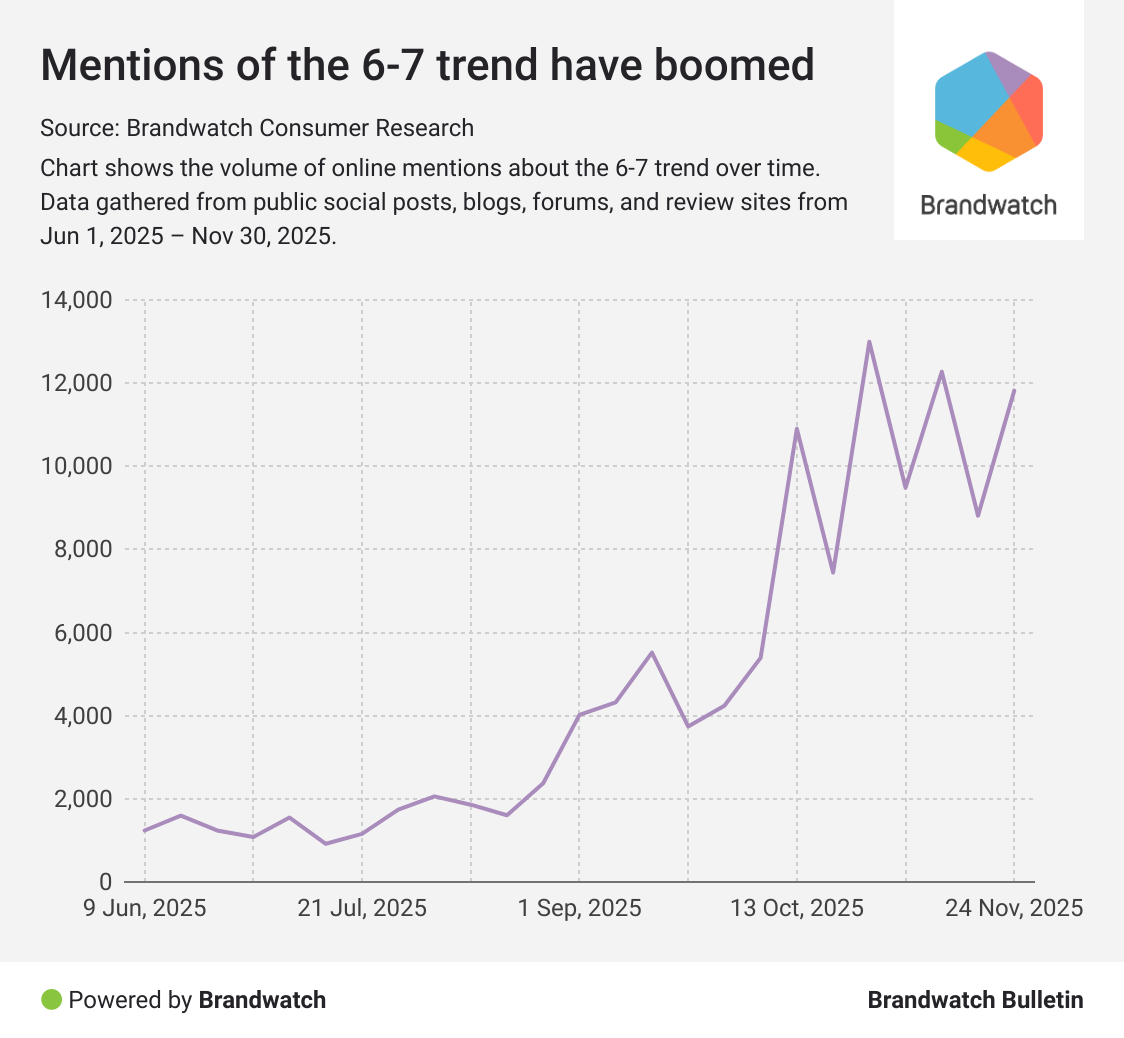
According to Brandwatch Consumer Research, online conversations around the 6-7 trend surged in the months that followed – hitting 152k total mentions this year. A series of mainstream moments, including a mention in a recent South Park episode, pushed the trend into full cultural visibility (more on this below). 

So, what does 6-7 actually mean? 

Well, nothing. But that’s exactly why it shot to success. The mystery (and the sense that everyone else was in on a joke you should understand) made it irresistible – especially to younger generations. They would caption mundane moments with ‘6-7’ or use the hand gesture in reaction videos, creating a nonsensical in-joke that relied entirely on vibes instead of meaning. 

And viral linguistic memes like 6-7 are vital for youth culture. Tony Thorne, director of the Slang and New Language Archive at King’s College London, told the BBC: “Sharing a knowledge of new slang and viral fads is both part of bonding and important in expressing a social identity.” At this point, participation in the 6-7 trend became the only way to keep up – and for younger generations to connect. 

By October, Dictionary.com even listed “6-7” as the word of the year.  

For a moment, the meme was everywhere. But that ubiquity became the beginning of the end. Once a trend saturates feeds, audiences shift from enjoyment to avoidance – fast.  

Today, dropping a 6-7 reference doesn’t make you timely – it makes you look late. So, how can brands join viral moments before the window closes? 

The stages of a dying trend 

For brands, jumping into a post-peak trend isn’t just ineffective – it’s risky. Audiences tire quickly. And once the cultural tide turns, no amount of clever content can save a late entry. 

So, let’s use the 6-7 trend as an example to identify the stages of a dying trend, so you can stay relevant. 

Stage 1: Mainstreamification 

Once authority figures, mainstream media, or “normie” culture join a youth-led meme, the end is already in sight. 

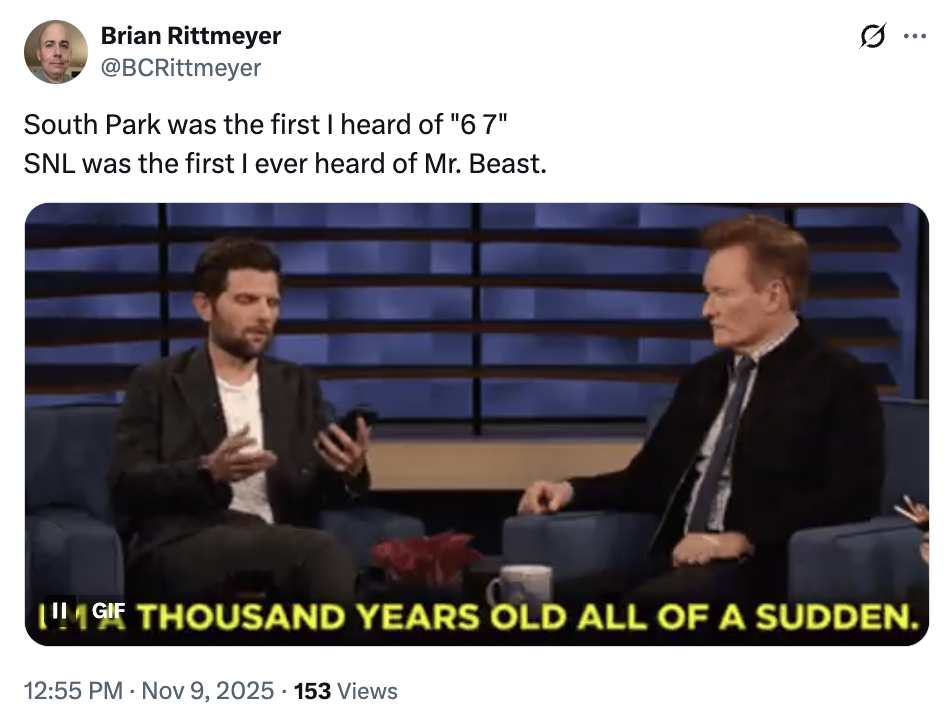
In October, South Park dropped a 6-7 reference. That same week, Skrilla announced that Doot Doot (6 7) would feature in the upcoming Grand Theft Auto VI soundtrack, and Jimmy Kimmel dissected the meme on his show. 

The impact was immediate: mentions of the trend jumped 102%. 

But as with any trend, hitting mainstream didn’t extend its lifespan – it shortened it. Why? Because once a trend becomes accessible to everyone, early adopters lose their sense of ownership – and that exclusivity is what made it valuable in the first place. 

Stage 2: Irritation 

By the time 6-7 was everywhere, early adopters were over it. And once a trend crosses the threshold from niche to on everyone’s feeds – its decline only accelerates.

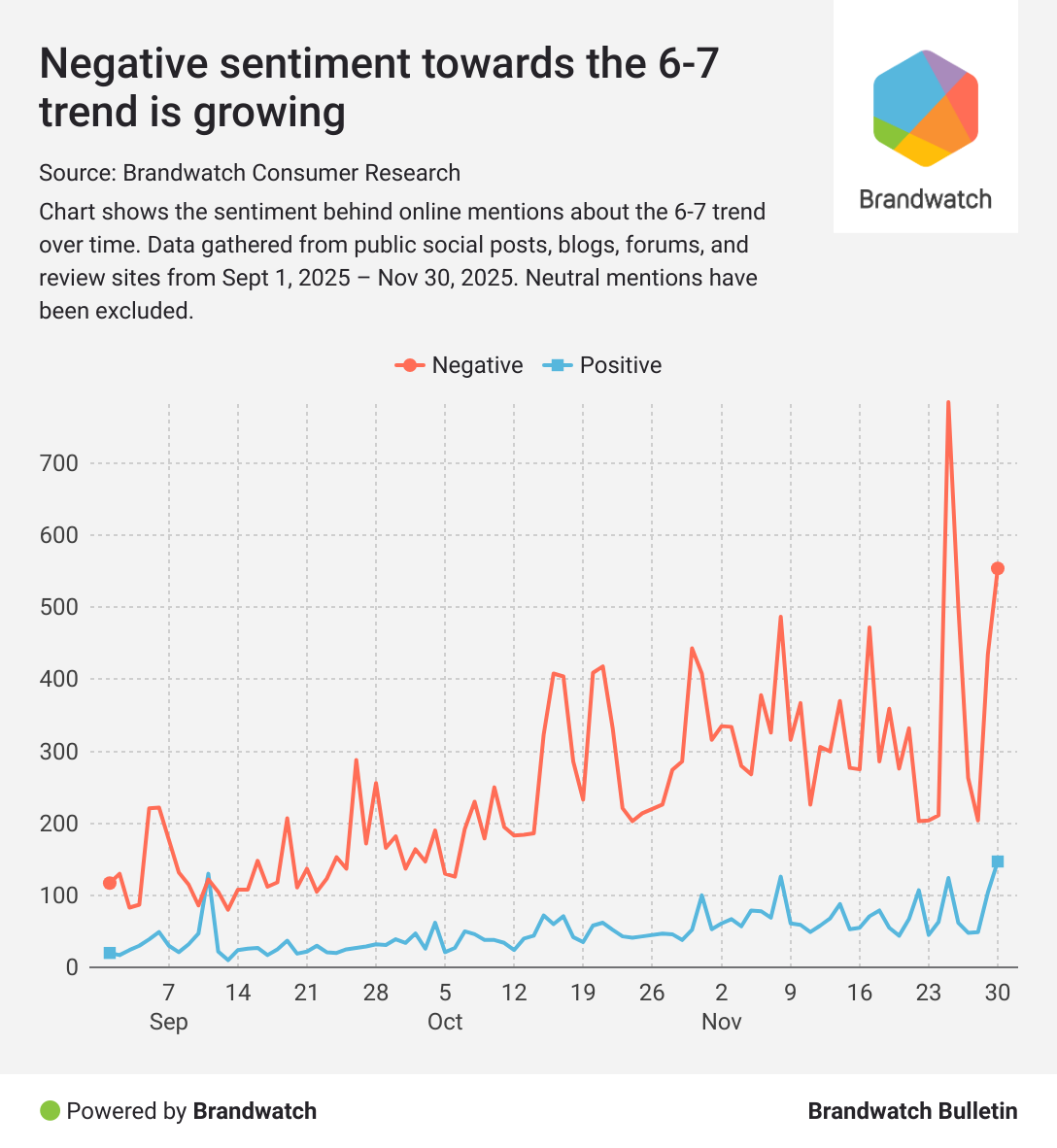
Brandwatch Consumer Research makes the pattern clear. From early September onward, negative sentiment around the 6-7 trend steadily increased while positive mentions stayed relatively flat. 

This imbalance is a telltale sign of a dying trend: people aren’t getting more excited – they’re getting irritated. 

The spikes in negativity through mid-October coincide perfectly with major cultural events like the South Park episode. And each of these moments amplified the disconnect between how frequently 6-7 appeared, and how much audiences actually wanted to see it. 

To many, mainstream participation signaled that the inside joke had escaped to the general population. Oversaturation kicked in, novelty evaporated, and – for early adopters – irritation took over. 

Stage 3: Backlash 

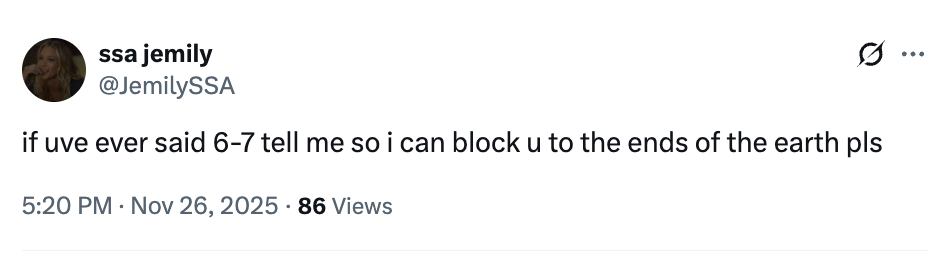
By this point, early adopters had started turning against the trend. To them, it feels like the only people still using the meme are brands, try-hard celebs, and latecomers – a sure sign that the cultural moment has slipped away.

Instead of participating, people begin posting about being tired of the trend. The joke shifts from doing, to mocking those still doing. And that’s where the sentiment in these conversations flip. 

As a result: the feed finally rejects it too. Engagement drops, algorithms deprioritize the trend’s content, and visibility falls. And those still genuinely getting involved risk looking out of touch. 

How to avoid being late to the party 

Brands only benefit from trends when they’re part of the joke – not catching up to it. Miss this window, and you risk weakening the connection you’ve built with your audience.

To stay ahead, focus on the signals that a trend might be losing steam: mainstreamification, oversaturation, and irritation. But identifying these shifts is only half of the battle. The real advantage comes from building systems that let you act quickly when a trend’s still rising. 

Building a trend readiness framework helps you act fast when trends enter your radar. For example: pre-approve visual styles, messaging, and response protocols so your team can move from ‘should we?’ to ‘here’s how.’ Identify the themes, formats, and cultural moments that naturally fit your brand ahead of time. This way, then when a trend breaks, you’re executing while competitors are still seeking approval. 

And bear in mind that you need to listen to your audience – not just the internet at large. Younger audiences drop trends the moment they feel overexposed, but other demographics may give you a bit more leeway. A trend that’s dead to 18-24s might be peaking for your 35-55 audience. Different timing windows aren’t wrong – they’re strategic opportunities. 

And remember, trends rarely die of old age – instead audiences kill them when they decide they’re no longer fun, fresh, or theirs to claim. 

TL;DR 

The 6-7 meme grew and died fast. Once mainstream media joins, early adopters bail and sentiment tanks. For brands: watch for mainstreamification, track negative sentiment spikes, and build approval processes that move in hours, not days. 

I want to hear from you! 

Spotted a trend or got a burning question about today’s topic? Just hit reply – your ideas often spark our best deep dives. Brandwatch customers can join the conversation in the Community, too.

And if this gave you an “aha” moment, forward it to someone who’d appreciate it. New readers can subscribe here. 

See you next time,

Emily @ Brandwatch 

logo
  Our Suite     Use Cases     Industries     Get started  

Runtime Collective Limited (trading as Brandwatch). English company number 3898053
New York | Boston | Chicago | Austin | Toronto | Brighton | London | Copenhagen | Berlin | Stuttgart | Frankfurt | Paris | Madrid | Budapest | Sofia | Chennai | Singapore | Sydney | Melbourne

Privacy Policy

Update subscription preferences

Unsubscribe

We value your privacy

We use cookies and similar technologies to personalize ads and content (including by sharing data with Google), to measure site performance, and to improve your experience. Learn more in our cookie policy

Privacy & Safety • Terms of Service

No, take me to settings
Yes, I agree
More info.

By using our site you agree to our use of cookies —