logo

Brandwatch Bulletin 03/05: Money Talks

A year of spending and stress.

Welcome to this Friday’s bulletin. Nice work on making it through another week.

Today we’re looking at how online conversations changed last year, and what that may mean for 2021.

Let’s get to it.

Subscribe to the Brandwatch Bulletin

How we’re spending

With the release of our new financial services report, we thought we’d bring you some of the insights and trends we uncovered in our research.

2020 was a year like no other, and consumer behavior across every sector was impacted. The way we spend our money saw a lot of changes, so there’s a lot of data to explore.

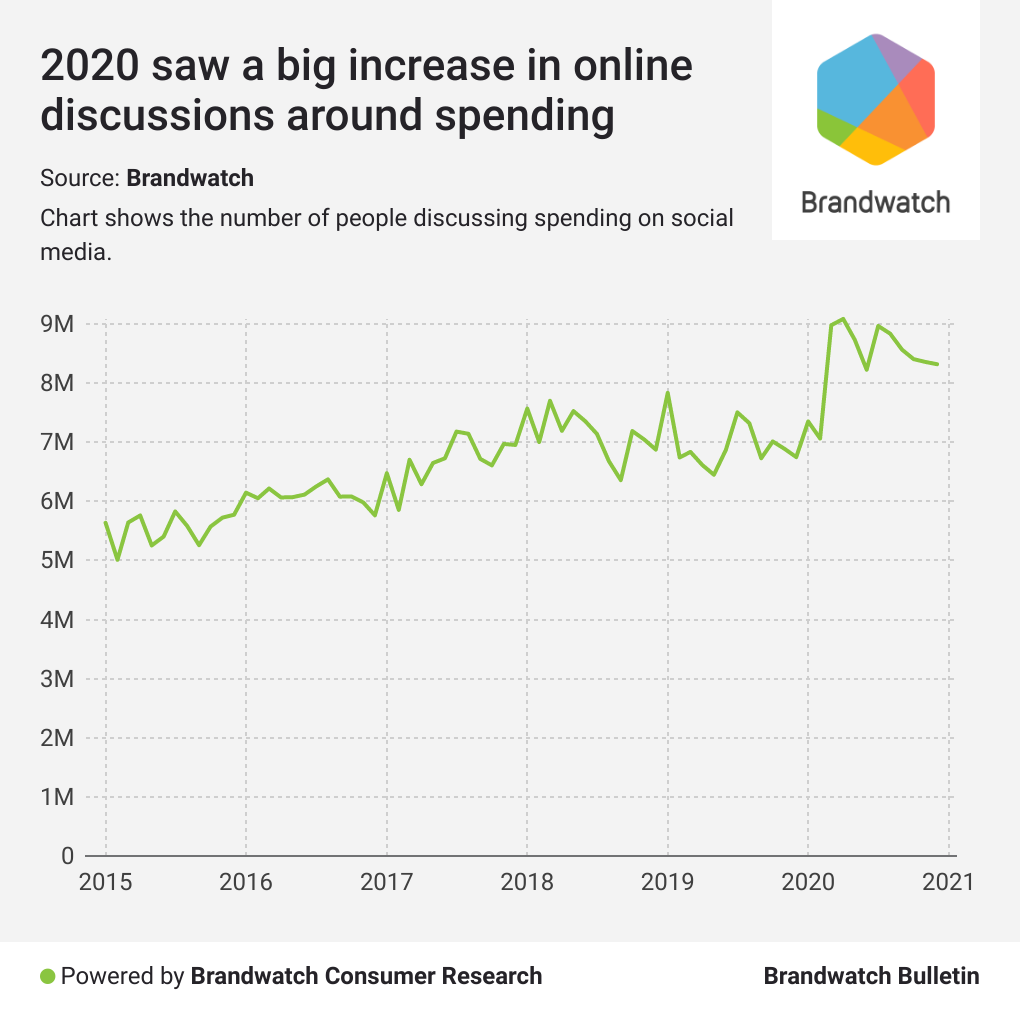
One big change was that we became more vocal online about our spending habits.

More conversation around spending doesn’t necessarily mean more spending. It simply means that consumers are more compelled to talk about the subject, and therefore there’s more that can be learned from analyzing all the chatter.

Within these spending conversations, there were big increases in mentions of deliveries (up 25% compared to the 2017-19 average), and online shopping (up 20%). Convenience and Covid-19 were unsurprisingly the main themes in both these sub-topics.

This is unlikely to change as we head further into 2021. While hope is on the horizon, many will still be wary of the virus and will shop accordingly. Plus, consumers may be unwilling to drop the habits they’ve picked up even if things get back to normal.

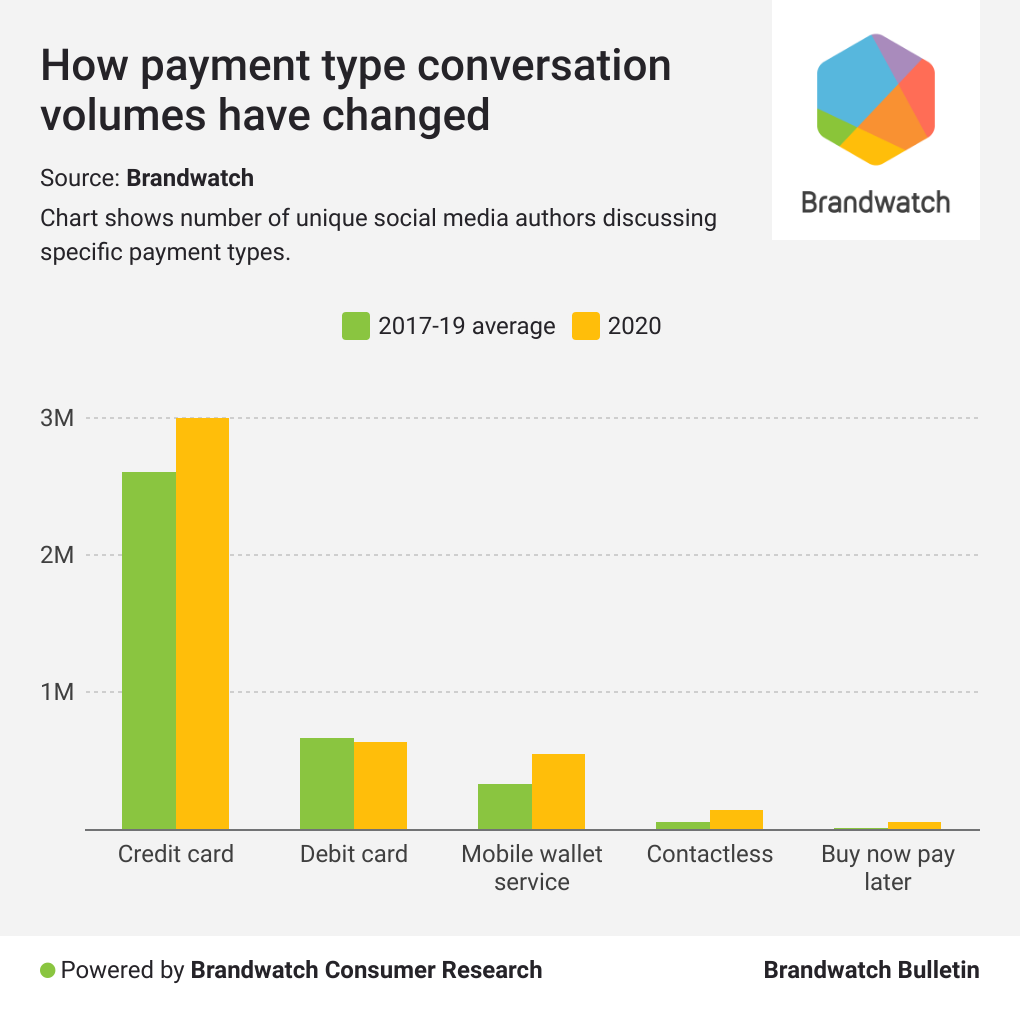
We also looked at what payment methods people talked about compared to previous years.

We saw a rise in discussion around all categories, except for debit cards. Contactless mentions jumped by 181% in 2020 compared to average volumes between 2017 and 2019 as we used the technology to keep safe in the pandemic, while mobile wallet service (options like Apple Pay) conversation increased by 65% for similar reasons.

Spending stress

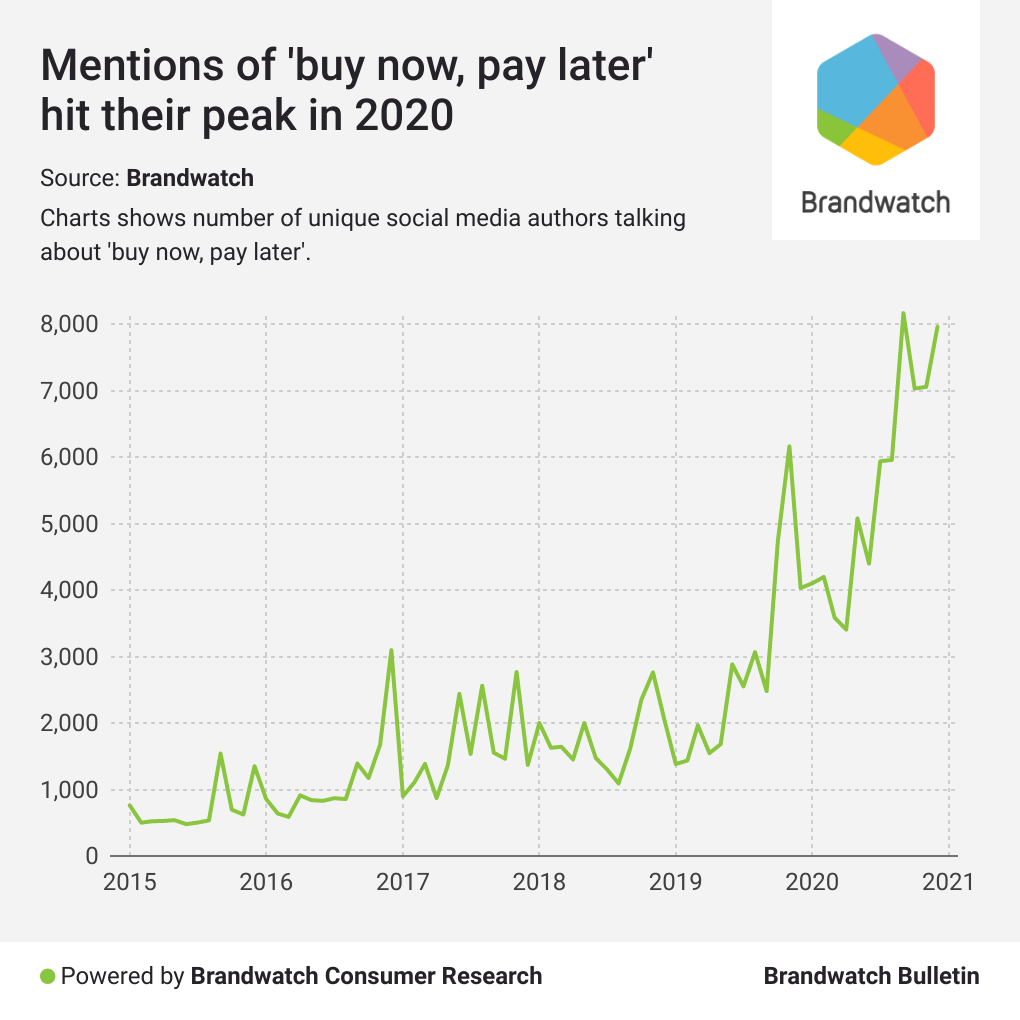
Last year also saw a huge 176% rise in mentions of ‘buy now, pay later’ options. While this has been increasing since 2019, it skyrocketed in 2020. This is possibly a sign of people’s cash flow problems.

After conducting some sentiment analysis on this conversation, there are clearly two sides to the story. While there were plenty of positive mentions around price and getting nice clothes, the negative side was filled with comments about interest, payments, and accounts.

There have been serious concerns about the financial problems ‘buy now, pay later’ can cause for consumers. New regulations were brought in in the UK to combat this this year, while there are calls for legal action to be taken in Australia.

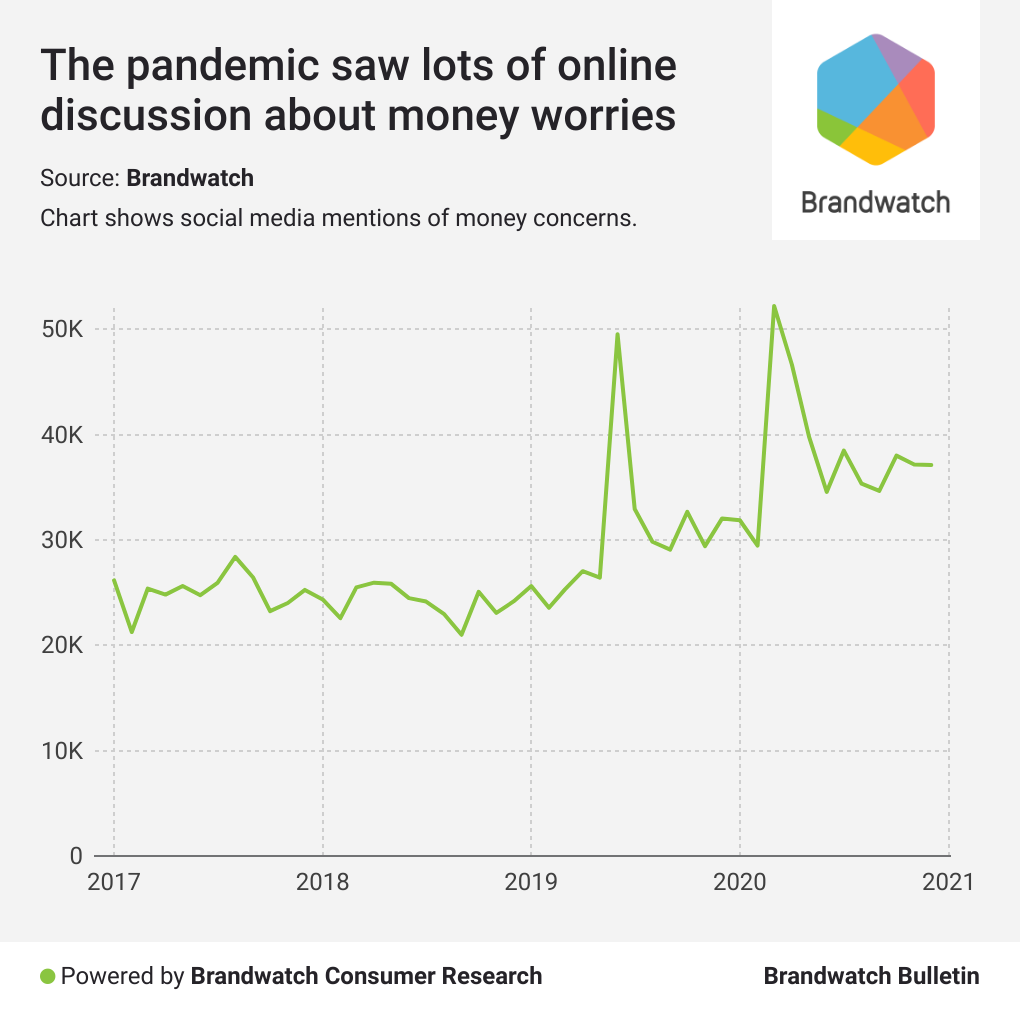
This is part of a wider picture of increasing worries about finances. Last year saw a 23% year-on-year increase in posts about money stress.

With job losses, closing businesses, and faltering economies, people are obviously worried about their finances. If people are getting into debt too, the urge to spend once restrictions are eased may not be as strong as business owners might hope.

On the plus side, people are talking more openly about their spending and financial habits. That means they can be better understood, including spotting where things are going wrong.

Read the full 2021 financial services report to get more data on spending, saving, insurance, investing, and cryptocurrencies.

Thanks for reading

That’s it for today. We’ll be back on Monday so, if you’re not already, get subscribed to the Brandwatch Bulletin right away.

Stay safe,

Brandwatch React team

logo
  Our Suite     Use Cases     Industries     Get started  

Runtime Collective Limited (trading as Brandwatch). English company number 3898053
New York | Boston | Chicago | Austin | Toronto | Brighton | London | Copenhagen | Berlin | Stuttgart | Frankfurt | Paris | Madrid | Budapest | Sofia | Chennai | Singapore | Sydney | Melbourne

Privacy Policy

Update subscription preferences

Unsubscribe

We value your privacy

We use cookies and similar technologies to personalize ads and content (including by sharing data with Google), to measure site performance, and to improve your experience. Learn more in our cookie policy

Privacy & Safety • Terms of Service

No, take me to settings
Yes, I agree
More info.

By using our site you agree to our use of cookies —