logo

Brandwatch Bulletin #93: What -Core Are You?

It's a fallcore kind of day.

22 October 2021

Today it’s time to look at the modern evolution of aesthetics into new forms of online subcultures that cater to any and all personal interests. It’s time to get bulletincore.

Let’s get to it.

Subscribe to the Brandwatch Bulletin

The new aesthetics

You may know aesthetics as a branch of philosophy focused on beauty and the arts, or you may know it as simply referring to the look of something. But over the last few years an increasing number of people are using the word in a similar way they might use ‘subculture’.

While not entirely unmoored from its traditional meaning, aesthetics in this sense mainly refers to online trends based on an amalgamation of fashion, hobbies, music, and other interests into a single concept. They often invoke their own kind of atmosphere or ‘mood’ that’s imparted into content posted on platforms like Tumblr and TikTok.

Importantly, they’re both a basis for a personal identity and look, and for content creation. For example, someone could refer to themselves by an aesthetic, or produce art that falls under an aesthetic.

Aesthetics themselves can include all kinds of things, from the music-inspired emo aesthetic to aesthetics based on genres of fiction with distinctive imagery like cyberpunk or gothic.

It can be hard to get your head round it all at first, so we’ll leave you with the Aesthetics Wiki explanation as they’re far better placed to give you the details.

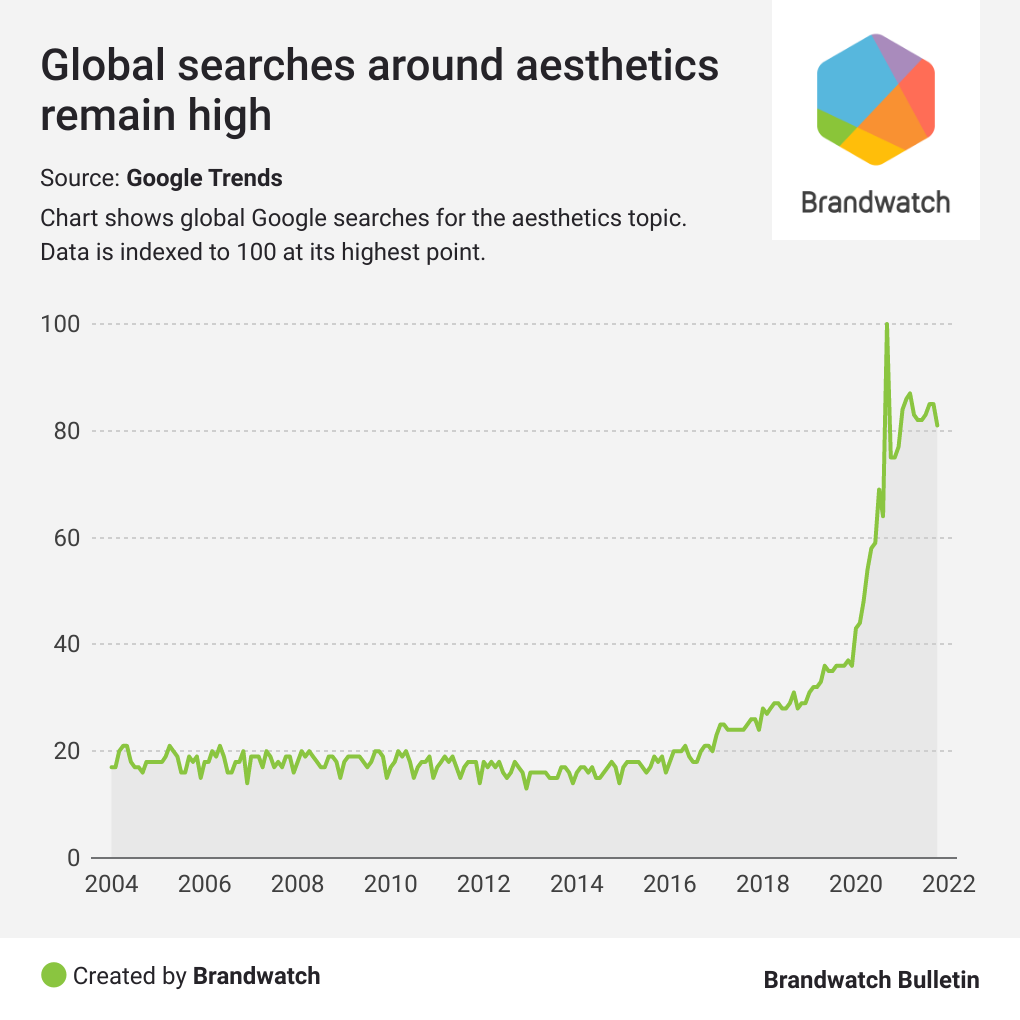
So how meteoric has the rise in aesthetics been? Let’s look at some Google data to find out.

From 2004 to 2015, searches for the aesthetics topic referred to things like beauty, medicine, and philosophy. But in 2016 Tumblr was one of the biggest related topics, while searches around specific colors were increasing.

Tumblr, which is seen as the original birthplace of these online aesthetic subcultures, remained a major topic for the next few years. By 2018 all of the top five related search topics focused on the new understanding of the term aesthetics. It had taken over.

Here come the -cores

We can’t cover all types of aesthetics in this bulletin, so we’ll focus on a certain type: ones ending in -core. These portmeantaus take the ‘core’ from ‘hardcore’ and combine it with a word that sums up the aesthetic.

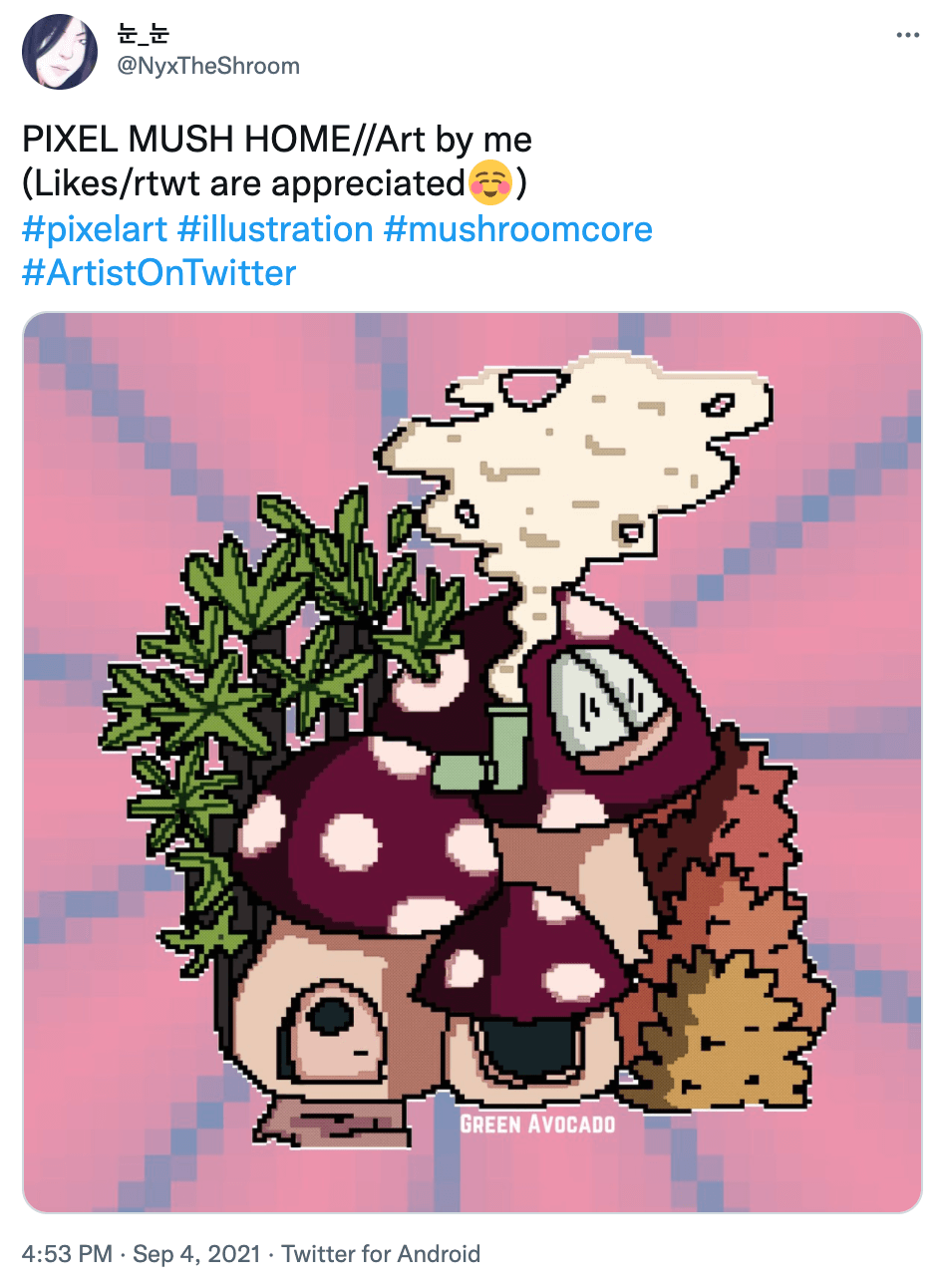
Really into nature? That’s naturecore. Like crystals? Let me introduce you to crystalcore. Don’t worry fungi friends, there’s even mushroomcore.

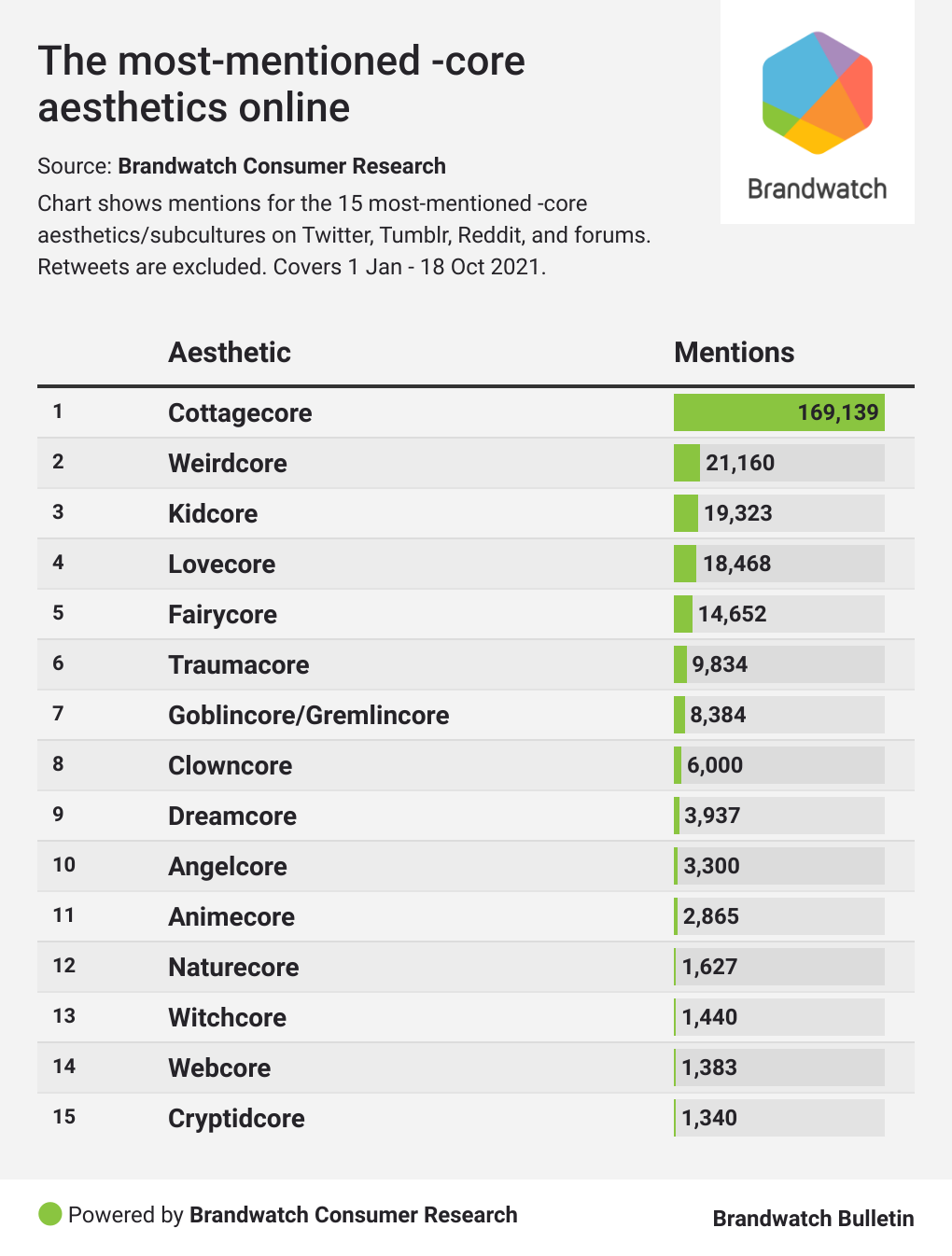
By far the biggest of these, and the one you’re most likely to have heard of, is cottagecore. We’ll get to that in a minute.

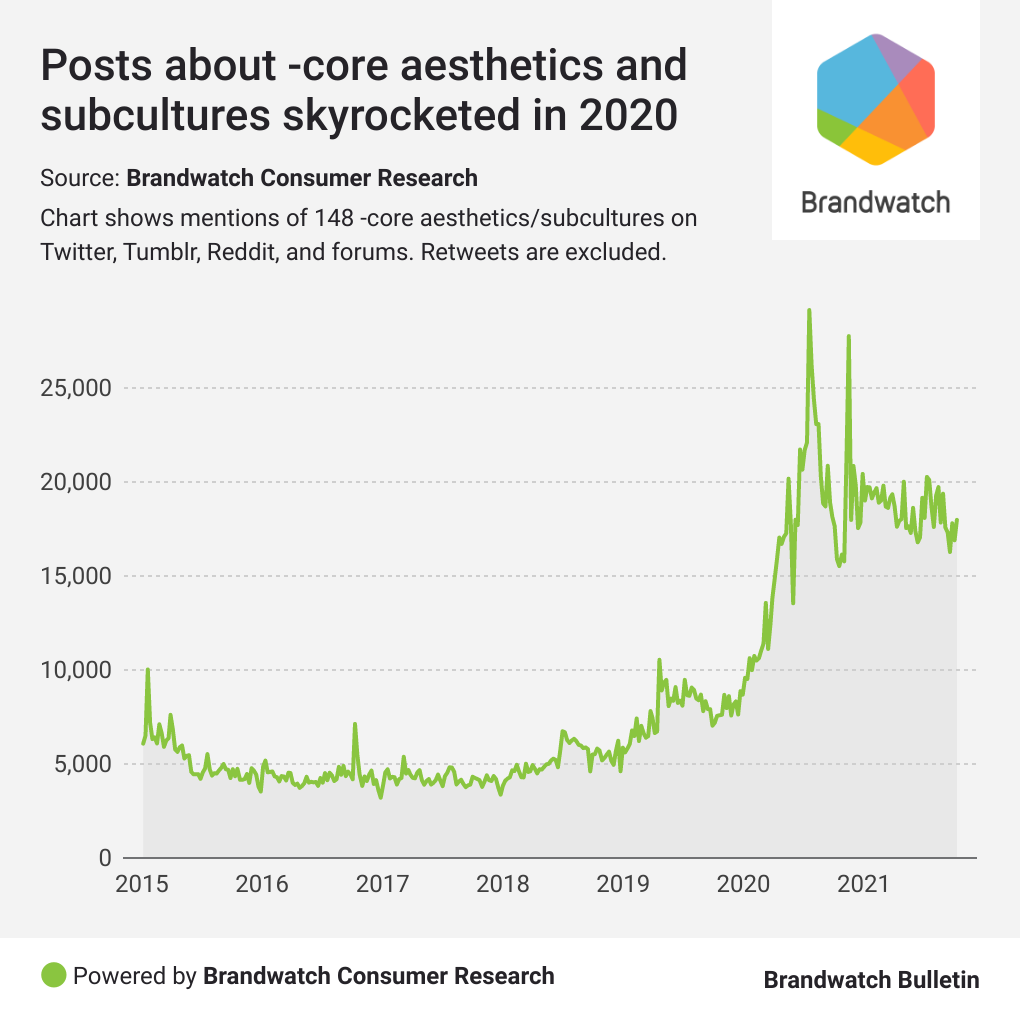
To see how these -core aesthetics have taken off, we created a Consumer Research query based on 148 -cores we found on the Aesthetics Wiki. We were then able to search for their use in public posts across the internet.

Mentions of these aesthetics follow a similar trend to the search data we looked at. And although there’s been a slight decline in volume during 2021, the number of posts is still way above pre-2020 levels.

It seems like these aesthetics are here to stay, and are currently ingrained into internet culture. It’s easy to see why. They bring people together, they’re versatile and easy to take on, and iterations are endless, whether you’re going broad or niche.

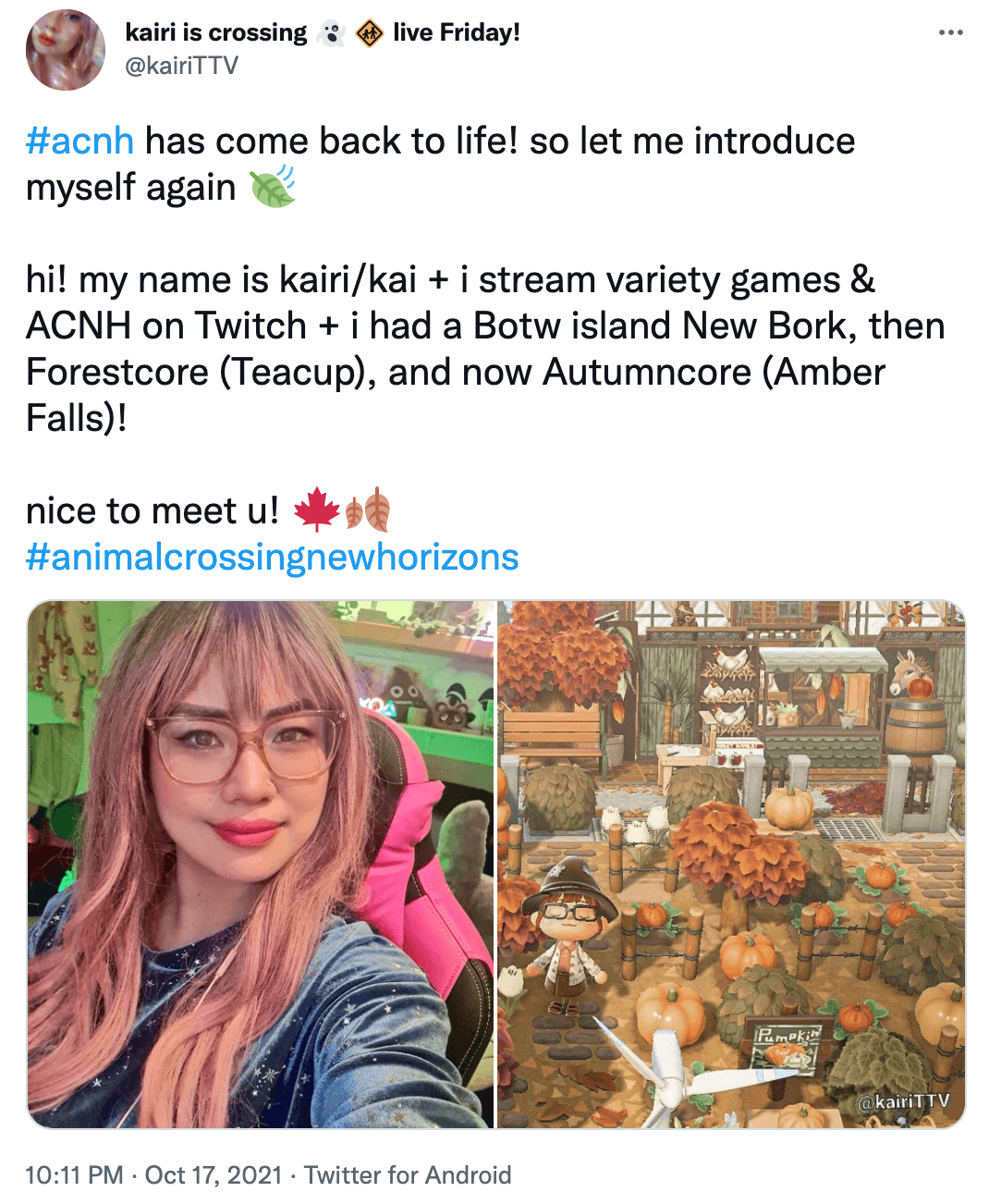
They’ve also found a lot of popularity on TikTok, suggesting they’re spreading to the next generation. People even base their Animal Crossing island designs on them.

With new aesthetics being created every day, who knows what’s coming next. Without input from influencers and power users, brands will find it hard to predict. But at least they can rely on some seasonal trends–yes, that’s right, Christmascore is a thing too.

The power of cottagecore

Amidst the seemingly endless list of aesthetic possibilities, one has led the way in terms of awareness, influence, and interest. And that’s cottagecore.

It gets mentioned far more than any other aesthetic we could find, and it’s one of the oldest too. Although the original post has since been deleted, the following was posted to Tumblr on 24 Feb 2018:

“which sounds better villagecore or cottagecore”

We can’t claim this was the first use of the term, but from that point on cottagecore only went from strength to strength, fascinatingly culminating in influencing Taylor Swift’s Folklore album. From Tumblr obscurity to global pop hits? That’s quite the journey.

So what is cottagecore exactly?

A lot has already been written on the subject, but this Vox article does an incredible job of charting its history, influences, and how it fits into the modern world.

Rebecca Jennings (@rebexxxxa)

Senior reporter covering internet culture at Vox

“Here is what cottagecore looks like: It is doilies, snails, and DIY fairy spoons crafted from seashells. It is illustrations from Frog & Toad, stills from Miyazaki movies, two girls kissing in a forest in springtime. It is a laughably arduous tutorial on how to make homemade rosewater whispered to you in a British accent.”

We also recommend this video from fashion history YouTuber Karolina Żebrowska, which goes into a lot of detail on how the ideas behind cottagecore are anything but new.

Mentions of cottagecore remain high, but they are beginning to wane. Will there ever be another aesthetic that reaches the same heights? It’s hard to say, but there are common themes amongst many aesthetics even if they look like opposites.

Escapism is a big part, while longing is another. Whether it’s wanting to run away to the countryside, live in the future, or have a mushroom-shaped house, many of these trends are far removed from the real world.

This may explain why 2020 saw an explosion in aesthetic interest. When you’re trapped inside by a highly contagious virus, what else is there to do but to wish for a different, better life?

And for the thousands of people who fled cities for the country, they made the cottagecore dream a reality. Who knows what aesthetic may be driving our decisions next.

Let’s hope it’s not clowncore.

Find out more

Our report on this topic, The Changing Conversation Around Work and People with Disabilities, can be read for free here. It offers lots of more data, research, and insight we hope you’ll find useful

What should we cover next?

Is there a topic, trend, or industry you’d like us to feature in the Brandwatch Bulletin? We want to hear your ideas to make sure our readers are getting what they want. We may even ask to interview you if you’re involved with the topic.

Send any and all ideas to [email protected] and let’s talk.

Thanks for reading

That’s it for today, but we’ll be back next Friday. Have a great weekend. And if you were forwarded this email and want in on the action, get subscribed to the Brandwatch Bulletin now.

Stay safe,

The Brandwatch React team

logo
  Our Suite     Use Cases     Industries     Get started  

Runtime Collective Limited (trading as Brandwatch). English company number 3898053
New York | Boston | Chicago | Austin | Toronto | Brighton | London | Copenhagen | Berlin | Stuttgart | Frankfurt | Paris | Madrid | Budapest | Sofia | Chennai | Singapore | Sydney | Melbourne

Privacy Policy

Update subscription preferences

Unsubscribe

We value your privacy

We use cookies and similar technologies to personalize ads and content (including by sharing data with Google), to measure site performance, and to improve your experience. Learn more in our cookie policy

Privacy & Safety • Terms of Service

No, take me to settings
Yes, I agree
More info.

By using our site you agree to our use of cookies —