logo

Brandwatch Bulletin #139: The Big Ick

We reveal the true history of the ick.

28 October 2022

Social media is a breeding ground for slang, spreading real world phrases far and wide and producing new ones entirely. One such example is “the ick”, and in today’s bulletin we’re explaining what it means, its origins, and how it became popular today.

Let’s get to it.

Subscribe to the Brandwatch Bulletin

Defining the ick

First things first, what does the ick actually mean? Thankfully our community marketing coordinator, Florencia Liondi, is on-hand to explain all.

Florencia Liondi

Community marketing coordinator, Brandwatch

"The ick is a sudden feeling of disgust about a romantic interest, which turns you off them entirely. It can be caused by anything the interest does, no matter how minor or subtle."

Essentially anything could give you the ick. It could be someone’s mannerisms, the way they dress, their job, how they talk, or even how they deal with the forces of nature.

What’s key though, is that it needs to induce a sudden change in how one person views another. It doesn’t matter if it’s innocent or not, all attraction evaporates and the effect is irreversible.

It’s brutal, but as we’ll see later, it’s a common experience. We just have a name for it now.

But where did the phrase come from?

Let’s do some digging.

Cultural archeology

The word “ick” is nothing new. According to Oxford Languages, as a phrase for something that’s disgusting, it’s been in use since at least the 1940s. In most cases it would be used as an exclamation, as in, “I touched something slimy. Ick!”

We can see the origins of “the ick” here, beyond the word itself. Both are related to an involuntary reaction: we get the ick whether we like or not, and we say “ick” about something unconsciously just as we say “ow” when we hurt ourselves.

What seems to bridge the two is the phrase the “ick factor”. If something or someone has the “ick factor” they make you feel disgusted. The earliest example of this we could find is in a 1979 Newsweek review of Alien.

Putting aside how wrong that review is, we’re still not at “the ick” yet. The ick factor is far too broad and is something you ascribe to something else, not something you get. But we’re getting somewhere.

The primordial ick

What comes next is a number of television shows creating an association between ick, the ick factor, and dating.

First we must go all the way back to 1995 for an episode of Friends called “The One With The Ick Factor”. In this episode Monica finds out Ethan, a man she’s sleeping with, is much younger than she thought and so she calls it off because it’s “icky”.

Notably she is still attracted to Ethan, unlike when someone gets the ick, and calls things off because of the age gap itself rather than the man. Also “ick factor” is only mentioned in the title, so this episode’s place in the ick’s history is tenuous, but it looks to have set things in motion.

Four years later, “the ick” is actually used to describe a lack of interest in someone in an episode of Ally McBeal. That seems like a slam dunk on the ick origin story, but when we examine its usage more closely, we see it’s off the mark.

We can turn to this Ally McBeal fansite for a succinct summary.

This doesn’t really align with the modern usage though. It’s too vague. Today people know exactly what the issue is when they get the ick, and so, we’d argue, this is not the first use of the term proper.

Next we jump to 2004 to an episode of Sex and the City titled “The Ick Factor”. Near the start of the episode the word ick is used multiple times in its more original usage, but then we get the following line later on:

“I’m serious. I think you should tell him this whole romance thing gives you the icks.”

This is probably the closest of the three as the phrase is nearly the same, and it refers to a specific issue causing a problem. But what lets it down is that Carrie, who is getting “the icks” in this case, isn’t put off the man entirely. Close, but no cigar.

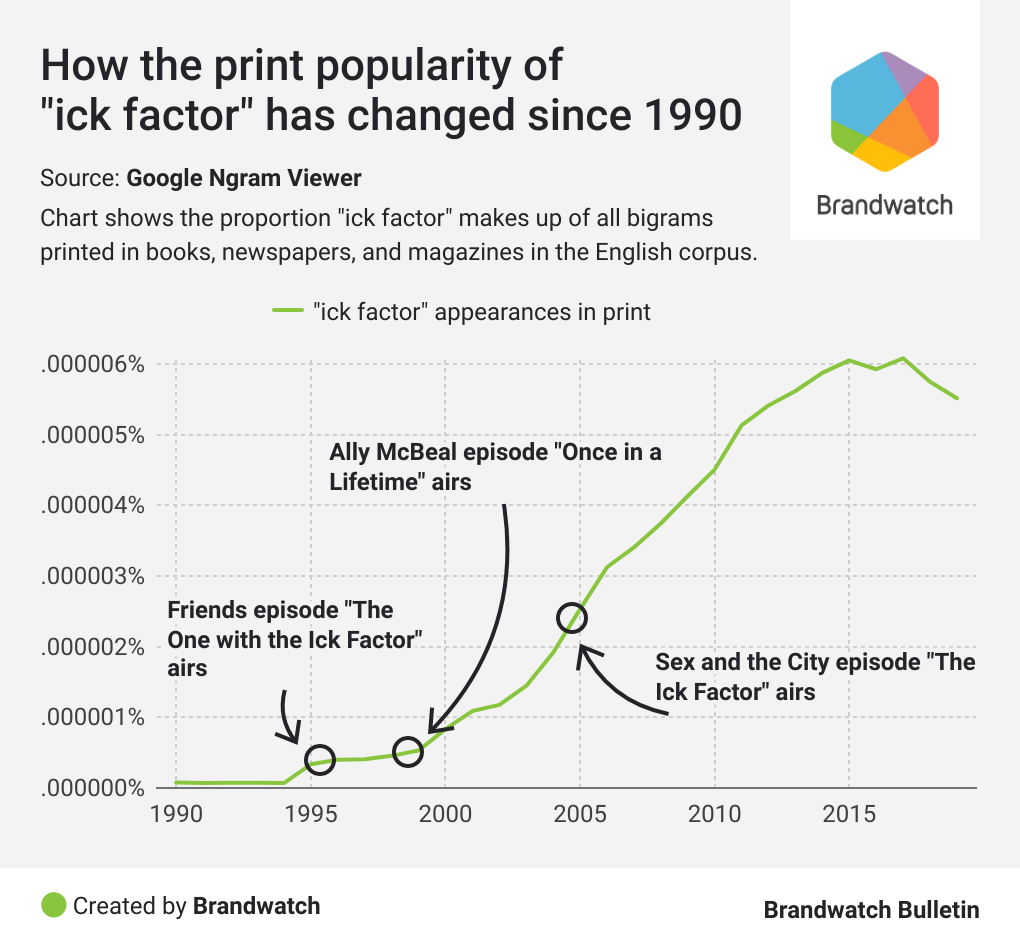
The ick in print

When we look at how often “ick factor” appears in print, it rises with each of these episodes. And considering the context and content, we’d argue they clearly laid the ground for “the ick” we know and love today.

Now it’s time for the final piece of the puzzle.

The true ick makes its broadcast debut

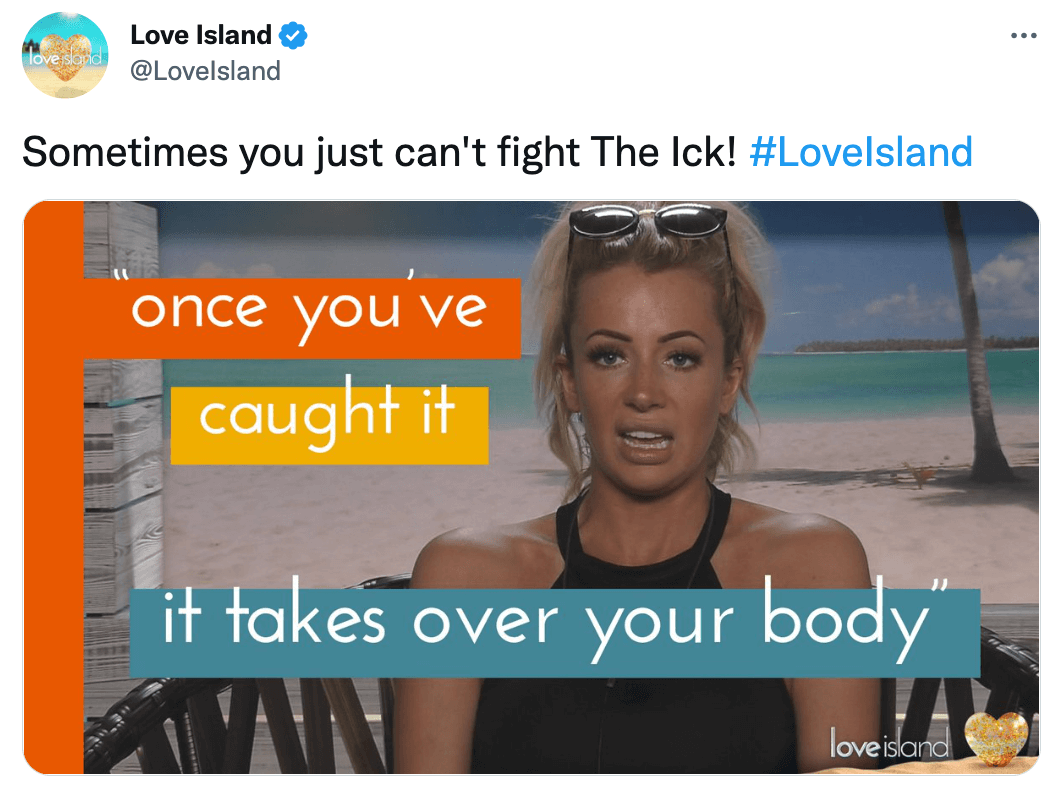
It’s 2017 and we’re watching the reality TV dating show Love Island as the contestants live the villa life and try not to get voted off the show by the baying audience at home. Standard reality television fare.

But then one of the show’s stars, Olivia Attwood mentions “the ick” in reference to a romantic interest turning into someone that repels you.

Importantly she also clarifies that once you get the ick “it doesn’t go away”. This is undeniably the same ick we refer to today, even if it’s now slightly more refined and specific.

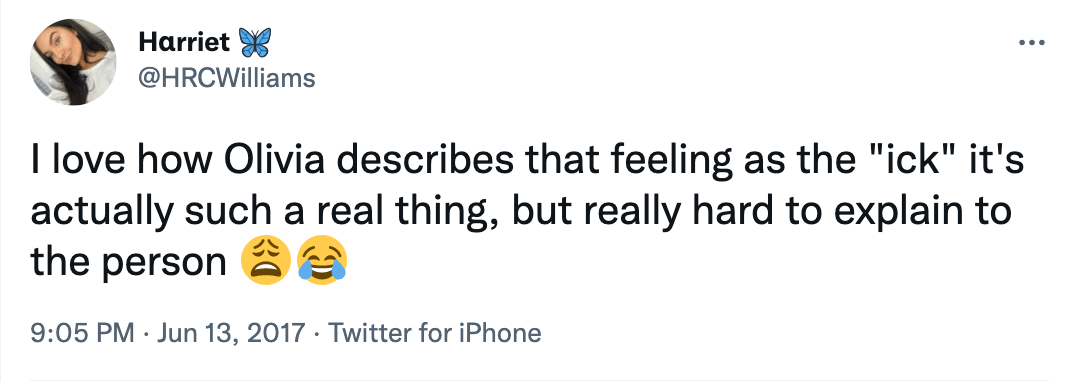
We’re not sure she invented the phrase, but either way, when the episode aired a bunch of people said they knew exactly what she meant, and were glad to finally have a term for it.

But this was only groundwork. As you’ll see below the echoes of this momentous moment in history took time to be felt.

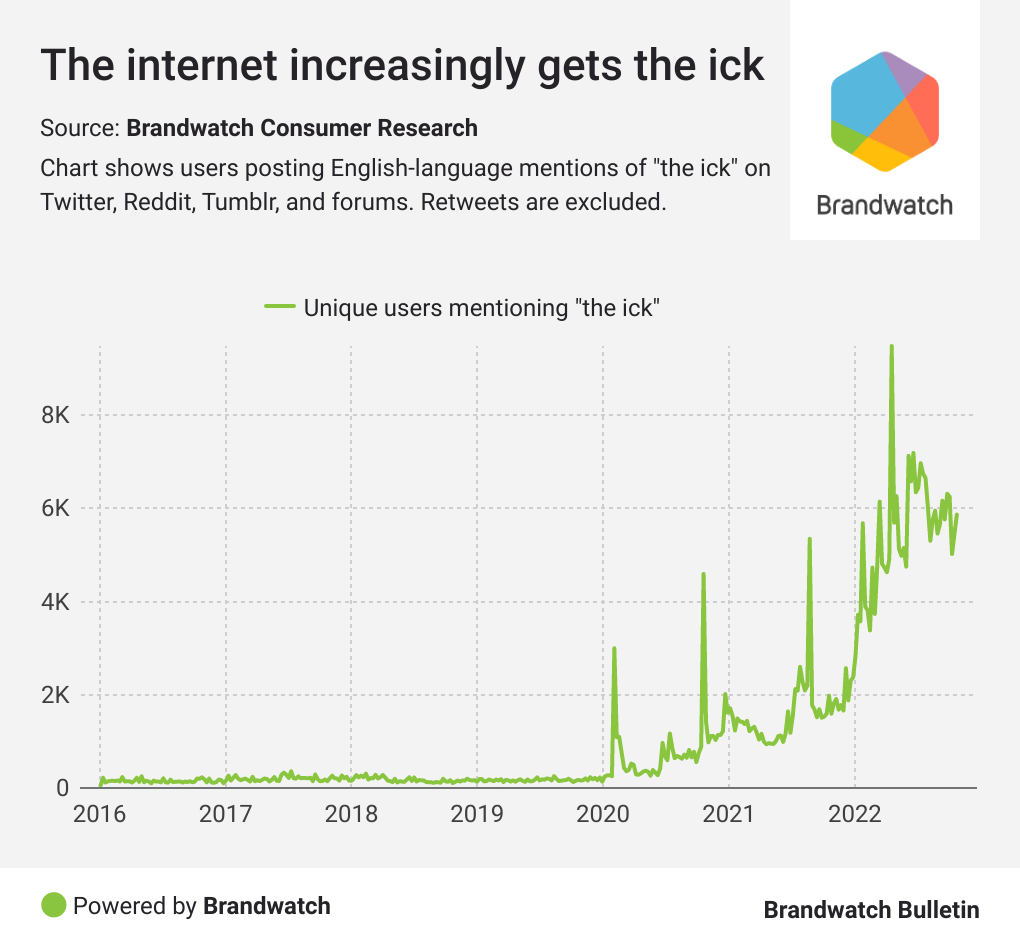
Prior to the ick’s 2017 Love Island mention, around 120 users used the phrase every week. In this context, it was mainly to describe themselves being ill. Then in July 2017, you can see a small bump in mentions caused by Olivia Attwood.

A minor increase remained all the way until 2018, where in March it was used on another reality TV show. This time it was Made In Chelsea, but from there volume dipped to pre-Attwood levels until we hit the first of four major ick spikes.

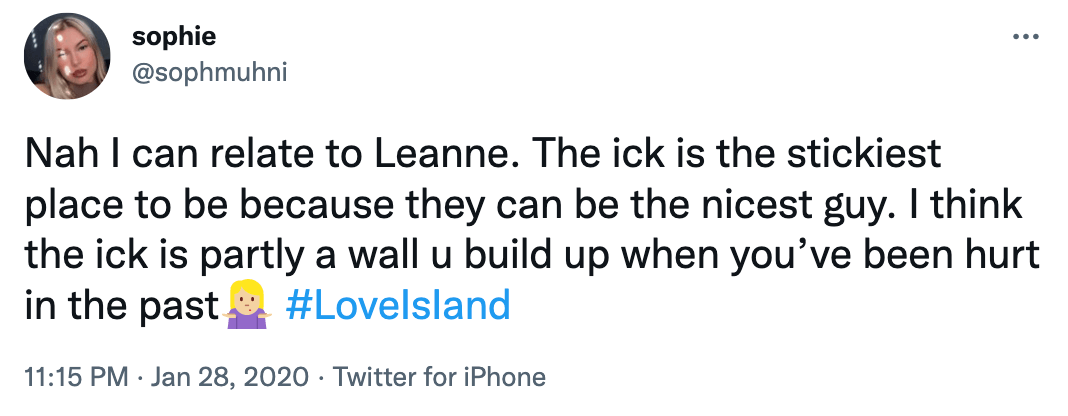
Ick Spike #1: January 2020

It’s Love Island again, with contestant Leanne Amaning using the phrase. For whatever reason, possibly thanks to the increased popularity of the show, the phrase generated far more interest than in 2017.

Most of the posts are comments about events on the island, people wondering what “the ick” is, and, as before, people talking about their own ick experiences.

Ick Spike #2: October 2020

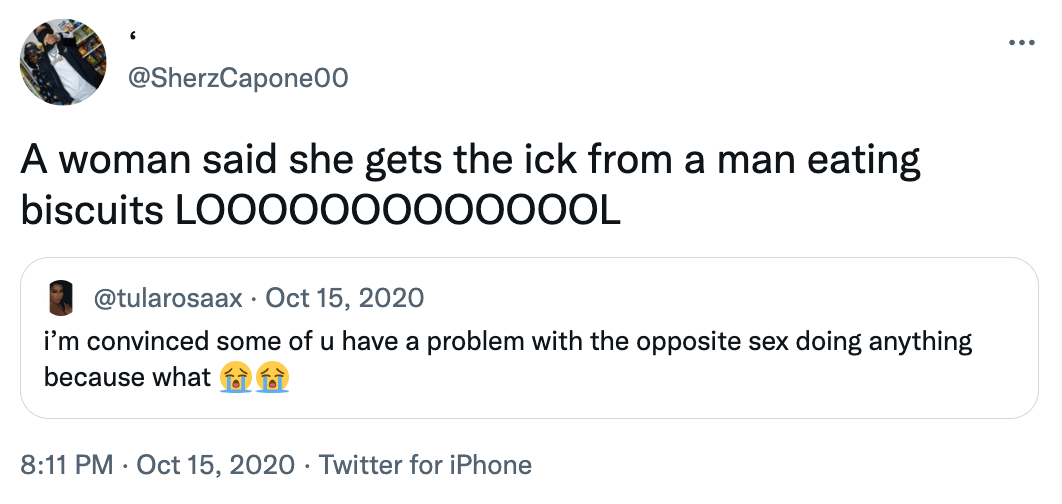
There’s no reality TV show this time. Instead the phrase itself went viral, or at least tweets asking people what gave them the ick went viral. What really pushed the term’s popularity is some of the incredibly specific and mundane things that give people the ick.

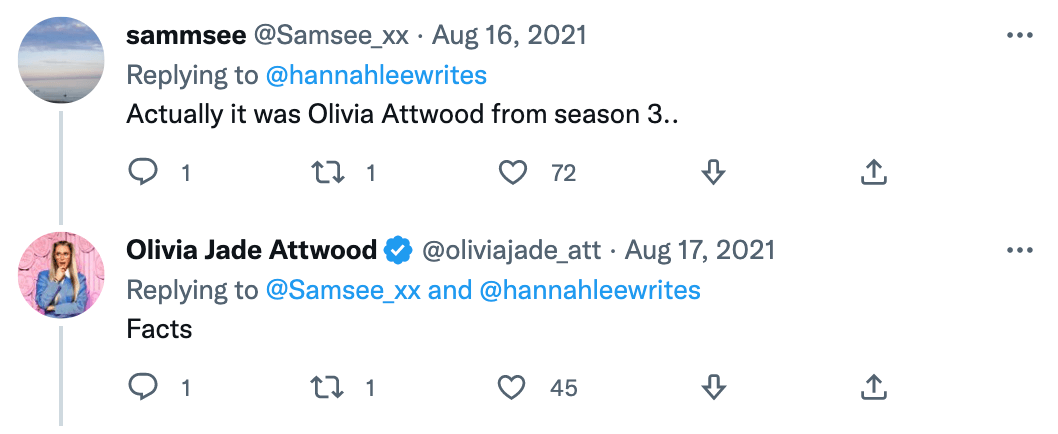
Ick Spike #3: August 2021

Love Island is behind this one too for the exact same reason as before. This time multiple contestants are using the phrase, the ick now a part of the standard Love Island lexicon, and understood enough online to see requests for a definition significantly decrease.

But what’s interesting is that we start to see ick lore discussed. After a tweet claimed Leanne Amaning was the “pioneer” of the ick, the OG Attwood steps in to clear things up. We must respect this defence of history.

Ick Spike #4: April 2022

Here we have a repeat of spike #2 with the phrase itself, and people’s personal icks, spreading like wildfire. But we also see a couple of shifts. First that people are using the term outside of a romantic context, and second, a marked increase in jokes and memes.

The big icks

The ick has come a long way. Nearly 6k accounts use the phrase every week from all over the world. With all the memes it’s spawned too , it’s a true internet phrase, despite its real-world origins.

The generalisation of the term has also continued, and it’s not uncommon to see the ick used in reference to friends and inanimate objects. Arguably this is an incorrect usage, but who are we to stand in the way of progress?

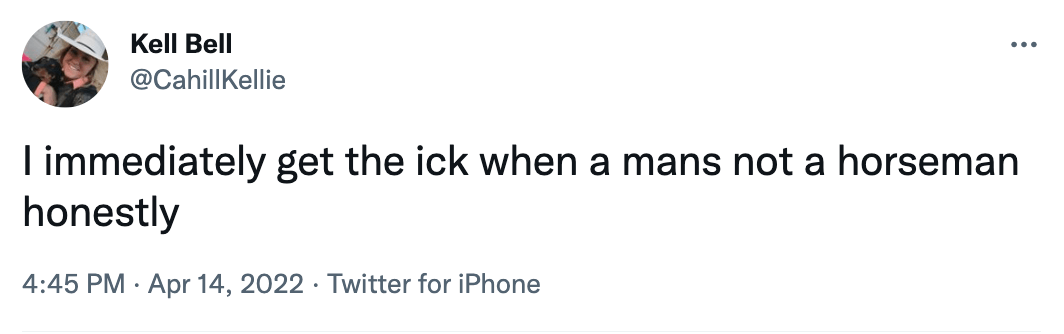
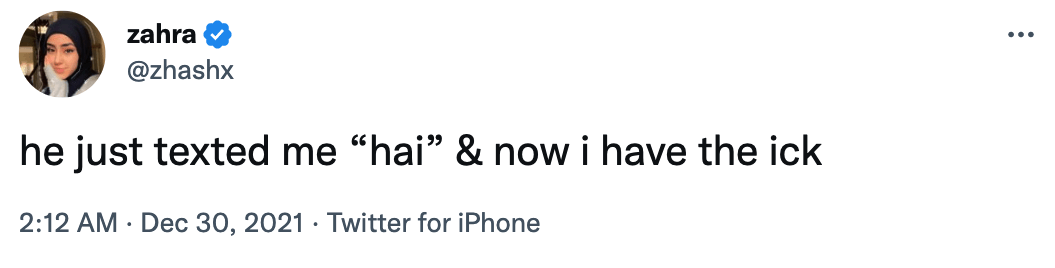
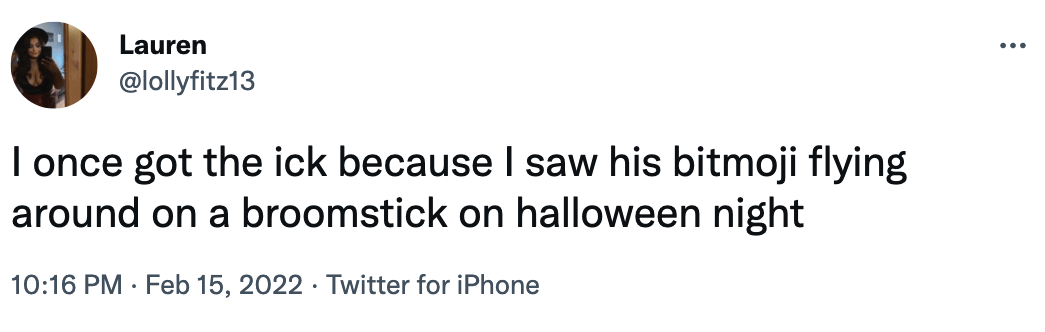
To finish off, here’s the three most retweeted causes of the ick.

3. Choose your food wisely

A quick note on this one. This is a UK tweet and so “biscuits” refers to what would be cookies in the US.

2. It only takes a word

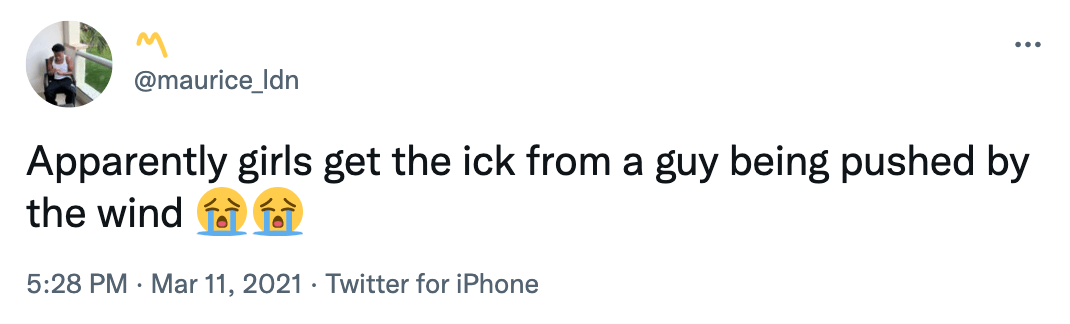
1. Get your avatar off that broomstick

What’s your social media ick?

Why not tell us over at our Grow With Social community. We’re very friendly, we promise.

What should we cover next?

Is there a topic, trend, or industry you’d like us to feature in the Brandwatch Bulletin? We want to hear your ideas to ensure our readers get what they want. We may even ask to interview you if you’re involved with the topic.

Send any and all ideas to [email protected] and let’s talk.

Thanks for reading

If you liked what you saw today, sign up for the Brandwatch Bulletin now. We’ll be back next week. See you then.

Stay safe,

The Brandwatch Bulletin team

logo
  Our Suite     Use Cases     Industries     Get started  

Runtime Collective Limited (trading as Brandwatch). English company number 3898053
New York | Boston | Chicago | Austin | Toronto | Brighton | London | Copenhagen | Berlin | Stuttgart | Frankfurt | Paris | Madrid | Budapest | Sofia | Chennai | Singapore | Sydney | Melbourne

Privacy Policy

Update subscription preferences

Unsubscribe

We value your privacy

We use cookies and similar technologies to personalize ads and content (including by sharing data with Google), to measure site performance, and to improve your experience. Learn more in our cookie policy

Privacy & Safety • Terms of Service

No, take me to settings
Yes, I agree
More info.

By using our site you agree to our use of cookies —