logo

Covid-19 Daily Bulletin 25/06: Plastic Waste and Anxiety Levels

One worry for another.

Welcome back. Today we’re looking at how anxiety levels have changed during the pandemic, and how plastic waste concerns are falling.

Let’s get to it.

SUBSCRIBE

On your nerves

Using Brandwatch Qriously, we’ve been surveying people to see how anxious they have felt since mid-March. This is important as while our physical health is at risk from the virus, our mental health is at risk from stress, isolation, and worry.

Our first few surveys recorded the highest levels of anxiety, which made sense. The future was uncertain, lockdowns weren’t yet in place, and many of the countries we surveyed were seeing daily case and death numbers rise.

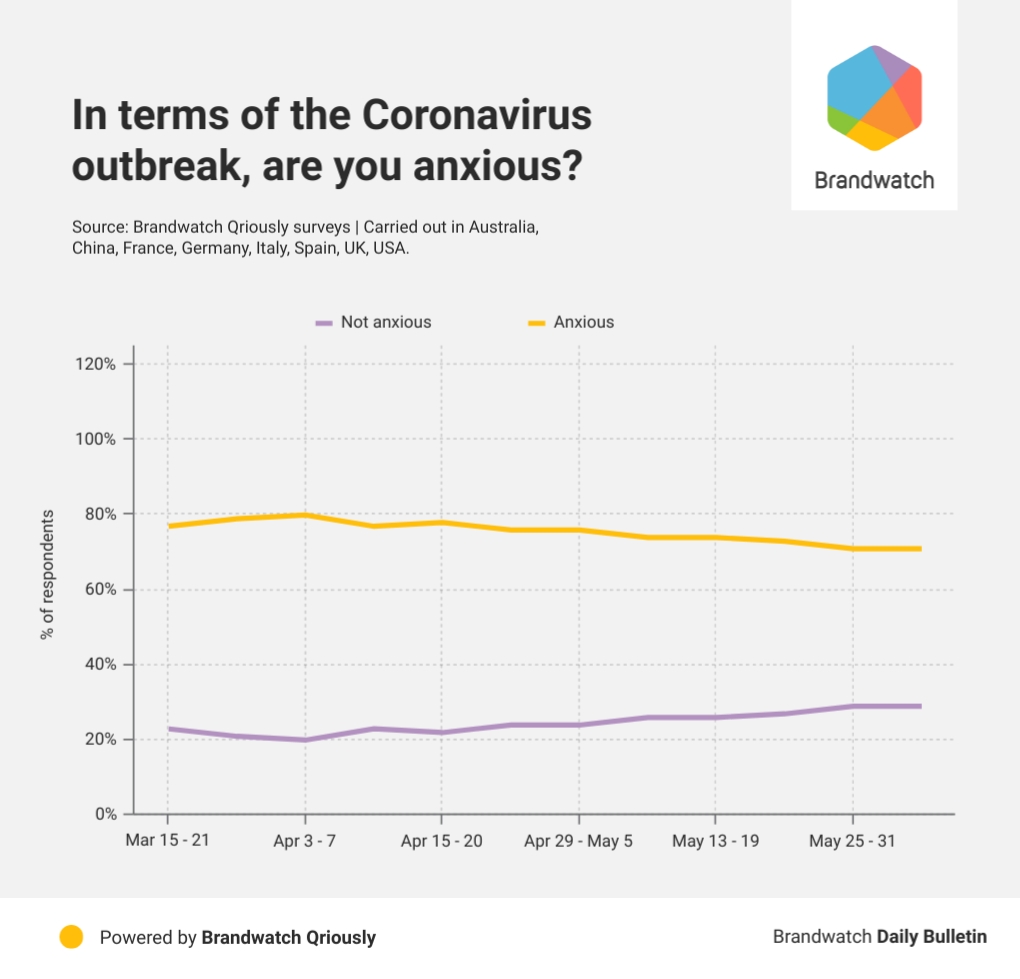
Since then, we’ve seen anxiety levels gradually fall.

Our latest survey was taken two weeks after the one before, so a bigger gap between surveys than usual. But what we’ve seen in that time is no change in anxiety levels, suggesting they may be plateauing.

While it’s a good sign that anxiety levels aren’t going up, we’re still left with 71% of people feeling in some way anxious about Covid-19. It’s a natural response but the data shows that, even as lockdowns have lifted and it seems like the tide is turning in the countries we surveyed, people aren’t relaxing just yet.

One part of this may be to do with fears about a second wave. This topic has been increasingly mentioned on social media (as we’ve previously reported) and while people may feel more comfortable about the situation right now, their minds may be looking warily to the future.

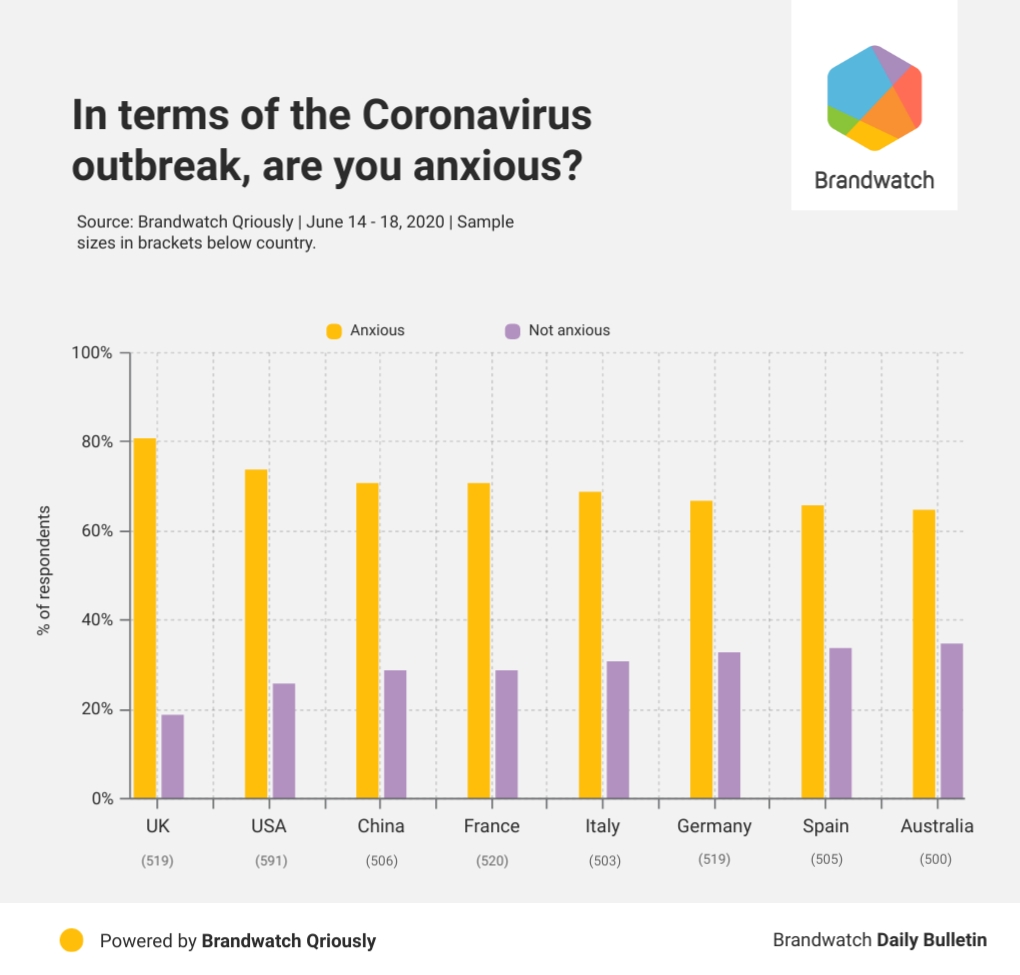
We can also look at how different countries are feeling. The picture is not the same everywhere.

People in the United Kingdom are reporting the most anxiety of the countries we surveyed, with just 19% of respondents not feeling anxious at all. This tallies with how the country has been hit by Covid-19, with one of the largest death tallies in the world and an incredibly severe economic impact. The US follows them in the rankings, facing similar issues.

What’s clear is that people all over the world are still feeling uneasy, and they aren’t in the minority, either. As governments attempt to revive shaky economies, small spooks could cause problems. Even early suggestions of a second wave could cause people to panic and shut themselves indoors, with their wallets.

Plastic waste interest falls during pandemic

It’s estimated that eight million tons of plastic enter our oceans every year, with a total of 5.25 trillion pieces of plastic waste devastating aquatic ecosystems. And that’s just the tip of the iceberg.

So it’s no wonder we have seen consumers stand up and demand that industries do better. In fact, when we last looked at plastic waste in our 2019 report, we found 156k mentions between January and April 2019 from consumers demanding just that.

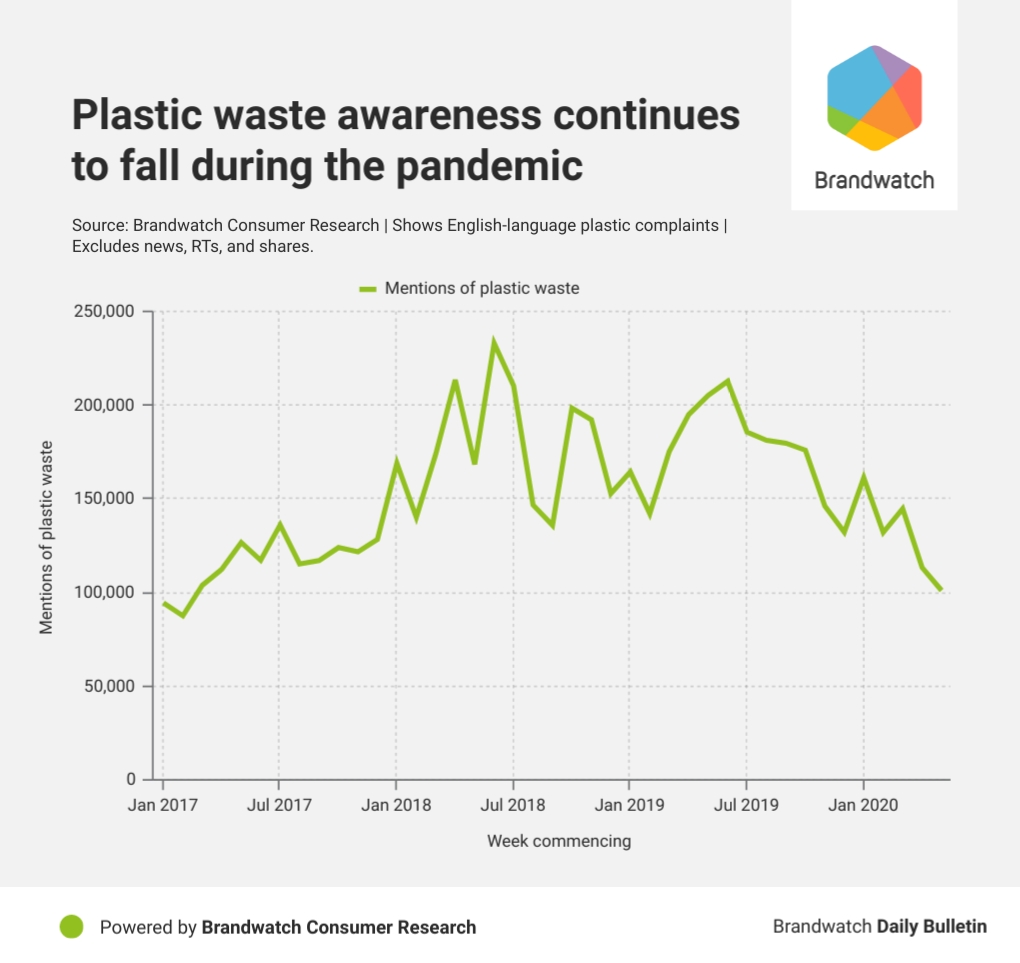
Today we’re checking in on general complaints about plastic. Using our Consumer Research platform to investigate English-language mentions on social, we found conversation decreased 36% in March, April and May, compared to the same period in 2019.

Why aren’t we talking about plastic waste?

Frankly, our attention is elsewhere. The pandemic has devastated millions of people, and the Black Lives Matter movement has dominated conversations. This has meant more people, including big influencers, have used their platforms to talk about other causes.

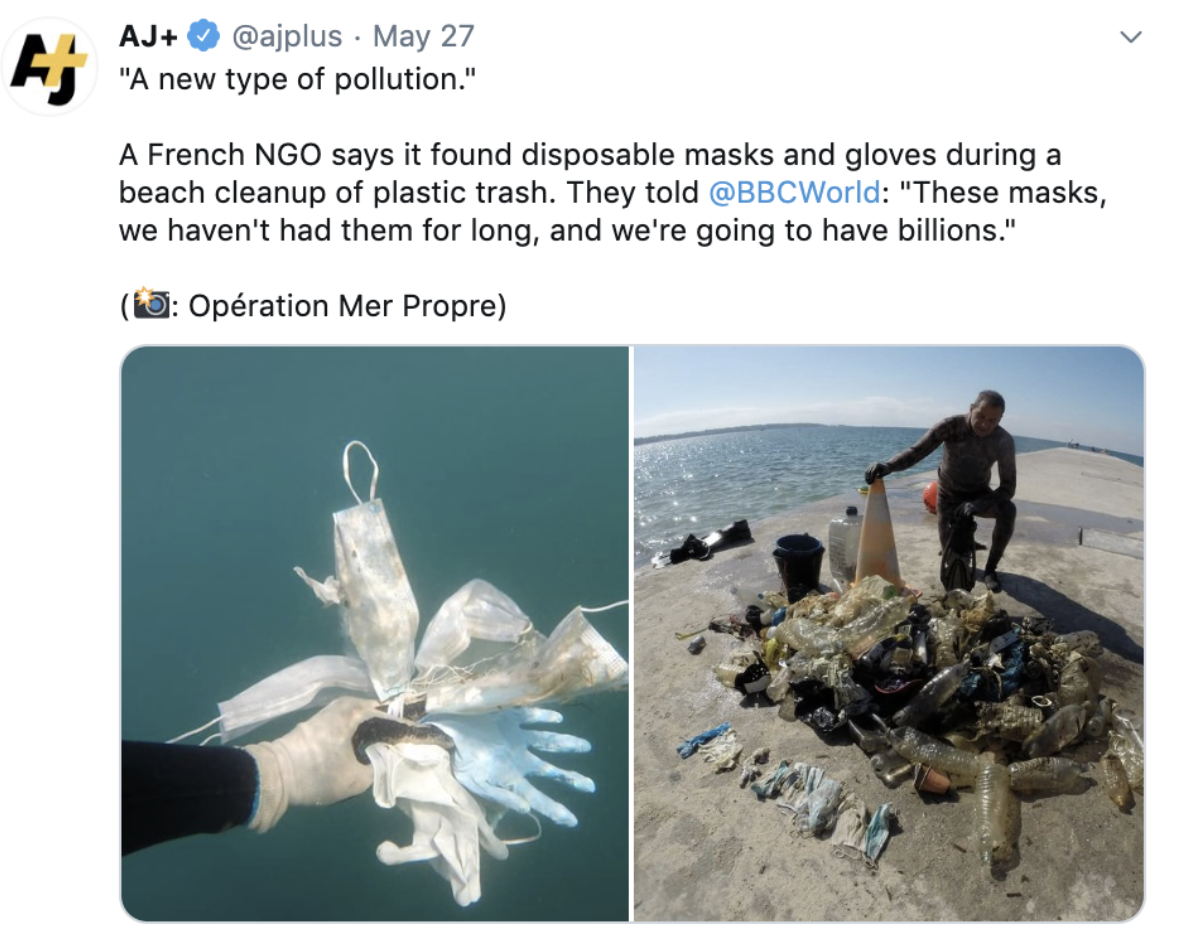
Despite this, many consumers still care about plastic waste. Their new obsession? Single-use personal protective equipment. From March 1 to June 21 2020 there were 327k social media complaints about single-use protective equipment ending up in places it didn’t belong.

Meanwhile, over the same period, 188k people worried or noted that they were consuming more single-use plastics during the pandemic.

Conversation around plastic waste is falling, but as we head into the summer (when as we’ve found, people talk about plastic most) we may start to see the issue rise in the public consciousness again.

Get more in-depth data

Don’t miss out on our huge report looking at consumers and how their behavior has changed due to Covid-19.

Head here to find out more and get signed up.

Thanks for reading

That’s it for today. What to subscribe to these bulletins? Head here.

Stay safe,

Brandwatch Response Team

logo
  Our Suite     Use Cases     Industries     Get started  

Runtime Collective Limited (trading as Brandwatch). English company number 3898053
New York | Boston | Chicago | Austin | Toronto | Brighton | London | Copenhagen | Berlin | Stuttgart | Frankfurt | Paris | Madrid | Budapest | Sofia | Chennai | Singapore | Sydney | Melbourne

Privacy Policy

Update subscription preferences

Unsubscribe

We value your privacy

We use cookies and similar technologies to personalize ads and content (including by sharing data with Google), to measure site performance, and to improve your experience. Learn more in our cookie policy

Privacy & Safety • Terms of Service

No, take me to settings
Yes, I agree
More info.

By using our site you agree to our use of cookies —