logo

Brandwatch Bulletin #162: The Lifespan of Internet Slang

Here's how (not) to use slang.

02 June 2023

Internet slang is a huge deal: iykyk.

It can serve many purposes, including bridging a gap between brands and audiences by expressing identity and solidarity. With good slang in your arsenal, you remain relevant. But misusing slang can do the opposite and actively put people off your brand.

So, what makes a slang term popular? What’s trending right now, and why? 

Let’s explore, and see the opinions is of the slang champions themselves: Gen Z.

Subscribe to the Brandwatch Bulletin

What’s been trending recently?

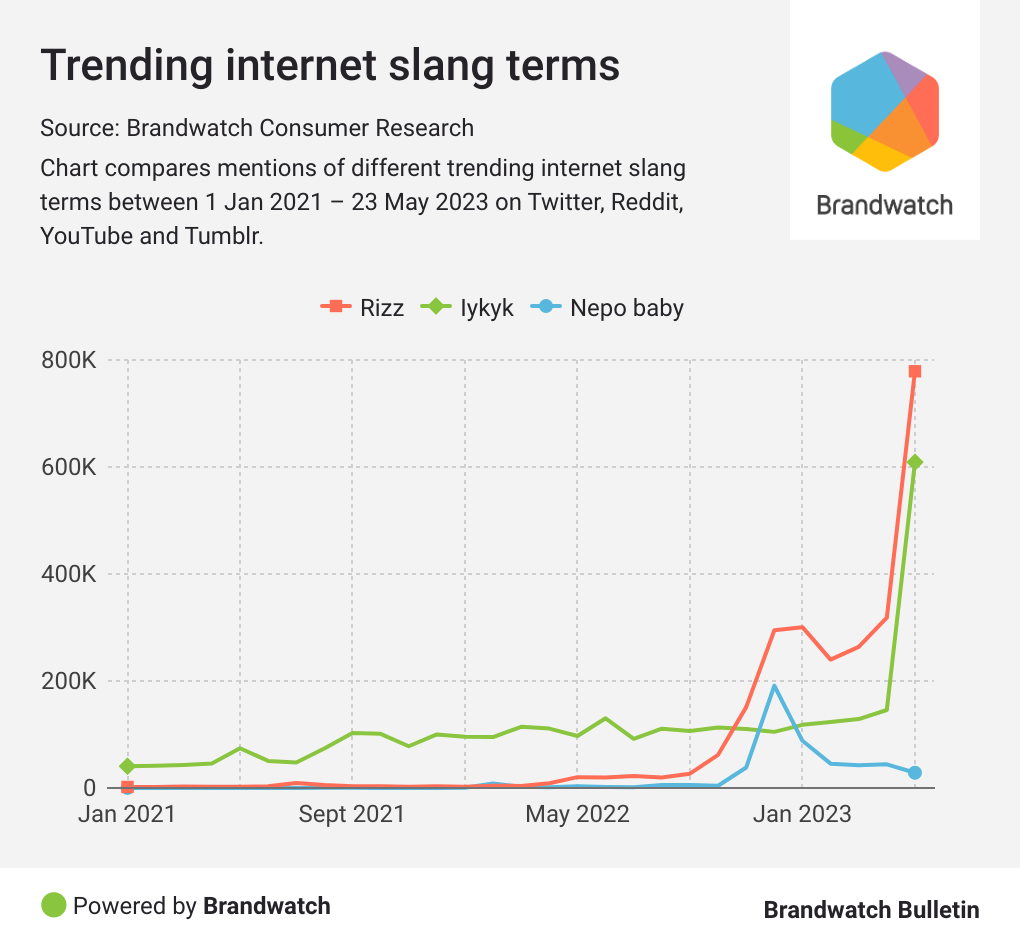
We used Brandwatch Consumer Research to follow dozens of slang terms. Here are three that are worth delving into.

“Rizz” and “iykyk” are skyrocketing in popularity at the moment. Rizz is short for “romantic charisma,” and its meaning is similar to “flirt” – basically to have “good rizz” is to be good at attracting partners. Iykyk is short for “if you know you know” – and now you do.

Both of these phrases are at an all-time high in mention numbers across social media. These words have rapidly snowballed into widespread terms without any obvious indication as to why. Our best guess is that they’re popular because they’re short, memorable, and bridge a gap in our lexicon that other words can’t fill.

The term “nepo baby,” referring to someone successful due to nepotism, reached its peak in popularity last year. Its rise can be attributed to a cover article in New York Magazine that discussed the growing trend of popular nepo babies in the media – and people were keen to join the conversation.

While nepo baby mentions have dipped since then, the phrase is still widely understood and sees thousands of daily mentions – usually as the subject of jokes, memes, or debates about specific people with famous parents.

So, why does it matter if a term is trending?

Marketers and researchers will always benefit from understanding why a term is trending and recognizing when to use it. If anything, the fresher a term is, the more relevant your brand will seem – if you’re able to use it correctly, that is. Make sure to not use it for the sake of it (we’ll explain why later).

Who knows what the trajectory for “rizz” and “iykyk” might look like in the future. Will it continue to boom? Or hit a peak and die down? Perhaps these phrases will infiltrate our language for good?

Let’s look at some slang terms which have been rising for a while to see what it takes for a phrase to continue gaining traction.

Terms still on the rise

While some slang terms disappear within a few months, others experience continuous growth. Here are some internet slang terms which have yet to die off.

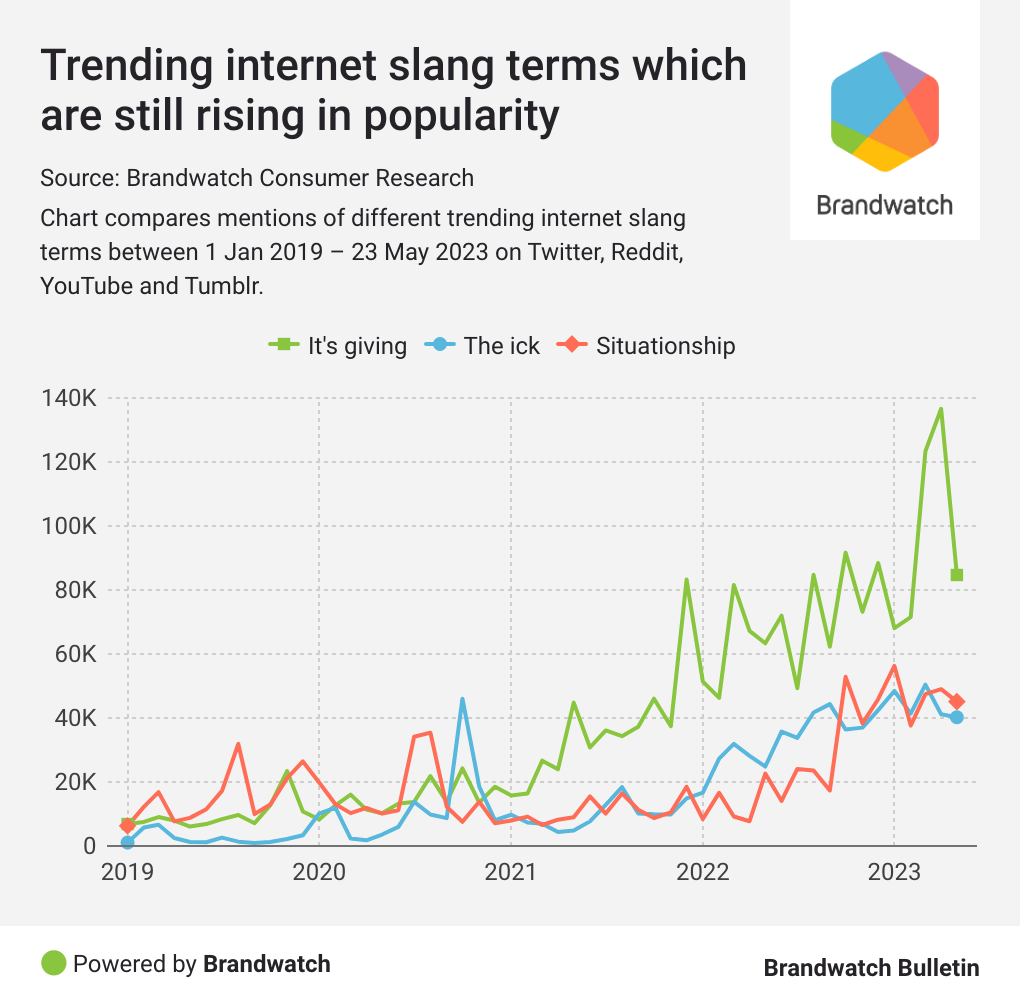
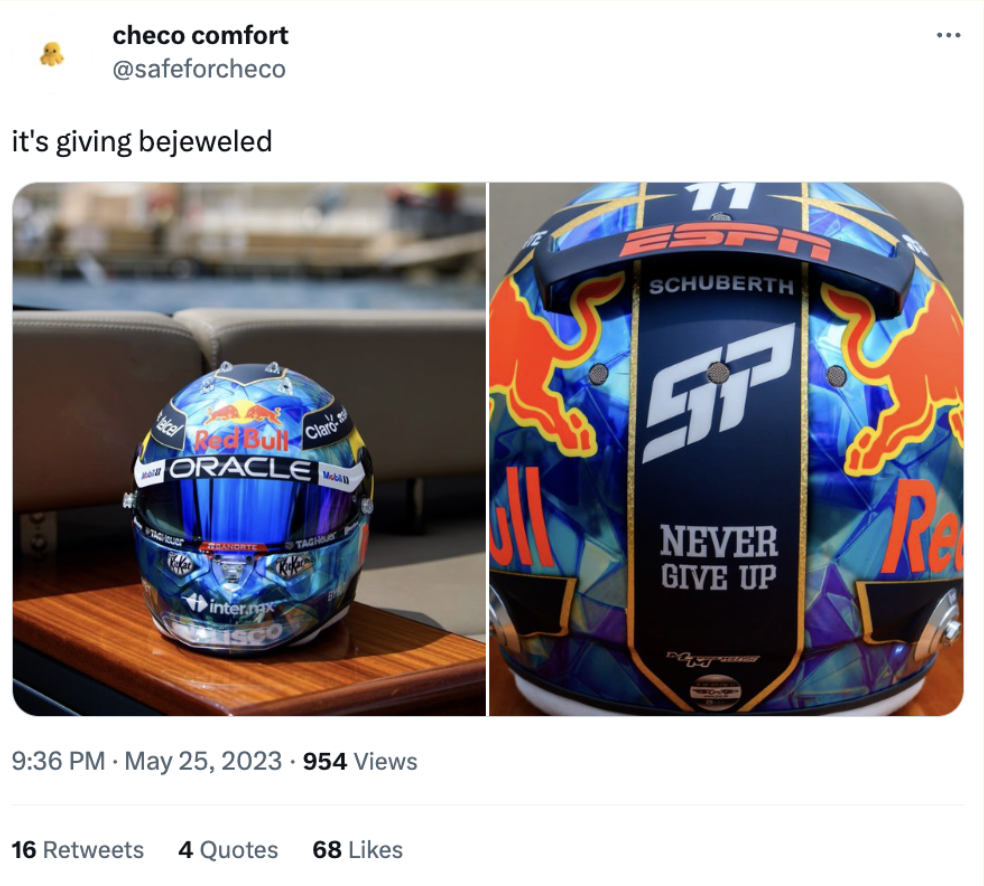
The term “it’s giving” saw a huge peak in usage in April this year after a steady increase since 2019. This phrase is used as a descriptor, similar to saying, “it reminds me of.” For example, in the tweet below, a Formula 1 fan is discussing a driver’s helmet.

This is an excellent example of how understanding such terminology can help researchers and marketers better grasp the context behind brand mentions.

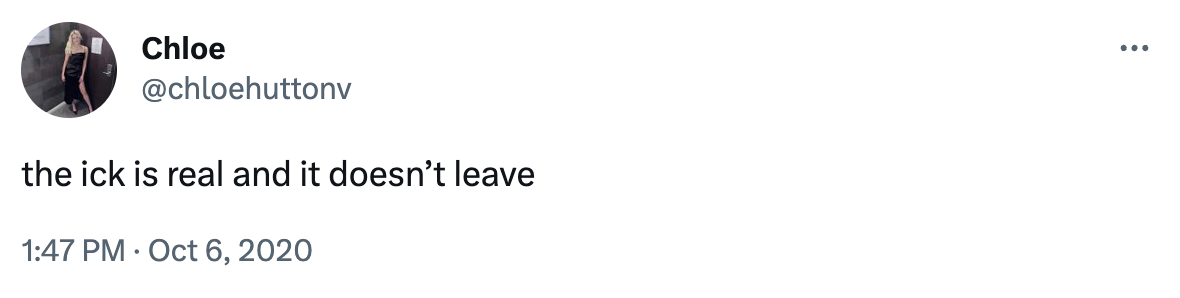
“The ick” also saw a steady increase in mentions on social media, referring to something that puts you off a romantic partner. This phrase picked up traction in late 2020 as people began hearing the phrase for the first time. It seemed people were glad to finally have a name for the feeling. It’s since bounced back, and – like “it’s giving” – using “the ick” is more popular than ever, currently receiving over 40k monthly mentions.

A “situationship” is an undefined relationship that typically occurs before two potential partners discuss their feelings toward one another. The term saw a notable increase in mention numbers in late 2022, and these numbers haven’t dipped since.

So, what makes these examples of slang see slow but continuous growth? It would seem that these terms perfectly slot into day-to-day language to describe a new phenomenon in modern culture – such as dating culture. People are glad to have specific terms that accurately label and capture these experiences, and using them fosters a sense of understanding and connection with others.

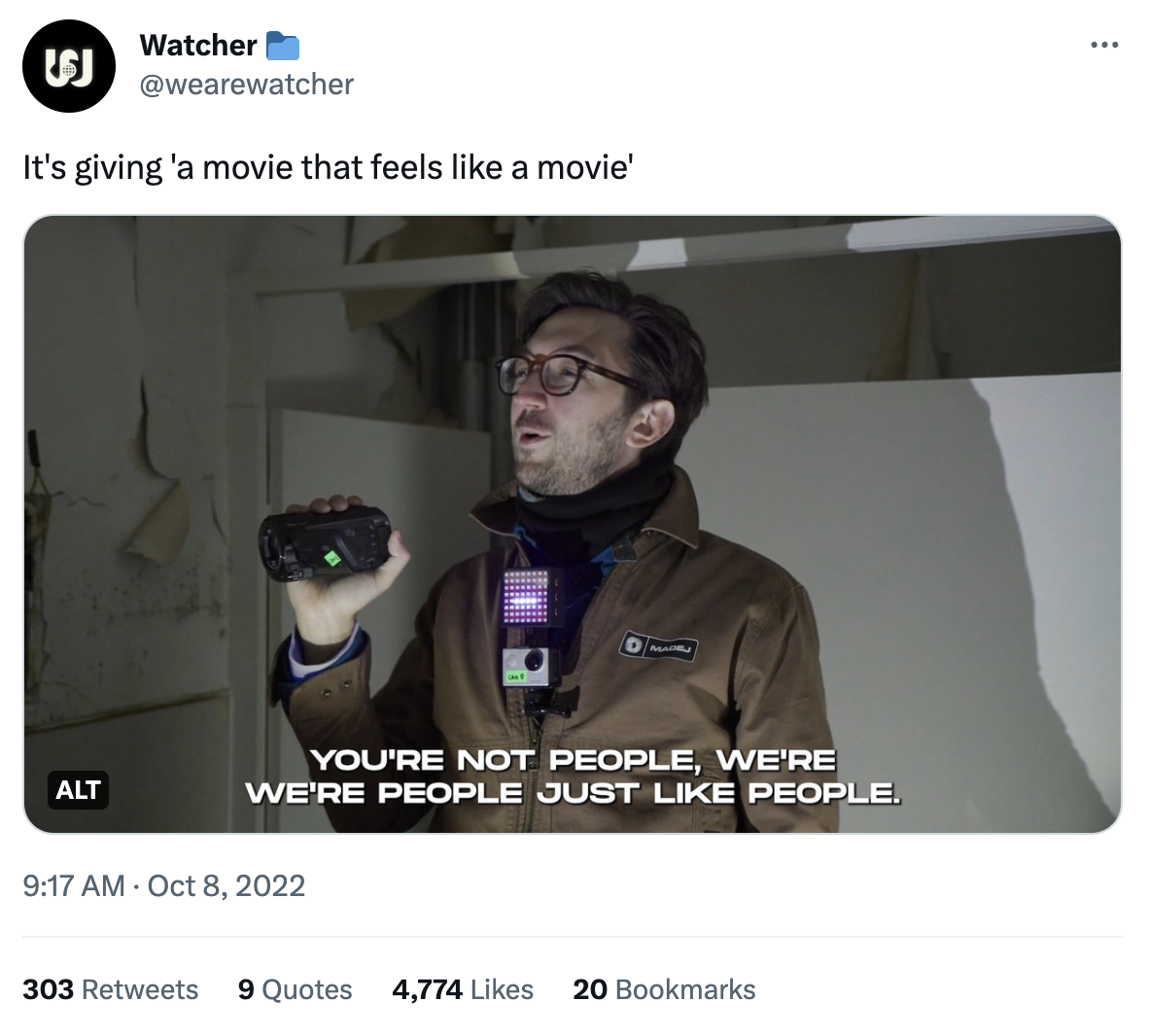
Brands might benefit from introducing similar, relevant slang terms which are growing in popularity. Like the tweet below from production studio Watcher, using trending slang correctly can encourage fans to actively get involved.

Let’s look at some phrases that haven’t maintained their flight.

Where slang goes to die

Occasionally, a slang term will experience an impressive surge in popularity, only to die off very quickly. Here are a couple of examples.

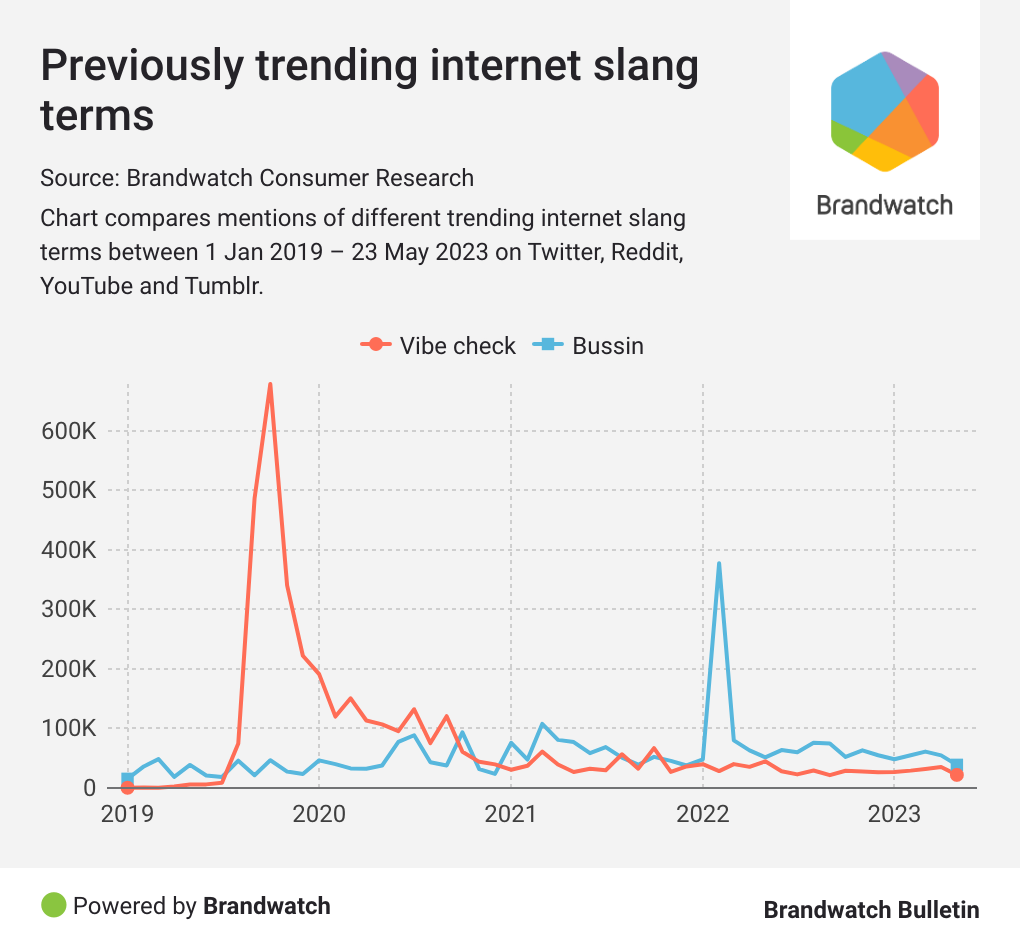
“Vibe check” – the act of assessing the atmosphere in a given situation – rose to stardom in late 2020 following a surge in TikTok trends relating to the term. As of 2023, the phrase is still in use – but not nearly to the extent that it used to be.

“Bussin” experienced a similar theme. Simply put, this term describes something that’s really good. The term peaked in early 2022 when Nicki Minaj released a song called “Bussin,” but it has since dropped in popularity.

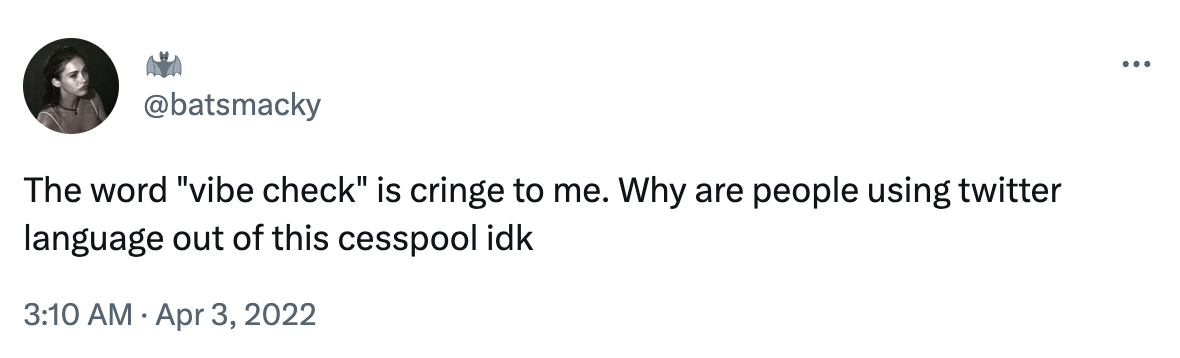
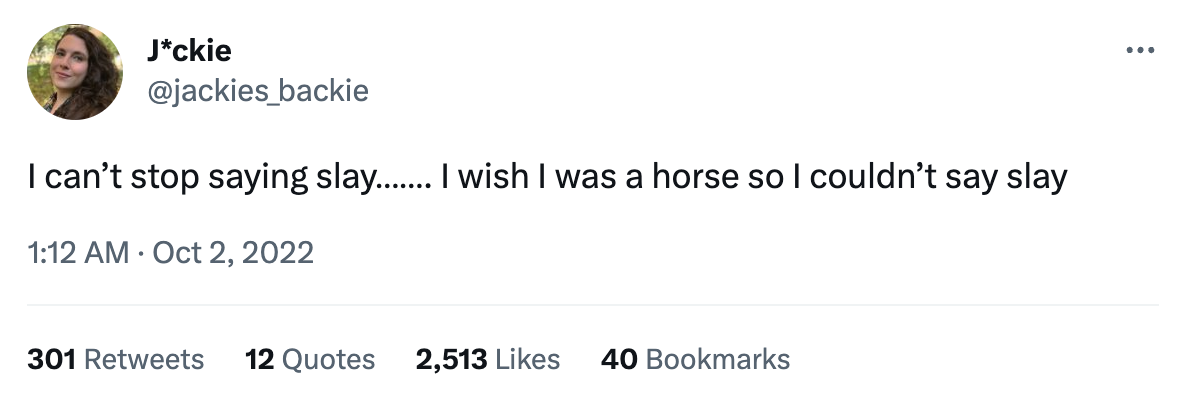
While both of these phrases still experience thousands of monthly mentions, their swift rises to fame seem to mean they’re now said with reserve. Some users are no longer fans of the phrases, and – like the user below – wouldn’t use them in daily life.

Let’s dive into why using outdated phrases might negatively affect your brand image.

Being aware of slang is invaluable

Gen Z are savvy. And using slang ties in perfectly with connecting with this generation. A lot of the time, the only way to understand them is to actively get involved with internet trends, memes, and slang.

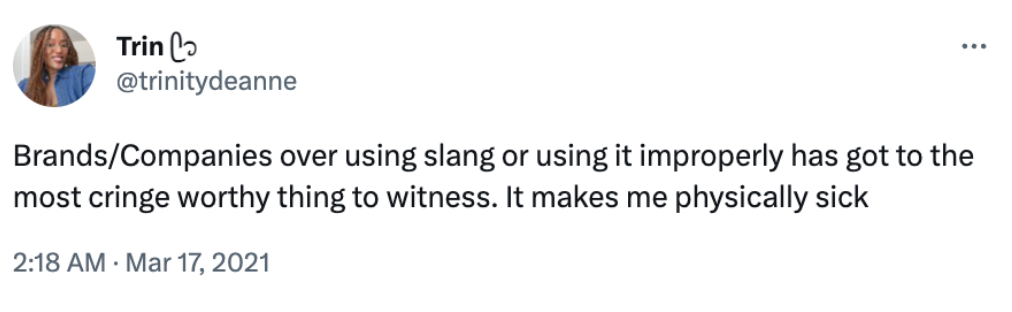
Yet the nuances of internet slang mean that social media managers need to understand the hidden meanings or context behind slang completely before introducing phrases to their marketing. And not doing proper research can actively put people off.

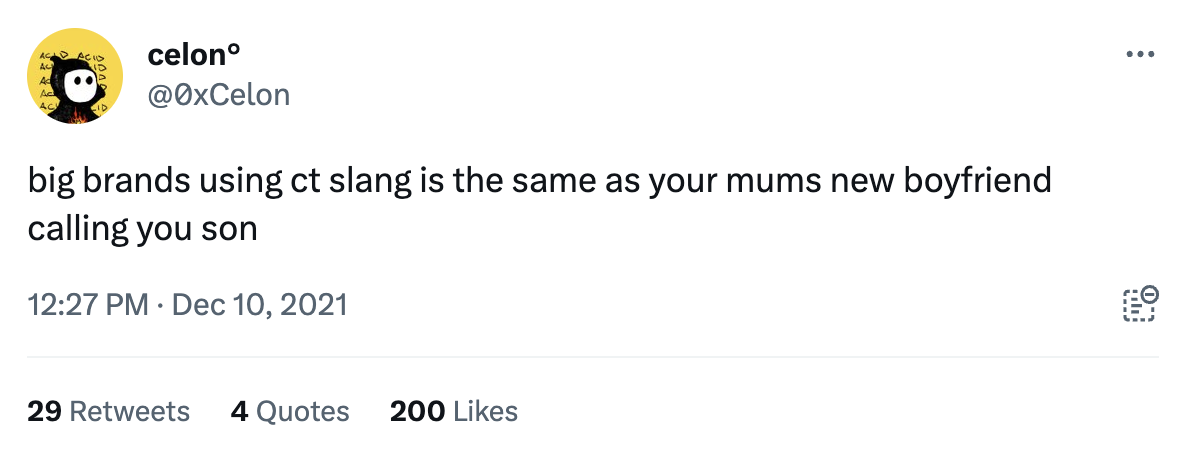
Sometimes slang can develop within niche online communities – for example, among K-pop fans on Twitter or fans of a certain TV show on Reddit. In these instances, it can connect individuals on a deeper level. But using this slang incorrectly can come across as tone-deaf.

*Note: ”ct slang” stands for “crypto Twitter slang,” referring to the crypto community on the platform.

As you can see by this example, people can be quite protective of their slang. In some cases, it helps people feel safe within their specific community, and outsiders using their language can come across as insincere.

So, if you do decide to use slang, make sure you’ve done your research.

And while some slang terms remain niche, others become parts of our daily lives. Let’s see which terms have remained part of the internet’s wider vocabulary.

What makes slang stick?

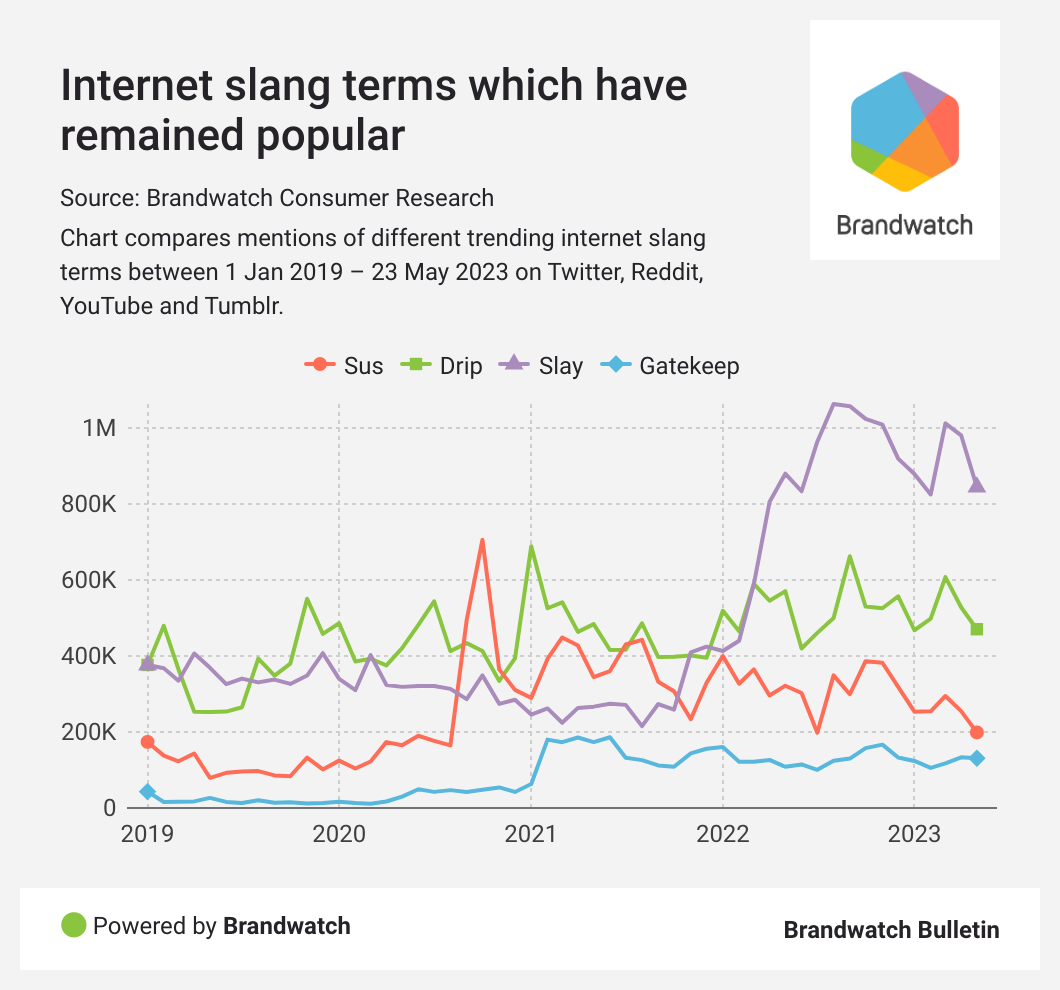
Often, slang terms arrive with force and stick around. Below are a few terms which have remained popular after a jump in usage.

Let’s explain what these expressions mean.

“Sus” is short for “suspect” or “suspicious,” and “drip” refers to a cool outfit. “Slay” means to “kill it” or to see success in something. The slang term “gatekeep” means something similar to its dictionary definition – to hold something back.

The term “sus” rose to popularity in 2020, and this success can be attributed to the video game Among Us. The premise of this game is to guess which players are the bad guys based on who is acting suspiciously. The phrase’s popularity has since exceeded the game, becoming widely used in daily life.

“Sus” was even added to the Merriam-Webster dictionary in late 2022.

“Drip,” “gatekeep,” and “slay” all became part of the internet’s vocabulary. While “gatekeep” and “slay” saw quick, notable increases in usage – simply because more people heard the phrase and began using it – “drip” has seen a slow but steady increase over the years.

So, what can we learn from the words that stick?

Why following slang is important for brands

Language is always evolving. Since well before Shakespeare invented the word swagger in the 1500s, we’ve been adding to the dictionary when needed. And with social media connecting us to millions of people across the world in seconds, new slang is coming at us with greater speed – much like everything else on the internet. 

Understanding slang, emojis, and imagery might seem like a fleeting endeavor, and indeed, it is ever-evolving. However, it remains crucial as slang is here to stay. To truly understand your audience and engage with them effectively, it’s essential to delve deeper than surface-level demographics and actively monitor their specific conversations, including the nuances of their slang.

Brands should be connecting with their target audience through properly interpreted slang. But don’t dare use them otherwise – iykyk.

What should we cover next?

Is there a topic, trend, or industry you’d like us to feature in the Brandwatch Bulletin? We want to hear your ideas to make sure our readers are getting what they want. We may even ask to interview you if you’re involved with the topic.

Send any and all ideas to [email protected] and let’s talk.

Thanks for reading

If you were forwarded today’s bulletin and want to get them yourself, you can subscribe to the Brandwatch Bulletin here.

See you next time,

The Brandwatch Bulletin team

logo
  Our Suite     Use Cases     Industries     Get started  

Runtime Collective Limited (trading as Brandwatch). English company number 3898053
New York | Boston | Chicago | Austin | Toronto | Brighton | London | Copenhagen | Berlin | Stuttgart | Frankfurt | Paris | Madrid | Budapest | Sofia | Chennai | Singapore | Sydney | Melbourne

Privacy Policy

Update subscription preferences

Unsubscribe

We value your privacy

We use cookies and similar technologies to personalize ads and content (including by sharing data with Google), to measure site performance, and to improve your experience. Learn more in our cookie policy

Privacy & Safety • Terms of Service

No, take me to settings
Yes, I agree
More info.

By using our site you agree to our use of cookies —