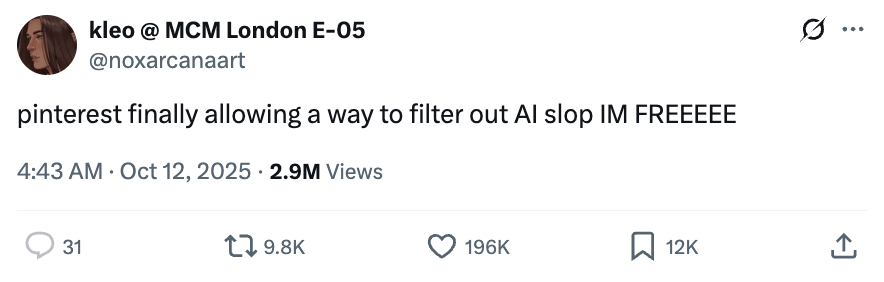
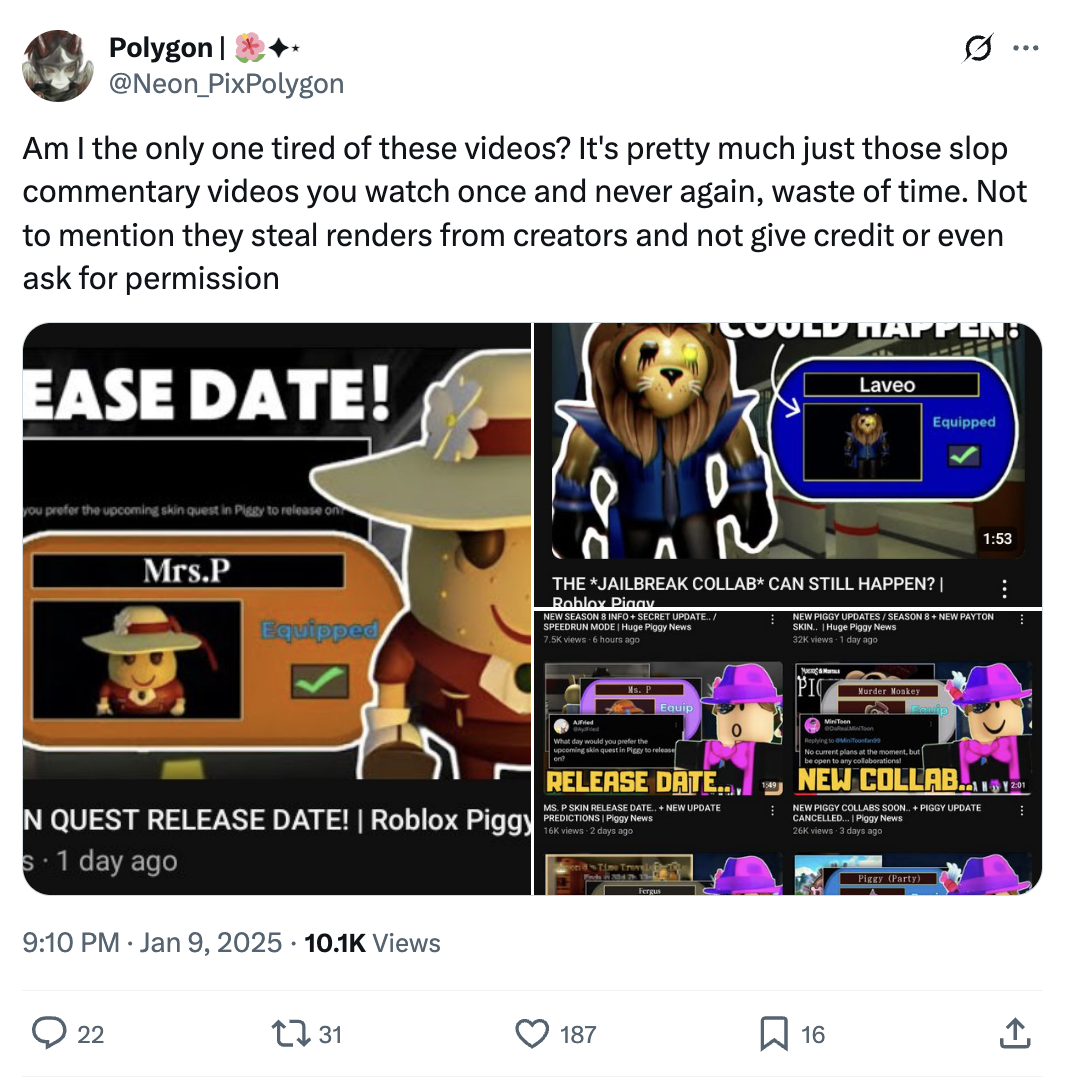
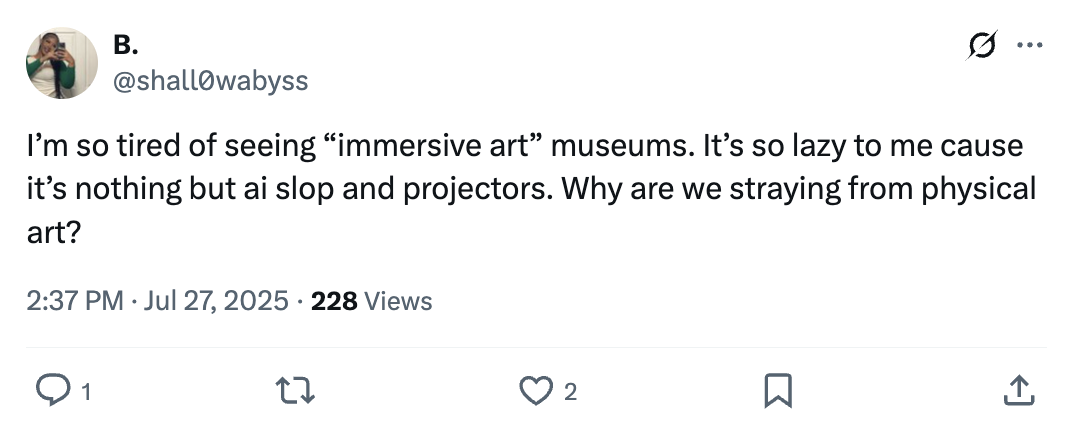
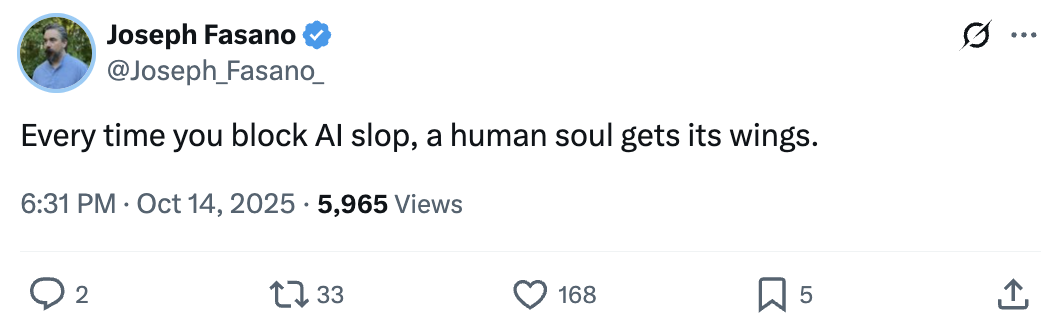
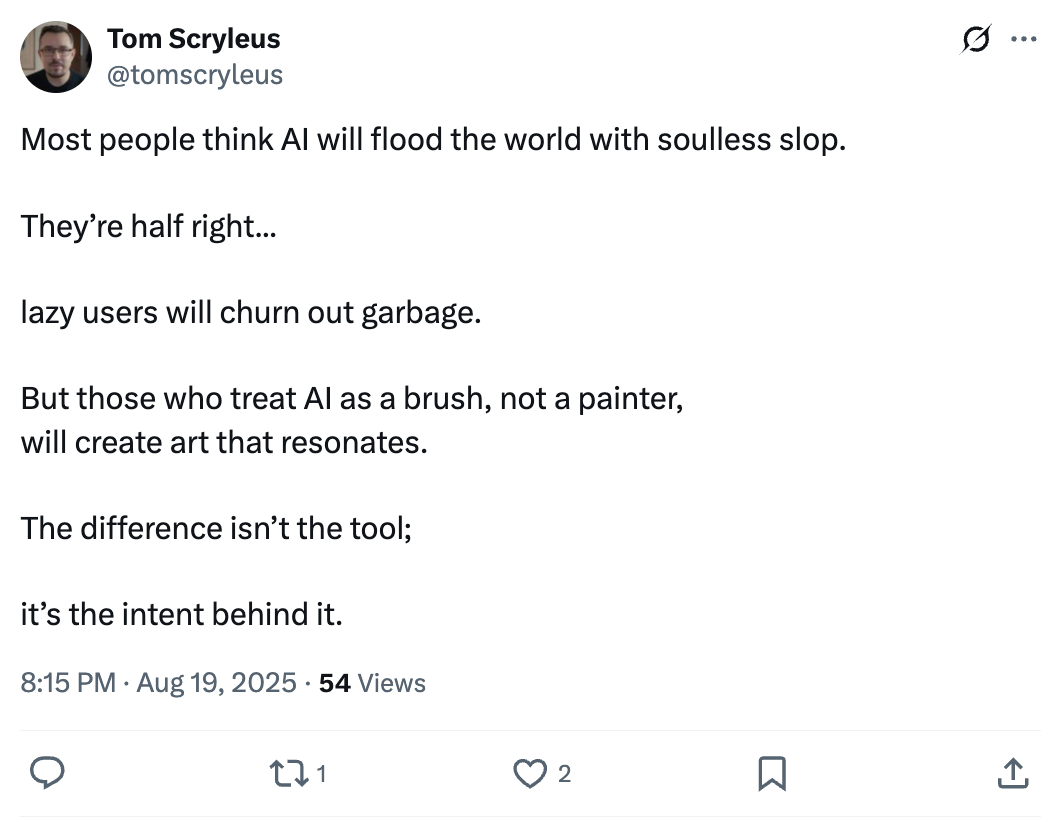
Slop is now synonymous with “digital spam.” For brands, this all presents a challenge: how can you create content that actually stands for something?
How to avoid the slop trap
Marketers can’t escape the reality: not all slop comes from AI. Some comes from humans taking shortcuts, whether it’s rushed posts, recycled ideas, or campaigns made with limited customer connection.
So, how can you make sure your content doesn’t just add to the noise? Here’s a quick framework to follow that we’ve dubbed ‘The Slop Test.’
Ask yourself a few questions before you hit publish:
- Would someone share this, or just scroll past it? If your post doesn’t spark emotion, offer new insight, or evoke genuine emotion – it could fall into the slop bucket.
- Could any other brand have posted this? Assess whether the content could have been made by a different brand in your industry – or worse, any industry. Does it show specific expertise that only your brand can offer? Make sure your content feels unmistakably yours.
- Is the effort you’ve put into this content visible? People reward content made with care. From strong creative to thoughtful replies, clear and human-first production is the perfect antidote to slop.
As we’ve seen, audiences are craving content with soul. Brands need to lead with originality – while straying away from volume for volume’s sake. In an era of AI saturation, people care about quality over quantity.