Getting influencers to notice your brand in a crowded inbox isn't easy. But when you nail your outreach strategy, you unlock partnerships that drive awareness, build trust, and convert audiences into customers.
This guide walks you through the complete influencer outreach process, from finding the right creators to measuring campaign success. Plus, you'll get copy-and-paste templates that you can start using today.
What is influencer outreach?
Influencer outreach is the practice of finding, contacting, and partnering with creators via email or direct message to promote your brand. It's a relationship-led approach, not a one-off pitch.
The goal is to build authentic, mutually beneficial partnerships that deliver value for both your brand and the influencer.
Think of it like networking, but instead of trading business cards at a conference, you're sliding into DMs and inboxes with personalized pitches. The influencers you're reaching out to already have engaged audiences who trust their opinions. When done right, these partnerships amplify your message to people who actually want to hear it.
Successful influencer outreach recognizes that influencers are content creators and business owners. They're selective about partnerships because their credibility depends on maintaining audience trust. Your outreach needs to respect their time, demonstrate genuine interest in their work, and clearly communicate what's in it for them.
The 9-step influencer outreach process
Step 1: Clarify goals and offer
Before you contact anyone, nail down what you want to achieve and what you're offering in return. Are you aiming for brand awareness, user-generated content, product trials, affiliate sales, or something else? Your goals will determine which influencers to target, what you ask them to do, and how you measure success.
Be specific. Instead of "increase brand awareness," try "get our product featured in 10 YouTube videos by beauty creators with 50K+ subscribers." Clear goals help you work backward to identify the activities that'll get you there.
Equally important is knowing what you can offer. Compensation comes in many forms: cash payments, free products, affiliate commissions, exclusive access, or creative freedom. The most sought-after influencers get pitched constantly, so your offer needs to stand out. Ask yourself what value you bring beyond money. Can you help them access your audience? Provide unique experiences? Support causes they care about?
Step 2: Build a shortlist
Finding the right influencers is where many brands stumble. You want creators whose audiences align with your target market, whose content style matches your brand aesthetic, and whose engagement suggests an authentic following.
Start by considering platform fit. Where does your target audience hang out? It might be Instagram for lifestyle and fashion, YouTube for tutorials and reviews, TikTok for entertainment and trends, or LinkedIn for B2B thought leadership. Make sure to test your assumptions and don't spread yourself too thin. Focus on one or two platforms where you can build real momentum.
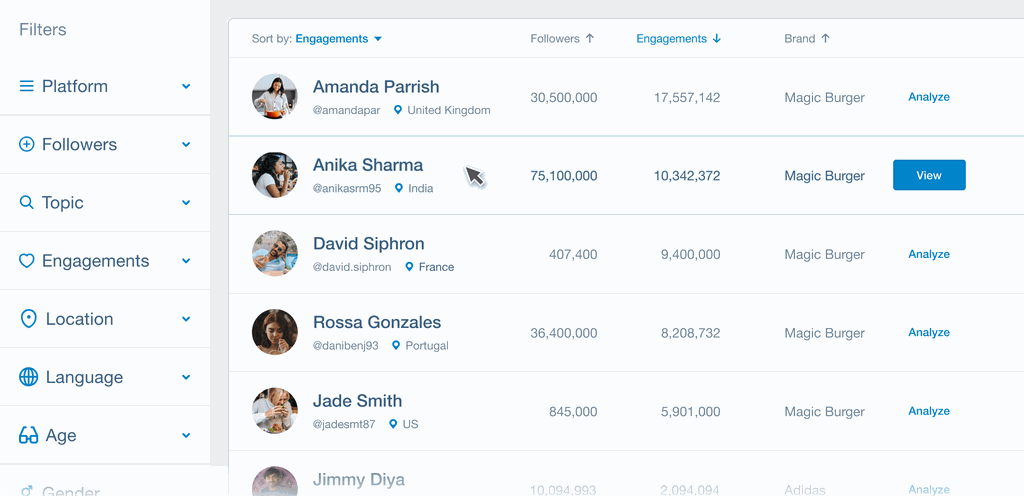
Next, look for audience match. An influencer with millions of followers means nothing if those followers aren't interested in what you sell. A niche creator with 15,000 highly engaged followers in your exact market will outperform a generalist with 500K any day. Use discovery tools like Brandwatch Influence to filter creators by interests, brand affinities, demographics, and more across 50m+ global profiles.
Finally, evaluate engagement authenticity. High follower counts can be bought. Real engagement cannot. Look at comments, not just likes. Are people actually conversing, or is it spam and generic emojis? Check if the influencer responds to their community. Authentic influencers build relationships, not just audiences.
Step 3: Choose your outreach channel
Most creators specify their preferred contact method in their bio. Check there first. Some list business email addresses, others link to management agencies, and many accept DMs for collaboration inquiries.
The decision rule is simple: start with the channel listed in their bio. If no preference is given, default to email. Email feels more professional and gives you space to make your case. DMs work well for micro-influencers and quick initial contact, but they're easy to miss in busy inboxes.
Larger influencers often route business inquiries through managers or agents. Don't take this personally. It's how they protect their time and ensure professional partnerships. When reaching out through representatives, your pitch needs to be even more polished since it's passing through a gatekeeper first.
Step 4: Personalize the first contact
Generic copy-paste pitches get ignored. Personalization is non-negotiable. You need to signal that you actually know their work and genuinely want to collaborate with them specifically.
Reference a recent post, video, or campaign they created. Mention what you appreciated about it. Show that you've spent time understanding their content style and audience. This takes effort, but it's the difference between getting deleted and getting a response.
Here's what not to do: "Hey! Love your content! We'd love to work with you!" That could apply to anyone. Instead: "Hey [Name], your recent video breaking down sustainable fashion brands was exactly what the industry needs. The way you explained fast fashion's environmental impact without being preachy really resonated with me."
Personalization doesn't mean writing a novel. Keep it concise but specific. You're proving you're not mass-emailing hundreds of creators with the same template.
Step 5: State value and expectations
Once you've established that you know who they are, get to business. What are you asking for? What are you offering? Be crystal clear on both.
Outline the deliverables: number of posts, platforms, content format, timeline. Specify compensation: payment amount, free products, commission structure, or a combination. Don't make influencers chase this information or guess whether you're expecting free work.
Transparency builds trust. If you're offering $500 for two Instagram posts and one Story, say that upfront. If you can't afford cash but can offer product worth $300 plus affiliate commission, explain that clearly. Influencers appreciate brands that respect their time by being honest about expectations from the start.
Also communicate what you're flexible on. Many brands make the mistake of overcontrolling creative direction. The influencers know their audience better than you do. State your must-haves (brand messaging, disclosure requirements, posting dates) but give them creative freedom on execution.
Step 6: Send, track, and A/B test
Now you're ready to hit send. But smart outreach doesn't stop there. Track your emails to see who opens, who clicks, and who responds. This data helps you refine your approach over time.
Subject lines matter enormously. Test different approaches to see what gets opened. "Collab idea for [Creator]" performs differently than "Paid partnership opportunity for [Creator]." Some creators respond better to a casual tone, others to professional formality. A/B testing reveals what resonates.
Keep your initial outreach short. Aim for 120 words or less. You're not closing the deal in the first email. You're starting a conversation. Save the detailed brief and campaign specifics for after they express interest.
Step 7: Follow up (politely)
Most people won't respond to your first message. They're busy, your email got buried, or they need time to consider. Following up is expected and professional.
Here's a simple cadence:
- Day 0: Send initial outreach
- Day 4-5: Short bump ("Just checking in case this got buried")
- Day 10-12: Final nudge ("Last ping on this. Happy to send more details if you're interested")
- Then stop
Respect inboxes. After two or three follow-ups with no response, move on. Persistence shows interest. Harassment damages your brand reputation.
When you do follow up, keep it brief. Reference your original message and offer something new (additional context, adjusted offer, different approach). Make it easy for them to say yes by removing friction.
Step 8: Negotiate and brief
When you get a yes, it's time to work out details and formalize the partnership. This is where you negotiate specifics: exact deliverables, timing, compensation, usage rights, and content approval processes.
Be prepared to negotiate. Professional influencers know their worth and may counter your initial offer. Approach this collaboratively. If you can't increase payment, maybe you can offer longer creative freedom, include them in future campaigns, or provide other value.
Once terms are agreed, send a clear creative brief. Include:
- Campaign concept and key messages
- Deliverables (formats, quantities, platforms)
- Timeline (content creation deadlines, posting dates, review rounds)
- Usage rights and whitelisting requirements
- Brand safety guidelines
- FTC disclosure requirements
- Any brand assets, product info, or hashtags to include
Make the brief thorough but not restrictive. Remember, you hired them for their creative expertise. Give guidelines, not scripts.
Step 9: Measure and nurture
Track performance from day one. Monitor opens and reply rates during outreach. Once content goes live, measure engagement rate, reach, impressions, clicks, and attributed conversions using UTM parameters.
Compare which influencers drove the best results and why. Was it their audience size, content format, or messaging approach? Use these insights to inform future campaigns and identify creators worth partnering with long-term.
The best influencer relationships aren't transactional. They're ongoing partnerships that get stronger over time. After the campaign, stay in touch. Share results with them. Thank them publicly. Consider them first for future opportunities. Influencers who feel valued become brand advocates beyond paid partnerships.
Email vs DM: which outreach works when?
The question of email versus DM depends on the creator's preferences and your relationship stage.
Email pros:
- Professional and expected for business inquiries
- Allows detailed explanations and attachments
- Less likely to get lost than DMs
- Easier to track and follow up systematically
Email cons:
- Can feel formal or impersonal
- May sit unopened in crowded inboxes
- Takes longer to get responses
DM pros:
- Feels more personal and conversational
- Gets seen faster, especially by smaller creators
- Good for initial soft intros before formal pitches
- Some platforms notify users immediately
DM cons:
- Limited character counts force brevity
- Easy to miss in message requests or spam folders
- Less professional for larger partnerships Harder to include detailed information
The decision rule: Check the creator's bio first. Many explicitly state "Business inquiries: [email]" or "DM for collabs." When in doubt, email feels more professional for paid partnerships. Use DMs for quick questions or initial warm contact before sending a detailed email pitch.
Copy-and-paste templates (email + DM)
Email templates
Email #1: Short cold pitch
Subject: Collab idea for [Creator] — [Brand]
Body: Hi [Name], Loved your [specific post/work]. We're planning [campaign] on [platforms] and think your style fits perfectly. Scope: [# deliverables] across [timeline]. Comp: [cash/gift/affiliate or mix]. Interested in a quick 10-min chat?
— [Your name]
[Role], [Brand]
[contact]
Email #2: Warm intro via mutual touchpoint
Subject: [Mutual contact/event] → quick collab idea?
Body: Hi [Name], [Mutual/source] suggested we connect after your [post/event]. We'd love to co-create [concept]. Draft scope + comp attached. If you're open, can we trade notes this week?
Email #3: Product seeding / gifting
Subject: We'd love to gift you [product]
Body: Hi [Name], We're sending [product] to a few creators we admire. No strings attached. If you like it, we can discuss sponsored content later. Can we ship to [address request/link]?
Email #4: Affiliate/ambassador invite
Subject: [Brand] ambassador invite (+rev share)
Body: Hi [Name], Your audience aligns closely with ours. Would you consider an ambassador spot with [commission]% and exclusive drops? We'll handle tracking & payouts. Quick call?
Email #5: Negotiation follow-up
Subject: Re: [Brand] x [Creator]
Body: Thanks for the quick reply. Here's a revised scope: [deliverables/usage/term]. New comp: [offer]. Does this work for you?
Email #6: Polite follow-up (no reply)
Subject: Just checking in re: [campaign]
Body: Hi [Name], Pinging this once more in case it got buried. Happy to send more detail or pause if timing isn't right.
Instagram/TikTok DM variants
DM #1: "Hey [Name], huge fans of your [topic] series. Could we share a short collab idea for [month/campaign]?"
DM #2: "Loved your [specific post]. We're exploring [concept]; fair comp + full creative freedom. Best contact?"
DM #3: "Quick one: paid collab for [deliverables/timeline]. Can I email [address] with details?"
Subject lines that get opened
Subject lines make or break your open rates. Try testing some of these formats:
- "Collab idea for [Creator] — [Brand]"
- "Paid collab: [Brand] x [Creator] in [Month]"
- "Ambassador invite + rev share"
- "Quick partnership question"
- "[Mutual contact] suggested we connect"
- "Love your [specific content] — collab?"
- "We'd love to gift you [product]"
- "[Brand] x [Creator]: [specific campaign type]"
- "Collaboration opportunity from [Brand]"
- "Question about working together"
- "[Creator] — partnership details inside"
- "Interested in [campaign concept]?"
Mix and match elements based on what feels authentic to your brand and the specific creator. A/B test different approaches to find what resonates with your target influencer segment.
Briefing and guardrails (after 'yes')
Once an influencer agrees to work with you, it's time to formalize the partnership with a solid creative brief. This document keeps everyone aligned and prevents miscommunication down the line.
Your brief should include:
- Creative concept: What's the big idea? What story are you telling? Give enough direction that they understand the vision without micromanaging execution.
- Deliverables: Exactly what you need. Two Instagram posts plus three Stories? One YouTube video with specific segments? Be precise about formats, quantities, and platforms.
- Timelines: When content is due for review, when edits need to be completed, when posts go live. Build in buffer time for revisions.
- Review rounds: How many rounds of feedback will you provide? What's the approval process? Set clear expectations so creators aren't surprised by multiple revision requests.
- Usage rights and whitelisting: Can you repurpose their content in ads? Run it as paid social? Use it on your website? Specify usage rights upfront because these affect compensation.
- Brand safety guidelines: What's off-limits? Controversial topics, competing brands, specific language. Make your non-negotiables clear.
- Disclosures: FTC requires clear disclosure of paid partnerships. Specify exactly how you want this handled (#ad, #sponsored, verbal disclosure in videos). Non-compliance can create legal issues for both parties.
Consider creating a downloadable one-page brief template that makes this process repeatable and professional.
Metrics that matter (what to track)
Measuring success starts during outreach and continues through campaign execution. Here are the metrics that actually matter:
Outreach metrics:
- Open rate (how many creators opened your email)
- Reply rate (how many responded)
- Positive reply rate (how many expressed interest)
- Conversion rate (how many signed agreements)
Campaign performance metrics:
- Engagement rate (likes, comments, shares, saves relative to follower count)
- Reach and impressions (how many people saw the content)
- Clicks (if tracking links included)
- Attributed conversions via UTMs (purchases, sign-ups, downloads)
- Content saves (indicates high-value content people want to reference later)
- Sentiment (are comments positive, neutral, or negative?)
Long-term relationship metrics:
- Repeat collaboration rate (how many influencers work with you again)
- Creator satisfaction scores (gather feedback after campaigns)
- Audience growth (do partnerships drive new followers for your brand?)
Don't get caught up in vanity metrics. A post with 100K impressions but zero clicks or conversions isn't successful. Focus on metrics tied to your original goals from Step 1.
Tools that make outreach easier
Managing influencer outreach manually gets messy fast. Spreadsheets break, emails get lost, and tracking performance becomes impossible at scale. The right platform streamlines discovery, outreach, campaign management, and reporting in one place. Look for tools that support the full influencer marketing lifecycle:
- Discovery: Search and filter creators by audience size, demographics, interests, engagement rates, and brand affinities. Brandwatch Influence tracks 50m+ global creators across YouTube, Instagram, and TikTok, making it easy to pinpoint perfect matches for your campaigns.
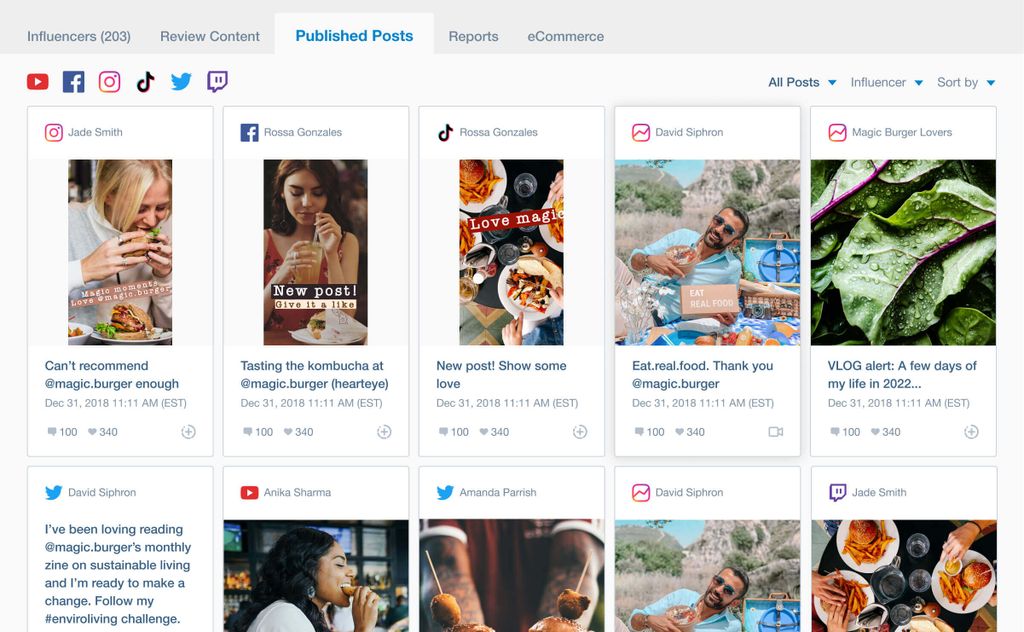
- Outreach and relationship management: Store contact details, payment information, contracts, and correspondence history. Track who you've contacted, when, and what they responded. Automated email tracking ensures nothing falls through the cracks.
- Campaign management: Track deliverables to ensure creators fulfill requirements, manage content approvals before posts go live, and monitor campaign performance in real-time.
- Payments and reporting: Pay creators and link payments to specific campaigns for clear spending visibility. Create real-time reports showing impressions, engagement, viewership, and ROI.
An end-to-end solution like Brandwatch Influence brings all these capabilities together, helping you manage influencer relationships professionally while proving the value of your programs to stakeholders.
Common mistakes to avoid
Even experienced marketers make these influencer outreach mistakes. Avoid them to improve your success rate:
- Generic, copy-paste pitches: Nothing screams "mass email" like a message that could apply to anyone. Personalization isn't optional. Reference specific content, demonstrate genuine familiarity with their work, and explain why they're the right fit.
- Hiding compensation or expectations: Vague offers waste everyone's time. Be upfront about what you're asking for and what you're offering. Influencers need this information to decide if the partnership makes sense. Playing coy about budget or deliverables makes you look unprofessional.
- No personalization or value to the creator: Remember, influencers are running businesses. What's in it for them beyond payment? Do you offer creative freedom, special access, unique experiences, or long-term partnership potential? Lead with value, not just what you need.
- Ignoring compliance requirements: FTC regulations around disclosure aren't suggestions. Failure to properly disclose paid partnerships can result in fines and legal trouble for both you and the creator. Include clear disclosure requirements in every brief.
- Over-automating without human review: Automation tools help with efficiency, but influencer outreach requires human judgment. Automated emails that miss obvious context (like congratulating someone on an award they didn't win) damage credibility. Always review before sending.
FAQs
How do I write an influencer outreach message?
Start with personalization (reference specific content they created), state your purpose clearly (collaboration opportunity for [campaign]), outline what you're asking (2 Instagram posts in March), specify compensation (payment amount or product value), and make responding easy (quick yes/no or meeting request). Keep it under 120 words for the initial outreach.
Email vs DM: which is better?
Check the creator's bio first. Many specify their preferred contact method. When no preference is stated, email is generally better for paid partnerships because it's more professional and allows detailed explanations. DMs work well for quick initial contact with micro-influencers or when you want to establish rapport before sending a formal pitch. Always respect the creator's stated preference.
How many influencers should I contact per campaign?
This depends on your goals and expected response rates. If you're targeting established influencers, expect 10-20% positive response rates. If you need 5 confirmed partnerships, contact 25-50 creators. For micro-influencers with smaller followings, response rates may be higher. Quality matters more than quantity. Better to send 20 highly personalized pitches than 200 generic ones.
What should I pay (and how do I discuss compensation)?
Compensation varies widely based on follower count, engagement rate, content format, and usage rights. Micro-influencers (10K-50K followers) might charge $100-500 per post. Mid-tier creators (50K-500K) often charge $500-5K. Discuss compensation transparently in your initial outreach. State your offer clearly (cash amount, product value, commission percentage) and be open to negotiation. Don't expect influencers to name their price first. Come prepared with a specific offer.
How often should I follow up?
Follow up twice after your initial message. Send the first follow-up after 4-5 days, the second after 10-12 days. Then stop. Three touches total (initial message plus two follow-ups) is professional persistence. More than that becomes spam.
What needs to go in a creative brief?
A solid creative brief includes campaign concept and goals, specific deliverables (post formats, quantities, platforms), timeline (creation deadlines and posting dates), number of review rounds, usage rights and whitelisting permissions, brand safety guidelines, required disclosures (#ad, #sponsored), any hashtags or brand messaging requirements, and contact information for questions. Make it comprehensive but not restrictive. You want to guide creators without stifling their creative expertise.
How do I measure success from the first campaign?
Measure against the goals you established in Step 1. If you wanted brand awareness, track reach, impressions, and engagement rate. If you wanted conversions, track clicks and attributed sales via UTM parameters. Compare performance across influencers to identify which partnerships delivered the best results. Gather feedback from the influencers themselves about what worked well and what could improve. Use these insights to refine your strategy for future campaigns.
What disclosures are required?
The FTC requires clear disclosure of paid partnerships. Influencers must use language like #ad, #sponsored, or "paid partnership with [Brand]" in a prominent location that's hard to miss. For video content, verbal disclosure should happen early in the video. Platform-specific disclosure tools (like Instagram's "Paid partnership" tag) should be used when available. Disclosure requirements apply to any material connection between the brand and creator, including free products. Non-compliance can result in fines and legal action for both parties.
Ready to streamline your influencer outreach?
Effective influencer outreach is equal parts strategy, personalization, and relationship management. The brands that succeed are those that respect creators' time, communicate clearly, and deliver genuine value beyond compensation.
Whether you're managing your first campaign or your fiftieth, having the right tools makes the difference between chaos and efficiency. Brandwatch Influence helps you discover the right creators, manage relationships professionally, track campaign performance, and prove ROI to stakeholders all in one platform.