


Christmas remains the biggest shopping season of the year.
For 37% of small retailers, Christmas makes up more than half of annual revenue. But changing habits, like social commerce and AI-driven shopping, mean it’s tougher than ever to stand out.
The solution? Smarter holiday marketing. Plan early and you’ll boost sales while avoiding the spike in post-holiday returns (up 28% since last year).
Here’s your 2025 guide to thriving this holiday season.
The state of holiday shopping in 2025
Last year, the holidays didn’t disappoint: retailers raked in $1.2 trillion worldwide.
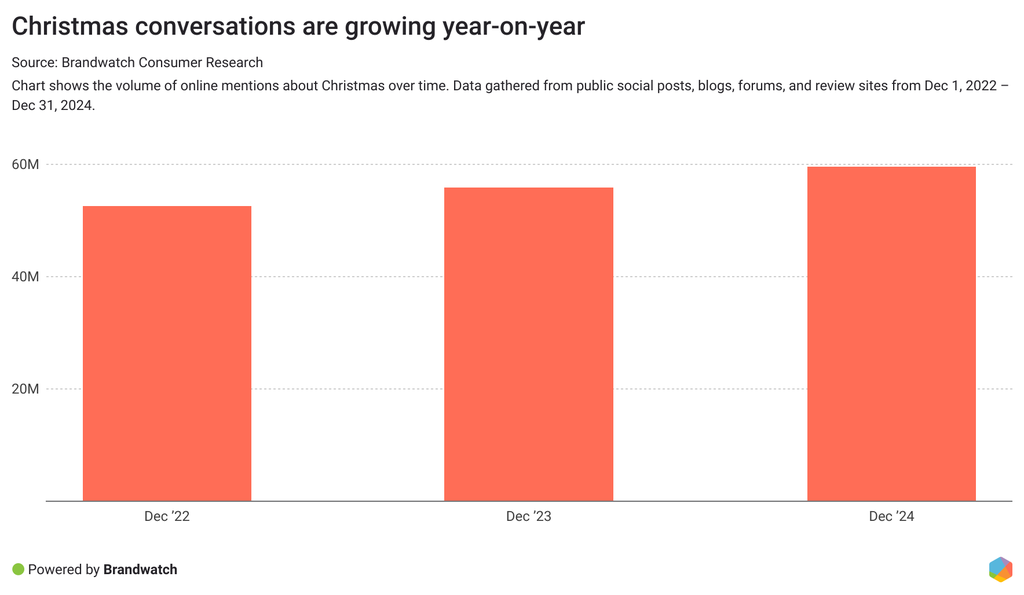
At the same time, shoppers are talking about Christmas more than ever before on social media. Online conversations about Christmas peaked at almost 60 million mentions in December 2024. And we're sure to see plenty of chatter this year, too.
Naturally, people are overwhelmingly positive about Christmas online. Using Brandwatch Consumer Research, we found that 62% of online conversations about Christmas are joyful.
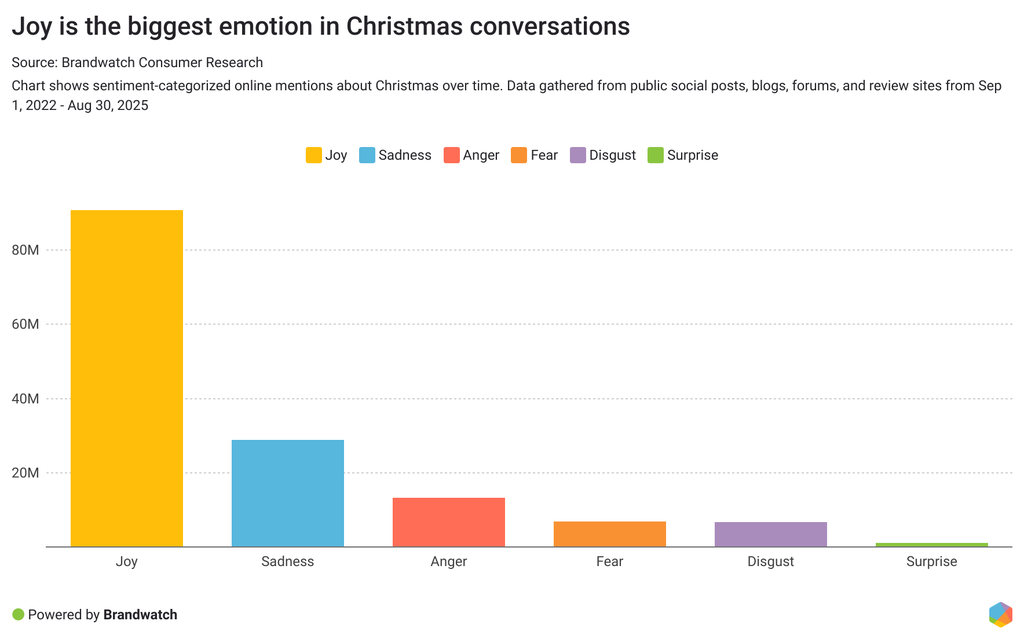
Using Brandwatch's Iris AI, we dug into what’s driving these joyful conversations. And much of it comes down to convenience. Consumers are turning to apps and websites to complete their gift lists, praising platforms that offer affordable prices and wide product selections.
Recent mentions include excitement about getting started with Christmas gift shopping already.
But joyful mentions are only part of the story. Mentions showing anger, sadness, and disappointment can be where the true opportunity lies.
Why post-Christmas returns are soaring
There’s a downside to the holiday shopping surge: returns.
While brands hope for a strong return on their Christmas marketing, product returns are a reality for many. Changing shopping habits and rising customer expectations are making returns more common – and more costly.
In December 2024 alone, returns accounted for 643,000 online mentions. By the first week of January 2025, $122 billion in merchandise (around 10% of festive sales) had been sent back.
The main drivers of this frustration? Unclear return policies, service inefficiencies, and quality control issues.
Brands should keep this in mind when designing holiday campaigns, ensuring returns policies are clear, customer service is prepared for peak periods, and product quality meets expectations – all steps that can reduce returns and, ultimately, keep shoppers happy.
How holiday shopping behavior is changing (and what you can do about it)
Christmas shopping is no longer about last-minute mall trips or giant grocery hauls. Today? Shoppers are online.
Consumers are searching Instagram for gift inspo, shopping on mobile-first websites, and buying directly through social apps – all while expecting brands to be just as fast and convenient.
Here’s how marketers can adapt to changing holiday habits this season.
1. Optimize your mobile shopping
Mobile commerce is set to reach $2.5 trillion by the end of the year and is projected to make up 63% of all retail ecommerce by 2029. And with shoppers increasingly heading to mobile apps and one-click checkouts for their shopping, one thing’s clear: brands need to prioritize convenience and speed ahead of the holiday season.
Tip for marketers: Optimize your site and checkout processes for mobile, reduce shopping friction for a smooth purchase process, and make it as easy as possible for a customer to purchase your product.
2. Prioritize social commerce storefronts
Four in ten social media users discover new products online. And with the social shopping penetration rate to hit 31% by the end of 2025, platforms like Instagram and TikTok are prioritizing their in-app checkout processes and dedicated storefronts.
Tip for marketers: Prioritize social platforms as legitimate sales channels, not just advertising spaces. Invest in shoppable posts and easy-to-navigate storefronts to kickstart your holiday shopping processes.
3. Try AI shopping assistants – but only if they add value
With 41% of Americans saying they don’t trust AI shopping assistants, brands need to pay attention to how they deploy AI in ecommerce. The most effective use cases include answering product questions and finding deals, yet trust is still a barrier.
Tip for marketers: Utilize AI to guide and support shoppers, but be honest with its implementation. Offer shoppers the option for an easier shopping process without using it to push products.
4. Set realistic delivery expectations
Online orders now account for a huge portion of retail activity – up to a quarter in the UK. Due to its availability, fast and reliable delivery is no longer a bonus – it’s expected. And the hectic holiday season only amplifies this.
Tip for marketers: Highlight your delivery options, especially if they’re timely. Make them simple and communicate clearly. But most of all, make sure to hit expectations to keep shoppers happy.
5. Plan early, stay joyful, and thread your theme
Christmas marketing starts well before December. Brands that plan activations early, carry a consistent theme across seasonal campaigns, and emphasize positive messaging resonate the most with consumers.
Tip for marketers: Begin planning your strategy now. Maintain messaging continuity across campaigns, and make sure to keep joy at the forefront – an emotion that dominates holiday conversations.
6. Keep returns manageable
Returns are inevitable, especially during the holidays. While generous policies boost loyalty, unclear processes and service inefficiencies can frustrate shoppers.
Tip for marketers: Make your returns process simple and transparent. Make sure to monitor your feedback and consider personalisation or AI tools to reduce mistakes.
It’s time to plan your Christmas marketing strategy
It’s never too early to get ahead of the Christmas rush. With holiday sales more crucial than ever, planning ahead is essential.
Tools like Brandwatch Consumer Research let you track audience sentiment, monitor competitors, and spot when Christmas conversations start heating up This holiday season, make sure to focus on spreading joy, delivering on your promises, and minimizing post-holiday returns through meeting expectations.


