


From wellness resets to sober curiosity, Gen Z are leading a shift in how younger consumers approach drinking.
In our Generational Trends report, we highlighted the rise in conversations about moderating alcohol use – with people across all generations expressing a desire to cut back. But Gen Z stand out.
Our research shows that in the last year, between May 1, 2024 and May 1, 2025, among all generations, Gen Z express the most negativity in conversations relating to drinking.
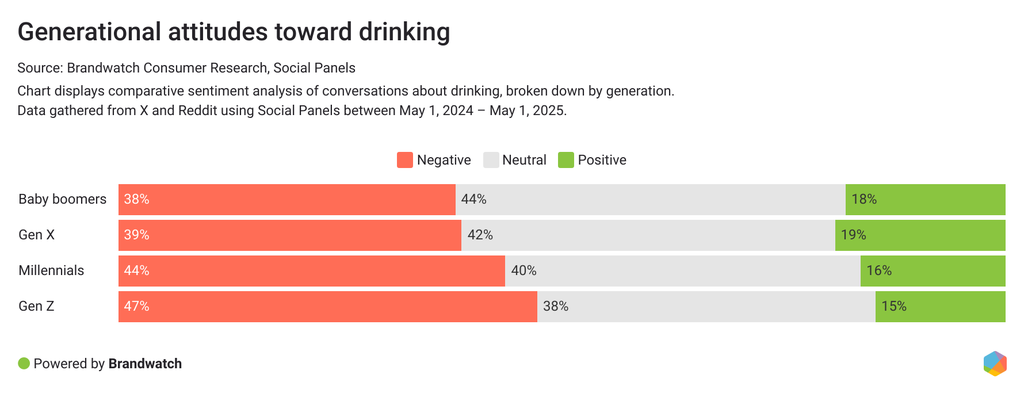
We analyzed drinking-related discussions among Gen Zers and here’s what we found.
3 Factors affecting Gen Z’s decision to drink – or not
1. Gen Zers want to feel good
While getting buzzed is still culturally accepted and considered fun by many, more and more Gen Zers recognize that the aftermath may not be worth it – and they openly discuss how rough the morning after a night of drinking can be.
These posts are often accompanied with a familiar “never drinking again.” But it’s more than just a hangover-fueled promise. In fact, we’d argue it signals a broader shift.
Posts discussing quitting drinking tracked over 54k mentions between May 1, 2024 – May 1, 2025. And r/stopdrinking was the top subreddit by volume of conversations, tracking over 17.2k posts.
Some Gen Z are embracing sobriety as a personal and empowered lifestyle choice, often tied to mental clarity, health, and financial wellbeing.
What it means for brands
Gen Z are redefining what fun and connection look like – and alcohol isn’t always part of the mix. They value mental clarity, wellness, and financial control, and see drinking less or not drinking at all as an empowered choice. Brands that offer inclusive, feel-good alternatives and celebrate this shift will be better positioned to win Gen Z’s trust and loyalty.
2. Social acceptance is still an important factor for Gen Z
Many Gen Zers associate alcohol with regret and other negative emotions, yet it still plays a key role in helping some feel more comfortable in social settings – especially for those who consider themselves shy, antisocial, or socially anxious.
Drinking can feel like a social shortcut – a way to fit in or loosen up. At the same time, some feel peer pressure to drink even when they don’t want to, just to avoid feeling left out.
What it means for brands
The tension between wanting to opt out and wanting to belong is real, and brands should be careful not to frame alcohol as the only route to connection.
Reconsider how you depict social settings – alcohol isn’t always central to connection.
3. To Gen Z, the vibe matters more than the drink
But brands have to get it right.
For some Gen Zers, having a drink is part of a bigger self-care or celebration ritual – a way to unwind, set the mood, or enhance a moment. Whether it’s paired with a salon appointment, a delicious meal, or a beautiful day out in the sun, the drink isn’t the main event – it’s part of the aesthetic.
What it means for brands
Everything in aesthetics matters: presentation, setting, and overall experience. The wrong glassware, clashing colors, or a poorly lit setting can kill the mood. To land the vibe right, brands need to create moments that look good, feel good, and are worth capturing and posting or even bragging about on social.
Just like with food, Gen Z do crave drink experiences that are shareable – something they’ll want to post about, not just sip on. When the details spark emotion or aesthetic delight, the drink becomes more than a beverage; it becomes memory and mood all in one.
Drinking culture, redefined
Gen Z are reshaping drinking culture on their own terms – trading excess for intention, and choosing clarity, connection, and creativity over conformity. For this generation, not drinking isn’t boring – it’s often a sign of confidence, self-awareness, and alignment with their values.
For brands this means it’s time to move beyond the party and meet Gen Z where they are. Normalize alcohol-free choices, prioritize responsibility in your messaging, and design inclusive experiences that celebrate presence, not pressure.
Want to dive deeper into generational trends?
Gen Z isn’t the only one rewriting the rules. We analyzed millions of social mentions to uncover how each generation talks about retail, food, and travel and what it means for brands trying to stay relevant. Read the report and see how every generation is shaping the conversation.
