Figuring out when to post on Instagram can feel like guesswork. You create great content, hit publish, and hope it reaches your audience. But timing matters more than you might think. 

Instagram's algorithm prioritizes recent, engaging content. Post when your followers are scrolling, and you're more likely to get those crucial early likes and comments that push your content to more people. Post when they're asleep or busy, and even your best work might get buried. 

This guide breaks down the best times to post on Instagram in 2026, based on recent data and research. We'll cover general best practices, day-by-day recommendations, and how to find your personalized optimal posting times. 

Why posting time matters on Instagram

Instagram's algorithm rewards posts that get quick engagement. When your content receives likes, comments, saves, or shares shortly after you post it, the platform interprets this as a signal that your content is valuable. The algorithm then shows it to more people, potentially landing it on the Explore page or in more followers' feeds. 

Post at the wrong time, and your content might not get that initial engagement boost. By the time your audience logs on, your post could be buried under dozens of others, making it harder to gain traction. 

Beyond algorithmic considerations, timing affects how people interact with your content. Someone scrolling during their morning coffee might engage differently than someone browsing late at night. Understanding these patterns helps you connect with your audience when they're most receptive. 

Best times to post on Instagram: overview

According to multiple 2024 and 2025 studies, the best times to post on Instagram are: 

  • Monday: 5 am and between 1 and 2 pm 
  • Tuesday: 1 to 2 pm 
  • Wednesday: 7 to 9 am 
  • Thursday: 9 am and 1 pm 
  • Friday: 5 am 

Across multiple analyses, consistent engagement spikes appear between 7 and 9 am and 11 am and 1 pm in your audience's local time zone. Evening hours between 6 and 8 pm also show strong performance, particularly for feed posts and carousels. 

However, these are starting points, not absolutes. Your audience's behavior might differ based on their demographics, time zones, and daily routines. 

Best time to post on Instagram: day by day

Monday

Mondays are about capturing attention as people transition into their work week. In general, early morning (around 5 to 7 am) and lunch hours (11 am to 2 pm) perform best. 

More than seven in ten people check social media as soon as they wake up, with Instagram being particularly popular for this morning ritual. That early morning window captures people scrolling over coffee or during their commute. 

Lunchtime engagement peaks as people take breaks from work. Your audience is looking for a mental break, making them more likely to engage with content during this window. 

Tuesday

Tuesdays typically show strong engagement throughout the workday. Studies show that the best time to post on Instagram on Tuesday falls between 10 am and 4 pm, with particularly strong performance between 1 to 2 pm. 

There's also a morning spike around 7 am when people are starting their day. Tuesdays tend to be less stressful than Mondays, so users may be more relaxed and receptive to content, leading to better engagement rates. 

For certain industries (CPG, retail, automotive, financial services), Tuesdays rank as either the best or second-best day to post overall. 

Wednesday

Wednesdays consistently show the highest engagement across multiple studies. According to the data, 7 to 9 am, 11 am, and 2 to 4 pm are prime posting windows. 

Brand mentions and conversations tend to peak mid-week, particularly on Wednesdays and Thursdays. This could reflect users being more engaged with brand content during the middle of the work week when they've settled into their routine but aren't yet winding down for the weekend. 

Consumer tech companies in particular see strong performance on Wednesdays. 

Thursday

Thursdays maintain the high engagement pattern seen on Wednesdays. Research shows that between 9 am and 1 pm performs best, with another spike around 2 pm. 

Like Wednesday, Thursday sees high instances of brand mentions and conversations. It's a prime day for automotive, financial services, and food industry brands to post. 

The slightly later morning start (9 am versus 7 am) might reflect users easing into Thursday with less urgency than earlier in the week. 

Friday

Fridays show more variation in optimal posting times. In general, early morning (5 am), late morning (11 am), and evening hours (8 to 9 pm) as potential sweet spots. 

The variation makes sense given Friday's transitional nature. Some users are focused on finishing work, while others are already mentally checked out and thinking about weekend plans. 

Entertainment and energy sector brands tend to see particularly strong Friday engagement, likely because their content aligns with weekend anticipation. 

Saturday

Weekend engagement typically drops compared to weekdays. None of the major industry categories show Saturday as a high engagement day in most studies. 

That said, Saturday mornings (9 am to noon) and early afternoons (noon to 3 pm) see the best engagement for those who do post on weekends. 

Brands focused on hobbies, leisure activities, or weekend inspiration may find success on Saturdays. If your content naturally fits weekend mindsets (recipes, travel, entertainment, home projects), Saturday could work well for your audience. 

Sunday

Sunday typically sees the lowest engagement of any day – shoot for early morning (4 to 5 am) or evening hours (6 to 9 pm) if you do post on Sundays. 

The low engagement reflects people spending time with family, preparing for the upcoming week, or simply taking a break from screens. However, lower competition from other content creators could work in your favor if your specific audience is active on Sundays. 

Instagram Reels: different timing considerations

Instagram Reels often perform differently than standard feed posts. Multiple studies from 2025 found that the best time to post Reels is between 12 am and 6 am, with Monday being particularly strong. 

This counter-intuitive timing suggests Reels benefit from lower competition hours. When you post during overnight hours, your Reel has time to accumulate some engagement before peak usage times. The algorithm may then push it harder during busier periods since it's already gaining traction. 

Evening hours (6 to 8 pm) also work well for Reels, giving your content time to circulate as people wind down for the night. 

Stories vs. feed posts

Instagram Stories and feed posts have different lifecycles and engagement patterns. 

Stories see fast, reactive engagement and perform best when posted before noon. Since Stories disappear after 24 hours and appear at the top of the app, they work well for timely content, behind-the-scenes moments, or limited-time promotions. 

Feed posts (especially carousels) have a longer lifespan and perform better during evening hours (6 to 8 pm) when users have more time to browse. The algorithm continues surfacing feed posts for days if they perform well, whereas Stories are ephemeral. 

Carousels in particular benefit from evening posting because they require more engagement time. Users are more likely to swipe through multiple slides when they're relaxing rather than quickly scrolling during a work break. 

How to find your personalized best time to post

While general guidelines provide a helpful starting point, your audience is unique. Here's how to find your specific optimal posting times: 

Use Instagram Insights

If you have a Business or Creator account, Instagram provides native analytics showing when your followers are most active. 

To access this: 

  1. Go to your profile and tap the menu icon 
  2. Select "Insights" 
  3. Navigate to "Total followers" 
  4. Scroll down to see "Most Active Times" 

This shows you which days and hours your specific followers are online. Look for patterns over several weeks to identify consistent high-activity periods. 

Leverage Brandwatch's Best Time to Post feature

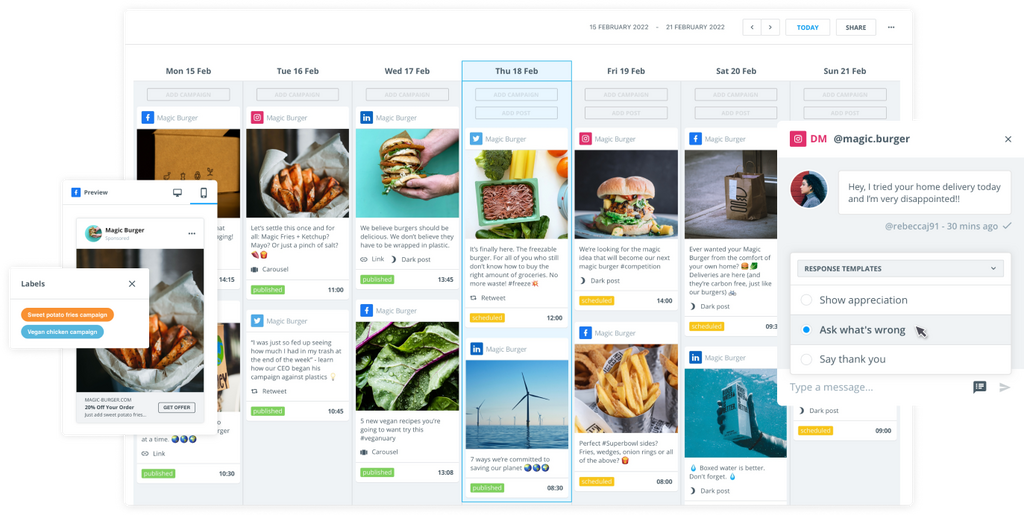
Brandwatch Social Media Management offers a Best Time to Post feature that analyzes your historical data to recommend optimal posting times and dates. 

The feature provides data-driven recommendations by analyzing your post performance from the past six months to suggest when your content reaches maximum potential. You can tailor recommendations based on your chosen KPI, whether you're aiming to boost engagement, expand reach, increase impressions, or maximize video viewsThe feature provides data-driven recommendations by analyzing your post performance from the past six months to suggest when your content reaches maximum potential. You can tailor recommendations based on your chosen KPI, whether you're aiming to boost engagement, expand reach, increase impressions, or maximize video views (including Reels plays). Brandwatch provides customized scheduling suggestions based on what matters most to your strategy. 

By integrating these personalized insights, you can refine your Instagram strategy and connect with your audience at the moments they're most active and engaged. 

Track and test

Experiment with different posting times and track the results. Post similar content at different times and compare engagement rates, reach, and saves. Over 4-6 weeks, patterns will emerge showing when your specific audience is most responsive. 

Pay attention to: 

  • Engagement rate (total interactions divided by reach) 
  • Saves (strong signal of valuable content) 
  • Shares (indicates highly resonant content) 
  • Reach (how many unique accounts saw your post) 

Don't just look at likes. Saves and shares are becoming more important engagement signals in Instagram's algorithm. 

Consider your audience demographics

Your follower demographics significantly influence optimal posting times. Consider: 

Time zones: If your followers span multiple time zones, you might need to post multiple times or choose times that work across regions. 

Age groups: Younger audiences (Gen Z) might be active late at night, while older demographics might engage more during business hours. 

Work schedules: B2B audiences might engage during breaks at work, while B2C audiences focused on parents might be active during school drop-off/pick-up times or after bedtime. 

Lifestyle patterns: Think about when your audience has downtime to engage with content. Are they night owls or early risers? Do they work traditional hours or have flexible schedules? 

Monitor competitors

Look at when successful accounts in your niche post. While you shouldn't copy them exactly (you might end up competing for attention), understanding when they post can reveal insights about your shared audience's behavior. 

Additional factors that influence Instagram engagement

Timing isn't everything. Several other factors affect how well your Instagram content performs: 

Content quality

No posting time can save mediocre content. Focus on creating valuable, visually appealing posts that resonate with your audience. High-quality photos, compelling captions, and relevant hashtags all contribute to success. 

Consistency

Posting consistently matters more than finding a single "perfect" time. The algorithm favors accounts that maintain regular posting schedules. Aim for a predictable rhythm your audience can rely on. 

Hashtag strategy

Use relevant, specific hashtags to help new audiences discover your content. Mix popular hashtags with niche ones to balance reach and relevance. Instagram allows up to 30 hashtags, but 5-10 well-chosen ones often perform better than maxing out. 

Caption engagement

Write captions that encourage interaction. Ask questions, share stories, or create captions that prompt comments. The algorithm prioritizes posts that generate conversations. 

Pay attention to what's happening in the world and your industry. Timely content that aligns with trending topics or cultural moments can see engagement boosts regardless of posting time. 

Start optimizing your Instagram posting schedule

Finding the best time to post on Instagram requires combining general best practices with insights specific to your audience. Start with the recommended time windows (early morning, lunch hours, early evening), then refine based on your Instagram Insights and performance data. 

Remember that consistency and content quality matter as much as timing. A strong social media strategy considers all three elements together. 

If you want to take the guesswork out of timing, Brandwatch's Best Time to Post feature analyzes your historical performance to recommend exactly when your content will reach maximum potential. By scheduling posts at data-backed optimal times, you can maximize your reach and engagement without constant manual tracking. 

Ready to optimize your Instagram strategy? Start testing different posting times, track your results, and let data guide your decisions. Your perfect posting schedule is out there waiting to be discovered.