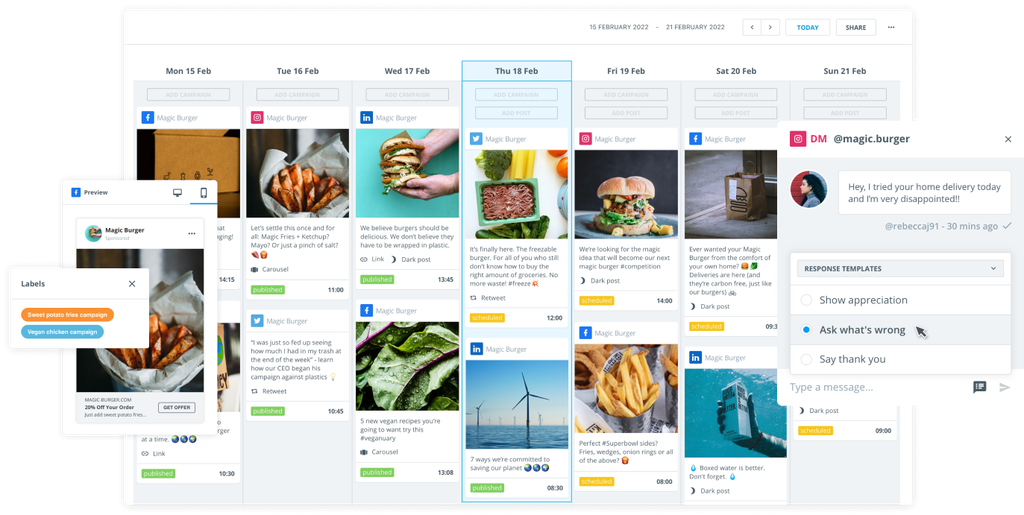
Posting at the right time on social media can make the difference between your content thriving or disappearing into the void. With algorithms prioritizing early engagement and users scrolling at specific times throughout the day, knowing when your audience is most active is crucial for maximizing reach and interaction. 

This guide breaks down the best times to post on each major social platform in 2025, backed by recent research and data analysis. Whether you're managing a brand account or building your personal presence, these insights will help you optimize your posting schedule for better results. 

Why posting time matters

Timing isn't everything, but it plays a significant role in how well your content performs. Most social media algorithms reward posts that get quick engagement. When your content receives likes, comments, or shares soon after publishing, the platform's algorithm pushes it to more users. 

Post at the wrong time, and even your best content might get buried before your audience has a chance to see it. Post during peak activity windows, and you give your content the best shot at initial engagement that can snowball into greater visibility. 

Best times to post on Facebook

Facebook remains a key platform for both B2C and B2B marketers. With its aging but loyal user base, knowing when they're scrolling can make or break your post's reach. 

Overall best times

The general consensus is that the best times to post on Facebook are early weekday mornings, particularly: 

  • Monday at 5 am 
  • Tuesday at 5 am and 9 to 10 am 
  • Wednesday at 11 am and 1 to 2 pm 
  • Thursday at 10 am 

Why these times work

Mid-morning on weekdays (particularly Tuesdays to Thursdays between 9 and 10 am) is when users are most likely to take quick scroll breaks, often before lunch or between meetings. Engagement tends to spike as people catch up on notifications and news updates. 

Early morning times (4 to 6 am) may seem unusual, but they capture commuters and early risers checking their phones. There's also potentially lower competition in the feed during these hours. 

What to avoid

Weekdays outperform weekends on Facebook. Most engagement comes from people browsing during work hours, while weekends tend to be more passive with fewer comments and shares. Avoid early mornings or late evenings on weekends, as these slots tend to underperform. 

Best times to post on Instagram

Instagram continues to be a powerhouse for visual marketing. The platform's algorithm still rewards timely engagement, making posting times crucial for visibility. 

Overall best times

In general, the best times to post on Instagram are: 

  • Monday at 5 am and between 1 and 2 pm 
  • Tuesday between 1 and 2 pm 
  • Wednesday between 7 and 9 am 
  • Thursday at 1 pm and 9 am 
  • Friday at 5 am 

Peak engagement windows

Across multiple studies, consistent engagement spikes appear between 7 and 9 am and 11 am and 1 pm across global time zones. Evening hours between 6 and 8 pm also show strong performance, particularly for feed posts and carousels. 

Reels vs. feed posts

Instagram Reels perform differently than standard feed posts. The general consensus is that the best time to post Reels is between 12 am and 6 am, with Monday being the overall best day. This timing helps your Reels catch the algorithm's attention during lower competition hours. 

Feed posts and carousels, on the other hand, perform better during evening hours (6 to 8 pm) when users are casually browsing, which increases the chance of likes, saves, and shares. 

What to avoid

Early morning hours during workdays and late evenings tend to see engagement drop off. Stories see fast, reactive engagement and work best before noon, while feed content thrives between 6 and 8 pm when users have more time to browse. 

Best times to post on TikTok

TikTok's algorithm is particularly fascinating because engagement patterns can be less predictable than other platforms. However, data analysis reveals some consistent trends. 

Overall best times

The best times to post on TikTok are: 

  • Sunday at 8 pm 
  • Tuesday between 4 and 9 pm 
  • Wednesday between 5 and 9 pm 
  • Thursday at 9 am and between 6 and 9 pm 
  • Friday between 5 and 9 pm 

Peak engagement patterns

Views tend to pick up later in the day, with peak time slots at 1 pm or later. Evening hours between 6 and 11 pm consistently show high engagement across multiple days, particularly on weekdays. 

Mid-week days (Tuesday, Wednesday, and Thursday) in the mornings (7 to 9 am), early afternoons (1 to 3 pm), and evenings (7 to 9 pm) tend to perform best overall. 

What to avoid

Sundays tend to have the least engagement overall, particularly late at night between 11 pm and 3 am, as users are winding down for the week. Saturdays also see lower engagement compared to weekdays, with activity concentrated in a tighter evening window (7 to 9 pm). 

Industry-specific considerations

Different industries see varying TikTok engagement patterns. For restaurants, posting between 2 and 5 pm Monday to Thursday reaches users planning meals or dining out. Your specific audience behavior may differ, so testing is essential. 

Best times to post on LinkedIn

LinkedIn is unique among social platforms because it caters almost exclusively to working professionals. This makes peak engagement times much more predictable. 

Overall best times

Generally, the best times to post on LinkedIn are: 

  • Monday between 11 am and 12 pm 
  • Tuesday between 6 and 9 am and 12 and 2 pm 
  • Wednesday between 8 and 9 am and 12 pm 
  • Thursday between 8 and 10 am and 2 pm 
  • Friday at 8 am 

Why these times work

LinkedIn engagement times are consistent with general business hours. High engagement hours are concentrated to midday on weekdays, when professionals are settling into their tasks, taking lunch breaks, or wrapping up their day. 

The buzz on the platform is highest midweek, with Tuesdays through Thursdays being the best days to post. Wednesdays and Thursdays show two strategic windows: one at the beginning of the day around 8 am and another during the lunch hour at noon. 

What to avoid

Weekends are typically the worst days to post on LinkedIn, with engagement dropping significantly. Lower engagement may be because people view LinkedIn as a work-related platform and something to avoid on days off. Friday afternoons also tend to see lower engagement as people wind down for the weekend. 

Best times to post on X (Twitter)

X sees relatively consistent engagement throughout the day, but certain windows perform better than others. 

Overall best times

Research shows that the best times to post on X are: 

  • Wednesday between 8 and 11 am 
  • Thursday between 8 and 11 am 
  • Friday between 8 and 11 am 

Peak patterns

Weekday mornings, particularly mid-week, tend to see the highest engagement. The 8 to 11 am window captures users checking social media during their morning routine or early work breaks. 

Best times to post on Pinterest

Pinterest operates differently from other social platforms, with users often searching for inspiration and planning rather than real-time content consumption. 

Overall best times

According to the data, is that the best time to post on Pinterest is 12 pm on Tuesdays and Fridays. These midday slots align with when users are taking breaks and planning future projects or purchases. 

How to find your personalized best time to post

While these general guidelines provide a solid foundation, achieving optimal engagement requires a strategy tailored to your specific audience. The best time to post varies depending on your audience's location, habits, and demographics. 

Use Brandwatch's Best Time to Post feature

Brandwatch Social Media Management offers a Best Time to Post feature that analyzes your historical data to recommend the most effective times and dates for your content. 

Here's what the feature offers: 

Data-driven recommendations: Brandwatch analyzes your post performance from the past six months to suggest the optimal time and date to post, ensuring your content reaches its maximum potential. 

Goal-oriented scheduling: Tailor your strategy based on your chosen KPI. Whether you're aiming to boost engagement, expand reach, increase impressions, or maximize video views (including Instagram Reels plays), Brandwatch provides customized scheduling suggestions. 

By integrating these personalized insights, you can refine your social media strategy and connect with your audience at the moments they're most active and engaged. 

Leverage platform analytics

Most social platforms come with built-in analytics that allow you to track key metrics, such as audience activity, engagement rates, and content performance. If you're just getting started, these tools are a great way to understand your audience and experiment with different posting strategies. 

For example, TikTok's Business account gives you access to a "Follower activity" panel that shows when your followers are most active throughout the week. Instagram Insights provides similar data, showing when your followers are online. 

Use third-party social media management tools

Third-party tools often provide deeper insights and flexibility, going beyond platform-specific data to give you a more comprehensive view of your social performance. Social media management tools help you establish patterns over time, so you get better at predicting audience behavior. 

They can also help you identify trends, establish patterns, and refine your posting schedule, even if you don't yet have access to a dedicated Best Time to Post feature. 

Additional factors that influence posting times

Beyond the day and hour, several other factors can affect when you should post: 

Your audience demographics

Understanding who your audience is provides crucial clues about when they're most active online. Consider their age, gender, location, interests, work schedules, and daily habits. Are they night owls or early birds? Do they work 9-to-5 jobs or have flexible schedules? 

Time zones

If your audience spans multiple time zones, you may need to post multiple times or choose times that work across regions. Many social media management tools allow you to schedule posts in different time zones to reach global audiences. 

Social media is a dynamic landscape, shaped by current events, holidays, and trends. Paying attention to what's happening in the world can help you capitalize on timely opportunities to connect with your audience. 

Is there a big industry conference happening? A national holiday or observance? A viral meme or trending topic? Incorporating these events into your posting schedule can help your content feel relevant and timely, increasing the likelihood of engagement. 

Content type

Different content types perform better at different times. Quick, snackable content might do well during commute times or lunch breaks, while longer-form content might perform better in the evening when users have more time to engage deeply. 

Testing your posting schedule

The only way to truly find your best time to post is through experimentation and analysis. Here's how to approach it: 

  1. Start with the general guidelines provided in this article as your baseline. 
  2. Track your performance using analytics to see which posts perform best. 
  3. Experiment with different times within the suggested windows. 
  4. Monitor patterns over at least 4-6 weeks to account for weekly variations. 
  5. Adjust your schedule based on what the data tells you. 

Remember that consistency matters more than finding a single "magic time." Aim for a predictable posting rhythm that your audience can rely on. 

The bottom line

While general best practices provide a helpful starting point, the true best time to post on social media depends on your unique audience and their behavior patterns. The data suggests that: 

  • Facebook performs best during weekday mornings. 
  • Instagram sees strong engagement in mornings and evenings. 
  • TikTok thrives in the evenings and mid-week. 
  • LinkedIn is all about business hours, especially mid-week mornings. 
  • X favors weekday mornings. 
  • Pinterest works well at midday on Tuesdays and Fridays. 

However, these are starting points. The most successful social media strategies combine data-driven insights with continuous testing and optimization. 

Having reliable social media analytics is essential for any successful strategy. Tools like Brandwatch's Best Time to Post feature provide tailored recommendations based on your actual performance data, taking the guesswork out of scheduling and helping you maximize your reach and engagement. 

Ready to optimize your social media posting schedule? Explore the Brandwatch Social Media Management suite and start posting when your audience is most likely to engage.