With millions of creators across platforms like Instagram, TikTok, and YouTube, the challenge isn't a lack of options. 

It's cutting through the noise to identify creators who truly align with your brand, resonate with your audience, and drive meaningful results. 

This guide walks you through everything you need to know about influencer discovery, from defining your campaign goals to leveraging AI-powered tools that help you find creators who will actually move the needle for your business. 

What is influencer discovery?

Influencer discovery is the process of researching, identifying, and evaluating potential content creators to partner with for marketing campaigns. It's the critical first step in any influencer marketing strategy that determines whether your campaign succeeds or falls flat. 

Unlike influencer management (which focuses on maintaining relationships and tracking ongoing partnerships), discovery is all about the hunt. You're looking for creators whose audiences, content style, and values align with your brand goals. 

Think of it as matchmaking for marketing. You're not just looking for someone with a big following. You're searching for creators who can authentically connect your brand with the right people at the right time. When done well, influencer discovery uncovers partners who feel like a natural extension of your brand rather than a paid advertisement. 

Where influencer discovery fits into your overall strategy

Influencer marketing success depends on a strong foundation, and discovery is that foundation. It happens before outreach, before contract negotiations, and before any content goes live. 

The discovery phase directly impacts: 

  • Campaign authenticity (the right creator makes partnerships feel genuine) 
  • ROI potential (well-matched influencers drive better engagement and conversion) 
  • Brand safety (vetting creators early prevents reputation risks) 
  • Long-term relationship building (finding great partners now creates opportunities for future campaigns) 

Skip the discovery process or rush through it, and you'll likely end up with mismatched partnerships that waste budget and fail to deliver results. 

Define your campaign goals before finding influencers

Before you start searching for influencers, get crystal clear on what you're trying to achieve. Your goals should shape every decision in the discovery process, from which platforms to search to what type of creator you need. 

You’ll want to think about the audience your targeting, metrics for success, and the budget you have to see the campaign through. 

Your budget determines not just how many influencers you can work with, but what type. Nano and micro-influencers (1K-100K followers) are more affordable and often deliver higher engagement rates. Macro and mega-influencers (100K+ followers) cost significantly more but offer broader reach. 

Consider starting with smaller-scale partnerships to test what works before committing big budgets to larger creators. A diverse portfolio of micro-influencers can sometimes outperform a single expensive partnership with a mega-influencer. 

What to look for in an influencer (beyond follower count)

Follower count is the most obvious metric, but it's also the most misleading.

A creator with 500,000 followers and 0.5% engagement is far less valuable than one with 50,000 followers and 8% engagement. Here's what actually matters. 

Influencer discovery: Best practices and common mistakes

Best practices ✅ Common mistakes ❌
Start early in campaign planning (discovery takes time)  Chasing follower count (vanity metrics don't always equal results) 
Test and validate before scaling (pilot programs reveal what works)  Ignoring audience mismatch (a creator's audience must overlap with your target market) 
Align discovery with measurement (identify trackable metrics from the start)  Overlooking emerging creators (rising stars often offer better engagement and value) 
Track performance over time (look for lessons from previous campaigns) Treating discovery as a one-time task (ongoing research uncovers new opportunities) 

Audience relevance

An influencer's audience matters more than the influencer themselves. A beauty creator with 2 million followers won't help your B2B SaaS company, no matter how impressive their reach looks. 

Dig into demographics. What's the age range, geographic location, and gender split of their audience? Do their followers' interests align with your product or service? Brandwatch Influence lets you filter creators by audience demographics, interests, and behaviors, ensuring you find influencers whose followers match your target customers. 

Look for overlap between the creator's audience and your ideal customer profile. The more alignment, the better your campaign will perform. 

Authentic engagement

Engagement rate is the percentage of an influencer's followers who interact with their content through likes, comments, shares, and saves. It's a much better indicator of influence than follower count. 

Calculate engagement rate by dividing total engagement (likes + comments + shares) by follower count, then multiply by 100. Anything above 3-5% is generally considered strong, though this varies by platform and audience size. 

Watch out for signs of inauthentic engagement. Generic comments ("Great post!" or "Love this!" repeated across multiple posts), sudden follower spikes, or engagement that doesn't match content quality can indicate purchased followers or engagement pods. 

Look for genuine conversations in the comments. Are people asking questions, sharing personal stories, or engaging in meaningful dialogue? That's authentic influence at work. 

Using Brandwatch Influence you can generate a report about an influencer to analyze the health of their social accounts, including the quality of their audience. 

Brand fit and content style

An influencer's aesthetic, tone, and content style should complement your brand identity. A creator known for edgy humor might not align with a luxury brand's refined image, even if their audience demographics match perfectly. 

Review their recent content. Does their visual style, voice, and messaging feel like a natural fit for your brand? Could you imagine your product or service appearing in their feed without feeling forced? 

Also consider past brand partnerships. Have they worked with competitors? How did they integrate sponsored content? Creators who've demonstrated skill at blending brand partnerships with their organic content are more likely to create authentic campaigns for you. 

Brand Affinity within Brandwatch Influence helps you determine whether an influencer is the right fit for your brand based on which topics and themes their audience tends to engage with. Check whether they have engaged with similar brands in the past to gauge whether your campaign is likely to succeed with them. 

Credibility and trust

Influencers earn their influence through credibility. Their audience trusts them because they've demonstrated expertise, consistency, and authenticity over time. 

Look for creators who show deep knowledge in their niche. Do they educate their audience? Do they share personal experiences and honest opinions? Are they consistent in their messaging and values? 

Community trust shows up in how audiences respond. Read the comments. Do people thank the creator for recommendations? Do they share their own experiences or ask follow-up questions? That level of engagement signals genuine trust. 

How brands find influencers

There are several approaches to influencer discovery, each with its own strengths and limitations.  

Manual search on social platforms

The most basic approach involves searching hashtags, browsing platform recommendation algorithms, and manually reviewing creator profiles. 

Pros: It's free, gives you hands-on familiarity with creators' content, and lets you discover emerging talent before they hit everyone's radar. 

Limitations: It's incredibly time-consuming, lacks scalability, and makes it hard to access detailed audience insights. You're also limited to surface-level metrics like follower count and engagement rate without deeper analytics. 

Influencer marketing tools

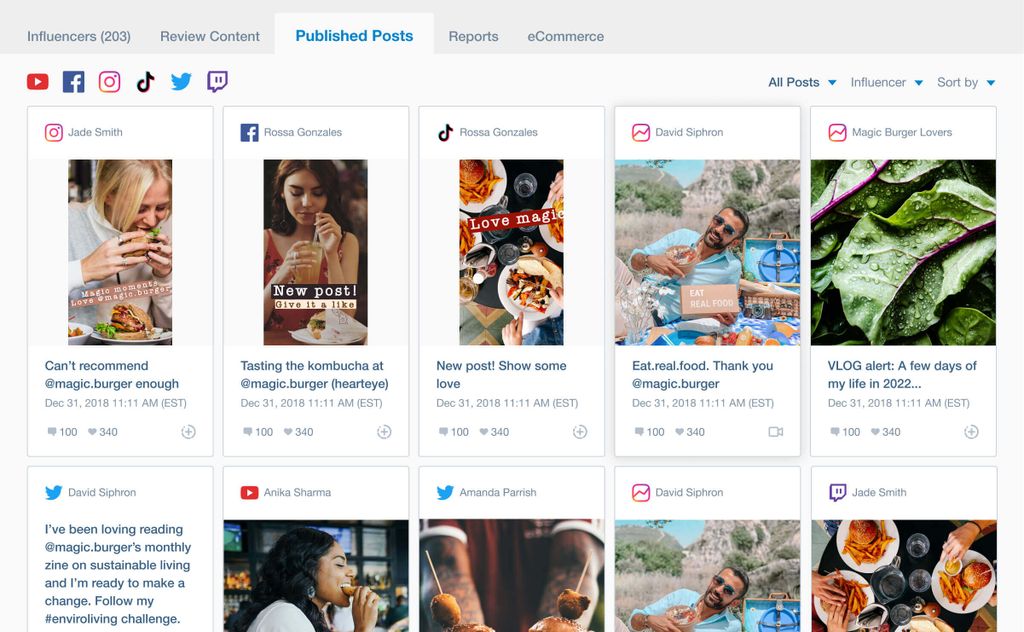
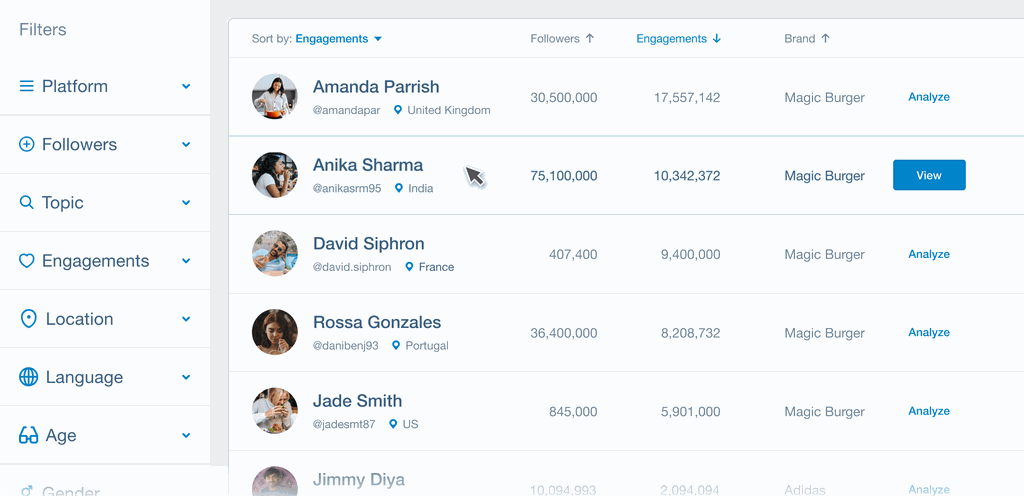
Influencer marketing tools (like Brandwatch Influence) can aggregate creator profiles, audience data, and performance metrics in searchable platforms. These tools track millions of creators across multiple platforms, offering advanced filtering by demographics, interests, engagement rates, and more. 

Pros: Massive time savings, access to detailed analytics, advanced filtering capabilities, and standardized vetting processes. You can search 50M+ creators in minutes instead of spending weeks on manual research. 

Limitations: Subscription costs (though often worth it for serious campaigns), potential database gaps (depending on the tool, newer or niche creators might not be included), and the learning curve for more sophisticated platforms. 

With Influence, you can filter creators by audience demographics, past brand partnerships, engagement trends, and even brand safety signals like mentions of controversial topics. This level of depth is impossible to achieve through manual searching alone. 

Social listening and consumer intelligence

Influencer marketing tools that incorporate social listening take discovery to another level by analyzing real conversations happening across the web. Instead of just searching creator databases, these tools identify who's already talking about your brand, your competitors, or topics relevant to your industry. 

This approach uncovers creators who are organically discussing subjects related to your brand, making them ideal partnership candidates. These influencers already have authentic interest in your space, which leads to more genuine content and better audience reception. 

Pros: Identifies creators with genuine interest in your industry, discovers rising stars before competitors find them, provides context on how creators talk about relevant topics, and surfaces micro and nano-influencers who might not be in traditional databases. 

Limitations: Requires specialized tools and expertise and needs ongoing monitoring rather than one-time searches. 

Social listening is particularly powerful for always-on influencer programs where you're continuously identifying new partnership opportunities rather than running one-off campaigns. 

How Brandwatch helps with influencer discovery

Brandwatch Influence combines the speed and scale of influencer databases with the depth of social listening, offering a comprehensive platform for discovery, vetting, campaign management, reporting, and even payment. 

Identifying creators driving real impact in your category

Influence isn't just about reach. It's about impact. With Brandwatch, you can see which creators are actually moving conversations, driving engagement, and shaping opinions in your industry. 

The platform tracks not just follower counts and engagement rates, but the quality of conversations creators spark. These insights help you identify creators who will genuinely impact your bottom line. 

Finding niche and micro-influencers

The most effective influencer campaigns often come from partnerships with smaller, hyper-focused creators. Brandwatch's influencer discovery tools excel at surfacing micro and nano-influencers who have deep expertise and highly engaged audiences in specific niches. You can filter by precise topics, interests, and audience characteristics to find creators who might fly under the radar in manual searches but deliver outsized results for the right campaigns. Unified influencer and audience intelligence 

One of Brandwatch's biggest advantages is the integration between influencer data and broader consumer intelligence. You're not just searching for influencers in isolation. Working with the full suite, you can connect influencer discovery with insights about your target audience, competitive landscape, and market trends. 

This means you can identify creators whose audiences overlap with the same consumers you're already tracking through Consumer Intelligence. You're making data-driven decisions based on comprehensive audience understanding, not just gut instinct. 

Whether you're launching a local campaign or going global, Brandwatch Influence scales with you. The platform tracks creators across geographies, languages, and platforms, making it possible to run coordinated campaigns in multiple markets simultaneously. 

You can search for creators in specific regions, filter by language, and identify creators with international audiences if you're targeting multiple markets with one campaign. 

Conclusion

Influencer discovery isn't about finding the biggest names or the flashiest profiles. It's about identifying creators who genuinely connect with your target audience and can tell your brand story authentically. 

The brands that win at influencer marketing are the ones that invest time and tools into smart discovery. They look beyond vanity metrics, prioritize audience fit over follower count, and use data to make informed decisions. 

With platforms like Brandwatch Influence, you can transform influencer discovery from a guessing game into a strategic advantage. You'll find better partners, launch more effective campaigns, and see stronger ROI. 

Start your discovery process early, be strategic about what you're looking for, and don't settle for surface-level matches. The right influencer partnerships can transform your marketing results, but it all starts with discovery done right. 

FAQs: More on influencer discovery

How do I find influencers in a niche?

Start by identifying the specific topics, hashtags, and conversations relevant to your niche. Use influencer marketing tools like Brandwatch Influence to filter creators by interests, content themes, and audience characteristics. Look for micro and nano-influencers who demonstrate deep expertise rather than chasing big names. Social listening tools can also surface creators who are already discussing niche topics organically. 

What's the best tool for influencer discovery?

The best tool depends on your needs and budget. For comprehensive discovery, Brandwatch offers access to 50M+ creators, advanced filtering, audience analytics, and social listening capabilities all in one platform. If you're just starting out, manual searching on platforms combined with free tools can work for small-scale campaigns, but dedicated influencer platforms save massive time and provide deeper insights as you scale.

Are micro-influencers worth it?

Absolutely. Micro-influencers (10K-100K followers) can often deliver better engagement rates, more authentic content, and higher ROI than mega-influencers. Their audiences are typically more niche and engaged, meaning their recommendations carry more weight. They're also more affordable, allowing you to work with multiple micro-influencers for the cost of one macro partnership, diversifying your reach and testing different approaches. 

How long does influencer discovery take?

It varies widely based on your campaign scope and resources. Manual discovery can take weeks of research for even a small campaign. With tools like Brandwatch Influence, you can identify potential partners incredibly fast thanks to advanced filtering. Budget at least 2-4 weeks for discovery if you're doing it manually, but expect faster turnarounds with dedicated platforms. Remember, thorough discovery upfront saves time (and money) later by ensuring better campaign performance.