Influencer marketing has come a long way from the days of A-list celebrity endorsements.
Today, virtually anyone can be an influencer thanks to social media, while at the same time, we’re all looking for content and people to relate to.
Our collective desire for connectivity online creates the perfect stage for influencers to thrive. It also presents more opportunities for brands to reach their target audience authentically.
Scrolling through your favorite social platform is almost impossible without seeing influencer marketing in action. Twenty-six percent of internet users may use ad-blocking technology these days, but almost no one is immune to the pull of influencers.
From product endorsements to unboxings and reviews, there’s influencer content everywhere.
As a business, developing a dedicated influencer marketing plan is a powerful way to reach your target audience, build brand awareness, increase purchase consideration, and attract new customers.
In 2026, rather than treating influencers as an afterthought, marketing teams should set aside an upfront, dedicated budget for influencer campaigns to stay competitive.
This guide explains what it takes to build a successful influencer marketing strategy for 2026 to authentically promote your products and services to your audience. We’ll also show how a tool like Influence can fuel your next campaign to find the right influencers for your brand.
What is influencer marketing?
Influencer marketing is a branch of marketing that focuses on partnerships between brands and influential content creators. Whereas brands would traditionally use celebrity endorsements to promote their products or services, these days, you can wield just as much influence when partnering with high-profile social media accounts.
It typically involves endorsements or product mentions from influencers – individuals who have a dedicated, highly engaged community of social media followers (not necessarily huge in size, but loyal) who trust their opinions.
These influencers are usually subject-matter experts or niche content creators whom followers turn to for advice on specific topics.
In an influencer campaign, the brand sponsors or compensates the influence in exchange for content that promotes their offerings on the influencer’s social channels.
Why brands use influencers
Brands go down this route – rather than sticking to celebrity endorsements – because of the power that influencers wield on their audience.
Capturing an audience’s attention is hard because there’s so much media out there. Instead of fishing for an audience with paid ads or celebrity appearances on your own marketing channels, you often get more return on investment (ROI) when using an influencer to spread your message.
Why is this? Because the influencer makes the personal connection between your brand and your audience for you. Over 80% of consumers have bought something based on an influencer’s recommendation, and many trust influencer advice almost as much as recommendations from friends and family. Influencers feel like our friends.
Social media has also become a major product discovery channel. Around 78% of internet users use social media as a search engine or to find new products. With consumers increasingly turning to Instagram, YouTube, TikTok, and even Twitch or Discord communities for advice on what to buy, a mention from a trusted creator can be incredibly powerful.
Brands need to understand that user trends are constantly changing and influencers are front and center of digital marketing.
Tracking consumer trends
We'll explore the steps required to launch a successful influencer marketing campaign later in this guide, but it's worth knowing more about consumer trends.
Influencers set and follow trends. They're the ones creating content, launching fresh ideas, and amplifying things others have done.
As a brand, their value comes in being proactive and forward-thinking – and this is where knowing about consumer trends really helps.
Using tools like Brandwatch Consumer Research gives you insight into what audiences like and dislike, how they respond to certain types of content, and who aligns with your brand values.
By weaving trend data into your influencer strategy, you can launch marketing campaigns that are far more effective and boost your future strategies.
Types of influencers: Nano, micro, macro, and mega
The sort of influencers you might hear about on TV or in the newspapers are usually celebrities in their own right. They have millions of followers and wield huge influence – but they also charge a lot for their services.
Look beneath the hood, and you’ll discover there are thousands of smaller-sized influencers out there who might be a better fit for your brand and budget.
Some of the top-performing influencers may have a small following but incredible engagement metrics, which may be more valuable when you're planning influencer collaborations.
Nano-influencers (1,000–10,000 followers)
Nano-influencers are individuals with a small but very engaged follower base. They often operate in tight-knit or local niches (for example, a local foodie or a niche hobbyist). They typically boast high trust within their community and can generate strong engagement relative to their size.
Benefits of using nano-influencers:
- Hyper-targeted campaigns focused on authenticity and personal connection
- Budget-friendly (sometimes they’ll collaborate in exchange for free products or modest fees)
Micro-influencers (10,000–100,000 followers)
Micro-influencers have a moderate following, often focused on a particular interest or industry (beauty, fitness, tech, etc). They strike a balance between reach and engagement – their audiences are larger than nano-influencers but still niche and loyal.
Micro-influencers are known for their authentic voice and high interaction rates with fans.
Benefits of using micro-influencers:
- Scale up a campaign while still maintaining relatability
- Cost-effective marketing
Macro-influencers (100,000–1,000,000 followers)
Macro-influencers are often well-known bloggers, YouTubers, or social media personalities who have “made it big” in their domain and carry a large following. Macro-influencers offer broad reach and are ideal when your goal is to increase brand awareness on a large scale.
However, their engagement rate per follower is usually lower compared to micro/nano influencers, and they charge higher fees. You must also ensure their style matches your brand because they’re unlikely to change for you.
Benefits of using macro-influencers:
- Put your brand in front of a wide audience
- Ideal for expansion marketing campaigns
Mega-influencers (1 million+ followers)
At the top tier are mega-influencers, including celebrities and internet-famous personalities with seven-figure (or more) follower counts.
They have massive reach and can drive a ton of impressions. Think Kim Kardashian or David Beckham. A single post from a big influencer account can put your product in front of millions of eyes.
However, these influencers are costly to work with, often charging tens of thousands of dollars per post, and their content may come across as less personal. Engagement rates in this tier tend to be the lowest (often well under 1% of their audience interacts).
Benefits of using mega-influencers:
- Offers value for big promotions, brand launches, or global campaigns
- Opportunity for brand alignment akin to traditional advertising
What is an influencer marketing strategy?
An influencer marketing strategy is your overarching plan that uses influential content creators (influencers) to achieve your marketing goals. It outlines the entire influencer campaign – from goal setting and influencer research to campaign execution and data capture.
It treats influencers as an extension of your marketing team, aligning their efforts with your campaign objectives. This strategic approach ensures that influencer partnerships aren’t random one-offs but rather a coordinated program that can be tracked and optimized over time.
Do it right, and you’ll build trust and credibility with the influencer’s fans, who should be your target audience. You may achieve increased brand awareness and fill gaps in your content strategy. Of course, you might also aim to drive social commerce and sales. After all, influencer marketing doesn’t just stop at awareness – it can directly generate revenue.
A good strategy will guide your decisions when researching and choosing an influencer and keep you in check as you work through the campaign.
Building a strong influencer marketing plan in 5 steps
Your influencer marketing plan doesn’t have to be complicated. It just needs to be accurate and strong enough to guide you through the whole partnership process.
Below, we outline five essential steps to help you get started with a solid influencer marketing plan:
1. Define your marketing goals and budget
Marketing teams need to do this stage no matter their campaign type. From ad campaigns to product launches, you must sit down and outline your goals and budget.
First, clarify what you want to achieve with influencer marketing and how much you’re willing to spend.
Establishing specific goals will guide every other decision – and having a clear budget will ensure your strategy is realistic and sustainable throughout your campaigns.
You may seek to grow brand awareness, reinforce brand identity, boost your social media following and engagement, or drive direct sales.
Defining and prioritizing your goals will heavily influence which influencers you choose and what kind of campaigns you run.
2. Choose your campaign type and key messaging
Next, establish what type of influencer campaigns you want to run and what key messages you want those campaigns to communicate.
This step assumes you have a solid understanding of your target audience and buyer personas. If you don’t – which is understandable – then Brandwatch Customer Research is there to help.
Once you know your audience, consider what type of content you plan to create. There are a lot of options here, including:
- Guest posts or takeovers: An influencer creates content for your brand’s blog or social media.
- Sponsored content: The classic approach – you sponsor one or more of the influencer’s own posts featuring your product in a favorable light.
- Product mentions or reviews: The influencer integrates a mention of your product into their content.
- Contests or giveaways: You team up with an influencer to give their followers a chance to win your product or a special prize.
- Discount codes or affiliate programs: Provide the influencer with a unique promo code or affiliate link. They share it with followers to give them a discount and earn a commission per sale. This incentivizes the influencer to actively drive conversions since they benefit directly.
- Livestream events: Partner with influencers on live content – for example, an Instagram Live or Twitch stream where the influencer features your product, does a tutorial, or hosts a Q&A while using your service.
- Brand ambassador programs: Rather than a one-off post, you establish a longer-term ambassadorship. This is similar to traditional celebrity endorsements. The influencer agrees to regularly promote your brand over a period (months or a year), often in exchange for a combination of payment and perks.
Once you have the format, nail down the key messaging and creative direction. The messaging should be conversational and authentic – it needs to sound like it’s coming from the influencer, not a corporate script.
However, you also want to ensure each influencer’s content aligns with your brand voice and values. Provide them with guidelines on your core messages, product points to highlight, and any must-say phrases or must-avoid topics. If your campaign has a slogan or hashtag, share that too.
3. Find and qualify influencers, then start outreach
With goals, budget, and campaign plan in place, it’s time to identify the right influencers and reach out to kick off partnerships. This step is crucial – the influencers you choose can make or break your campaign, so you’ll want to carefully qualify them before you proceed to collaboration.
You can find influencers through manual search by browsing relevant hashtags, keywords, or communities on social platforms. However, this can be incredibly time-consuming, and it’s hard to know much about their follower base. The same goes for finding influencers via your own social network.
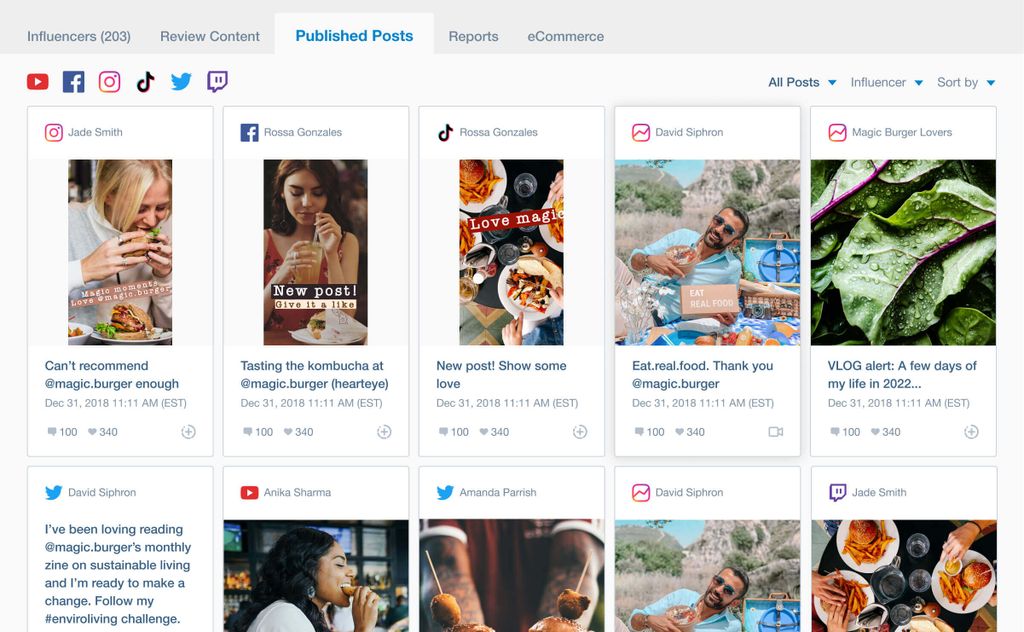
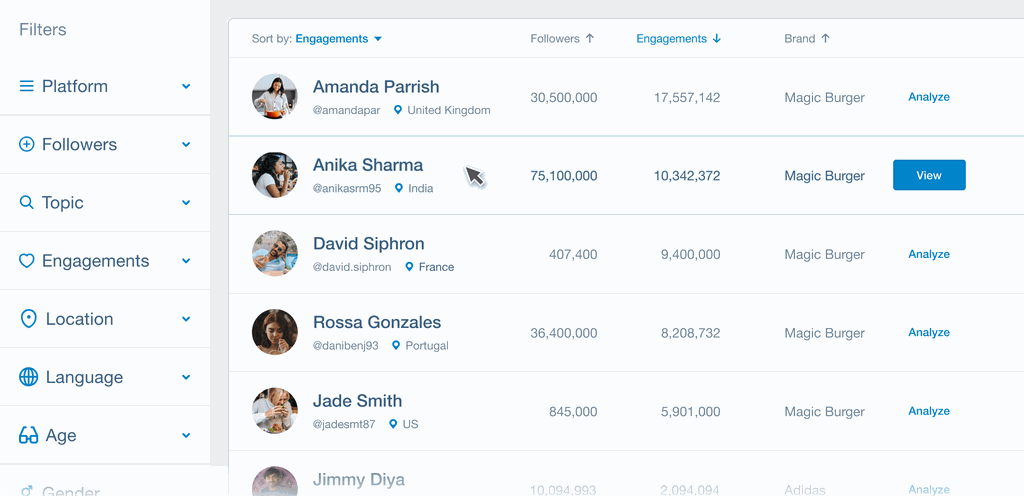
To do it properly, you need to invest in an influencer marketing tool. For example, Brandwatch Influence streamlines your search by scanning millions of creator profiles and filtering them by category, follower count, engagement rate, audience demographics, etc.
You’ll have a list of viable influencers in no time.

Your tool will also help you answer core questions about any identified influencer, such as "Does their personality and tone fit your brand?" and "Do they have a credible engagement rate?".
It’s also possible to gauge authenticity and user sentiment toward your identified influencer so you know you’ve locked in the right account.
From here, you can contact the influencer (usually via direct message (DM) for micro-influencers, or email or through their agency for larger profiles) and get to work. Brandwatch also provides marketers access to these networks, so you can perform influencer outreach from one dashboard.
4. Manage your influencer campaigns
Whether starting with three influencers or 30, managing the campaign details and relationships is an essential part of your strategy. Effective influencer campaign management ensures that all content is delivered on time, on brand, and in compliance with guidelines while keeping your influencers happy and engaged.
To do this, establish a clear onboarding process and explain the influencer’s requirements. They’ll need a create brief that contains objectives, timelines (posting dates), content guidelines, required hashtags or disclosure tags, and how/when to submit content for approval if you require that.
Successful campaigns establish communication channels and cadence from the start. No one wants to deal with issues at 3 am unless they can help. Ask the influencer about their preferred mode of communication (email, WhatsApp, Slack, etc) and keep in touch. Make sure they know who to contact if they have questions, too.
Provide resources and support to make it as easy as possible for influencers to create great content about your brand. Influencer partnerships can often break down when neither side supports and respects the other.
Remember, too, to ensure your campaign meets compliance standards, especially around advertising disclosure. Make sure your influencers know to include clear disclosures (like #ad or #sponsored tags or using platform tools such as Instagram’s “Paid Partnership” label) on every sponsored post.
It’s important to remember that influencers are not your employees – they are independent content creators and effective brand ambassadors. Treat them with respect and professionalism, and they should do the same.
5. Track your results and refine your strategy
The beauty of using influencer outreach software to find and manage your campaigns is your data comes back to one place. It becomes easy to track results and ensure your strategy is working toward your goals.
After all, the work isn’t over when your influencer content goes live.
Start by measuring the results against the objectives established in Step 1. Look at engagement, conversion, sales, and audience metrics – whatever you value. Is the campaign delivering what you need?
Compare which influencers performed best and why. Maybe you will find that video content on TikTok generates far more engagement than static posts on Facebook – a hint to invest more in video and TikTok next time.
Then, double down on what’s working. If a particular influencer drove exceptional results, consider a longer-term partnership with them. If a message or hashtag caught on, incorporate it into future campaigns.
You should also tweak or cut what isn’t working. This is all part of strategy optimization, which cuts out the bad things and molds your campaign to where you need it to be.
Remember, influencer marketing is not a “set and forget” activity. The most successful programs are iterative and always evolving. Use campaign data to fine-tune your strategy for the next one. Over time, you’ll build a playbook of what types of influencers and content drive the best results for your brand.
What makes a successful influencer marketing strategy?
There are some core principles and standards that separate successful influencer marketing strategies from mediocre ones.
Much of it has to do with clarity and communication. Both the brand and the influencer can come together with the best intentions, but bad communication can kill even the best marketing campaigns.
Being honest with what you both want to get out of the campaign is crucial. As a brand, you need influencers to align with your marketing efforts and goals. The influencer, though, will be wary of their brand and remaining authentic.
It’s crucial to let them maintain their voice and style while staying within your guidelines. Influencers know how to engage their audience best; overly scripted or forced content will fall flat.
A good strategy provides influencers with brand guidelines and talking points – but also plenty of creative freedom to present your product in a way that resonates with their followers.
This is good communication in action. Do it right, and you'll grow your influencer program and, perhaps, get a reputation for being a great brand to work with.
On a practical level, campaign success often comes down to integration. Your influencer posts need to integrate with a wider marketing strategy that reaches the right audiences, says the right things, and delivers value.
Integrating is also about onboarding your influencer properly. Use an influencer marketing platform to stay across the entire campaign and keep your influencer in the loop. Share your brand values, maintain a regular conversation flow, and meet up to develop your influencer strategy together.
Time to launch your influencer marketing strategy today
Developing an effective influencer marketing strategy is relatively straightforward, so long as you follow the above steps and use tools to help you along the way.
Define your marketing goals and budget, understand your audience, and then start looking for that perfect partnership.
Data is at the heart of any influencer campaign. Social media users leave a huge digital footprint, and a tool like Brandwatch gives you a full understanding of who’s out there.
Ready to get started with your influencer marketing plan? Book a free demo of Brandwatch Influence today to see how you can discover influencers, handle relationships, and manage campaigns all in one end-to-end platform.
FAQs: Influencer marketing in 2026
How much does influencer marketing cost?
Influencer marketing costs can vary widely depending on the type of influencer and campaign. Influencers typically charge rates based on their follower count, engagement, and content deliverables. For example, on Instagram, a nano-influencer might charge around $50–$200 for a single post, whereas a larger influencer or celebrity with a huge following could charge $50,000 or more per post.
What are nano, micro, macro, and mega influencers?
Nano-influencers have roughly 1,000 to 10,000 followers on a platform and are small-scale influencers but often have very engaged, niche audiences. Micro-influencers have around 10,000 to 100,000 followers and reach a somewhat larger audience than nano-influencers while still maintaining strong engagement and trust. Macro-influencers typically have hundreds of thousands of followers and are internet-famous personalities who can reach broad audiences. Mega-influencers have over one million followers, boast massive reach, and can quickly spread a message to a huge audience.
How do I find the right influencers for my brand?
Finding the right influencers starts with knowing your target audience and where they spend time. You can manually search for relevant accounts that align with your audience or use a tool like Influence to do it for you. Assess each influencer’s audience and content style to ensure you have a strong brand alignment. Run background checks on the influencer, and once you’re happy they’re the right fit, reach out to them.
How do you measure success in influencer marketing?
Measuring success in influencer marketing comes down to tracking the key performance indicators (KPIs) that align with your campaign goals. Start by defining what success means for you – is it increased brand awareness, higher engagement, traffic and sales, or something else? Once the campaign is running, monitor metrics like reach and impressions, engagement, follower growth, conversions, or sales. Use a tool like Brandwatch to collect all these metrics and assess the success of your campaign.