Social bookmarking websites have been around for years, but they’re far from obsolete. 

Social bookmarking might sound a little unfamiliar. It refers to sites where you can save things you like in a place that other people can access too, not just you. Pinterest is a prime example of social bookmarking, and even Reddit offers social bookmarking services.

Social bookmarking was more popular in the past, thanks to sites like Delicious and Digg. Since then, social media has undeniably taken the spotlight – but most social bookmarking sites still exist and can be an untapped resource for finding an audience.

Put simply, it's a way to save, share, and discover links that matter. And anyone with an internet connection can utilize these online resources.

Is social bookmarking still a thing?

Think of it as a modern twist on bookmarking pages in your web browser – only social. Instead of saving links just for yourself, you use public or semi-public sites where others can find and engage with your content.

If you use them correctly, social bookmarks can support your search engine optimization (SEO) efforts and drive traffic to your site. We’ll explain how later in this guide.

We’ll also explore how to utilize social bookmarking sites as part of your marketing strategy. We’ll highlight some of the most popular social bookmarking platforms right now and give you tips to get the best results.

So, let’s dive in and explore how social bookmarking can amplify your content’s reach and search engine performance.

What is social bookmarking?

Social bookmarking is the practice of saving and organizing web pages on public platforms instead of in your private browser bookmarks. 

In simple terms, it allows you to store web links online in one place, so you can access them from any device. You typically tag and categorize each bookmark by topic or keyword, making them easier to find later.

What makes it social is that these bookmarks aren’t just for you alone. Popular social bookmarking sites like Pinterest and Reddit let you share your favourite links with others and browse what other people have bookmarked. It's a valuable resource for discovery, market research, and your SEO strategy.

With sites like Pinterest, you can easily categorize and see things visually – which is revolutionary when compared to organizing links in a bookmarks bar. 

You can also discover new articles, videos, or websites through community-curated collections. In essence, social bookmarking takes that old-fashioned bookmarks bar and transforms it into a collaborative resource for finding and sharing great content.

How social bookmarking benefits SEO and marketing

Using social bookmarking sites may sound old-school, but they offer several benefits in terms of search engine results.

It's worth noting that social bookmarking links alone aren’t a magic SEO cheat code. Search engines are good at recognizing and ignoring spammy link-building tactics. 

The key is to use these platforms for genuine content promotion and discovery – not to spam links. When used properly, social bookmarking is about building awareness and traffic, which can then contribute to better SEO in the long run.

With that said, let's look at some of the key advantages of including social bookmarking in your strategy.

Faster indexing by search engines

High-authority bookmarking platforms (like Reddit or Mix) are crawled frequently. Submitting your content there can help Google find and index your new pages faster.

Referral traffic from engaged audiences

Every bookmark creates a link back to your site, providing interested readers with a clear path to click through. 

Even if many bookmarks are “nofollow” (meaning search engines won't use the link for ranking purposes), they can still drive valuable referral traffic to your content.

Increased online visibility

Sharing your content across multiple social bookmarking websites exposes it to new audiences. As users save and share your pages, you tap into communities beyond your usual followers, boosting your brand’s reach.

Community engagement and social signals

Content that gets upvotes, likes, or re-shares on these platforms gains social proof. A popular bookmark (for example, a Reddit post with lots of upvotes) indicates high-quality content, which can attract even more readers. 

While social signals aren’t a direct Google ranking factor, they often correlate with content that performs well.

When your article gains traction on a bookmarking site, bloggers or journalists may discover it and link to it in their own pieces. 

In this way, social bookmarking can indirectly lead to natural backlinks from other websites, which do benefit SEO.

Best practices for using social bookmarking sites

To get the most out of social bookmarking, keep these tips in mind:

Pick the right platforms

Focus on bookmarking sites that fit your niche and audience. For example, a food blogger might see great results on Pinterest, while a tech startup might favor Reddit or Slashdot. It’s better to be active on a few relevant platforms than spread yourself too thin.

Craft compelling titles and descriptions

Treat your bookmark submission like a mini ad for your content. Write a clear, catchy title and a brief description that tells people why the link is worth their time. Include relevant keywords naturally but remember you’re writing for humans, not just search engines.

Use tags and categories wisely

Most social bookmarking websites allow tags or topic categories. Organize bookmarks by sorting them into subcategories and tagging your links with accurate, popular keywords. This helps interested users (and the platform’s algorithm) find your content more easily.

Don’t spam – share quality, not quantity

Avoid blasting out a ton of links or only posting your own content. Communities will flag you for spam if you don’t contribute real value. 

Instead, share your best content at a steady pace. Ensure each bookmark is something you genuinely believe others will appreciate.

Engage with the community

Social bookmarking is a task that needs constant upkeep – just like social media. 

Upvote or save others’ submissions, leave thoughtful comments, and respond if people discuss your link. By being an active community member (not just self-promoting), you’ll build goodwill and credibility.

Mix up your content

Along with your own pages, consider bookmarking interesting content from other sources in your industry. 

Being a curator of useful articles or videos (not just your own work) makes your profile more valuable. Additionally, it can attract followers who appreciate your style and, in turn, engage with your content.

Monitor performance and adaptTrack which platforms send you traffic or spark conversation by looking at analytics to see how many visitors come from each bookmarking site. 

You can also use social listening tools, such as Brandwatch Consumer Research, to gauge where your content is receiving attention. Double down on the sites that work best, and refine your approach on those that don’t.

Integrate with your social strategy

Ensure your social bookmarking efforts align with your broader social media plan. For instance, when you publish a new blog post, you might share it on a bookmarking site and promote it via Facebook, X, or LinkedIn. 

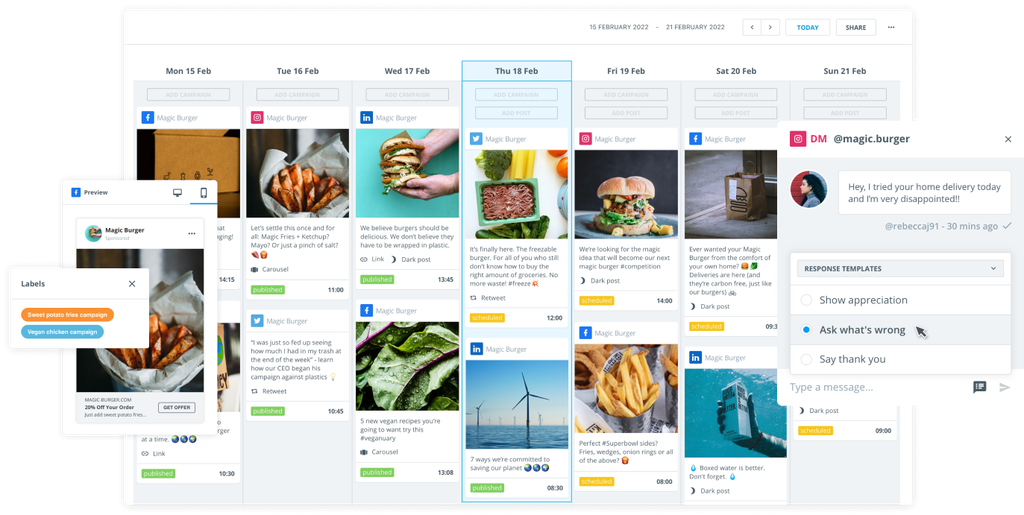
Using a centralized tool like Brandwatch Social Media Management can help you schedule posts across networks (and keep an eye on engagement) without losing track of where you’ve shared what.

Many platforms let users bookmark and share content, but a few stand out. Below is a list of some of the most popular social bookmarking websites.

Pinterest

Contrary to popular belief, Pinterest isn't a social media platform – it's a highly visual bookmarking site where users “Pin” images and links to thematic boards. 

Extremely popular for topics such as DIY, fashion, food, and design, Pinterest serves as both an inspiration source and a traffic driver. With over half a billion monthly users, it’s a go-to platform for sharing infographics, product photos, blog graphics, and other image-centric content.

With Brandwatch Social Media Management, you can schedule Pinterest content in advance, collaborate on Pins with an approval workflow, and even get AI-generated suggestions for content.

Reddit

Reddit is a massive community-driven platform dubbed “the front page of the internet.” Users submit links (or other media) into topic-focused communities, known as subreddits. 

While Reddit users aren't typically using the platform to save a link for future reference, as you would with a bookmark, it still counts as social bookmarking since it's a place where you can find content that others have flagged as useful and interesting.

Other members upvote or downvote submissions, which pushes the most popular content to the top. Reddit covers everything from news and memes to niche interests, making it a powerful place to share content if you find the right subreddit.

With Brandwatch Consumer Research, you can make light work of finding the communities and discussions that are relevant to your brand, and then get involved.

Mix (formerly StumbleUpon)

Mix is a content discovery platform – similar to Pinterest – that learns your interests and serves you content that it thinks could be of interest. You can curate collections of links (called Mixes) and browse others’ collections as well. 

It inherited StumbleUpon’s mission of helping people “stumble” upon new websites, but with a more modern interface and personalized recommendations.

Flipboard

Flipboard is a unique platform that presents bookmarked content in a glossy format described as a “social magazine”. 

Users create personal magazines by flipping articles, videos, or social media posts into them. Others can subscribe to your magazines to discover interesting content. 

It bills itself as “the best platform to amplify your content”, and publishers and creators are encouraged to share inspiring content for others to find.

Flipboard is especially useful for storytelling and content curation – for example, a marketer might make a Flipboard magazine of industry news for followers to read.

Digg

One of the original social news aggregators. Digg’s front page traditionally showcased a mix of viral news stories and interesting web finds, curated by editors and community votes. 

Although its popularity has waned in the age of social media, it remains popular in tech and science circles. Getting a link featured on Digg can result in a burst of traffic.

As we write, Digg is actually about to be relaunched as Digg Reboot – with a focus on human users to counter the AI-heavy and bot-saturated landscape elsewhere.

Slashdot

This is a classic social bookmarking site focused on technology and developer news.

Users submit tech-related articles or announcements, which are then discussed in threaded comments. 

Slashdot has a long history (dating back to the 1990s) and is probably best known among IT professionals. It’s a good place to share technical blogs or developer resources, provided they’re highly relevant.

Diigo

This is a social bookmarking site for research enthusiasts, educators, and professionals. 

Diigo not only lets you bookmark pages (and PDFs), but also allows you to add annotations or highlights to them. You can make your library public or share specific folders with a group.

It’s the kind of thing that's perfect for collaborative research or content curation within teams.

Tumblr

Tumblr is a microblogging platform that doubles as a social bookmarking tool for multimedia content.

On Tumblr, users share and follow posts that can include links, images, GIFs, and videos, often augmented with tags for discoverability. Content can be “reblogged” by others, which is akin to bookmarking it to their own feed and thereby amplifying its reach. 

Tumblr communities thrive around creative and niche topics, making it a useful platform for distributing content to engaged fan bases.

As official partners of Tumblr, Brandwatch Consumer Research will help you find the exact niche relevant to your industry, so that you can see what people are posting and join in from there.

FAQ: Social bookmarking

Before you get started on your social bookmarking journey, let's recap the basics.

How do social bookmarking sites benefit search engine optimization?

Social bookmarking sites can indirectly benefit SEO by helping your content get indexed faster, increasing its visibility and driving more traffic. 

When a piece of content is popular on a bookmarking site, it often gains more exposure (and sometimes attracts natural backlinks from people who see it). 

However, most bookmarking links are “nofollow,” and search engines ignore spammy link drops. Therefore, consider this a way to boost awareness and referral traffic rather than a direct SEO trick.

What's the best way to use social bookmarking sites?

To maximize the benefits of social bookmarking sites, prioritize quality over quantity. 

Share genuinely useful content on platforms that match your niche. Write good titles and descriptions with relevant tags to help people find your bookmarks. 

Importantly, engage with each community – follow the rules, contribute to discussions, and refrain from spamming your own links. Consistency and authenticity go a long way in building a presence.

What types of content should I share on social bookmarking sites?

Share content that provides value or sparks interest for the community. This can include informative blog posts, how-to articles, infographics, videos, research reports, or entertaining content – depending on the platform. 

For instance, visual platforms like Pinterest favor images (for example, infographics and photos), while Reddit or Slashdot might favor text-heavy articles or news. 

The key is to share things that you personally find worthwhile and match these to the interests of each site’s user base.

To make life easier, you can use a tool like Brandwatch Social Media Management to plan and publish content to sites like Pinterest from one dashboard – without having to hop from platform to platform.