Which education trends are making waves in online conversations?
From growing AI conversation to improved mental health support systems, discover the talking points that education institutions should be aware of in 2026.
Read on to discover the biggest trends in education.
Trend #1 AI chatter is at a peak
There were over 1.39 million mentions about artificial intelligence in the education conversation last year. And recently, mention volume has hit a peak.
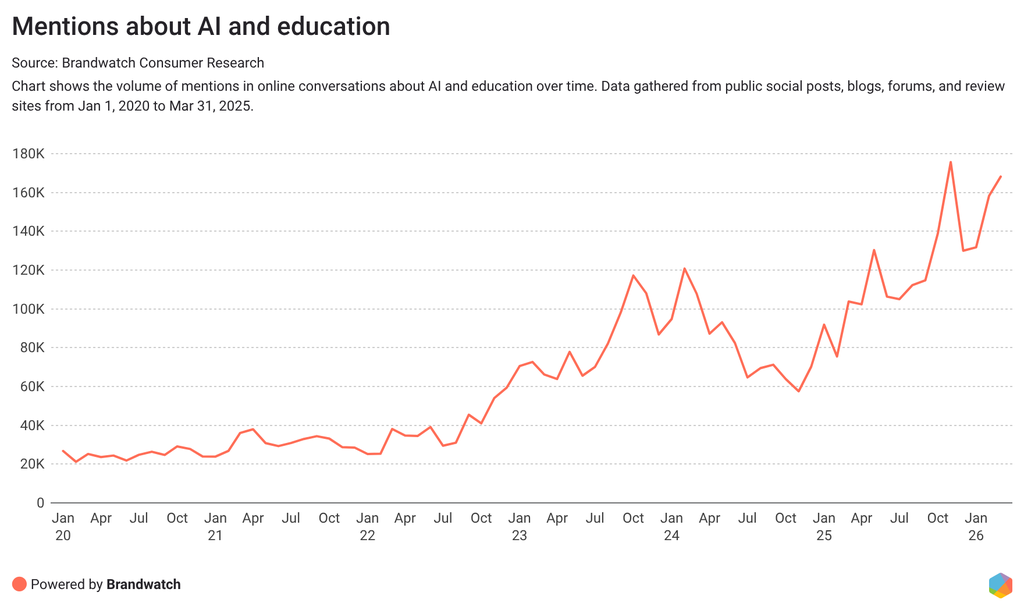
With the rise of accessible AI to assist with everything from homework to lesson planning, people are curious about how AI might help – and hinder – the education sector.
While some of these online mentions praise how AI is making students’ and teachers’ lives easier, almost 75% of sentiment-categorized mentions about AI and education have been negative. According to Iris AI, concerns include AI becoming detrimental to learning.
In fact, many students are actively expressing frustration over the reliance on AI tools for homework and assignments – and these concerns relate to teachers, too.
That said, there are plenty of positive ways AI is facilitating learning. Many students chat about the efficiency and effectiveness of these tools, saying they’re helping to streamline their study processes and improve their understanding of complex subjects.
Utilizing AI in education is becoming the norm – and brands can monitor online mentions to gain insight into how students, schools, and consumers are expecting this trend to take shape.
Trend #2 Tech challenges are leading to increased friction
Technology in education isn’t new – there were 8.3 million mentions about it in 2025 alone. But volume doesn’t always equal success.
With a huge 70% of these mentions being negative, it’s clear that students aren’t struggling with whether to use tech for their studies, they’re struggling with tech that doesn’t work.
According to Iris AI, students are expressing frustrations with apps and platforms that are supposed to help with their learning, yet glitches, clunky UX, and access issues are getting in the way.
And when something breaks, support often falls short too. Complaints about locked accounts, buggy apps, and slow responses are seen across online platforms.
For those in the education industry, the answer is clear: tech should always reduce friction for students, not increase it. Focus on improving support for students experiencing tech issues, so they’re able to access their education without hiccups.
Trend #3: Boosting support systems in schools
2025 saw a huge 1.2m online mentions about educational support systems. From counselling and pastoral care to wellbeing programs, students, parents, and educators are equally focused on improving mental health. And the conversation feels urgent.
Academic demands, strict policies, and social stressors are driving frequent student burnout, and many report feeling unsupported when they need help most. Teachers are also feeling the pressure, and online discussions show a clear call for systems that actually work.
On the plus side, plenty of schools are aware of this issue and responding accordingly. Counseling programs, mental health days, and specialized support centers highlight the growing recognition that mental health is essential – not optional.
For those in the education industry, it’s now vital to recognize this cultural shift. Younger generations are more open about emotional struggles, and schools are following suit.
Collectively, the system is working on reducing stigma, fostering resilience, and creating environments where students and teachers can thrive.
Roundup
AI, technology issues, and student wellbeing are all dominating education conversations in 2026. Spotting these trends is one thing – but taking action is another.
The education providers who will succeed this year will be the ones that focus on reducing friction, support the mental health of both teachers and students, and act on feedback from their communities. Social listening tools can help you track these issues in real time.
Book a Brandwatch demo to find out more.