




5 Social Media News Stories You Need to Read Right Now
By Bianca ParvuSep 28
Learn how to identify emerging risk signals and respond to threats before they escalate across social, media, and AI.
Brandwatch research reveals some of the biggest trends for the fashion industry for 2026. Explore the latest data here.
What’s been bubbling up in online conversations relating to the business of fashion?
What trends are picking up in 2026? And how will they impact the future of the industry?
In this analysis, we look at some of the most popular topics in consumer online discussions relating to fashion between January 1 and December 31, 2025.
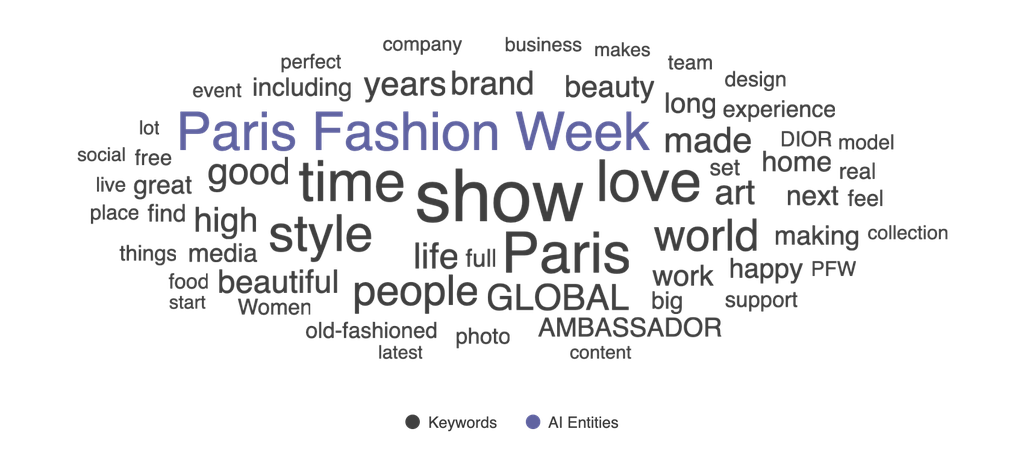
“Show” is one of the biggest topics in fashion-related conversations, accumulating 8.25 million mentions – a sharp increase of 31% since 2024.
Fashion Weeks in Milan, New York, and Paris, shows by Celine, Dior, and Victoria’s Secret, and the MET Gala all trended online as people posted about their first impressions and favorite moments from these events.
So, what makes a show great and worthy of mention?
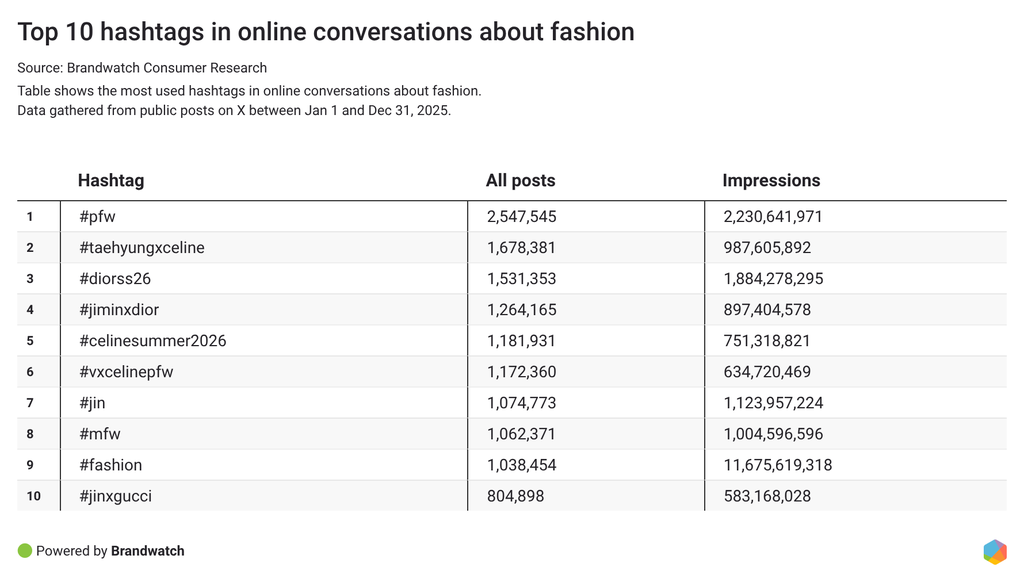
Celebrity power – especially K-pop influence – plays a massive role. Fashion and entertainment have become deeply intertwined, with celebrities like Jin (BTS), LISA (BLACKPINK), J-Hope, S.COUPS, TWICE, and Rosé making headlines at recent fashion shows. The proof is in the data: 5 of the top 10 most popular fashion hashtags featured K-pop stars.
Runway shows are also shifting from traditional beauty and model standards, now welcoming athletes and influencers to connect with audiences in ways that feel more authentic and inclusive than ever before.
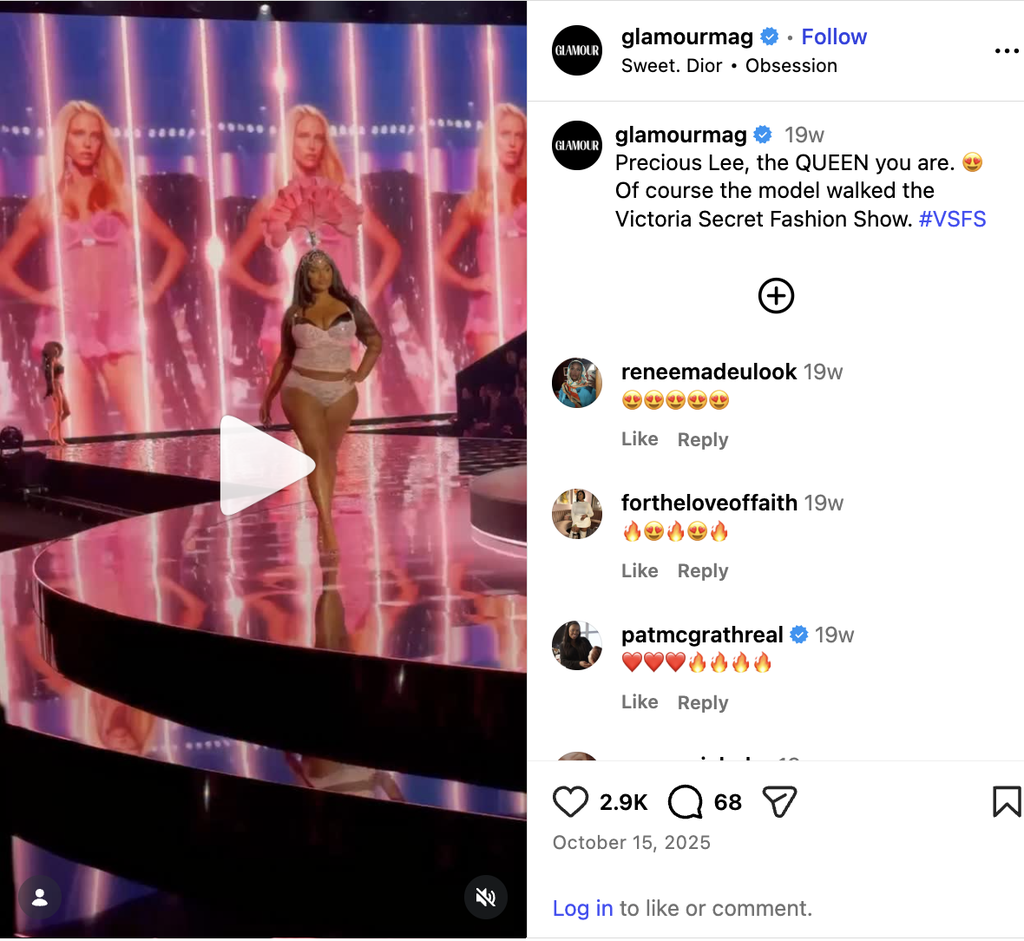
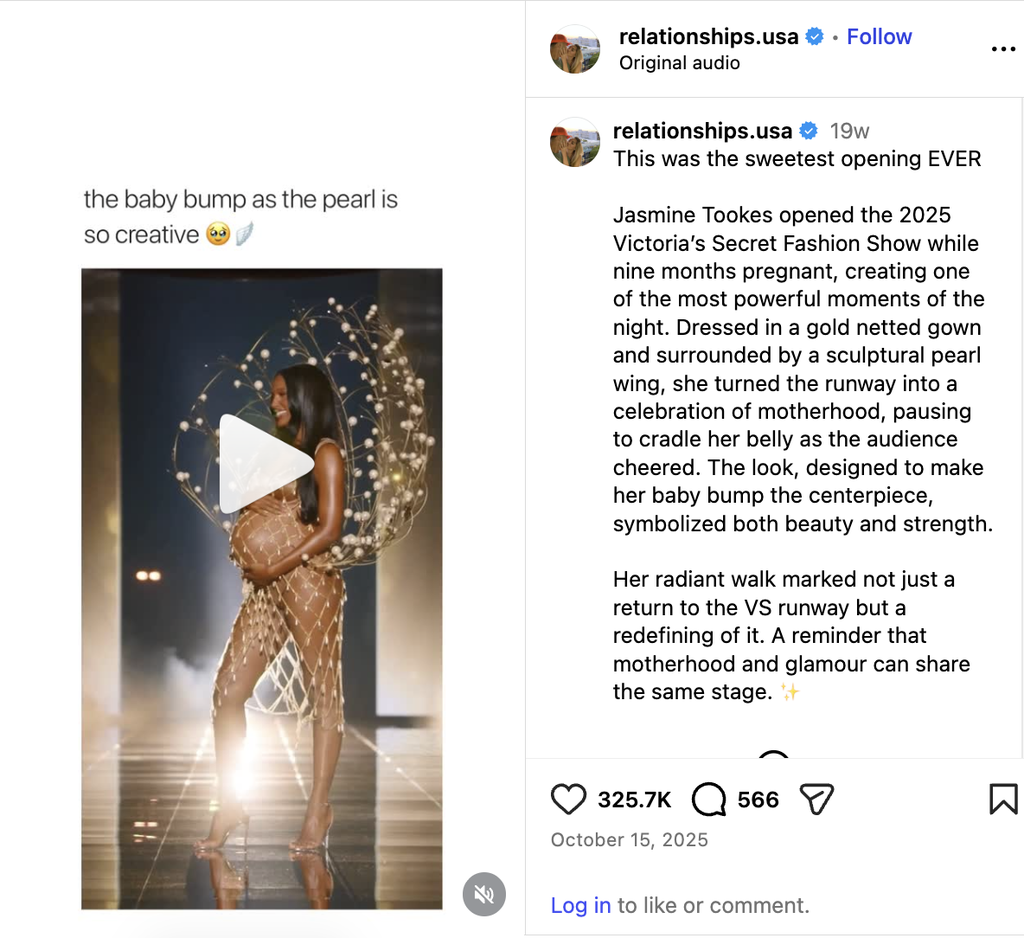
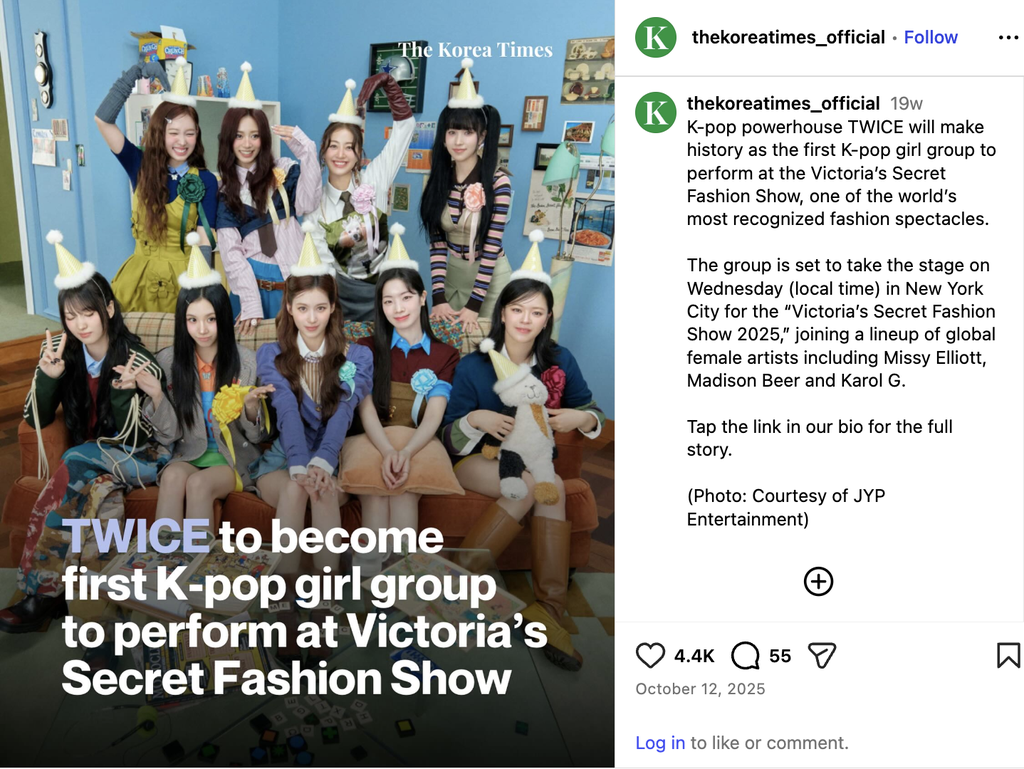
This strategy has paid off for Victoria’s Secret. The brand's revamped show featured NBA star Angel Reese, who made history as the first-ever pro athlete to walk the Victoria's Secret runway. Curvy models Ashley Graham and Precious Lee graced the show, while former Victoria's Secret Angel Jasmine Tookes opened the runway nine months pregnant. And TWICE made history as the first K-pop girl group to perform at the Victoria’s Secret Fashion Show, a move that checked both boxes – celebrity appeal and cultural relevance –signaling where the fashion industry is headed.
The results? While brand mentions only rose slightly with 4%, 44% more new people jumped into the conversation for the first time.
Why should fashion brands pay attention?
Fashion has always been about entertainment, and even more so today. Consumers don’t just want products; they want excitement and moments worth sharing. Brands that deliver bold experiences are the ones driving conversation.
Mentions of brand ambassadors skyrocketed 166%, reaching 4.23 million mentions in 2025, reflecting the significant impact of celebrity and influencer endorsements.
And you better believe it’s the K-pop stars who are leading the charge. BTS member and Dior's global ambassador Jimin became the most mentioned individual during Paris Fashion Week.
Another BTS member V (Kim Taehyung), a global ambassador for Celine, has earned the nickname "Sold Out King" among his fans due to his repeated and immediate impact on the brand's sales. And when TWICE member Tzuyu wore Victoria's Secret's $40 Wear Everywhere Push-Up Bra at the brand's 2025 show, it sold out immediately, with resale listings reaching $100. The brand quickly made her the face of their newest PINK bra model.
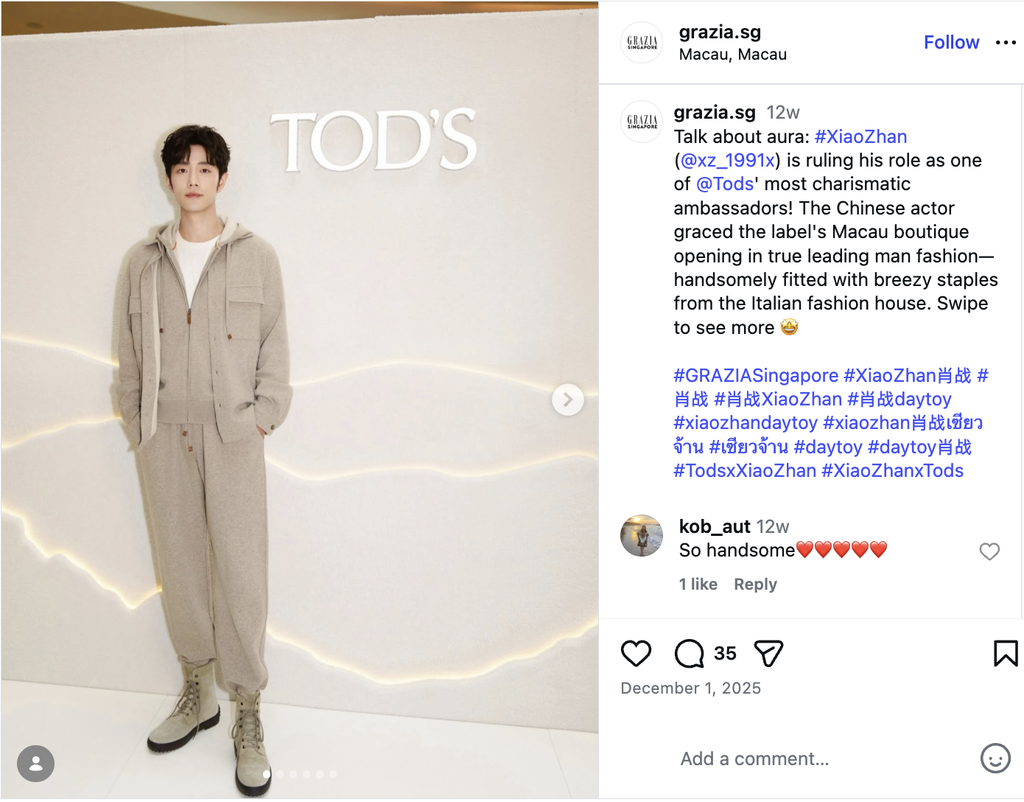
Beyond K-pop, various actors and musicians like Becky Armstrong (Chanel, L'Oréal), Nicole Kidman (Chanel), Xiao Zhan (Tod's), Olivia Rodrigo (Lancôme), and Jacob Elordi (Cartier) are also generating significant buzz online through their brand ambassador roles. Each brings their own style, personality, and fanbase to the table, transforming brand partnerships into cultural moments that resonate across different audiences and generate millions of engagements.
But not all brand ambassador partnerships are met with enthusiasm. Fast fashion retail brand FashionNova faced criticism when fans called out the brand for keeping a relationship with an ambassador who had been involved in a public controversy.
Why should fashion brands pay attention?
Brand ambassadors aren't just faces you stick on campaign assets. They're cultural forces that drive measurable sales and engagement. But authenticity matters: partnerships that feel misaligned with brand values can backfire publicly. The right ambassador can transform your brand into a cultural moment; the wrong one can damage your reputation overnight.
The fashion industry is integrating inclusivity and representation, driving a sense of empowerment across runways and in online conversations.
Many fashion events now showcase diverse models. Copenhagen Fashion Week made history by featuring a model with visual impairment on the runway, and Vogue Philippines championed Ellie Goldstein, a model with Down syndrome, in a widely praised campaign. In Chennai and London, runways featured senior citizens aged 60-80+, celebrating fashion across generations.
Adaptive clothing is also gaining momentum. Brands like Savage X Fenty, H&M, Primark, and SKIMS are expanding size ranges (many now up to 5X) and design clothes with features like velcro closures, adjustable hemlines, and accessible zippers. Disabled designers are also making their mark, bringing lived experience to fashion innovation. And it’s not just a trend. Today, it’s smart business: the global adaptive clothing market is projected to reach $29.8 billion by 2031.
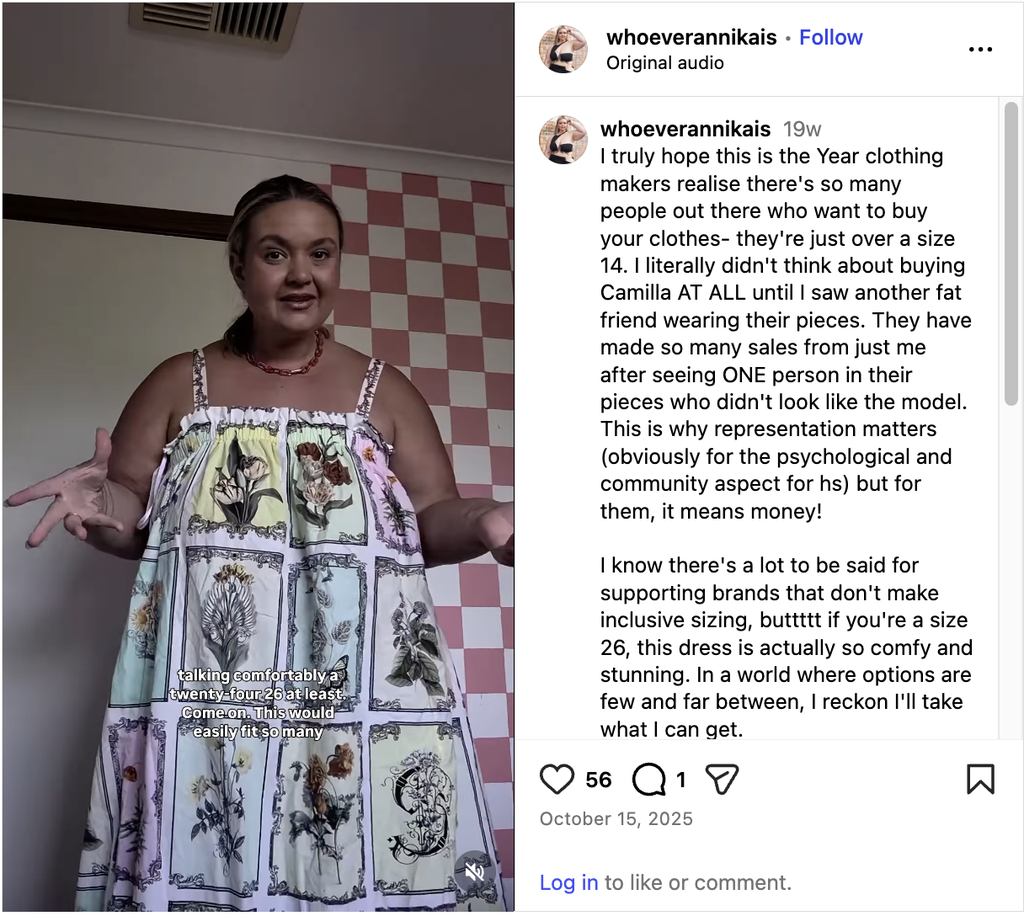
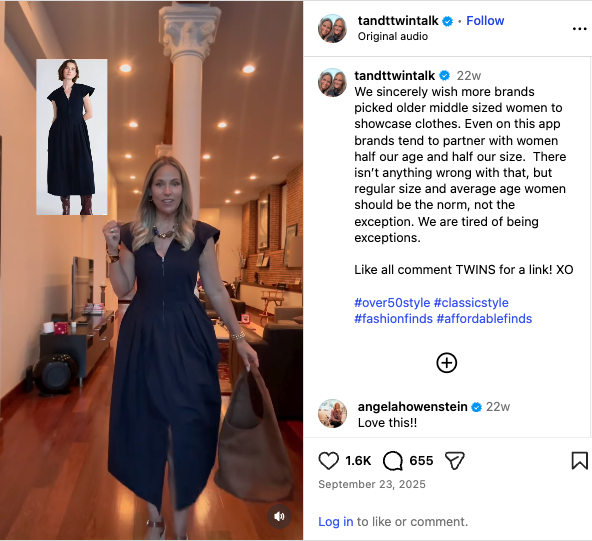
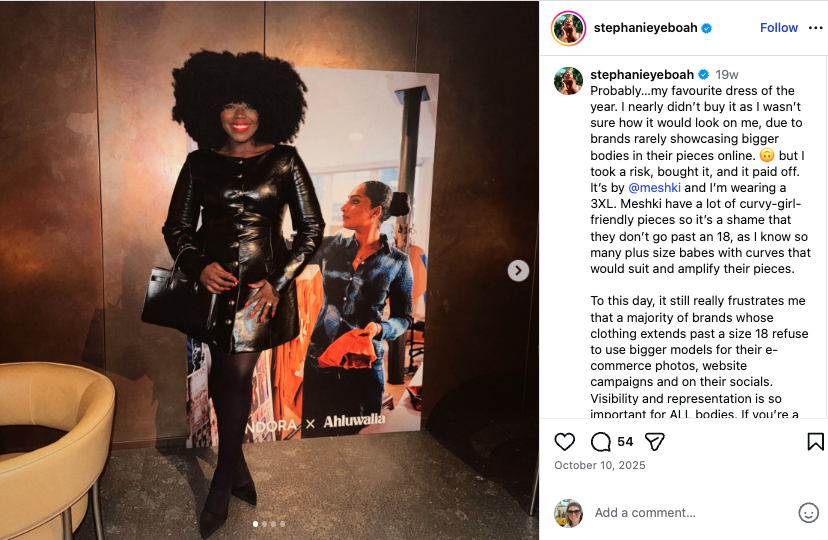
Yet despite progress, many criticize brands for not doing enough. Disabled and plus-size people remain largely invisible from media and marketing content, with a third of adults reporting they've never seen disability represented in advertising.
In the posts below, shoppers voice their frustration with the fashion industry’s lack of age and plus-size representation. One influencer shared her own disappointing experience after a designer pulled out of making her bridal outfit due to her bigger size.
Consumers now demand brands meet them where they are, celebrating all body types, abilities, and identities.
Why should retail and fashion brands pay attention?
Inclusivity isn't just about doing the right thing – it's about staying relevant. Consumers increasingly choose brands that reflect their values and offer products for their actual bodies, not idealized ones. Brands that expand sizing, feature diverse models, and design adaptive clothing will build deeper loyalty and capture market share from those still clinging to outdated standards.
The average person now buys 53 clothing items per year – 4 times more than they did twenty years ago. Many new garments are only worn 7–10 times before being discarded, a decline of more than 35% over the last 15 years. This pattern is driving overconsumption and accelerating environmental damage. The critique extends to thrifting, too. While secondhand shopping is often positioned as sustainable, this thrifting expert points out that buying 20 thrifted items you won't wear is still overconsumption.
Consumers have been pushing back for years, questioning the constant pressure to buy new – and they’re still taking action.
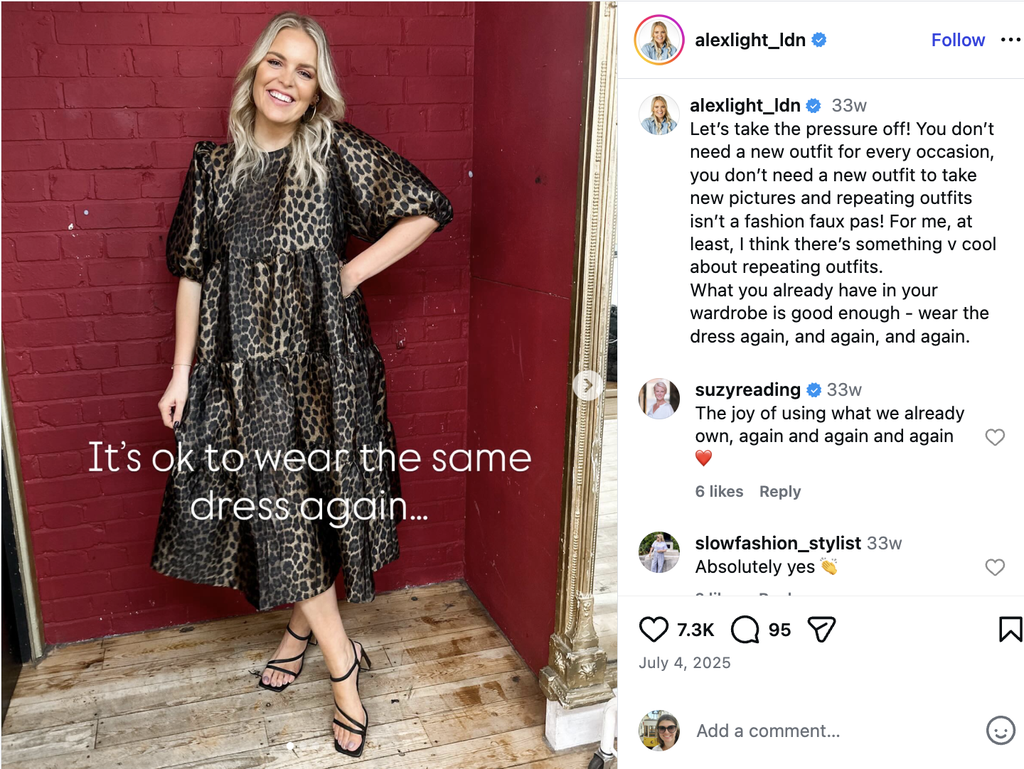
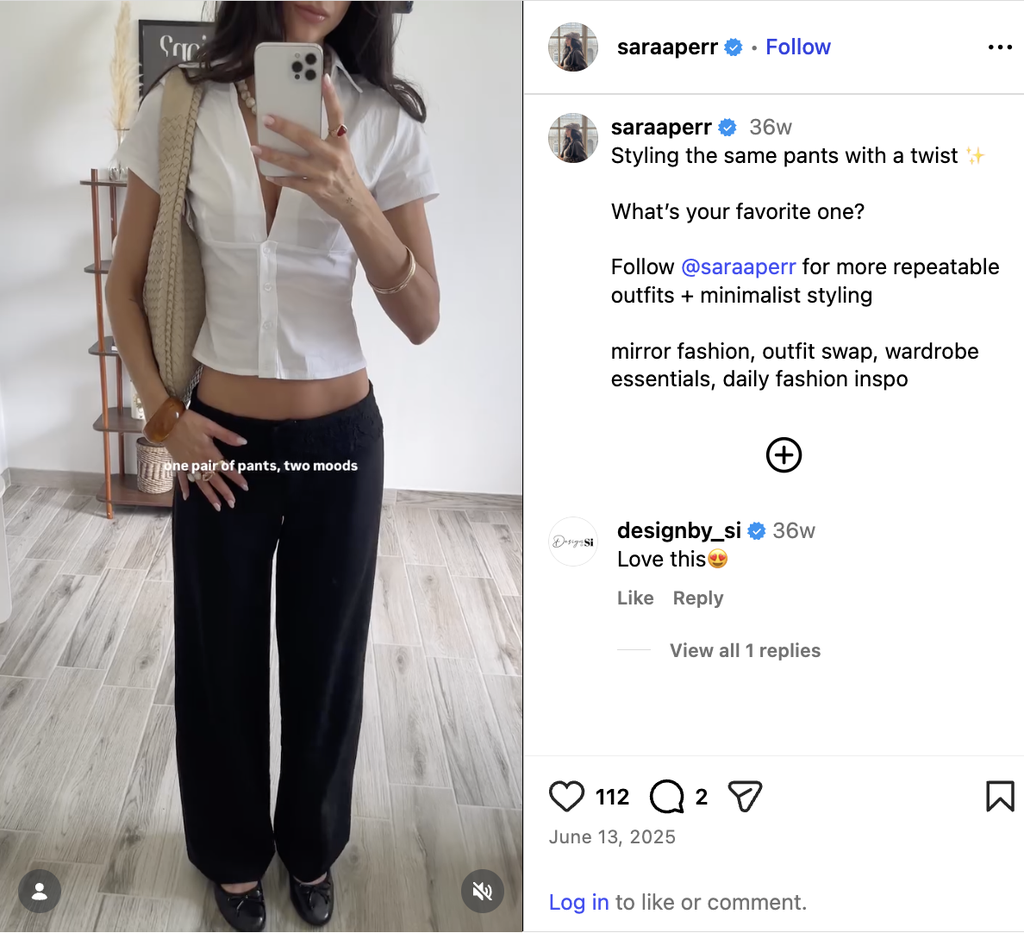
Some actively discourage unnecessary purchases through a movement known as deinfluencing, which emerged in 2023 and has been steadily growing since, with mentions spiking 158% in 2025 compared to 2024. Others promote repeat outfits – a trend that many celebrities and influencers have embraced, actively encouraging underconsumption and shopping less. When celebrities and influencers publicly normalize outfit repeating, it challenges the dopamine-driven microtrend culture and the endless cycle of buying new created by fast fashion and social media.
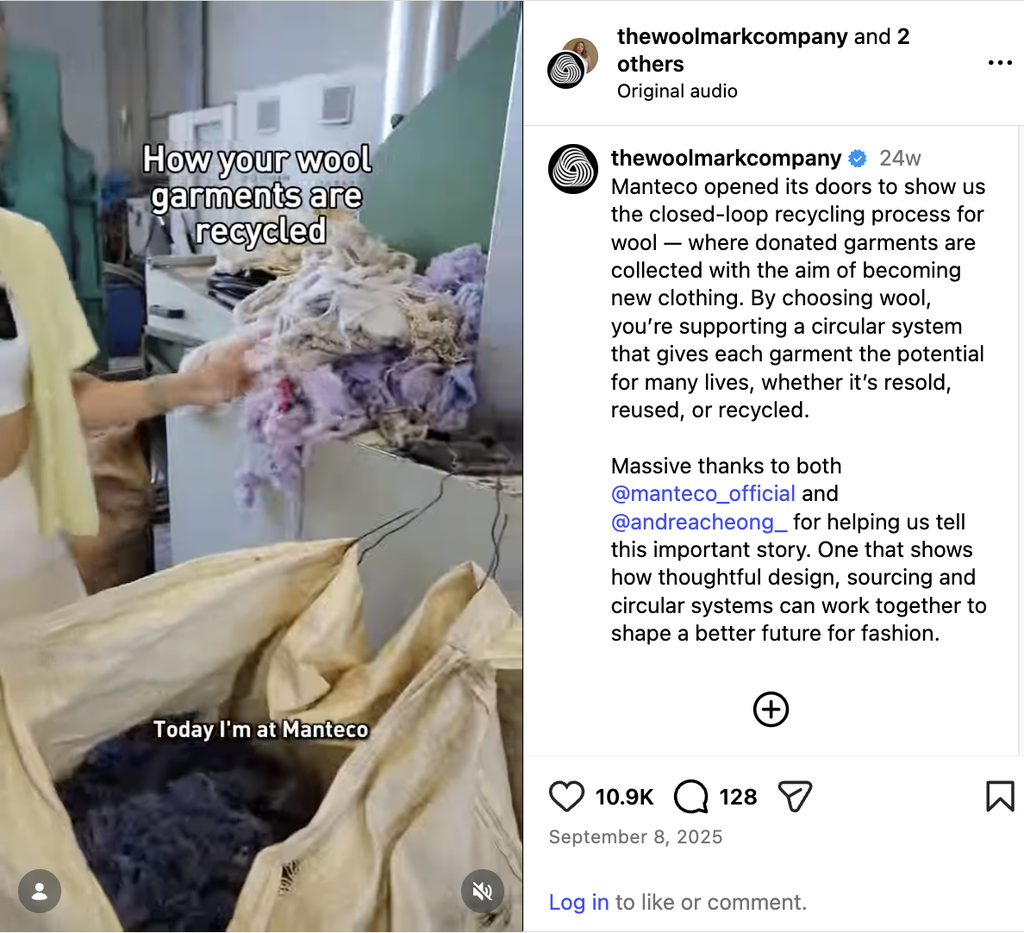
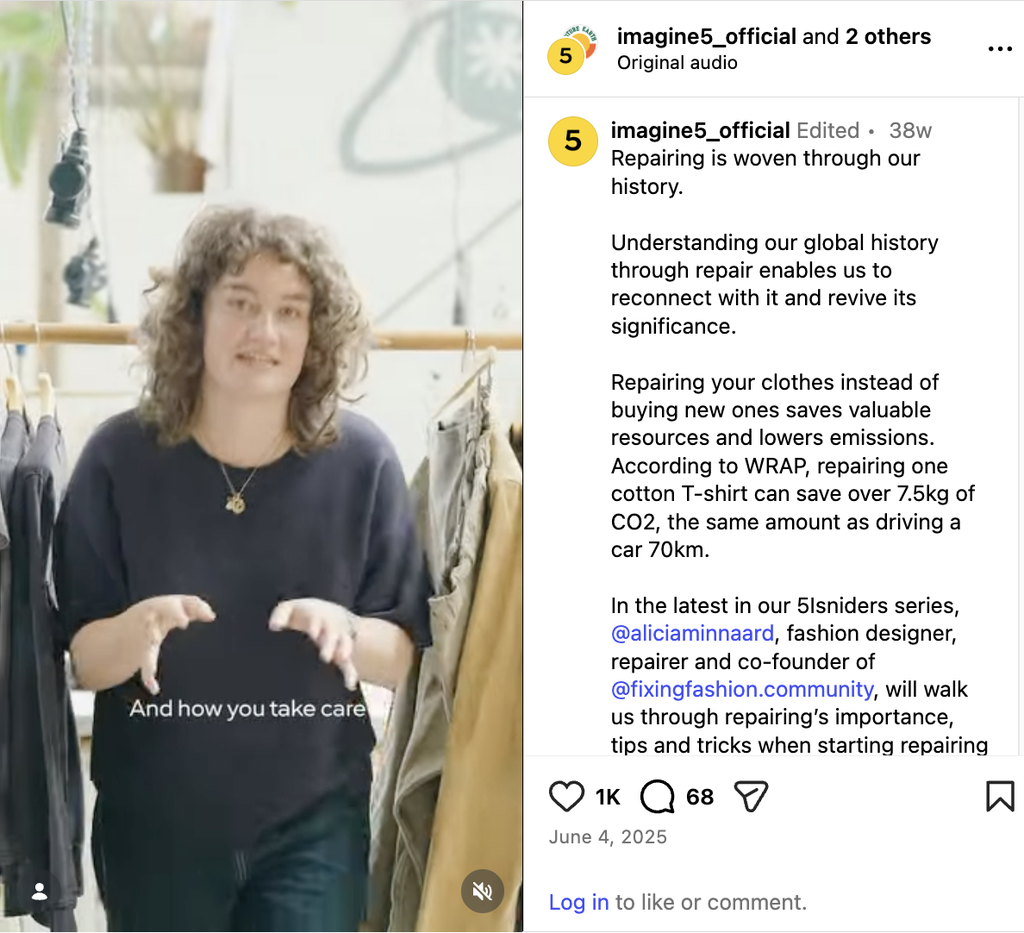
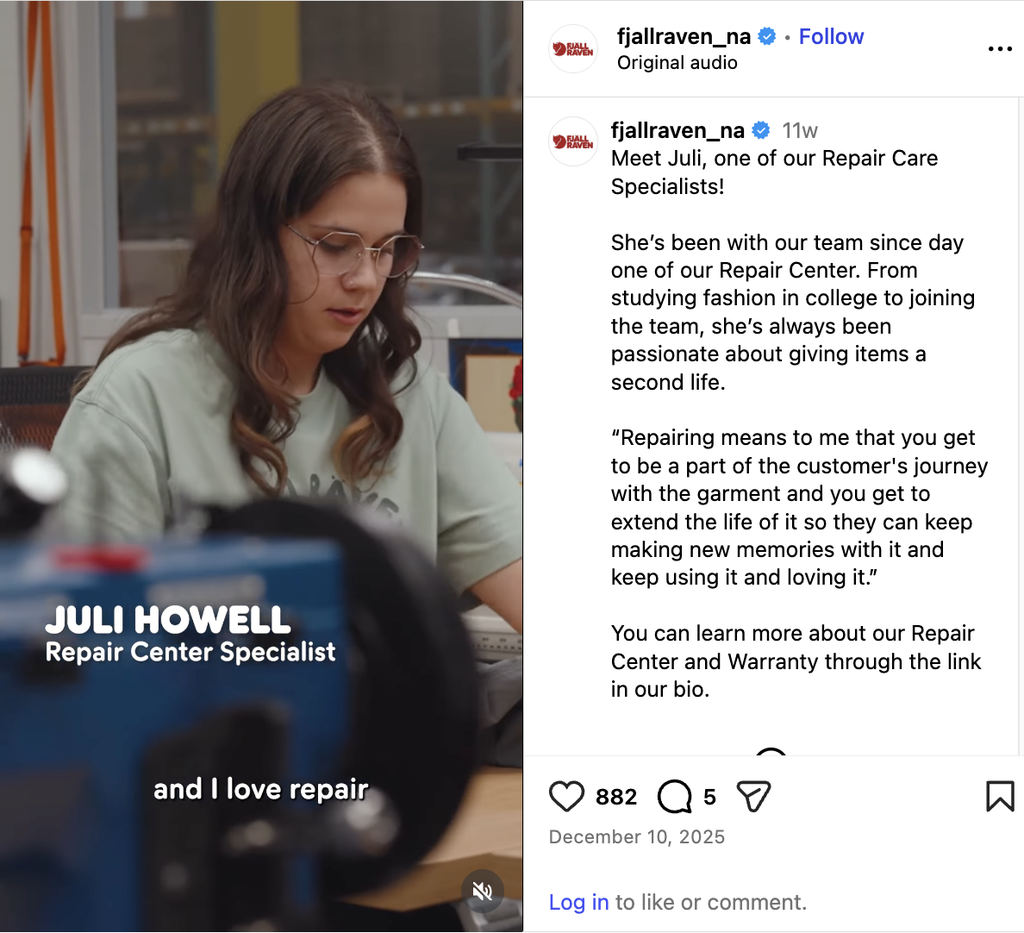
Brands are responding, too. Some are making durable clothing from natural fabrics. Others have long offered take-back programs, with retailers like Patagonia, Chaco, and Lululemon pioneering repair services to extend clothing lifecycles. These efforts continue to gain traction, with mentions of reuse and repair grew 16% in 2025 compared to 2024.
Why should fashion brands pay attention?
Consumer attitudes are shifting – though not uniformly. While the fast fashion segment is still growing due to a lower price point, many more consumers seek durability. Brands that can tap into this “buy less but better” mindset – through repair services and quality materials – can capture a loyal customer base willing to pay more for products that last.
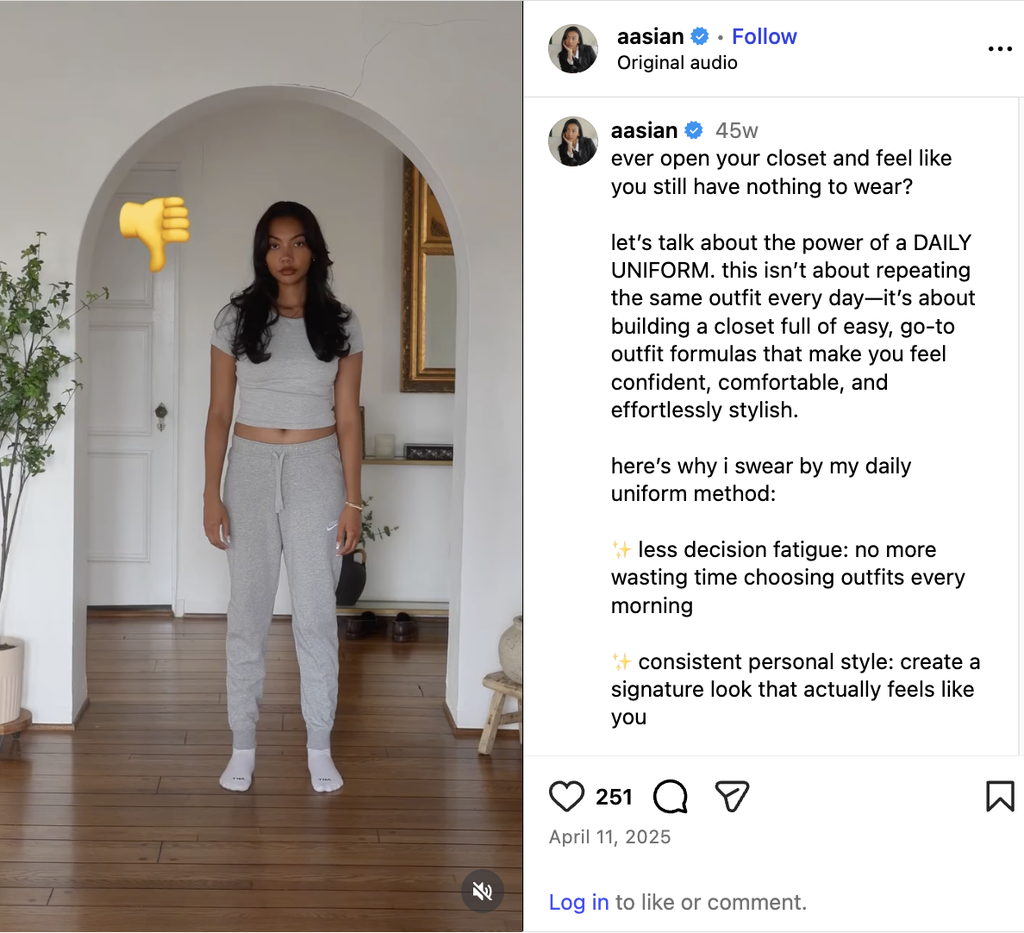
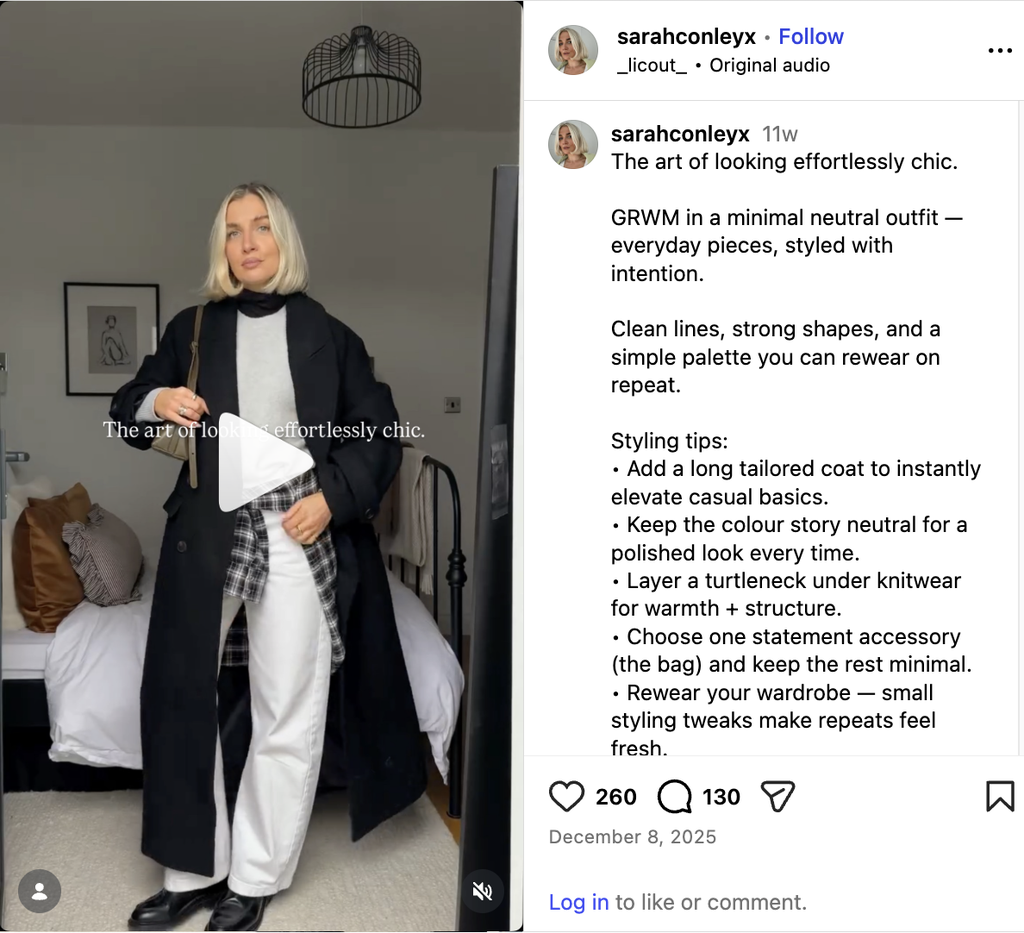
Perhaps building on the momentum of outfit repeating – and to combat daily struggles with what to wear – consumers are embracing the “daily uniform” mindset. This concept isn't about wearing the same outfit every day; it’s about building a closet full of easy outfit formulas that make one feel confident, comfortable, yet effortlessly stylish.
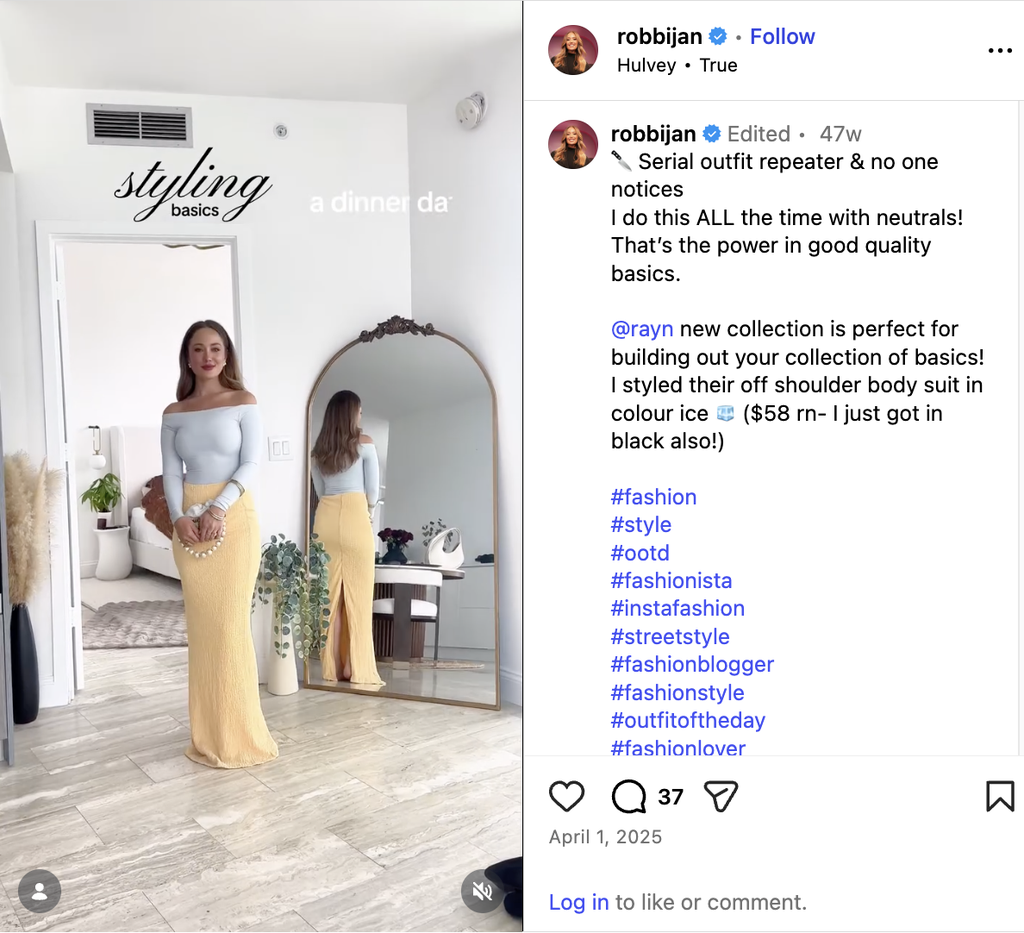
The key ingredient? Versatile basics that can be mixed and matched – dressed up and dressed down. Think classic tees, tailored pants, multipurpose skirts, cozy sweaters, and comfortable shoes that work for any occasion – whether it's a casual brunch, office day, or running errands. Mentions of “basics” grew 11% in fashion-related conversations in 2025, while casual looks and fits drew a 39% increase in mention volume.
Influencers are driving this momentum, showing their followers that you don't need to spend a fortune to look good – often spotlighting affordable basics from large e-commerce and retail brands. As one influencer put it: "Serial outfit repeater & no one notices. I do this ALL the time with neutrals! That's the power in good quality basics."
At its core, this trend reflects a broader cultural shift: simplicity over excess. Instead of overflowing closets filled with trendy pieces, consumers are investing in quality basics that can be styled in multiple ways.
Why should fashion brands pay attention?
Consumers are craving simplicity and versatility. Brands that offer timeless, high-quality basics designed to be mixed, matched, and repurposed will resonate with shoppers looking to maximize the value of their wardrobes.
This analysis is based on 68.2 million online conversations over a 12-month period, pulled from social media, forums, review sites, news articles, and blogs with the help of Brandwatch Consumer Research.
We looked at key themes in conversations about fashion to understand where consumer expectations are heading.
Looking to dig deeper into fashion trends that matter to your brand?
With Brandwatch Consumer Research, you can zoom in on what matters to your business:
Whether it's inclusivity, brand partnerships, or understanding your competitive edge – the real-time consumer insights are already out there.
Consumer Research gives you access to deep consumer insights from 100 million online sources and over 1.4 trillion posts.
Existing customer?Log in to access your existing Falcon products and data via the login menu on the top right of the page.New customer?You'll find the former Falcon products under 'Social Media Management' if you go to 'Our Suite' in the navigation.
Brandwatch acquired Paladin in March 2022. It's now called Influence, which is part of Brandwatch's Social Media Management solution.Want to access your Paladin account?Use the login menu at the top right corner.