


How to Find Influencers For Your Campaign
By Sabrina DorronsoroJan 29
Your field guide to navigating the social media wilderness - powered by 18M+ data points and expertise from 1,000+ marketers.
Published October 15th 2025
Analytics plays a crucial role in how brands and professionals excel on LinkedIn.
LinkedIn is the social media platform for professionals and B2B brands – and in many cases, it’s at the forefront of a social media manager’s agenda.
X, Instagram, and Facebook might be where you generate widespread engagement, but LinkedIn could be the place where you land leads and sales.
Mastering LinkedIn analytics has therefore never been so important. From gauging the benefits of shares and comments to measuring what’s working (and what isn’t), there’s plenty to assess when analyzing LinkedIn data.
Doing it right requires tools. This guide examines the 12 best LinkedIn analytics tools – from free built-in analytics to advanced all-in-one platforms – so you can find the perfect fit for your needs.
Best LinkedIn analytics tools
Before we examine the LinkedIn tools available for 2026, it’s worth considering what you’ll need your chosen software for. This will help you make the right choice from the start.
At minimum, the tool should track all the basics – post impessions, likes/comments/shares, click-through rates (CTR), follower growth, etc. Make sure it captures the metrics that matter for your goals (for example: engagement rate if you care about interaction, or conversion metrics if you run LinkedIn ads).
Your LinkedIn analytics tool needs to be easy to use – there’s no point subscribing to a tool that’s overly complicated.
Look for software with a clean, intuitive interface – you shouldn’t need to be a data scientist to gain insights. If you work in a team, look for multi-user support and the ability to manage multiple LinkedIn accounts.
Customizable dashboards and one-click reports are also highly sought after. This lets you focus on the key performance indicators (KPIs) you care about and present data in a client- or exec-friendly format.
If you manage multiple social networks, a tool with cross-platform integration is critical. It consolidates analytics for LinkedIn and other channels (Facebook, X, Instagram, etc.), helping you see the bigger picture and streamline your workflow.
Of course, it’s worth considering your specific needs, too. Do you want the tool to also schedule LinkedIn posts or manage comments?
Some analytics tools like Brandwatch work as full social media management suites, combining publishing, engagement, and analytics in one so you can execute on your content strategy as well as monitor performance.
Additionally, the best platforms provide AI-powered features that help you streamline workflows – in this case, helping you draft the perfect copy for social posts or analyzing how a post resonates with your audience.
With these criteria in mind, let’s explore the top LinkedIn analytics tools for 2026 and what makes each stand out.
Below, we’ve compiled 12 of the best tools for your perusal. These range from free solutions to enterprise platforms. Read on for a quick overview of each tool, plus highlights and key features to look out for.
Brandwatch is a comprehensive social media management platform and an official LinkedIn Marketing Partner. Brandwatch doesn’t just do LinkedIn analytics – it combines publishing, engagement, ads, and analysis in one place.
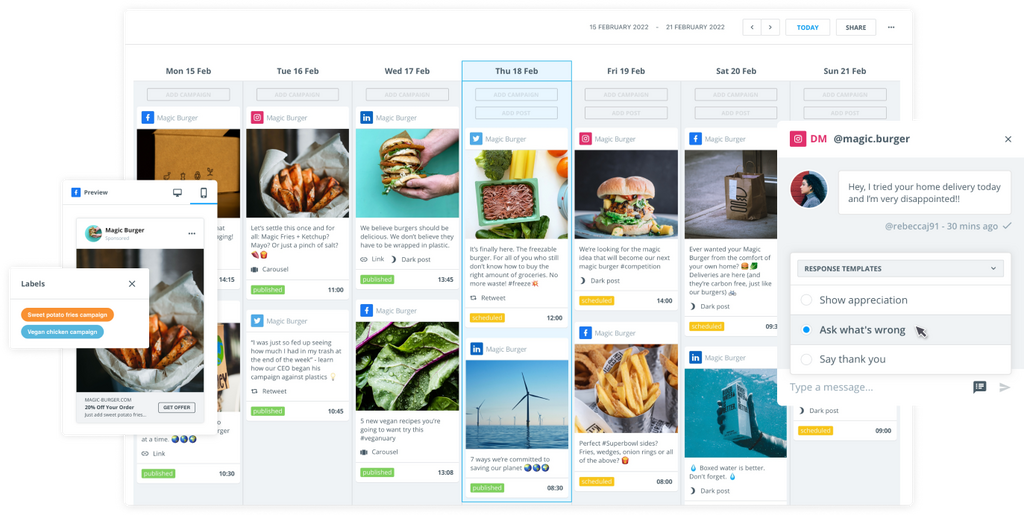
Use Social Media Management to oversee your entire LinkedIn strategy, from ideation to execution, and track scores of metrics in Brandwatch’s Measure module.
As a LinkedIn partner, Brandwatch can pull in your LinkedIn Page analytics and ad campaign data. You can see your latest post’s engagement and your LinkedIn ad spend return on investment (ROI). This tracking is invaluable for marketers running paid LinkedIn campaigns – no need to jump between LinkedIn’s Campaign Manager and your page insights. You can even turn organic posts into ads in one click.
Other modules, such as Publish and Engage make LinkedIn management easy. Schedule content at optimal times and never miss a message again.
Features include:
If you’re looking for an all-in-one solution to manage and measure LinkedIn (and other social media), then Brandwatch is the standout platform.
Brandwatch's Social Media Management solution is ideal for medium to large businesses that want a broad range of features and cross-team collaboration.
You can manage your entire LinkedIn strategy – from scheduling content to analyzing results – in one platform.
LinkedIn offers a free analytics platform for individuals and businesses, serving as a great starting point for those joining the network. The non-premium analytics aren’t as feature-rich as third-party tools like Brandwatch, but at least you can begin to gauge your performance.
You can track follower growth and audience demographics (like your followers’ industries, job titles, and locations), as well as page views and unique visitors. LinkedIn provides key metrics such as impressions, engagements (reactions, comments, shares), and click-throughs on any links.
Individual LinkedIn users can see weekly stats on profile views and search appearances, but you won’t see everyone who’s checked out your profile.
Indeed, if you want to take analytics seriously and get a 360-degree view of your performance, then you’ll likely need to pay for LinkedIn Premium and get deeper insights.
Anyone using LinkedIn should familiarize themselves with the native analytics – after all, the basic service is free and right at your fingertips.
It’s especially useful for individuals and small businesses that may not yet have the budget for a third-party tool. Just remember the native tool has limitations.
Buffer is a tool that primarily schedules social media posts (including LinkedIn) and comes with a good level of analytics as well.
While Buffer’s analytics are more basic compared to some other tools, they are user-friendly and great for quick insights. For each LinkedIn update you publish through Buffer, you can see the number of impressions, likes, comments, and clicks it received. It will also flag your “top post” in a given period.
Buffer’s paid plans unlock more analytics, including an overview of your LinkedIn account metrics. You also get weekly email reports summarizing your social media performance.
Buffer is especially popular among individual professionals, small businesses, and content creators who need a no-fuss solution.
The analytics won’t satisfy a data-hungry analyst, but they do give clear indications of what’s working.
HubSpot is a powerful CRM and inbound marketing platform, and it includes social media analytics as part of its Marketing Hub.
HubSpot’s standout feature is the ability to connect social interactions to your contact database. So, if a LinkedIn post brought someone to your website and they filled out a form, HubSpot will attribute that lead to the LinkedIn post. You can see which LinkedIn posts or campaigns generated contacts, leads, or customers.
HubSpot also connects to LinkedIn’s Ads platform – meaning you can create LinkedIn ads audiences from HubSpot and then see ad results in reports, aligning with your other marketing data.
LinkedIn analytics is not HubSpot’s core focus but companies already in the HubSpot ecosystem may benefit from its service. HubSpot can show you the full journey from a LinkedIn interaction to a closed deal.
Shield is a unique tool on this list because it focuses on LinkedIn personal profiles rather than company pages. Shield is a great solution if you’re looking at organic LinkedIn growth and engagement.
You’ve probably noticed LinkedIn doesn’t offer a great analytics dashboard for personal accounts. Shield fills that gap, providing professionals with a detailed view of how their personal LinkedIn posts perform over time.
Users gain access to a dashboard featuring visual charts that showcase performance over time. You can see how your follower (connection) count has grown month over month, what your average post engagement is, and which days you get the most engagement.
Shield allows multiple accounts to be managed together. You could, for example, track all your sales team members’ LinkedIn posting performance in one place (great for a company encouraging employees to post on LinkedIn).
LinkedIn content creators, thought leaders, and those building a personal brand on LinkedIn should get what they need from Shield.
Shield is tailored for LinkedIn power-users who post from their personal profile frequently. It gives you the kind of analytics that a LinkedIn Company Page admin gets – but for your own profile.
Hootsuite is a social media management platform that supports LinkedIn alongside other networks. You can schedule posts, monitor feeds, and analyze results all in one place. Its analytics are robust enough for most users, especially those managing multiple social profiles.
You’ll see engagement metrics for each LinkedIn post (likes, comments, shares, clicks) and overall page stats (followers, impressions, engagement rate) over selected time frames. The data is presented in charts and graphs that are easy to digest at a glance.
You can also compare your LinkedIn performance with profiles on other social media sites, and create custom PDF reports to highlight LinkedIn metrics that matter to you.
Hootsuite is suitable for teams – you can have multiple users, assign tasks (such as who should respond to a LinkedIn comment), and set permissions.
Hootsuite is an option for social media managers and agencies managing multiple profiles, as it centralizes all tasks. Its analytics are clear, covering the key metrics for LinkedIn without overwhelming you.
Sprout Social is a social media management platform known for its analytics and reporting capabilities. Like with Brandwatch's tool, LinkedIn is just one of the social media sites you can scrape data from.
Sprout provides insights into your page followers, including their job function, company size, and industry. This helps you ensure you’re attracting the right audience.
Additionally, Sprout can track your response rate and time to incoming LinkedIn messages if you use it for community management. It also aggregates cross-platform data so you can see, for example, total engagements across all networks.
Sprout Social’s analytics depth can be useful for large organizations and data-driven marketers that have LinkedIn as part of their social media strategy.
SocialPilot is a social media management platform that supports LinkedIn along with other major networks.
It covers all the bases to help you manage and measure your LinkedIn presence, including an analytics dashboard. It shows your recent posts with key metrics around performance and overall page statistics. You’ll see data like engagement per post, impressions, and follower growth.
While the analytics interface is not as fancy as some high-end tools, it presents the info clearly. You can quickly identify your top-performing LinkedIn content and track trends over time.
Other benefits of SocialPilot on LinkedIn beyond analytics include multi-account scheduling, team collaboration, and content curation suggestions.
SocialPilot is designed for small businesses, agencies, and social media professionals who require robust features on a budget. If you need to manage multiple LinkedIn pages or profiles and require scheduling, analytics, and client collaboration, SocialPilot is a cost-effective solution.
Keyhole provides quick insights into your LinkedIn page performance and is particularly useful if you’re running campaigns or tracking specific trends on LinkedIn. You can monitor post engagement rates, impressions, and follower growth in real-time.
In fact, one of Keyhole’s strengths is real-time tracking. If you have an important LinkedIn post or campaign (such as a big announcement or a live event), Keyhole can update key metrics quickly, allowing you to watch engagement roll in live.
Keyhole allows you to monitor hashtags and keywords on social media, including LinkedIn. Use comparative analytics to benchmark against competitors and generate automated reports that summarize your LinkedIn performance over a period.
If you’re a social media marketer who wants quick, campaign-oriented insights, Keyhole can be a handy tool.
Keep in mind that Keyhole is more about monitoring and measuring; it doesn’t handle posting or scheduling. Many users pair Keyhole with a separate scheduling tool.
LinkedIn analytics is a part of Sprinklr's offering. It covers the usual metrics (followers, impressions, engagements) to more advanced ones.
Sprinklr can provide a breakdown of your LinkedIn content performance – for example, which post formats (link, image, video) receive the most reach.
The platform is also suited for collaboration and governance controls, making it an option for large businesses with complex workflows.
Sprinklr is designed for large organizations that require scalability.
Agorapulse offers publishing, a unified inbox, and analytics within its combined social media management and CRM platform.
The analytics dashboard tracks all the key metrics related to your LinkedIn presence. You’ll see stats on impressions, clicks, reactions, comments, and shares for your posts.
One helpful metric Agorapulse calculates is the average engagement per post, which gives you a sense of content effectiveness normalized by posting volume. You can also review your fan base growth, showing new followers over time.
Agorapulse offers analytics without a steep learning curve, making it a potential choice for consultants and in-house social media teams.
LinkedIn has solidified its role as a critical platform for businesses and professionals, and leveraging analytics is the key to unlocking its full potential.
Whether you’re a brand looking to unlock fresh leads, an agency overseeing multiple content strategies for clients, or an individual looking to make an impact on the platform, there’s a tool out there for you.
One thing is clear: measuring your LinkedIn efforts is no longer optional. In today's fast-paced, algorithm-driven environment, you need those data-backed insights to refine your content, understand your audience, and demonstrate the ROI of your work.
The good news is that tools abound – the ones we listed here are among the best, and each can make your life easier by turning LinkedIn data into actionable intelligence.
Brandwatch is an official LinkedIn partner, and its Social Media Management suite is allows you to strategize marketing plans and analyze data all with one tool. Book a demo and see where Brandwatch can take you.
Q: Does LinkedIn have built-in analytics for free?
A: Yes – LinkedIn provides native analytics for free. If you have a LinkedIn Company Page, you can access key metrics on your followers (growth, demographics) and on each post’s performance (impressions, clicks, likes, comments, etc.). Individuals can see limited stats on their profile views and post views too. These built-in analytics are great for basic monitoring and are automatically available, but they are limited. For richer insights, consider a Brandwatch demo.
Q: How can I track analytics for my personal LinkedIn profile (not a company page)?
A: LinkedIn’s native tools for personal profiles are quite limited – you’ll see who viewed your profile (if you have Premium) and some stats on post views and search appearances, but it’s not comprehensive. To really analyze a personal profile’s content, you’ll need a third-party tool like Shield.
Q: Are there any free LinkedIn analytics tools besides LinkedIn’s native insights?
A: Completely free, dedicated LinkedIn analytics tools are rare. Most advanced analytics tools are paid because they incur costs to maintain and pull data. However, many of the tools we discussed offer free demos and remember that LinkedIn provides access to key metrics for company pages for free.
Existing customer?Log in to access your existing Falcon products and data via the login menu on the top right of the page.New customer?You'll find the former Falcon products under 'Social Media Management' if you go to 'Our Suite' in the navigation.
Brandwatch acquired Paladin in March 2022. It's now called Influence, which is part of Brandwatch's Social Media Management solution.Want to access your Paladin account?Use the login menu at the top right corner.