


Did Your Last Campaign Work? Why You Need Both Social and Search Data to Know for Sure
By Ksenia NewtonAug 14
Learn how to identify emerging risk signals and respond to threats before they escalate across social, media, and AI.
Learn how to get your brand cited by ChatGPT, Perplexity, and other LLMs through tactics such as owned content, earned media, and social media.
Consumers are rapidly changing their search habits. Instead of scrolling through search engine results, they’re asking specific questions to ChatGPT, Perplexity, and Google’s AI Overviews.
Marketers face a new dilemma: how to get referenced by AI tools, so their brand appears in those suggestions. Brands might be tempted to look for quick wins and algorithm hacks, but that’s not how large language models (LLMs) work.
LLMs reward brands that truly understand how people seek information and show up consistently with helpful, credible answers to real consumer questions.
Consumer search behavior now plays out in three different ways: private searches on Google, public discussions on social media, and conversational prompts typed into AI tools like ChatGPT. Each platform serves a different need in the discovery journey.
Google still handles the most search queries daily, but ChatGPT (which is now the fifth-most visited website globally) processes roughly 2.5 billion prompts each day. And the gap narrows quickly in high-consideration categories like car purchases, financial products, and healthcare decisions.
This change in search behavior is also changing how people engage with results. Fewer people click through from search results because they get their answers directly from AI summaries. But when clicks do happen, they carry a much stronger buying intent compared to traditional organic search.
“People go into Google, search, and then just read the results. They don't click through anymore, so referral traffic is down. But on the other hand, when someone does click on the link, their conversion is up.” – Alistair Wheate, Principal Solution Strategist, Innovation Lead, Brandwatch, Brandwatch London Masterclass
For brands, this creates a visibility challenge. LLMs learn from millions of documents across the web – far more than most marketers realize. This means your brand's narrative gets shaped by data you might not be monitoring.
The actual webpage cited in LLM responses – the URLs listed in sources – represent just a tiny fraction of what influences the answer.
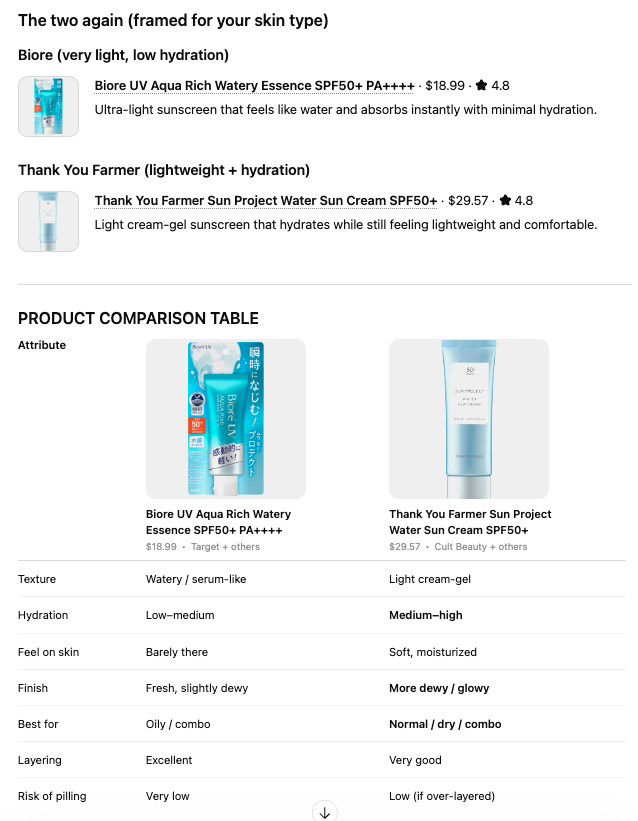
In the screenshot below, ChatGPT compares Bioré and Thank You Farmer sunscreens side-by-side using specific attributes. If you click the hyperlinked product names, they expand to show some of the sources ChatGPT pulled from to generate its recommendations, including reviews from licensed distributors, other websites, and niche communities on Reddit like r/AsianBeauty and r/SkincareAddiction. But ChatGPT's final recommendation is shaped by far more data sources than what's cited in the answer.
The real influence happens beneath the surface. Before an LLM forms an answer, it draws narratives from numerous sources, and those narratives quietly determine how your brand gets categorized in relation to the question being asked.
LLM tools can point you to some of the places you're cited, but they won't show you what narratives are actually shaping the AI's view of your brand.
You shape those narratives by consistently showing up with helpful, credible answers in the spaces where LLMs are actively learning about your category.
"The search landscape is becoming increasingly fragmented. More and more people are searching in different places to get their information." – Alistair Wheate, Principal Solution Strategist, Innovation Lead, Brandwatch, Brandwatch London Masterclass
LLMs learn from three main sources: your owned content, earned media coverage, and social conversations. Here's how to influence each one.
Make sure your owned content answers the questions people are genuinely asking. Not the questions you wish they were asking, but the ones they're actually typing into search bars and prompting into ChatGPT and other AI chatbots.
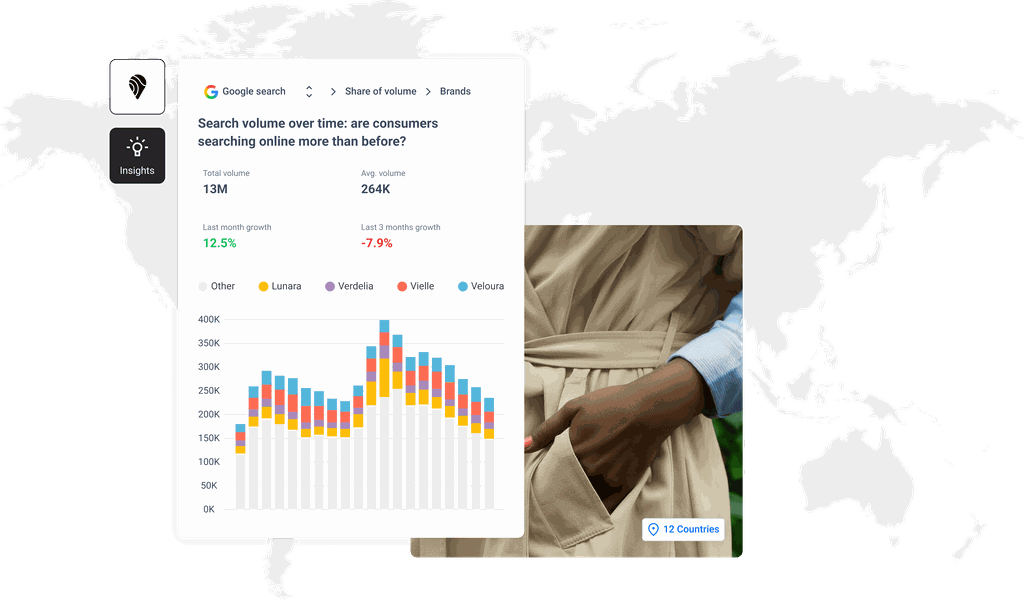
Use search intelligence tools like Trajaan to identify the exact queries your customers are searching for. Then create dedicated FAQ pages, troubleshooting guides, or blog posts that answer them directly.
A telecommunications brand selling smart home devices found that some customers experienced technical issues and were searching Google and asking ChatGPT questions like "How do I fix this bug?" or "Why is my TV not working?" The brand’s website didn’t have FAQ or troubleshooting materials, so customers flooded call centers with their questions.
The company identified the exact questions customers were asking (what bugs were people experiencing most frequently, and what specific troubleshooting steps they were looking for) and then created targeted website content answering them. This resulted in a 25% reduction in call center contact volume and a significantly better (and faster) issue resolution.
Major publishers like BBC, Telegraph, and the New York Times often block LLMs from scraping their content, but that doesn’t make them irrelevant. Their coverage creates a ripple effect by driving social media discussions, LinkedIn shares, and Reddit conversations that LLMs do read.
The publications that tend to influence LLMs most directly are openly crawlable editorial sources, so you might want to target trade publications in your category, independent industry blogs, analyst write-ups, and platforms like Substack and Medium where journalists expand on their work. Podcast transcripts and interview write-ups are also increasingly indexed.
But getting cited isn't enough. LLMs don't just register that your brand exists – they pick up on how it’s described. A competitor with fewer mentions but more consistently specific coverage can outperform a brand with broader but vaguer press presence. Brief your spokespeople to speak in concrete, useful terms. A quote like "our platform reduces onboarding time for enterprise clients by 40%" is far more likely to resurface in an LLM recommendation than "we're committed to helping businesses work smarter."
Focus your PR efforts on industry publications, trade journals, and online news sources that allow LLM access. Once you land that coverage, share it across your own channels and social media to maximize its reach.
Social conversations shape how LLMs understand your brand in ways that owned content and earned media can't.
When consumers talk about your product on Reddit, share experiences on TikTok, or ask questions in forums, that feeds into what LLMs know about you. Your presence in these conversations matters.
Show up where your customers ask questions. Provide helpful answers on Reddit. Respond to customer reviews with solutions. Share expertise in industry forums. Engage authentically on TikTok. Every helpful response you give becomes data that LLMs can learn from.
LLMs have long memories. A reputational issue from 18 months ago can still resurface in recommendations. While you can’t erase the past, you can create fresh context for LLMs to learn from.
Track what LLMs say about your brand, where those conversations are happening, and what questions are driving wrong answers. When you spot misinformation or outdated narratives, that’s your signal to create fresh content with accurate information and engage in conversations where your customers are asking questions.
"We're seeing a bigger and bigger part of the consumer purchase journey being shaped by AI. We absolutely need to be having a good handle on what the AI is saying to these consumers." – Alistair Wheate, Principal Solution Strategist, Innovation Lead, Brandwatch
For brands, winning audience attention in the age of LLMs means having a crystal-clear understanding of what their audience genuinely wants to know.
Start by discovering what LLMs currently say about your brand; note where your brand appears – and where it doesn't. Then focus on three areas where you can make an impact:
Track global search behavior across AI, social, shopping, and traditional search.
Existing customer?Log in to access your existing Falcon products and data via the login menu on the top right of the page.New customer?You'll find the former Falcon products under 'Social Media Management' if you go to 'Our Suite' in the navigation.
Brandwatch acquired Paladin in March 2022. It's now called Influence, which is part of Brandwatch's Social Media Management solution.Want to access your Paladin account?Use the login menu at the top right corner.