




The Big Fashion Industry Trends for 2026
By Ksenia NewtonFeb 26
Based on 1,000+ marketers and 750k conversations, here are the skills, tools, and strategies shaping marketing in 2026.
Published February 5th 2026
What we can learn from the biggest Super Bowl moments.
The Super Bowl is one of the biggest dates in the sporting calendar. But beyond the touchdowns, its halftime shows and headline-grabbing ads are a masterclass in how cultural moments are both made and sustained.
With this year’s Super Bowl just around the corner, we’ve looked back at the most talked-about moments from the last decade. Using Brandwatch Consumer Research, we’ve unpacked what drives the conversation and what brands can take from it – all as trends emerge ahead of the Super Bowl LX.
Let’s get to it.
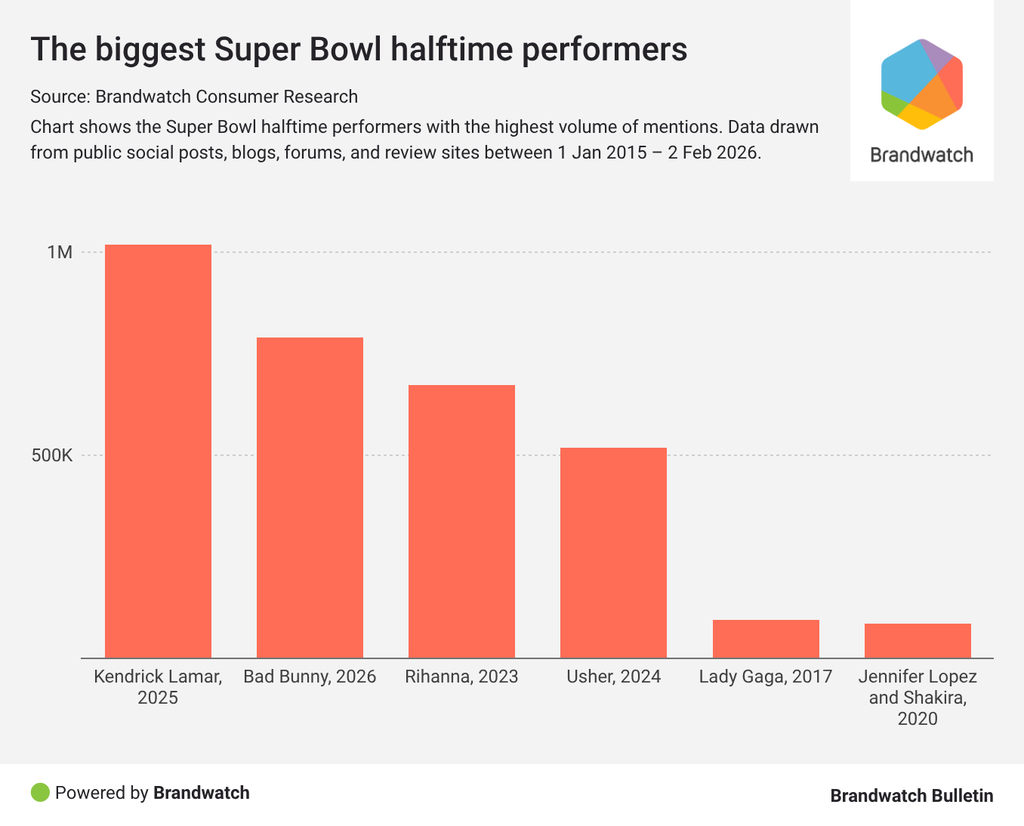
We used Brandwatch Consumer Research to discover the biggest halftime performers from the last decade. And the winners are clear.
Kendrick Lamar’s 2025 performance was the biggest hit. With over a million online mentions specifically about his performance, it didn’t only dominate the night – it shaped the wider cultural conversation that followed.
The performance combined spectacle with substance. By blending his biggest hits, Kendrick delivered a tightly choreographed set that was carefully constructed for hardcore fans – rather than purely created to crowd-please. Appearances from long-time collaborator SZA and surprise guests like Serena Williams amplified the chatter even further.
But context mattered, too. Kendrick’s ongoing feud with Drake loomed large in the lead-up, priming audiences to dissect lyrics, visuals, and on-stage moments for hidden meaning. The performance gave people something to analyze (and debate) long after the show ended.
Interestingly, the second-most mentioned halftime show is one that hasn’t even happened yet. Bad Bunny’s upcoming Super Bowl LX performance is already generating plenty of online discussion. Set to become the first Latino and Spanish-speaking solo act to headline the halftime show, anticipation is being driven not only by musical expectations – but by cultural significance.
Bad Bunny himself has framed the performance as going beyond entertainment, saying: “This is for my people, my culture, and our history.”
Both fans and critics are being vocal on social, speculating about setlist choices, potential surprise collaborators, and how Bad Bunny's Latin trap roots could translate on stage. The result? A pre-event buzz that’s extending the lifespan of the performance – before it’s even happened.
Rounding out the top three is Rihanna’s 2023 performance, marking her first live performance in years. Conversation surged when she revealed her pregnancy mid-performance – instantly dominating headlines. There was no pause or announcement, just a moment audiences picked up on instantly.
So, what’s the pattern across these top performers? It’s about the three Ds: giving audiences something to decode, dispute, and defend. Cultural relevance beyond the performance is what turns a 13-minute stage slot into a lasting conversation. For brands, it's about creating moments people feel part of, not just exposed to.
In January alone, the Super Bowl saw a huge 2.87m online mentions. From halftime speculation to team rivalries, audiences are already setting the narrative – but brands aren’t waiting for kick-off. Commercials, teasers, and early reveals are already competing for attention.
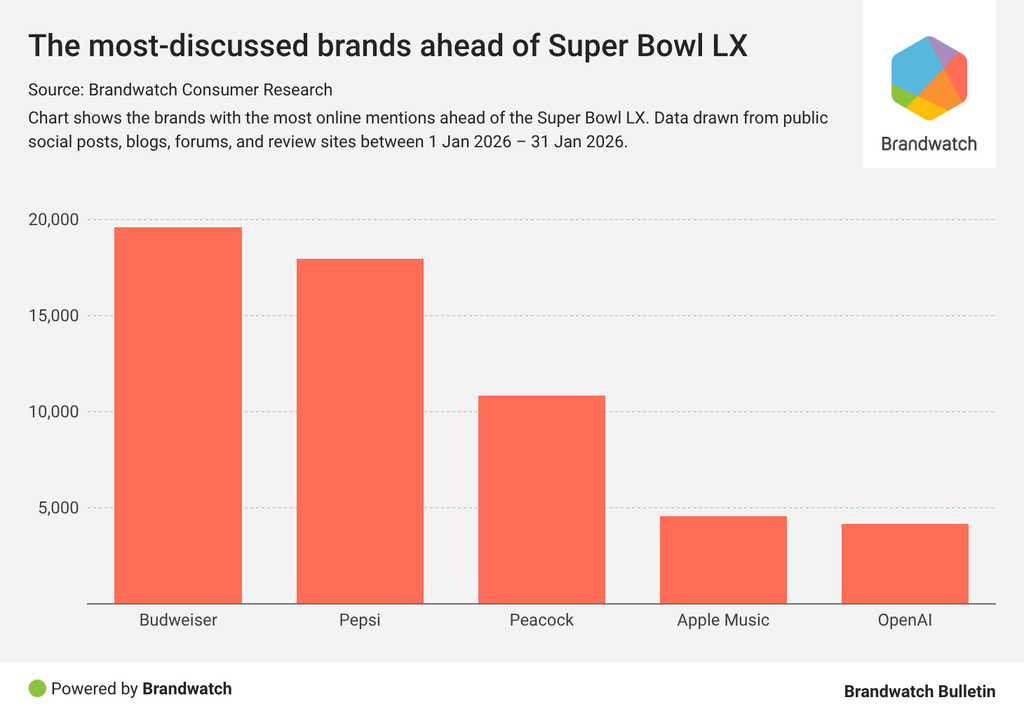
So, who's trending? We used Brandwatch Consumer Research to discover the biggest brands ahead of the Super Bowl LX.
Budweiser’s leading the conversation with nearly 20,000 mentions. Their “American Icons” ad leans hard into American patriotism, using familiar symbols like the classic Budweiser Clydesdale horses and bald eagles. And it’s struck a strong nostalgic chord with fans.
The response reminds us that, in moments of cultural scale, brands that anchor themselves in a recognizable identity are quick to gain traction and emotional resonance – as long as you know your audience well.
Pepsi follows closely behind. Pepsi’s Super Bowl commercial nods to Coca-Cola's iconic polar bear in a blind taste test. The arguably controversial move sparked debate, reviving a long-standing rivalry and proving that intentional provocation can reignite brand relevance. The lesson? Sometimes, strategic rule-breaking can be a brand superpower.
Peacock was, perhaps unsurprisingly, the third-most mentioned brand in the Super Bowl run up. As the streaming host for the Super Bowl LX, the conversation is a reminder that sometimes visibility comes from owning the moment – not stealing it.
The Super Bowl is our yearly reminder that cultural impact isn’t accidental. Whether it’s Kendrick’s subtle lyrics or Pepsi’s glaring rivalry, the brands and performers being intentional with their messaging are the ones giving audiences a reason to engage – not just watch.
For brands, it’s clear that the moments with the biggest impact are built on meaning, context, and timing. After all, audiences want to participate. And brands that allow this are sure to stay relevant long after the final whistle.
As this year’s Super Bowl approaches, we’re tracking the conversation live at Brandwatch. From the biggest teams to the most-mentioned celebs, our live dashboard shows what’s capturing attention.
The Super Bowl offers brands one of the biggest cultural stages of the year – but attention isn’t always guaranteed. The brands that cut through are the ones that give audiences something to anticipate and debate. And when brands tap into this culture, rivalry, or relevance, they extend the conversation way beyond the campaign – staying part of the narrative long after the final whistle.
We share monthly insights into the latest trends via email on the Brandwatch Bulletin. Why not subscribe to get the action straight to your inbox?
Consumer Research gives you access to deep consumer insights from 100 million online sources and over 1.4 trillion posts.
Existing customer?Log in to access your existing Falcon products and data via the login menu on the top right of the page.New customer?You'll find the former Falcon products under 'Social Media Management' if you go to 'Our Suite' in the navigation.
Brandwatch acquired Paladin in March 2022. It's now called Influence, which is part of Brandwatch's Social Media Management solution.Want to access your Paladin account?Use the login menu at the top right corner.