




5 Benefits of Combining Social Data with Search Data
By Emily SmithMar 25
Only 25% of marketers truly understand their audience. Do you? Join us for a candid conversation and discover the tools and skills top marketers are using in 2026.
Published January 29th 2024
Find out how social media lead generation works, including tips for Facebook, LinkedIn, X (formerly Twitter), Instagram, Reddit, and TikTok. Start bringing in customers now.
Your social media platforms can be a gold mine for leads. When done right, social media lead generation is a viable and valuable strategy. Don't let anyone tell you otherwise.
Social media has become a critical part of any company's marketing strategy. Whether it is to promote campaigns, nurture customer relationships, or sell your products, social media is much more than funny videos and memes. And driving leads is an important part of any successful social media marketing strategy.
This is a comprehensive guide to social media lead generation, from definition to general advice to platform-specific tips and tricks. You can jump directly to the platform-specific tips here:
Social media lead generation is the process of identifying, attracting, and capturing potential customers or leads with activities on social media platforms. It involves creating engaging content, using calls to action, and creating incentives that encourage people to fill out their contact information. The leads are then nurtured with follow-up strategies, with the ultimate goal of converting them into customers for that business.
For example, they may sign up for your newsletter, click on your social media ads, or download your content. Social media lead generation can be a valuable strategy for attracting new customers and ultimately increasing sales.
Social media is a powerful tool for connecting with your target audience, and more and more consumers are using social media to discover new brands and products. Three-quarters of consumers say they use social media to search for products or discover new brands. Nearly 69% of consumers bought a product based on something they saw on social media.
These statistics show how important social media has become for consumers to find and buy new products. Brands that ignore the potential of social media for lead generation are missing out on an important channel for attracting new customers.
Here are some benefits of social media lead generation:
Now that you know what social media lead generation is and why you should implement a social media lead generation strategy, here are some practical tips.
The first step in defining your strategy is to think about your goals. What are you trying to accomplish with social media lead generation? Do you want to increase newsletter sign-ups or increase sales?
To define your goals, consider the following:
These questions are a good place to start developing clear goals and objectives for your social media lead generation strategy. This will help you spend your budget efficiently, measure the results of your performance, and improve your strategy over time.
Social listening can be a great tool to enhance your lead generation tactics. With social listening, you can actively monitor and analyze online conversations on social media. You can gain valuable insights into discussions about specific topics or brands, where they are happening, and how people are talking about them.
You can do this with sophisticated social listening platforms like Brandwatch, but there are also free social media monitoring tools on the market for basic social listening. With a proper setup, you can learn about your target audience – how they talk about your industry, products, and competitors – and discover their interests, challenges, and preferences.
These are valuable insights that can inform your social media lead generation strategy. For example, you can create targeted content that speaks to the interests and pain points of your target audience to drive engagement and, ultimately, convert them into leads.
These insights help you create targeted content for your social media presence, whether organic or paid.
So when you come to writing posts to drum up interest, you can let them go out organically or put some money behind them.
Paid social media ads, compared to organic content, come with some benefits:
For lead generation, the above is obviously very important. You will see much better results on your posts with money behind them. On LinkedIn, you can target people with specific jobs. On Facebook, you can target specific locations. On X, you can target people who have posted certain keywords. These are just some of the targeting options that social media platforms offer.
The downside of paid, of course, is money. To spend your budget efficiently, it's important to track the results of your social advertising campaigns. With tools like Brandwatch Advertise, you can easily manage social ads across all your channels and gain real-time insights to optimize your campaigns.
In the next section, we'll go over some tips for each platform that will help you get leads. Some relate to specific lead generation tactics, while others, such as how to get new followers, simply lay the groundwork.
That’s because there are a number of ways to get leads through social, including:
While not exhaustive, the more comprehensive your social media strategy is, the easier it will be to get leads. The following will put you in a good position for all of the above.
Organic reach on Facebook isn't what it used to be. That's why many people rely solely on paid advertising on this platform, but there are still some ways to get your message out for free.
Since Facebook updated its algorithm, brands have struggled with organic reach. The platform is now built around conversations and interactions. To get your page and content in front of people, you need to do the same.
Try to encourage discussions with your content. Ask questions to get the conversation started, and respond to the comments to keep the engagement up. When you post content that is interesting to your audience, whether it is entertaining or informative, they are more likely to share it on their own timelines. And that could really increase your organic reach.
But keep in mind that Facebook dislikes certain attempts to get shares and engagement. These tactics can also alienate your audience and, in the worst case, damage your reputation.
Always think about the value you provide to your audience. Avoid posts that use clickbait headlines to get people to click on your link. It looks spammy and desperate. Facebook's algorithm can penalize posts that contain clickbait, and this type of tactic easily turns people. You risk losing potential customers.
Engagement baiting is another tactic you should avoid, as Facebook will penalize your posts in the future and make you look inauthentic. Engagement baiting posts try to get the audience to interact with the post by commenting, liking, or sharing the post to increase engagement metrics. A common example of engagement baiting is running a contest, but as a condition of winning the prize, the audience must share the post on their timelines or with multiple friends. This artificially increases engagement metrics, but the engagement is not authentic.
There are many ways of encouraging more leads on your Facebook page. First, make sure all of your contact information is up to date. Next, you can add a CTA to get people to email or call you. Anything that makes it easier for people to contact you is good.
It is also a great idea to set up your page with beautiful visuals and organized photo albums (for example, by product category). Think of your page as your own website. You can sell through it, so don't mistreat it.
Communities are becoming an increasingly important way for marketers to connect with consumers. In fact, online communities are a top trend in our Digital Marketing Trends report.
Creating a community can be a great way to foster relationships, which in itself can be a lead-building activity. For your community to succeed and thrive, you need to remember to add value to the group. Don't over-sell. Instead, share valuable information and content or ask questions to encourage meaningful discussion.
One thing Facebook is great for is creating your own group. If you already have a page, creating a group is easy. Just click on the three dots next to the ‘Share’ button at the top of your page and click ‘Create group.’
It's a good idea to choose a topic that's broader than just your business content. Think about what your target audience likes to discuss and talk about. Focus on that, and then you can start drawing people in. From there, it’s simple to make a few gentle nudges toward your product or service.
At Brandwatch, for example, we have our own Facebook group to create a space for marketers to discuss all things social media, from the latest trends to practical tips and tactics.
Instagram is obviously a huge platform with a lot of opportunities for lead generation. The site currently has 1.4 billion monthly active users. That's a huge pool of potential leads. One downside to Instagram is that you can't include links in posts like you can on other platforms.
First, you need to look at what you're selling and how that can be translated into Instagram posts. For some, it's pretty simple. If you run a bar, get a lot of pictures of people having a good time at your bar. If you sell clothes, get beautiful pictures of your clothes. Easy.
For B2B companies, it can be harder to generate leads on Instagram than it is for B2C companies. But with a smart content strategy, you can still get great results. For example, you can post educational content or let your employees speak in short, entertaining videos.
Even if you can’t easily photograph what you’re selling, many brands thrive off of using the platform to promote their brand identity rather than their products and services.
Including hashtags in your post is a great way to increase its reach and get it in front of interested consumers.
Since people are actively searching for hashtags, you've already got people who could be receptive to sales. Be sure to include them when appropriate. Don't add 50 hashtags for no reason, but be targeted and concise. It's also worth looking at a hashtag's feed beforehand to get inspiration for your content strategy.
For more tips on how to use hashtags, check out our blog on Instagram engagement.
As mentioned above, driving traffic to your site from your Instagram content can be tricky. So how do you do it?
First, make sure you have website or contact buttons set up in your bio (you can do this in the app's settings). This will give people easy, one-click access to your website.
The next step is content to grab the attention of the audience and encourage them to visit your site. Start with high-quality images and videos to make your posts stand out. Next, add a compelling caption that gives context and a call to action to your audience to check out the link in your bio and increase traffic to your site. Read our blog on Instagram captions to get more tips.
On LinkedIn, it's all business. At least when you get past all the broetry. It's a great platform for leads because people are already open to business conversations, and many use it to learn about new tools, products, and approaches. On LinkedIn, you can be a little more direct.
One of the best things about LinkedIn for lead generation is that you can target your posts, even if they're unpaid. By clicking "Post Options" under the post creator, you can send the post to people based on their location, job, industry, and other criteria.
This means you can make your posts highly personalized without annoying the people they're not aimed at. Want to write something aimed at pharmaceutical CEOs in Bradford? Easy. The pharmaceutical CEOs in Newcastle won't see anything and won't be bothered by content that doesn't benefit them.
LinkedIn's algorithm loves conversations and will share your post more widely if many people comment. Encouraging this is as easy as asking a question. People on LinkedIn love to share their opinions.
This can be as simple as asking for their top tips on a certain topic, or you can ask for their opinion on a new trend. The more discussion in the comments, the better. As the post's reach increases, you'll be in front of new people who might just need your services.
People love advice and tips on LinkedIn. A lot of people are there to learn. While you can still do well with fun stuff on the platform, offering actionable insights will get you good engagement and a bigger following.
This is also a good thing to keep in mind when sharing content. Guides that help people improve their business will perform well, so offer something of value. Avoid fluff and get to the point.
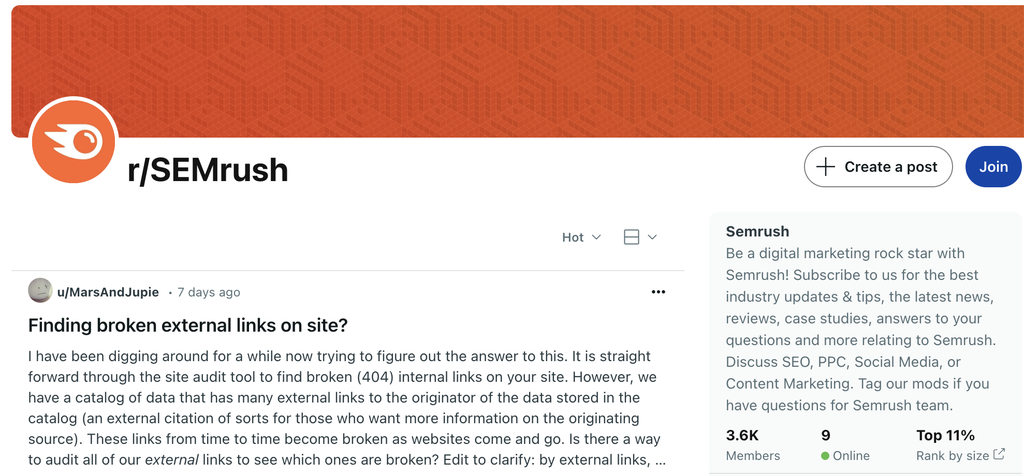
Reddit is getting more and more attention from marketers. It has a lot of users from all over the world, and people can create their own super niche communities. It's great for finding opportunities and better understanding your audience. Check out our Reddit guide to learn how Reddit can help you drive sales and nurture customer relationships.
Reddit is a community platform. As a marketer, you need to remember that community is Reddit's core value. Therefore, jumping into conversations to blatantly promote your products and services is frowned upon. If you don't have something valuable to contribute to the conversation, it may be best to stay out of it.
To get the most out of the platform, you need to set up a real account and use it naturally. Get involved in a number of subreddits and build up a decent profile. This shows that you're willing to put in the time.
This will be necessary to share your own content. But beware, it's not as simple as that. What you post still needs to be useful, interesting, and relevant. Dumping every blog post you write all over the site will quickly get you banned. Be thoughtful and helpful. Once you get the hang of using Reddit, it will be much easier to find real opportunities.
If you use the site properly, you can start communicating with subreddit moderators. Depending on the topic, many are open to working with brands in the right situation.
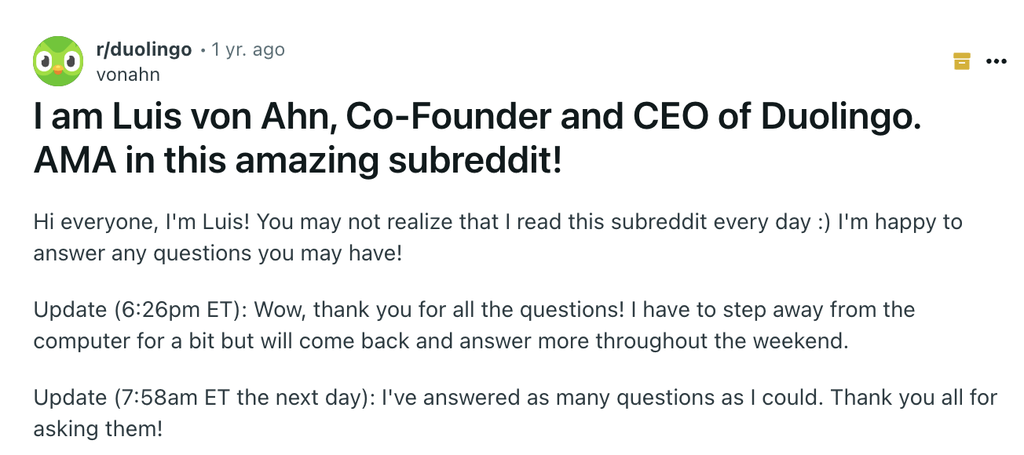
For example, many run Ask Me Anythings (AMAs for short), where a person is interviewed by the subreddit. If you run a restaurant, you might be a good choice for one of the food subreddits. Or, if you run an agency, try one of the marketing subreddits.
You'll increase your chances by talking to the mods regularly. It's always a good idea to check that your content is a good fit for a subreddit, and they can also offer advice on what content you should produce and post. Moderators want the best for their subreddits, so they're often willing to help.
People ask for a lot of advice and help on Reddit. This can be a great opportunity to let them know about your great content or product. You can find these conversations simply by using the search bar, but you can also get more advanced and track them more specifically (and easily) with Brandwatch Consumer Research.
Be careful, though. Just showing up everywhere and replying with "buy my stuff" will quickly get you labeled as a spammer. Make a note of which subreddits people are asking relevant questions in so you can start engaging with them.
Knowing your customers' pain points can also be a great opportunity to start your own subreddit with valuable tips and guides for the most common issues. It can be a great place to connect with your customers and deepen the relationship by providing another customer service channel. It can also help customers connect and help each other.
TikTok has grown massively over the past few years. With over 1.5 billion monthly active users in 2023 and expected to reach 2 billion by the end of 2024, it's one of the largest social platforms in the world. TikTok is also the first non-gaming app to reach $10 billion in consumer spending.
With more shopping features added, there's huge potential for brands to generate new leads and boost sales on TikTok.
A call to action, or short CTA, is one of the most important elements of your social media strategy. They're all about getting people where you want them to go, whether that's signing up for your newsletter or going to a specific product page.
On TikTok, you have two ways to implement a CTA. The first and most important is the bio link that you can set on your profile. When people go to your TikTok profile to learn more, you want to provide a link that makes it easy for them to go to your website or a specific campaign page to learn more or buy your products.
The second option is to encourage your video viewers to visit your profile and check out your link by including a call to action in your video captions. Let them know that they can get further information about a product, campaign, or giveaway by clicking on the link in your profile. Like on Instagram, you can only share one link in your bio, but there are third-party apps that can help you create a landing page with multiple links.
One of the most important things about getting discovered on TikTok is using the right hashtags. To appear in the Discover section of TikTok, it's important to tag your content with hashtags that are clear and relevant. A smart hashtag strategy can help you increase the reach of your content and get discovered by people who are interested in the topic. Ultimately, it can help you generate leads.
In the TikTok Creative Center, you can research trending hashtags for different locations and industries and see if any of the trending hashtags are appropriate for your videos. This research can also help you with content inspiration.
You can also create your own branded hashtag. Just make sure it's unique and memorable. A branded hashtag can increase your brand awareness and make it easy for consumers to search for posts related to your brand and products. Done right, consumers will use your branded hashtags for their own posts to share your products.
If your videos aren't grabbing viewers' attention in the first few seconds, you need to optimize your content strategy. TikTok is all about creative and authentic content. You don't need a big budget to post videos on TikTok, but your content needs to be entertaining or educational. You won't achieve this with a boring sales video.
Think about your audience. What are their interests? What hashtags do they use? When did they first encounter your brand? How do they want to be perceived?
There are many ways to reach new audiences. Start or participate in challenges to increase engagement, use trending music in your videos, offer educational videos or tutorials, and keep up with the latest trends on TikTok.
Whichever tactic you choose, remember that you need to grab the viewer's attention from the very beginning of your video. Check out our TikTok lead generation blog for more tips.
With people from all walks of life and all corners of the globe using X, there's almost an audience for everyone. Plus, with the right posts, you have the potential for huge organic reach if you can get the shares.
If you have a low number of followers, it can feel like you are shouting into the void. You’ll want to get those numbers up, but you also want to make sure you’re getting the right followers.
Here are a few things to consider:
Once you've built your audience, you can start generating leads for your business.
A great way to get your account in front of new people is to get the bigger players to mention or share your content. Talking to them is a great first step.
You can also incorporate this into your content approach. Interviews can be great ego bait to encourage more influential accounts to share your content. That, in turn, should increase your following.
Another great idea is to run chats on X, which are essentially Q&As on the platform. Invite some influencers to answer questions, and they'll promote the whole thing to their followers. Again, more relevant eyes on your account.
Effectively leveraging social media for lead generation requires a thoughtful approach to your brand's online presence. While sharing your brand voice is essential, it's crucial to align it with the nature of the platform. Social media users on X are seeking entertainment or information. Consider adapting your content to resonate with their preferences.
Take, for instance, Waterstones' X account, where the British bookstore seamlessly integrates book-related content with a slightly more casual tone. Incorporating emojis, occasional memes, and casual language can enhance engagement.
Obviously, striking a balance is key. While a humorous meme can attract attention, it's vital to remain focused on your primary goal: introducing your brand to a broader audience and converting them into leads.
Tailoring your approach to fit the platform's dynamics ensures that your content not only aligns with your brand voice but also resonates effectively with potential leads.
Social media is a powerful place for marketers to nurture relationships and capture leads. With the right lead generation strategy, you can add leads to your sales funnel and ultimately increase sales. Remember to be relevant and not to over-sell, no matter which social media platform you choose for your lead generation tactics.
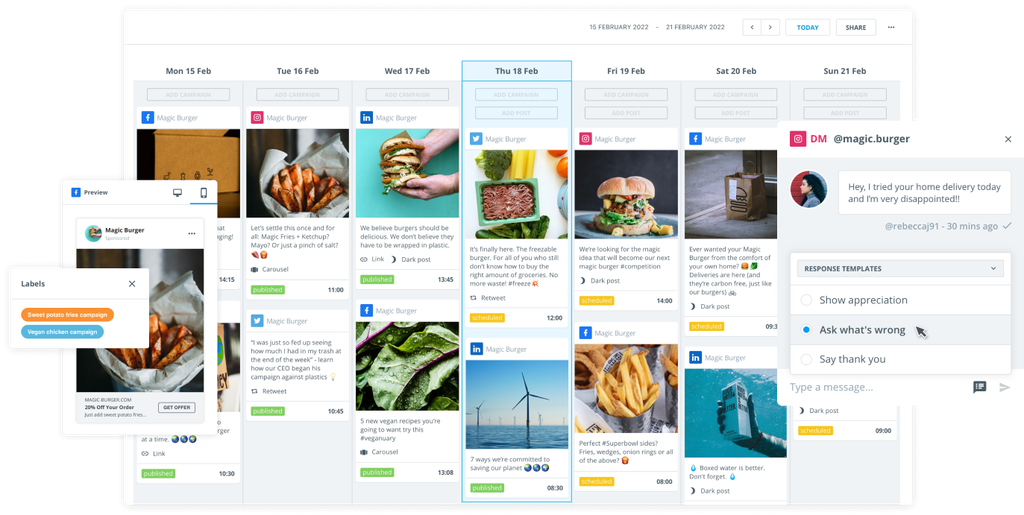
Track your performance so you can continually optimize your strategy. Sophisticated social media management tools like Brandwatch can help you analyze your results and save time.
Existing customer?Log in to access your existing Falcon products and data via the login menu on the top right of the page.New customer?You'll find the former Falcon products under 'Social Media Management' if you go to 'Our Suite' in the navigation.
Brandwatch acquired Paladin in March 2022. It's now called Influence, which is part of Brandwatch's Social Media Management solution.Want to access your Paladin account?Use the login menu at the top right corner.